
Tăng hơn 20 lần trong 5 năm! Điều gì ẩn sau sự bùng nổ của cổ phiếu bóng dáng bitcoin MicroStrategy?

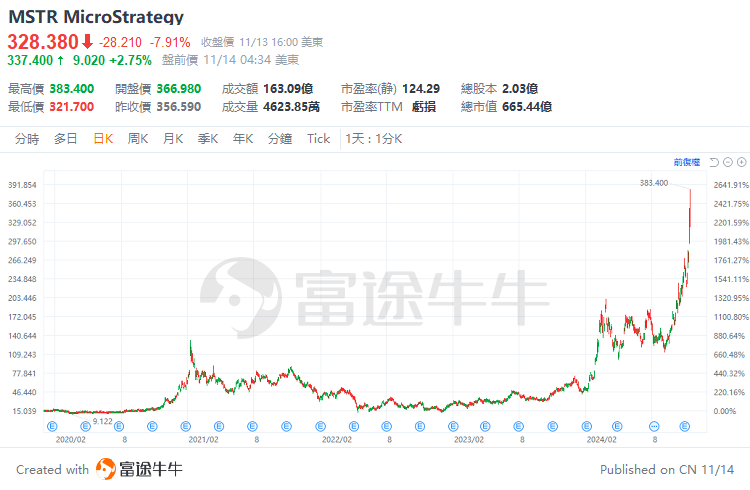
 Từ trước đến nay, MicroStrategy liên tục sử dụng nguồn vốn huy động từ cổ phiếu và trái phiếu để mua bitcoin với quy mô lớn, và nhờ bitcoin tăng giá mà “phất lên”, đây cũng là lý do cốt lõi khiến giá cổ phiếu công ty tăng mạnh. Đằng sau câu chuyện làm giàu của MicroStrategy chính là phương thức huy động vốn cổ phần độc đáo của họ – ATM (At-the-market offerings).
Six times in one year, twenty times in five years, the surge in MicroStrategy's stock price cannot be separated from the ATM financing mechanism. Under this model, MicroStrategy can flexibly raise funds at the peak of the price, avoiding the significant discount issuance problem caused by large-scale issuance, while allowing 'everyone to participate' and not favoring institutional investors.
$MicroStrategy (MSTR.US)$ Once a typical victim of the internet bubble in 2000, the stock price plummeted from $300 to $0.42. In 2020, the company's founder made a fateful decision to transform the company into a cryptocurrency investment platform: All-in on bitcoin, and claimed that bitcoin is "the most valuable asset in the world."
With the recovery of bitcoin, Microstrategy has returned to its peak, becoming a 'bitcoin shadow stock.' This year, Microstrategy's market cap once soared to nearly 70 billion dollars, with the stock price increasing six-fold in a year and nearly twenty-fold over the past five years. The current stock price is reported at 328 dollars.
 Microstrategy has consistently invested heavily in bitcoin through equity and bond financing, achieving 'riches' through the appreciation of bitcoin, which is also the core reason for the company's soaring stock price. Behind the myth of Microstrategy's wealth lies its unique equity financing method—ATM (At-the-market offerings).
ATM refers to issuing or increasing shares at market price, which means that a publicly listed company gradually sells newly issued shares or the shares it already owns into the secondary trading market at current market prices through designated brokers.
Recently, Microstrategy made a bold plan to increase financing to gather ammunition for the 'bitcoin buying frenzy.' This plan is called the '21/21 plan,' which aims to raise 42 billion dollars through 21 billion dollars in equity and 21 billion dollars in bonds over the next three years. At current prices, this means the company will purchase nearly 600,000 bitcoins, accounting for about 3% of the total bitcoin supply.
The 21 billion dollars financing in this plan is being completed through the ATM equity financing method, and has already raised over 3.5 billion dollars. What characteristics does the ATM mechanism have, and can it help Microstrategy reach new heights again?
The ATM mechanism behind the surge in stock prices.
Microstrategy is the company holding the most bitcoin among U.S. listed companies, and its stock price is deeply tied to bitcoin. Initially, it bought using cash, and later leveraged by raising funds through methods like ATM, resulting in Microstrategy's stock price increasing even more sharply than bitcoin.
Microstrategy employs banks to sell stocks through the so-called 'at-the-market' (ATM) issuance method, allowing the company to sell stocks without submitting additional regulatory documents. This model gives all investors an equal opportunity to participate in purchasing stocks, without favoring institutional investors, aligning with the decentralized spirit of cryptos.
The ATM model can also raise funds flexibly, avoiding the significant discount issuances that occur in traditional financing, particularly suitable for high-volatility stocks like Microstrategy. Meanwhile, Microstrategy's high trading volume makes large-scale stock sales feasible, and its stock market cap enjoys a 2.8 times premium relative to its bitcoin holdings, creating arbitrage opportunities in financing.
Microstrategy raises funds through the ATM model, utilizing the high volatility of the stocks and bitcoin markets to maximize its bitcoin holdings while maintaining a high valuation of the company's stock price. However, the success of this strategy heavily relies on the continued rise in bitcoin prices, so the potential risks posed by market volatility cannot be ignored.
The Financial Times of the united kingdom analyzed the characteristics of the ATM equity financing mechanism, specifically:
-
Flexibility of ATM stock issuance/increase.
ATM stock issuance allows companies to gradually push new stocks to the market instead of issuing them all at once through traditional methods. This flexibility is particularly suited for companies with significant stock price volatility like Microstrategy, as it allows for flexible fundraising during price peaks, avoiding the issues of steep discounts caused by large-scale issuances. -
In line with the spirit of decentralization in cryptos.
"Everyone can participate", the ATM provides all investors equal opportunities to purchase stocks, without favoring institutional investors. This model of minimizing intermediary intervention aligns with the decentralization concept advocated by cryptos. Moreover, using the ATM eliminates the need for management to spend time and energy meeting with fund managers or attending roadshows to raise funds. -
Applicable to capital-intensive industries.
The ATM model is widely popular in capital-intensive industries, such as life sciences and the energy sector. MicroStrategy demonstrates the versatility of this tool by utilizing ATM fundraising in industries like life sciences and the energy sector. -
High liquidity supports ATM operations.
microstrategy's stock has high liquidity, allowing it to sell large volumes of stocks through the ATM without putting too much pressure on the stock price. The company can gradually sell shares based on market conditions, and even sell large amounts of stock when fund managers make a quote, but management has complete decision-making power in this regard. -
ATM provides arbitrage opportunities.
Due to the highly leveraged balance sheet, microstrategy's stock market cap has a 2.8 times premium relative to the value of its held bitcoin. The funds obtained from selling stock through the ATM can be used to buy more bitcoin. This means that issuing more stocks actually increases the amount of bitcoin represented per share, thus achieving an arbitrage effect. -
The risks are exposed when the price of bitcoin drops.
Although current ATM operations benefit from the rise in bitcoin, the article mentions two major potential risks: first, if the price of bitcoin drops, the premium of stocks relative to net assets (bitcoin) may shrink or even turn into a discount; second, continuous stock issuance could gradually erode the premium, leading to a decline in stock prices to the actual value of bitcoin.
Editor/Somer
Tuyên bố miễn trừ trách nhiệm: Mọi thông tin trong bài viết đều thể hiện quan điểm của tác giả và không liên quan đến nền tảng. Bài viết này không nhằm mục đích tham khảo để đưa ra quyết định đầu tư.
Bạn cũng có thể thích
Trong vụ bê bối ngoại tình, giá cổ phiếu Nvidia giảm mạnh, "Đại không đầu": Ngắn hạn có thể là "giao dịch tuyệt vời", nhưng dài hạn vẫn bi quan
Burry thẳng thắn thừa nhận rằng, nếu không đang nắm giữ vị thế bán khống, cú lao dốc do bê bối gây ra có thể là một cơ hội mua vào ngược dòng tốt—nhưng bản thân ông khẳng định sẽ không tham gia. Rủi ro chí mạng là làn sóng có thể kích hoạt cuộc điều tra của cơ quan quản lý về các hành vi kinh doanh “kiểu mafia” và kiểm soát xuất khẩu. Cộng thêm rủi ro đầu tư quá mức vào AI, lợi thế cạnh tranh của họ sẽ bị thu hẹp nhanh chóng, vì thế ông vẫn kiên trì giữ vững vị thế bán khống.
Báo cáo quý của CoreWeave mạnh nhất lịch sử, nhưng Bernstein và HSBC vẫn kiên trì khuyến nghị "bán ra"
Ba vấn đề cốt lõi bị nghi ngờ là: Ban quản lý tuyên bố giá mỗi megawatt mỗi năm là 20-25 triệu đô la Mỹ, nhưng số liệu tài chính thực tế chỉ cho thấy 9,2 triệu đô; hai tổ chức độc lập ước tính đều cho thấy khoảng trống tài trợ khoảng 33 tỷ đô la Mỹ; trước năm 2028, thị trường sẽ có thêm 55 GW năng lực tính toán mới, gấp 20 lần quy mô của chính CoreWeave. Hiện tại, khoản nợ là 46,9 tỷ đô la Mỹ, vốn chủ sở hữu chỉ 4 tỷ đô, trong mười năm này không có dòng tiền tự do – liệu sự khan hiếm có đủ để trụ đến khi trả hết nợ không là câu hỏi mà báo cáo tài chính mạnh mẽ cũng không thể trả lời.

Làn sóng AI có thể đi theo dấu vết bong bóng đường sắt thế kỷ 19, những người xây dựng chưa chắc là người chiến thắng cuối cùng
Nhà phân tích của Goldman Sachs, Bobby Molavi, đã lấy cơn sốt đường sắt Anh thế kỷ 19 làm ví dụ: 500 công ty đã tiêu tốn hơn tổng thu nhập quốc dân trong một năm để xây dựng 8.000 dặm đường sắt, các nhà đầu tư ban đầu hầu như đều thua lỗ, nhưng những người hưởng lợi thực sự là các “hành khách” đến sau. Ông chỉ ra rằng cơn sốt AI hiện tại được thúc đẩy bởi nợ và động lượng, hệ số P/E dự phóng của S&P 500 ở mức 18 lần chỉ là “hơi rẻ hơn một chút”, còn về việc những người kiến tạo có giữ được giá trị hay không, thì lịch sử không đưa ra một câu trả lời khả quan.

Nếu việc niêm yết của Anthropic vào tuần tới diễn ra suôn sẻ và giá cổ phiếu tăng, thì AI "mọi thứ vẫn như cũ", nếu không thì "một số công ty sẽ phá sản"
Giá trị sụt giảm của hai ông lớn đã gây ra phản ứng dây chuyền—nhà đầu tư bắt đầu áp dụng hệ số doanh thu thận trọng hơn đối với các startup AI, trực tiếp dừng các hoạt động gọi vốn với định giá cao của những công ty chưa có doanh thu. Nhiều quỹ đầu tư mạo hiểm đã khuyến nghị các công ty được đầu tư hạ thấp kỳ vọng định giá, nhanh chóng tích trữ tiền mặt. Các chuyên gia thị trường cảnh báo kết quả niêm yết của Anthropic sẽ trở thành chỉ dấu cho xu hướng ngành: thành công sẽ duy trì sự thịnh vượng, thất bại sẽ khiến một số công ty phải rời cuộc chơi.
Giá tiền điện tử
Thêm


