

Justin Sun, the founder of TRON and a notable figure in the blockchain industry, stated that he sold approximately 80% to 90% of his Ethereum holdings when ETH traded between $3,600 and $4,000. He shared this information during an October 16 interview with Jin Ming, disclosing that the decision reflected concerns about market fragility and potential price reversals.
Justin Sun reveals 80%–90% Ethereum sale at $3,600–$4,000, pivots to Nvidia and Nasdaq-100
By:Cointurk
Bitget offers one-stop trading for cryptocurrencies, stocks, and gold. Trade now!
A welcome pack worth 6200 USDT for new users! Sign up now!
Reasons behind the Ethereum sale
Sun attributed the major reduction in his Ethereum portfolio to technical factors. He referenced a double-top formation after Ethereum approached its earlier highs near $4,800 before pulling back, then advancing toward the $4,000 zone again. Although this pattern is widely watched for possible reversals, it does not confirm a turn by itself.
He indicated that the second rally was driven by exchange-traded fund demand, and reported citing investor Tom Lee to describe strong but ultimately fragile buying momentum. In light of this, Sun elected to trim his ETH holdings rather than maintain full exposure to what he believed were increasingly uncertain conditions.
In remarks about the timing and structure of the move, Sun pointed to a double-top setup and signaled diminished confidence in Ethereum’s ability to sustain its previous highs.
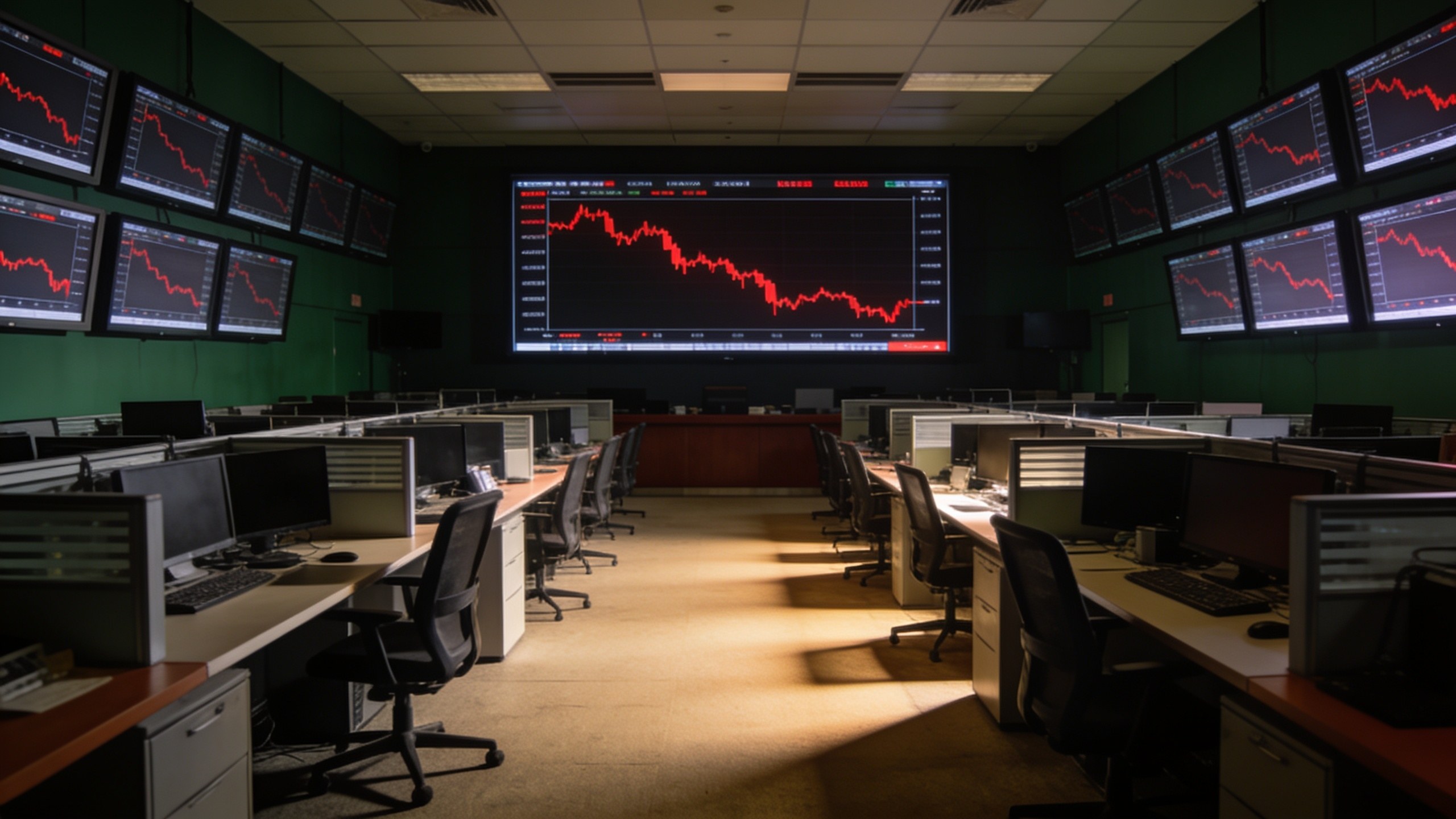
After the sale, Ethereum’s performance reflected Sun’s caution. The cryptocurrency, which had reached a high of about $4,950 in August 2025 and hovered near $4,755 in October that year, closed at approximately $2,402 on October 17, 2026—a decline of around 33%–40% from Sun’s disclosed exit level.
Despite the sizable reduction, Sun said he maintained a smaller Ethereum holding and continued to use its blockchain for large-scale decentralized finance activities, describing its liquidity as a key advantage.
Mini dictionary: Double-top pattern, a technical analysis formation signaling two failed attempts to surpass a resistance level, often considered a potential indicator of a trend reversal if confirmed by subsequent price action.
Shift to Nvidia and Nasdaq-100
Following the ETH sale, Sun directed significant capital into U.S. equities. He specifically identified Nvidia, a global leader in graphics processing units and artificial intelligence hardware, as a principal holding. Additionally, he reported sizable exposure to the Nasdaq-100 index, though he did not disclose precise allocation details.
Sun clarified that his shift toward equities did not signal an unconditionally bullish outlook. Instead, he characterized his stance on technology stocks as increasingly cautious, citing elevated valuations in the artificial intelligence sector and rising borrowing costs as concerns. His comments came as the Nasdaq Composite dropped 2.1% on October 16 and posted a weekly loss of about 4.5%, reflecting investor unease over heavy AI spending.
After reducing his Ethereum allocation, Sun maintained his Bitcoin holdings without change. He noted that he had opted to use cold-storage solutions for Bitcoin, with the goal of mitigating risks associated with potential future advances in artificial intelligence and quantum computing.
Mini dictionary: Nasdaq-100, a stock market index comprising 100 of the largest non-financial companies listed on the Nasdaq Stock Market, with a strong emphasis on technology and growth sectors.
Asset / Index Sun’s Action Performance (Oct 17, 2026)
| Ethereum (ETH) | Sold 80%–90% at $3,600–$4,000 | Closed at $2,402 |
| Bitcoin (BTC) | Held entire position | Unchanged as per Sun |
| Nvidia | Increased holdings | Not specified |
| Nasdaq-100 | Gained substantial exposure | Index down 4.5% for the week |
0
0
Disclaimer: The content of this article solely reflects the author's opinion and does not represent the platform in any capacity. This article is not intended to serve as a reference for making investment decisions.
Understand the market, then trade.
Bitget offers one-stop trading for cryptocurrencies, stocks, and gold.
Trade now!
You may also like
After the US stock market plummeted, "Wood Sister" Cathie Wood said: The more the market worries, the more optimistic I become, the bull market is not over
As the Nasdaq falls into a correction zone, Cathie Wood ("Sister Wood") stated that the prevailing market anxiety actually makes her more confident in the continuation of the bull market. She attributes this correction to pressures in the bond market and controversies over AI capital expenditures, but emphasizes that the technological revolution is still ongoing. She also revealed that ARK has used the opportunity to increase its holdings in high-conviction positions such as SpaceX, and expects the stock market to perform well through 2027.
华尔街见闻•2026/11/08 09:41

After the "Black Week" for tech stocks, Wall Street calls for "bottom fishing"
Morgan Stanley has made it clear that "the next two to three weeks are the time to increase positions." Ed Yardeni characterizes the current downturn as a "correction" rather than the bursting of a bubble. Major Wall Street institutions have an average year-end target for the S&P 500 of 7,973 points. However, most strategists believe that the direction of AI policy remains the largest variable.
华尔街见闻•2026/11/08 01:36
CoreWeave writes to Texas governor-elect seeking "data center consultation"
In this open letter, Michael Intrator stated that CoreWeave "strongly supports" Hinojosa's principled position that the growth of data centers must benefit the people of Texas. "We welcome the opportunity to work with your transition team to responsibly advance approved projects and to establish clear and lasting standards for future developments," he said.
华尔街见闻•2026/11/08 01:06


Crypto prices
More
Bitcoin
BTC
$75,818.27
-0.16%

Ethereum
ETH
$2,233.2
-0.53%

Tether USDt
USDT
$0.9985
-0.03%

BNB
BNB
$696.48
+0.44%

XRP
XRP
$1.16
-0.96%

USDC
USDC
$0.9998
+0.01%

Solana
SOL
$89.12
-0.90%

TRON
TRX
$0.3202
+0.33%

Zcash
ZEC
$1,264.63
-2.37%

Hyperliquid
HYPE
$76.98
-1.67%
How to buy BTC
Bitget lists BTC – Buy or sell BTC quickly on Bitget!
Trade now
Become a trader now?A welcome pack worth 6200 USDT for new users!
Sign up now