-
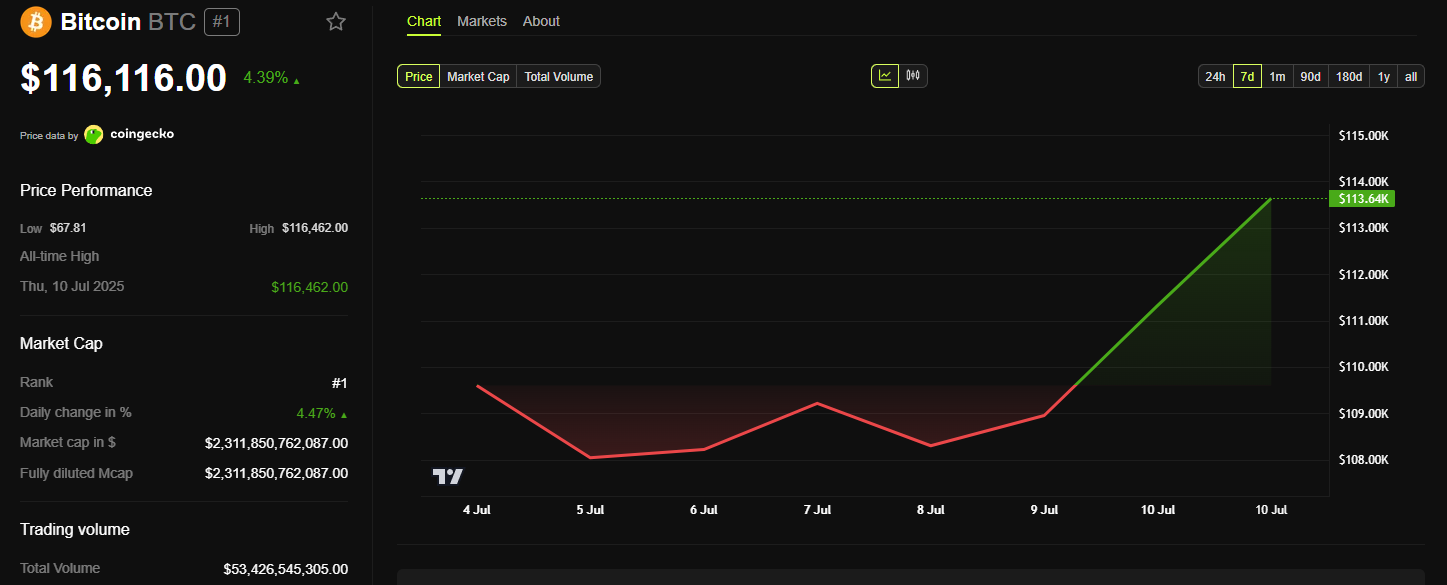
Bitcoin reached an unprecedented all-time high of $116,000, fueled by significant institutional inflows and macroeconomic shifts following the enactment of the $3.3 trillion Big Beautiful Bill.
-
The surge reflects a broader market rotation towards scarce digital assets as investors seek protection amid rising US debt and tightening Federal Reserve liquidity.
-
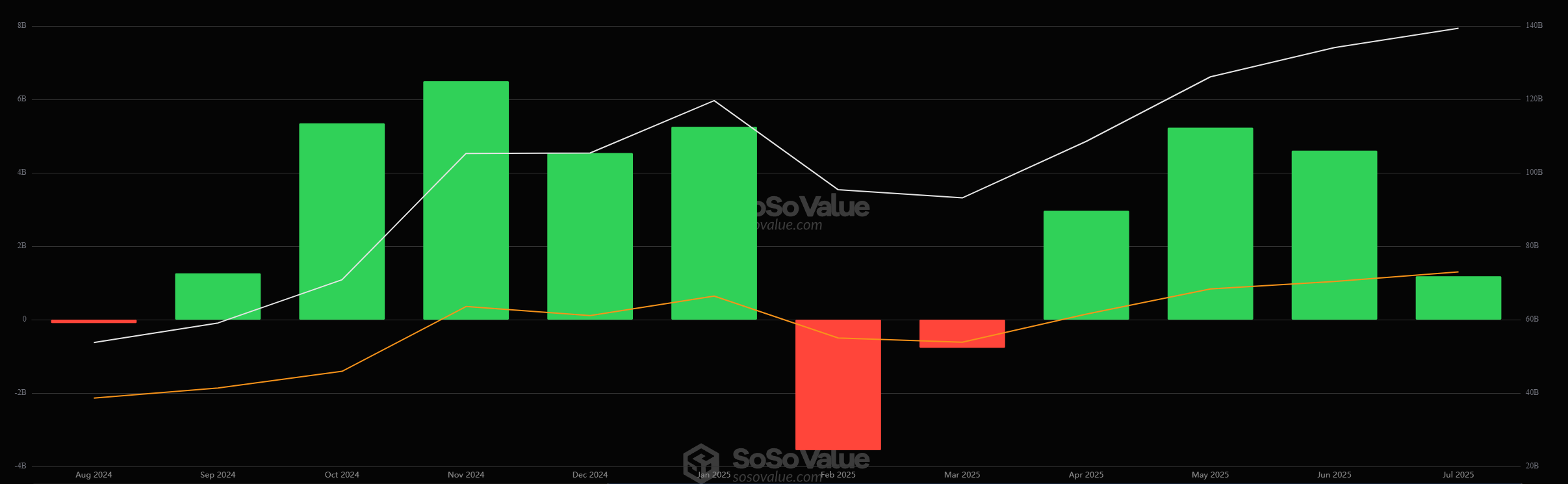
According to COINOTAG, BlackRock’s Bitcoin ETF (IBIT) has tripled its assets under management to $76 billion in just 200 trading days, underscoring growing institutional confidence.
Bitcoin hits $116K amid Big Beautiful Bill impact, institutional ETF inflows, and tightening Fed liquidity, signaling a new macro hedge in crypto markets.
Big Beautiful Bill Spurs Massive Shift to Bitcoin and Hard Assets
The recent passage of the $3.3 trillion Big Beautiful Bill on July 4 has catalyzed a significant market response, with Bitcoin rallying 6% within days to reach a historic $116,000. This legislation, which raised the US debt ceiling by $5 trillion and extended critical tax cuts, has injected $410 billion in new debt, intensifying inflation concerns among investors.
As traditional bond markets face pressure from increased supply and reduced demand, capital is rotating into scarce assets like Bitcoin, which offers a fixed supply and protection against fiat currency debasement. This dynamic is driving Bitcoin’s renewed appeal as a reliable store of value amid fiscal uncertainty.
Institutional participation is a key factor in this rally. BlackRock’s spot Bitcoin ETF (IBIT) has amassed $76 billion in assets under management, tripling its holdings in just 200 trading days—a pace unmatched by traditional asset classes such as gold ETFs, which took over 15 years to reach similar levels. This influx of institutional capital is pushing Bitcoin deeper into mainstream investment portfolios.
Federal Reserve Balance Sheet Reduction Tightens Market Liquidity
The Federal Reserve’s ongoing balance sheet reduction is another critical factor influencing investor behavior. In June, the Fed shrank its holdings by $13 billion, bringing the total to $6.66 trillion—the lowest since April 2020. Over the past three years, the Fed has decreased its assets by $2.31 trillion, representing a 26% contraction.
Simultaneously, Treasury holdings have declined by $1.56 trillion, reducing liquidity in traditional fixed-income markets. This environment has prompted investors to seek alternative assets with better inflation hedging properties, with Bitcoin emerging as a primary beneficiary.
BREAKING: The Federal Reserve’s balance sheet declined by -$13 billion in June, to $6.66 trillion, the lowest since April 2020.
Over the last 3 years, the Fed has reduced its asset holdings by -$2.31 trillion, or -26%.
During this period, the value of Treasury holdings has… pic.twitter.com/OGAVR5wjUd
— The Kobeissi Letter ( July 10, 2025 )
Ethereum and other altcoins are also benefiting from this risk-on environment, with Ethereum trading near $3,000—up 14% since the bill’s passage. Other tokens like Solana and Avalanche have seen notable gains, supported by renewed retail and institutional interest in decentralized finance and meme coins.
S&P 500’s Record High Reinforces Risk-On Market Sentiment
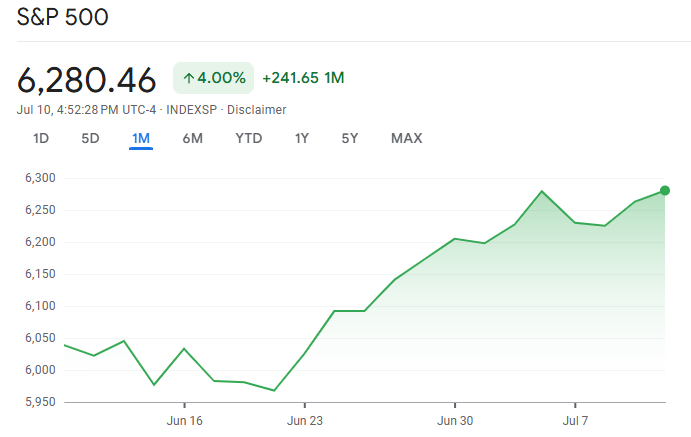
The S&P 500’s 30% rally since April 2025, culminating in a new all-time high, reflects robust investor confidence in growth-oriented and higher-risk assets. This bullish sentiment extends to cryptocurrencies, which often correlate positively with equities during risk-on phases.
Market participants interpret the Big Beautiful Bill as an indirect fiscal stimulus, further encouraging investment in both traditional and digital assets. Bitcoin’s price action mirrors this optimism, reinforcing its role as a complementary asset in diversified portfolios.
Conclusion
Bitcoin’s record-breaking surge to $116,000 is underpinned by structural economic changes rather than speculative hype. The Big Beautiful Bill’s expansion of US debt and the Federal Reserve’s liquidity tightening have shifted investor preferences toward scarce digital assets as inflation hedges.
With institutional inflows accelerating and macroeconomic conditions favoring risk-on assets, Bitcoin is solidifying its position as a key component in modern investment strategies. Moving forward, market watchers will closely monitor Federal Reserve policies and their impact on both traditional and crypto markets.