
K Wave Media brings Bitcoin treasury financing to $1 billion with latest funding deal

Quick Take K Wave Media Inc. (ticker KWM) has entered into a $500 million convertible note agreement with alternative asset manager Anson Funds. This adds to the K-Pop media holding firm’s previously announced $500 million equity purchase agreement with Bitcoin Strategic Reserve — bringing its total Bitcoin treasury capital war chest to $1 billion.
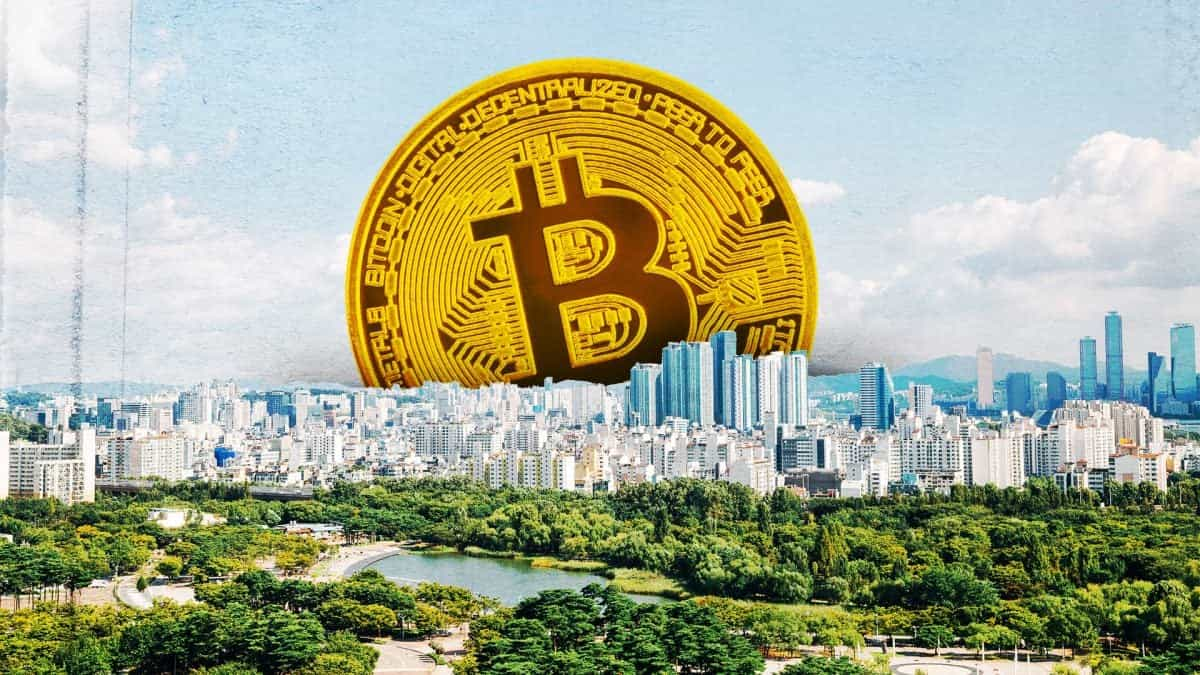
K Wave Media Inc. (ticker KWM) has announced $1 billion in financing to support its bitcoin acquisition strategy.
The total includes a newly signed $500 million convertible note agreement with Anson Funds, as well as a previously disclosed $500 million standby equity purchase agreement with Bitcoin Strategic Reserve, according to an announcement made on Thursday.
K Wave said it has already purchased 88 BTC and will issue $15 million in senior secured convertible notes and warrants in the first tranche, using at least 80% of these proceeds to acquire additional coins. The arrangement will facilitate the potential issuance of up to $500 million in convertible notes and warrants, with conversion pricing set at $4.40 per share.
The company, a Nasdaq-listed K-Pop media holding company, is among the latest publicly traded global firms to double down on a bitcoin treasury strategy. K Wave, like Michael Saylor’s Strategy that largely pioneered the bitcoin capital sector, uses a variety of financing arrangements to gain leverage on its crypto holdings.
There are at least 20 firms worldwide with at least $5 million worth of Bitcoin on their balance sheet, according to The Block’s data .
"We believe that this financing structure positions us to execute one of the most ambitious corporate Bitcoin accumulation strategies in the world," Ted Kim, CEO of K Wave Media, said in a statement. "Our objective is clear: to scale our holdings toward 10,000 Bitcoin as soon as possible while maintaining strong investor alignment and full transparency in treasury reporting."
KWM was down 16% at about $4.60 at press time, according to Yahoo Finance .
The convertible notes issued to Anson will mature on July 3, 2027, and accrue 12% annual interest, though interest will only be payable in the event of default. The accompanying warrants are immediately exercisable at approximately $3.66 per share for up to five years.
Anson Funds is a privately held alternative asset management company founded in 2003, with offices in Toronto, Canada, and Dallas, Texas, according to its website. Anson considers itself to be “an active institutional investor in the Bitcoin ecosystem.”
Disclaimer: The content of this article solely reflects the author's opinion and does not represent the platform in any capacity. This article is not intended to serve as a reference for making investment decisions.
You may also like
AI investment enters the "Trough of Disillusionment", the next 18 months will be a life-or-death test!
Goldman Sachs believes that the AI investment cycle is currently in the "trough of disillusionment," but this is not the first time. The core contradiction lies in the fact that the business models of new cloud computing providers are highly dependent on end-user returns from AI spending, while currently "there are basically zero companies that can attribute profits to AI." Social Capital founder Palihapitiya has clearly defined an 18-month key window, during which the market will decide which AI business models are sustainable and which are not.

Anthropic's Core Concern: Revenue Can Be Withdrawn at Any Time, but Computing Power Costs Are Locked in for up to 20 Years
Zheshang Securities believes that Anthropic's revenue is mainly based on usage-based billing, with remaining performance obligations covering only about 5.1 months of annualized revenue, while compute power costs are already locked in with $895.4 billion in irrevocable commitments, some extending as far as 2045. Revenues can be reduced at any time, but costs are non-exitable, creating a highly asymmetric maturity gap between the two—this is the company's real core constraint.
Triple Pressure from the Federal Reserve, Treasury, and Congress; Goldman Sachs: Liquidity Crisis May Occur in 2027
Goldman Sachs warns that the reserve ratio of bank assets has dropped to around 11%, only slightly above the crisis trough of 2019. In the second half of 2027, a deadlock in debt ceiling negotiations will force the Treasury to rebuild the TGA, triggering a "perfect storm" of a sharp drop in reserves and a surge in T-bill supply; combined with stalled money market fund buying, this will create a huge liquidity black hole. The Federal Reserve could be forced into the awkward position of lowering interest rates and launching large-scale bond purchases to rescue the market.
Crypto prices
More


