
FOMC Minutes Signal a Hawkish Stance: Could December Bring a 50-Basis-Point Hike? An Outlook for the US Dollar, Gold, and Stock Index
Does the Federal Reserve’s pause in rate hikes mean the tightening cycle is nearing its end? According to the supplied reporting on the October Federal Open Market Committee (FOMC) meeting minutes, the answer may be quite the opposite.
The report indicates that “almost all” participants considered further rate increases over the coming months potentially appropriate if inflation and the labor market evolved in line with their baseline forecasts. Two participants also suggested that, if subsequent inflation data proved unfavorable, the next meeting might warrant a rate hike of more than 25 basis points.
For CFD traders, the key issue is not simply whether the Fed raises rates, but the gap between the policy outcome and what markets had already priced in. That gap could become an important catalyst for volatility in the US dollar, gold, and US stock indices.
A Pause Is Not a Pivot: Bringing Inflation Down Remains the Priority
According to the supplied material, the FOMC kept the federal funds rate target range unchanged at 3.75%–4.00% at its October 27–28 meeting. Governor Lisa Cook and Cleveland Fed President Beth Hammack favored a 25-basis-point increase.
Holding rates steady does not mean officials have concluded that current policy is sufficient to bring inflation back to 2%. The case for a pause centered more on gathering additional information to assess the effects of existing policy and changes in the economy.
This highlights an important distinction: broad agreement on the need for further tightening does not imply consensus on the timing or size of a rate hike at the next meeting.
In addition, “participants” in the meeting minutes include regional Federal Reserve Bank presidents who do not hold voting rights that year. Their views should not be interpreted as a direct indication of the next policy vote.
A 50-Basis-Point Hike in December? Still a Conditional Risk Scenario
One of the report’s most closely watched points is that two officials suggested the next meeting might require a rate increase of more than 25 basis points. This leaves room to discuss a 50-basis-point move, but it does not mean the FOMC has decided on one.
More importantly, that view comes with a clear condition: subsequent inflation data would need to take an unfavorable turn.
Traders can focus on the following indicators:
-
Core CPI and core PCE: Whether price pressures persist or spread across more categories.
-
Employment and wages: Whether labor demand remains strong and wage growth supports continued consumer spending.
-
Inflation expectations: Whether businesses and households begin to expect faster price increases over the longer term.
-
Interest rate futures pricing: Whether markets have already priced in the risk of a larger rate hike.
Even if the Fed ultimately raises rates by 50 basis points, a fresh one-way market move is not guaranteed. If the decision has already been fully priced in, profit-taking could follow instead.
The AI Investment Boom: A Growth Driver—and a Source of Inflation and Financing Risks
The supplied report also notes that officials are monitoring the effects of AI-related demand on inflation and financial stability.
In the short term, increased data center construction, chip purchases, and electricity demand could push up certain equipment, energy, and construction costs. Over the medium to long term, however, meaningful productivity gains from AI could lower unit costs and ease some price pressures.
AI’s impact on inflation is therefore not one-directional. It depends on how quickly demand expands relative to productivity improvements.
Financing structures present another risk. If AI investment relies heavily on debt, off-balance-sheet commitments, or complex transaction arrangements, returns that fall short of expectations could intensify refinancing and cash flow pressures in a high-interest-rate environment. For traders in technology stock index CFDs, this means looking beyond revenue growth to corporate capital expenditure, debt, and free cash flow.
CFD Market Analysis: How Might the US Dollar, Gold, and US Equities React?
US Dollar: Interest Rate Support Alongside Economic Risks
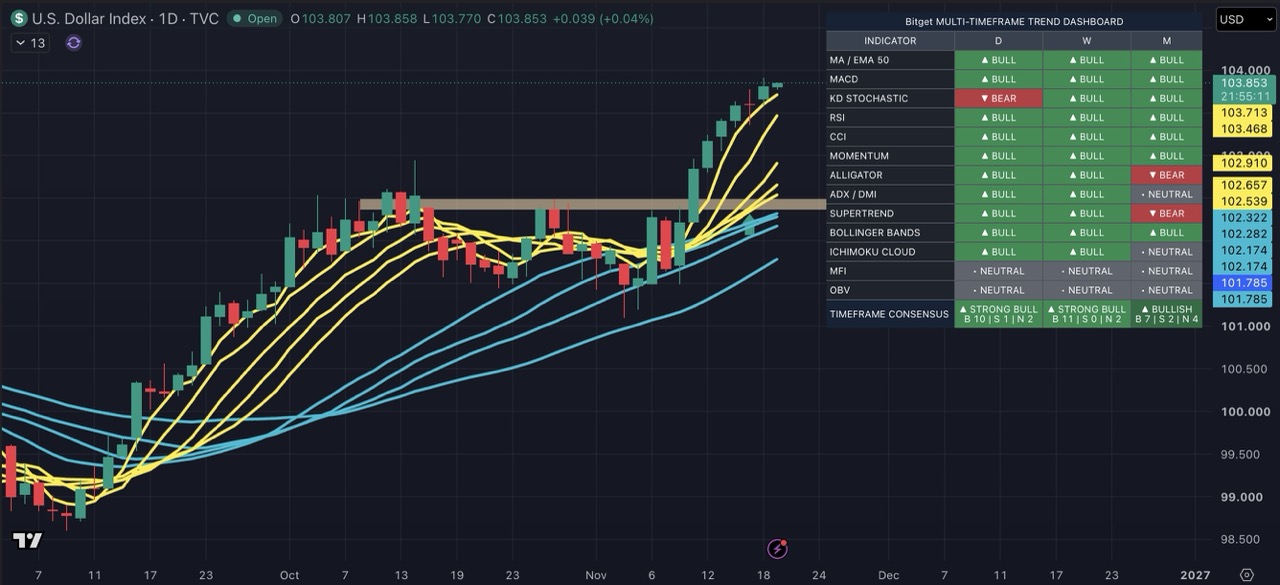
The US dollar generally finds support when US interest rate expectations rise relative to those of other major economies. However, exchange rates reflect relative policy paths, not the decisions of a single central bank.
If other central banks also turn more hawkish, or markets begin to worry about excessive US tightening, the dollar’s upside could be limited.
Gold: Real Interest Rates Matter, but Safe-Haven Demand May Offset Pressure
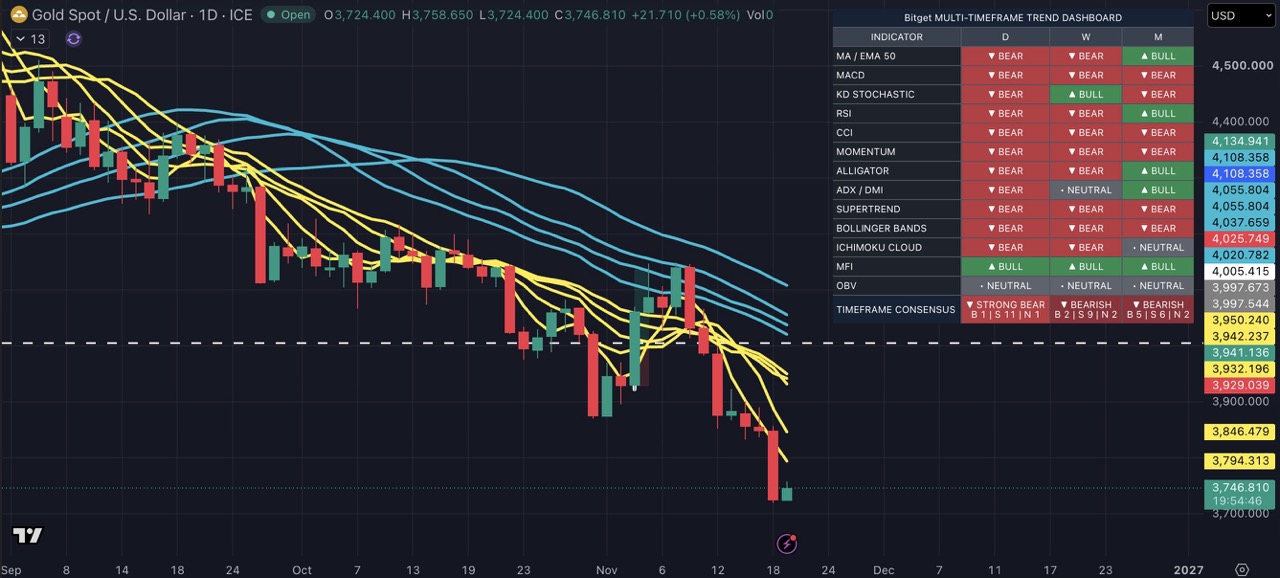
Higher real interest rates generally increase the opportunity cost of holding non-yielding gold. A stronger dollar also tends to weigh on dollar-denominated gold prices.
However, if tighter policy also triggers financial market stress, safe-haven demand could offset some of those headwinds. “Rate hikes always push gold lower” is therefore not a reliable trading rule.
US Stock Indices: Valuations and Earnings Face a Dual Test
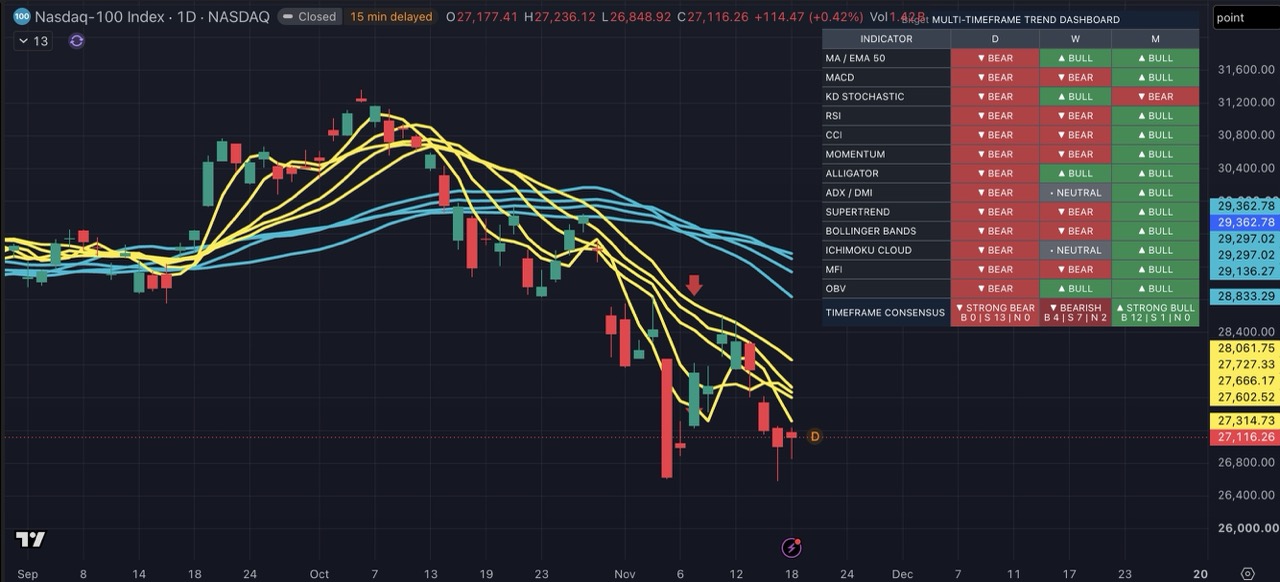
Higher interest rates can weigh on equity valuations, particularly for growth stocks whose value depends heavily on earnings expected further into the future. If corporate financing costs rise at the same time, earnings expectations could also come under pressure.
Yet if the economy and corporate earnings remain resilient, markets may still absorb higher rates. Assessing technology stocks therefore requires considering interest rates, returns on AI investment, and corporate earnings guidance—not just the Fed’s wording.
Trading Priorities: Manage Both Expectation Gaps and Leverage
Ahead of FOMC decisions and major inflation releases, CFD traders should map out different scenarios rather than treat a single outcome as inevitable:
| Policy and Data Scenario |
Potential Market Reaction |
| Inflation exceeds expectations, prompting markets to price in more tightening |
The dollar could gain support, while gold and highly valued equities could face pressure |
| Inflation cools and tightening expectations ease |
The dollar could weaken, while gold and stock indices could find support |
| Inflation remains elevated, but the economy weakens significantly |
Asset performance could diverge, with greater risk of sharp moves in both directions |
Conclusion: What Markets Expect Matters More Than the Size of the Hike Alone
The report’s central message is that a pause in rate hikes does not necessarily signal a policy pivot, while a larger increase remains dependent on incoming data. For CFD traders, the key is to track whether new gaps emerge between inflation trends, officials’ responses, and market pricing.
Looking to participate in global market moves? Visit Bitget to explore CFD products, trading eligibility, and fees. Once you understand how leverage and margin work, build a trading plan aligned with your risk tolerance.
All trading education provided by Bitget is for educational purposes only and should not be considered financial advice. The strategies and examples shared are for reference only and may not reflect actual market conditions. CFD trading involves significant risk, including the potential loss of capital. Past performance does not guarantee future results. Please conduct thorough research and ensure that you understand the risks involved. Bitget is not responsible for any trading decisions made by users.


- A Pause Is Not a Pivot: Bringing Inflation Down Remains the Priority
- A 50-Basis-Point Hike in December? Still a Conditional Risk Scenario
- The AI Investment Boom: A Growth Driver—and a Source of Inflation and Financing Risks
- CFD Market Analysis: How Might the US Dollar, Gold, and US Equities React?
- Trading Priorities: Manage Both Expectation Gaps and Leverage
- Conclusion: What Markets Expect Matters More Than the Size of the Hike Alone
 Part 2 | Call vs. Put Options2026-11-18 | 5m
 Part 1 | What Is Options Trading?2026-11-18 | 5m