
On the eve of the earnings report, bearish sentiment surrounds Nvidia (NVDA.US): "Big Short" Burry holds on to put options, while Musk warns that key protocols may be lost with Jensen Huang

According to reports, "The Big Short" Michael Burry continues to hold his put options on Nvidia ahead of its earnings release on Tuesday Eastern Time, although he acknowledges that retail buying still has a chance to push the stock price higher. Meanwhile, Elon Musk has issued a warning, stating that some key supply agreements for Nvidia may be lost if Jensen Huang leaves.
According to Zhitong Finance APP, it has been revealed that the "Big Short" and well-known investor Michael Burry continued to hold his put options on Nvidia (NVDA.US) prior to the company's earnings report being released on Tuesday Eastern Time, even though he admitted that retail buying could still push the stock price higher. Meanwhile, Elon Musk issued a warning, stating that some of Nvidia's key supply agreements could be lost if Jensen Huang leaves the company.
Nvidia is scheduled to release its earnings report on Tuesday. Just five days ago, Jensen Huang resigned as president and CEO and stepped down from the Board of Directors. The board is currently searching for a permanent successor, and current CFO Colette Kress will serve as interim CEO and host her first earnings call in this new role.
Burry’s Strategy for Nvidia’s Earnings
In a chat with subscribers of the Cassandra Unchained community, Burry said: "I am still holding Nvidia puts that expire in February 2027." When asked whether retail investors might continue pushing Nvidia's share price higher in the short term, he responded: "The possibility is very high."
These put options give him several months to wait for the share price to decline. Whether he adds to his position depends on the cost of the options. When asked if he would increase his holdings, Burry said: "It depends if the price can get cheap enough. I believe there will be a better time to buy more puts later than now."
For earnings night, Burry originally considered making a straddle trade to bet on a significant one-way move in the share price (regardless of whether it went up or down). He noted: "I was going to set up a straddle before earnings, but the implied volatility might already be too high." A straddle strategy involves simultaneously buying both a call and a put option at the same strike price and expiration date.
Burry’s Bearish Bets Are Not Limited to Nvidia
When a reader asked whether he still expects the market to see a major pullback, Burry revealed two major positions: "I have a large number of put options on the Nasdaq 100 Index and the semiconductor ETF VanEck (SMH.US)."
As early as September, Burry replaced his direct short positions in Nvidia, Palantir (PLTR.US), and other stocks with put options, many of which expire as late as 2027. By October, his bearish exposure was mainly concentrated in Nasdaq 100 puts expiring in April 2027 and SMH puts expiring in June 2027; Nvidia is the largest holding in this semiconductor ETF. Last month, he said: "I think we are 0 to 9 months away from an important market top."
As prices have shifted, he has taken profits and re-entered these positions. Earlier this month, after SMH fell about 11%, Burry sold a quarter of his put options on this ETF; a week later, he bought back part of the position and doubled his Nasdaq 100 put exposure as the index rebounded from around 27,000 points.
Burry has long questioned semiconductor sector valuations, the funding logic behind the demand for AI, and how much of the industry’s reported profits ultimately reach shareholders. In a recent post, he raised a more specific concern: Nvidia has changed its revenue recognition from billing location to customer headquarters location, making it harder for outsiders to track where its chips ultimately end up.
He also publicly confirmed his position: "I will continue to hold puts on this stock, and if I make any trading moves in the future, I will of course update accordingly."
Can Kress Maintain the Supply Chain Security of Jensen Huang’s Era?
Musk posted on X that some of Nvidia’s most important supply chain contracts relied on Jensen Huang’s personal credit to secure. “Without Jensen Huang, at least part of the core agreements will be lost.”
Moor Insights & Strategy chief analyst Patrick Moorhead said that several CEOs of Nvidia’s major customers told him that Jensen Huang could personally secure supply commitments worth billions of dollars on the spot, and suppliers equally trusted his decision-making. But he disagrees with Musk in one regard: the risk to those largest contracts is exaggerated, and these deals have already been formally inked.
Nvidia revealed that as of July 26, the scale of its supply chain and capacity commitments reached $279 billion, up sharply from $119 billion in the previous quarter, mainly to secure memory chips and wafer manufacturing capacity, with $267 billion of contracts scheduled until fiscal 2029. Nvidia also cautioned that some agreements can be modified or cancelled before formal purchase orders are made.
Moorhead stated that Nvidia’s supply chain and product planning are basically set for at least the next 18 months, and Kress has already engaged with suppliers to reassure all parties. His concerns focus on the next negotiation cycle: if Nvidia slows down its decision-making and cannot lock in capacity on the spot, competitors will rush to secure the capacity that Huang might otherwise have captured. “As long as Nvidia doesn’t secure it, competitors will bid for it.”
Dylan Patel: Without Jensen Huang, Nvidia’s Strength Will Be Greatly Reduced
SemiAnalysis founder Dylan Patel said bluntly in a podcast: "Nvidia without Jensen Huang is much weaker." In his opinion, with Huang’s departure, the U.S. loses a heavyweight industry voice in the debate over computing power export restrictions.
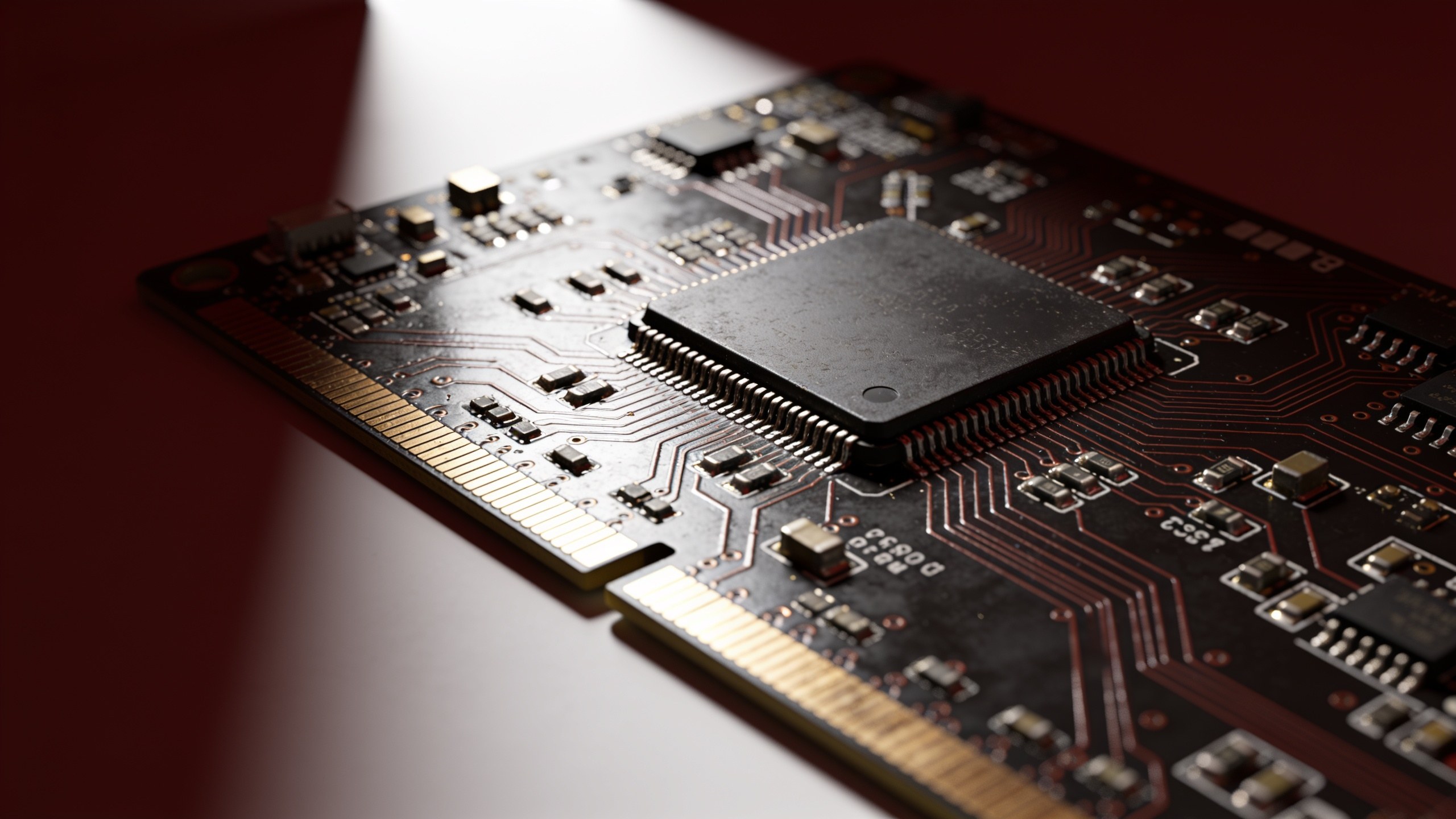
Patel pointed out a two-way dependency: foreign companies need American chips, while U.S. server manufacturers also cannot do without overseas components. He mentioned that Nvidia’s largest PCB (Printed Circuit Board) supplier is a foreign company. If the U.S. were to cut off advanced chip supplies and even ban overseas cloud computing power leasing, retaliatory measures could follow, restricting exports of components needed by Nvidia, Google (GOOGL.US), and Amazon (AMZN.US) servers.
"Without these components, it’s impossible to manufacture these computing hardware."
For Tuesday’s earnings report, Nvidia provided guidance: excluding revenue from China’s data center computing power, the revenue range is $108 billion (±2%). Analysts will also take the opportunity to ask Kress: who will take over the large orders that Huang used to personally secure in the future?
This year, among the "Magnificent Seven" in the U.S. stock market, Nvidia and Tesla (TSLA.US) have performed the worst, with both stocks falling about 13% year-to-date.
Disclaimer: The content of this article solely reflects the author's opinion and does not represent the platform in any capacity. This article is not intended to serve as a reference for making investment decisions.
You may also like
XRP recovers 7%, ETF outflows hit $19.13 million as $1 level tested

As AI tech stocks face heavy losses, Walsh will join Silicon Valley leaders tonight to discuss the economic impact of AI: Can a trillion-dollar investment deliver productivity gains?
Coinciding with the sharp decline in AI tech stocks, the market is re-examining the return prospects of massive capital expenditures. Whether AI investment can ultimately translate into sustained productivity gains has become the focus.
Anthropic's Potential Supply Reaches 1.141 Billion Shares on First Day of Listing
Anthropic plans to issue 825 million shares in its IPO, combined with the unlocking of 316 million existing shares, resulting in a potential total supply of 1.141 billion shares on the first day. In addition, future financial report dates will see the release of more than 4.7 billion shares, presenting significant supply pressure.
Nvidia (NVDA.US) Compression Shock to the Blockchain: Is AI Hardware Peaking? Structural Opportunities in Crypto Emerge
Wu Blockchain discusses the controversy surrounding Jensen Huang and Nvidia's risk from strategic contraction. Didier warns that the AI hardware cycle may have peaked, with CoreWeave facing a funding shortfall of billions; Minta highlights opportunities in software and alternative chains. BTC faces short-term pressure, but its long-term logic remains unchanged, and compliant perpetual contracts may become a new growth point.

Crypto prices
More


