- Ripple bridges global payments with fixed supply and institutional finance focus.
- Solana delivers fast, low-cost transactions and supports growing tokenization adoption.
- Aave leads DeFi lending with staking rewards, governance, and upcoming V4 improvements.
The crypto market rarely moves in a straight line. Price swings often test investor patience and confidence. During uncertain periods, many traders look for projects with strong utility and long-term relevance. Three altcoins attracting attention right now are XRP, Solana, and Aave. Each one serves a different purpose within the digital asset space. Those differences help explain why many investors continue watching these networks despite ongoing market volatility.
Ripple (XRP)
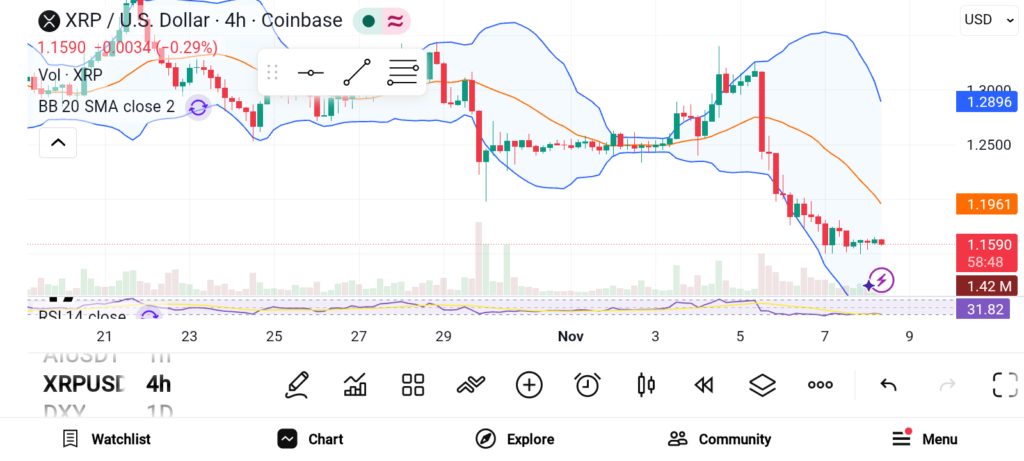 Source: Trading View
XRP powers the XRP Ledger, a blockchain launched in 2012. Ripple Labs designed the network to improve international payments for banks and financial institutions. Rather than relying on slow and costly currency conversions, financial firms can use XRP as a bridge asset between different currencies. Another important feature involves supply. XRP has a fixed maximum supply of 100 billion coins. No new coins can enter circulation through mining. More than half of the supply entered escrow when the network launched. Ripple releases up to one billion coins each month for operational needs, while unused amounts return to escrow. That structure gives market participants a clear view of long-term supply management.
Solana (SOL)
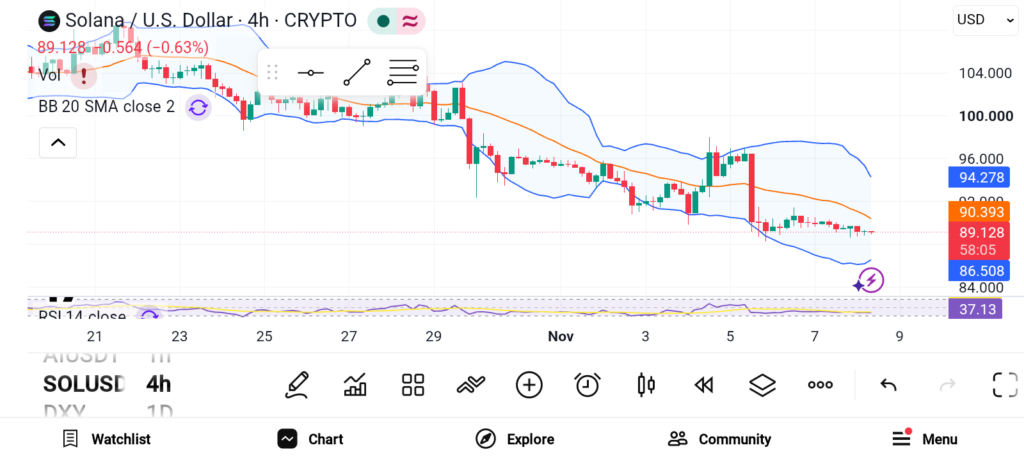 Source: Trading View
Solana has become one of the strongest competitors to Ethereum. The network launched in 2020 under the leadership of Anatoly Yakovenko and a team of engineers. SOL serves as the native cryptocurrency and covers transaction fees across the blockchain. Many users choose Solana because of speed and low costs. A unique feature called Proof of History helps organize transaction records efficiently. That design supports high throughput and smooth network performance. Solana also holds a growing position in asset tokenization. Interest in tokenized assets continues to rise as traditional finance explores blockchain technology. Strong user activity and broad ecosystem growth have helped Solana build a reputation as one of the leading smart contract platforms.
Aave (AAVE)
 Source: Trading View
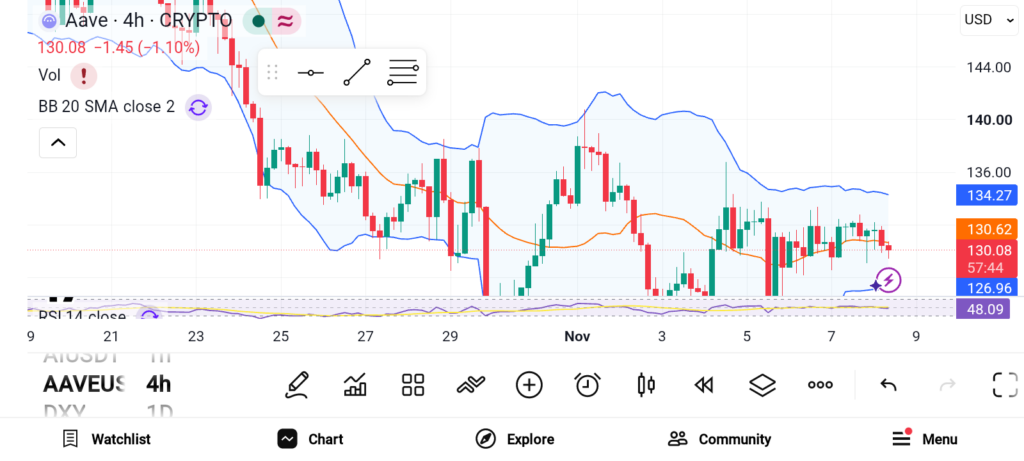
Aave stands as the largest decentralized lending protocol in decentralized finance. The platform holds more than $15 billion in total value locked across numerous blockchain networks. Users can lend crypto assets to earn yield or borrow funds by providing collateral. AAVE serves two important roles within the ecosystem. First, holders can participate in governance decisions. Second, token holders can stake AAVE in the Safety Module, which helps protect the protocol during extreme market conditions while providing staking rewards. Aave also supports GHO, a decentralized stablecoin backed by lending activity within the platform. Institutional interest has grown as well. Grayscale added AAVE to a DeFi-focused fund with a sizable allocation. Meanwhile, the planned V4 upgrade aims to improve liquidity management and strengthen risk controls.
XRP, SOL, and AAVE each address different needs within crypto. XRP focuses on global payments, Solana targets scalable blockchain activity, and Aave supports decentralized lending. Strong utility helps all three projects stand out during uncertain market conditions. For investors seeking altcoins with established ecosystems, these names remain worth watching.