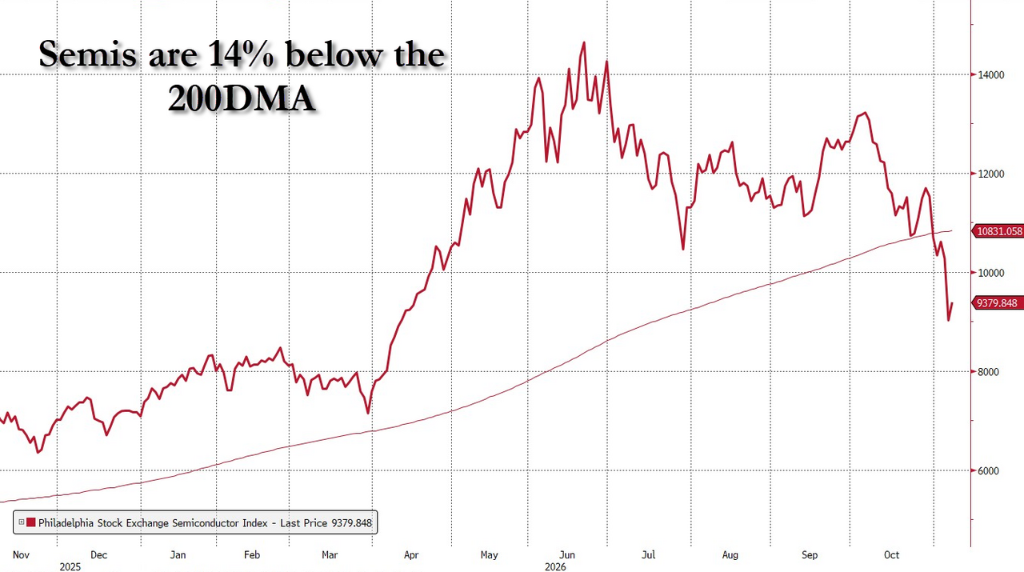
The chip stocks that suffered the most on Thursday became the main force in Friday’s rebound. AMD rose over 11%, Intel nearly 8%, Qualcomm and Micron both climbed more than 5%, and the semiconductor ETF closed up 3.62%.
If you didn’t dare to buy on Thursday, looking at these gains, you might wonder if you missed the bottom.
Don’t jump to conclusions yet, there’s a detail worth noting:Even before the non-farm payroll data was released, chip stocks had already started to rebound. So, is today’s action about fresh funds buying in, or is it just that after Thursday’s concentrated selling, there was temporarily less selling pressure?
Chip Stocks Lead the Rebound
The market was already worried on Thursday that after the election there could be tighter approvals for data centers and enhanced AI regulation. On top of that, tech remains the most crowded position, making any collective exit magnify the downside move.
According to the trading desks monitored by U.S. Stock Investment Network and its StockWe, Thursday saw retail investors with an estimated net sell of about $3.3 billion, and last-minute leveraged ETF rebalancing involved about $60 billion in stock exposure, with an estimated 90% concentrated in tech.
By Friday pre-market, Nvidia and memory stocks had already begun to recover.
My takeaway is that after the rush to reduce positions in the late session Thursday, the same amount of buying can more easily push up share prices. The CTA trend strategies turning bearish also leave room for a rebound later on.
As for how much of Friday’s buying was short covering versus fresh money entering, you can’t tell just from the price action.
Strong Non-Farm Payrolls Push Up Rate Hike Expectations
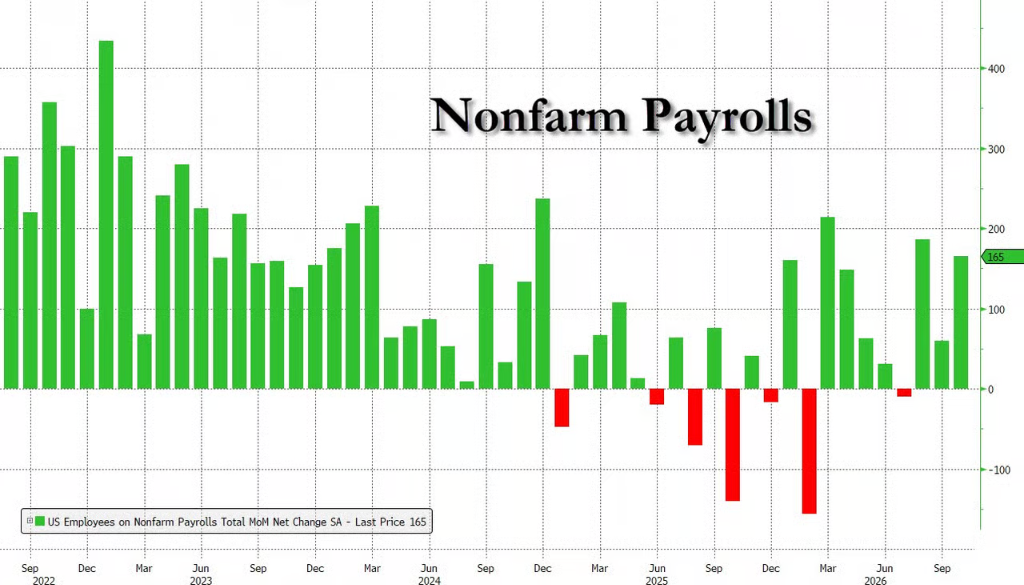
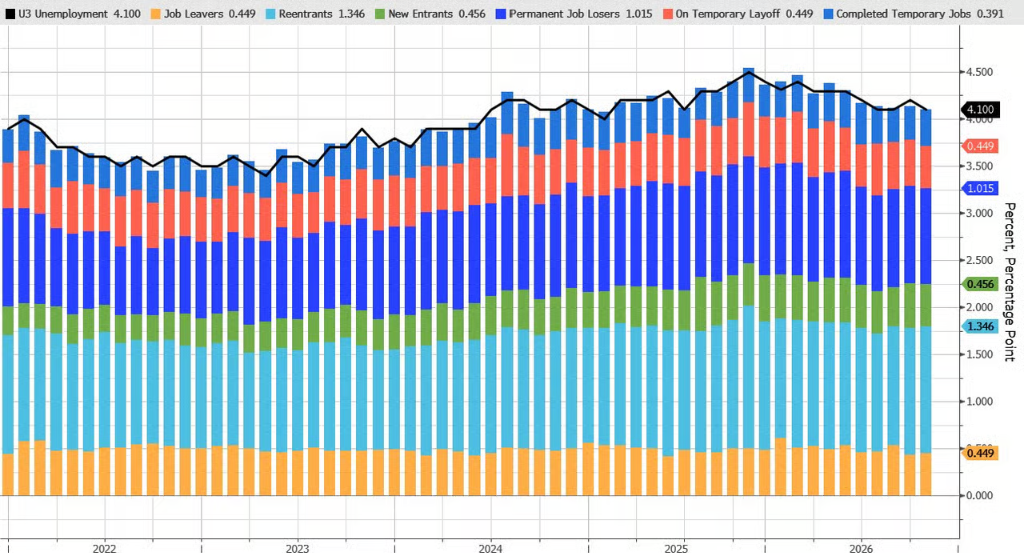
At 8:30 a.m. EST (UTC+8), October non-farm payrolls rose by 165,000, far above the 65,000 forecast in Reuters’ poll. Unemployment fell to 4.1%, and average hourly earnings rose 0.4% month-on-month.
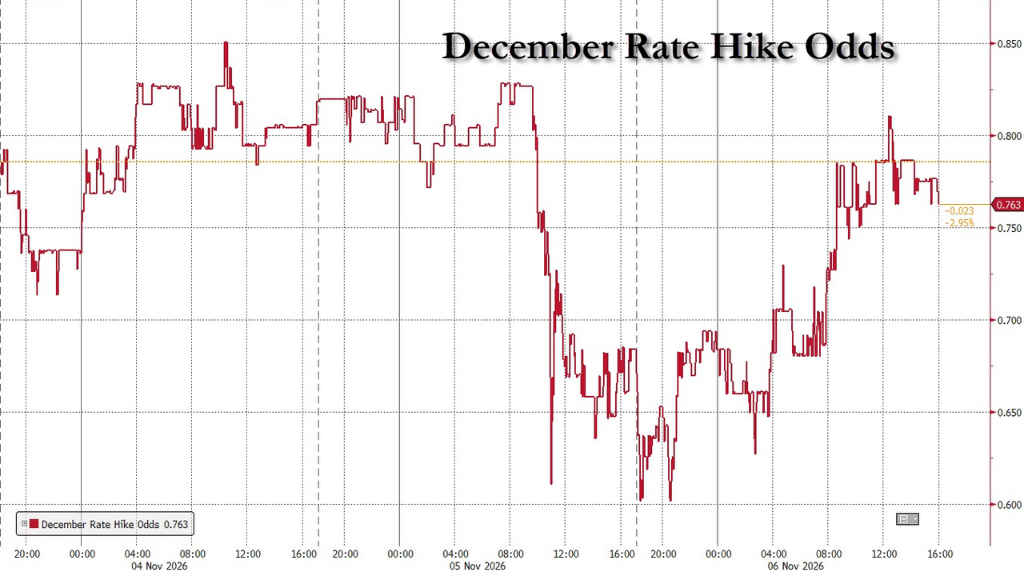
 After the data release, market pricing for a December rate hike rose from about 70% to 78%, and 10-year U.S. Treasury yields climbed from 4.84% late Thursday to 4.86%.
Stronger-than-expected employment suggests the economy still has short-term resilience.
But for those companies that have to borrow today to buy computing power and may only see returns years from now, higher financing costs mean projects have to be even more profitable to make sense. Non-farm payrolls didn’t break the chip stock rally, but didn’t give buyers a reason to broaden the rally across the market either.
Anthropic Revenue Strengthens; AI Financing Remains Tight
There’s a notable piece of news on AI demand.
The Wall Street Journal reports Anthropic’s annualized revenue run rate exceeded $8 billion as of the end of October, while some investors remain skeptical whether its IPO can justify a $150 billion valuation.
Taken together, these two things actually make sense.
Customers can keep increasing usage, while investors may find the IPO valuation expensive. The $8 billion figure is calculated by annualizing recent revenue momentum.
Judging what this business is worth depends on whether customers will keep paying—and after paying for compute, how much the company actually keeps.
At the same time, CoreWeave’s five-year CDS spread at one point broke through 1,000 basis points. Investors in U.S. equities are willing to buy battered chip stocks, but the credit market still demands high risk premiums.
This is also why I’m cautious about Friday’s rebound. AI demand provides support, but those funding the next round of expansion remain cautious.
TSMC Plans to Make 3D DRAM: Whose Orders Will It Compete For?
According to The Information, citing sources, TSMC has started researching 3D DRAM production plans at Nvidia’s request, with Reuters following up on the story.
However, neither company has responded yet, and details about the process, which generation GPU it's for, mass production timelines, and procurement commitments have not been disclosed. This can’t explain the rebound that started pre-market, but it does give TSMC an independent catalyst apart from the broader market.
Let's clarify one thing first.
HBM is already stacked memory. You can think of it as several layers of chips handling data storage, with a logic base underneath for connection.
SK Hynix announced as early as 2024 that the logic base for HBM4 would use TSMC’s advanced logic process. TSMC already participates in the base; the real question this time is whether they’ll take a further step and start making the data storage layers themselves.
Why Does Nvidia Want TSMC Involved?
Imagine a GPU is ready to process the next step, but the data haven’t arrived yet—the computing unit just has to wait.
If Nvidia can collaborate with TSMC during GPU design to decide where the memory should be placed, how it connects, and the power cost per data transfer, there’s a real opportunity to run the same GPU more efficiently. There’s also a supply-side calculation.
If this design opens up a multi-vendor supply, Nvidia gains more bargaining power for allocating orders and negotiating prices.
But if ultimately only TSMC can make it, Nvidia gains a new technology path, but supply concentration may be even higher.
What Memory Giants Care About: How Much HBM Is in Each GPU
If TSMC ends up just making the logic base and advanced packaging, it’s just a forward step in the current division of labor. TSMC gains more custom business, while Samsung, SK Hynix, and Micron continue making DRAM dies and delivering stacked memory.
Even if TSMC develops dedicated 3D DRAM, it depends on what Nvidia does with it.
If the memory is placed close to the GPU, handling only the most time-sensitive tasks, while HBM continues supplying large volumes and high bandwidth, the two can coexist just fine.
The real impact on memory manufacturers’ orders comes if the new solution takes over part of HBM’s job, reducing the HBM capacity in each GPU. To get there, it still needs customer validation, good yields, and cost controls, and finally be delivered at scale.
So, I’m watching Friday from two perspectives. In trading, chip stocks have staged their first post-deleveraging rebound.
If indexes keep rising next week, bearish CTAs might cover shorts. If volatility doesn’t fall, an estimated $50 billion of potential deleveraging exposure by trading desk models could still get unwound gradually. I'll watch whether chip stocks can hold gains over several sessions and whether buying spreads to more names.
From an industry perspective, TSMC’s news is worth tracking into next-gen GPU designs. Once product specs are released, what I'm most curious about is whether Nvidia’s GPUs get an extra layer of memory—or if they're planning to buy less HBM.
For TSMC, either approach could mean a new business opportunity. For Micron, SK Hynix, and Samsung, the outcome makes a big difference.
Join the U.S. Stock Investment Network VIP
Get first-hand Wall Street news and exclusive quant research tools
U.S. Stock Investment Network is a fintech company specializing in U.S. equities research, founded in 2008 in Silicon Valley, USA. It was founded by former NYSE analyst Ken in collaboration with several Morgan Stanley analysts and Google/Meta engineers. Using AI and big data combined with over a decade of U.S. market experience and industry quant models, they’ve built a stock market database that processes tens of millions of daily stock data: catching large options trades in real-time, tracking institutional flows, changes in positions, and breaking Trump news.