
Breakthrough in "Personalized Cancer Vaccines"! "Tumor Sequencing" Becomes a Hot Topic

Breakthrough progress in personalized mRNA cancer vaccines by Moderna and Merck is sparking an investment boom in the healthcare sector, pushing diagnostic companies that offer tumor sequencing services to the center of a lucrative market.
After Moderna and Merck released positive results from their late-stage melanoma trial, the combined market value of the two pharmaceutical companies surged by more than $50 billion. This breakthrough directly ignited the capital market performance of their diagnostic partners, with Tempus AI’s share price soaring 24% in the weeks following the data release.
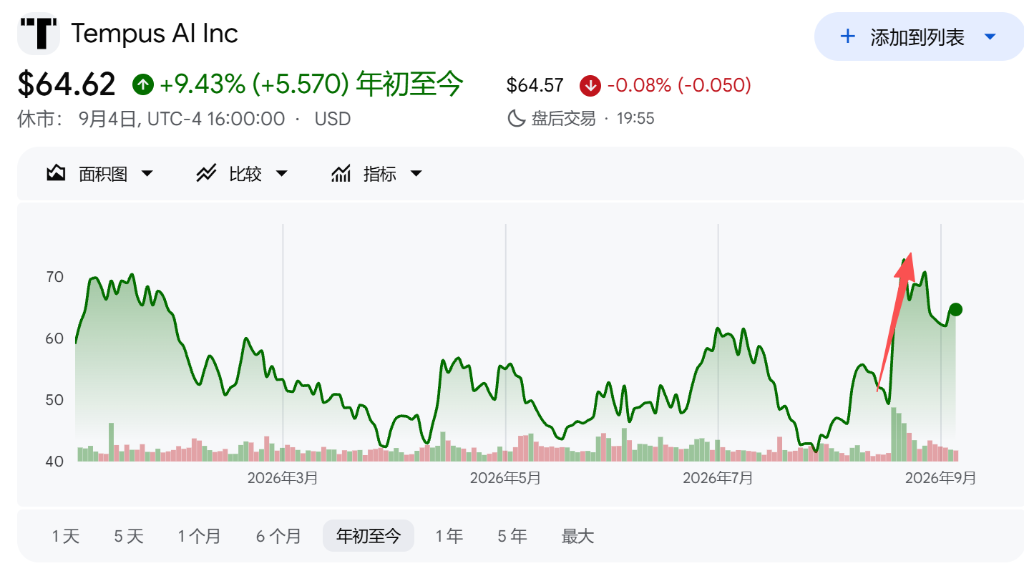
This chain reaction has triggered unusual activity in the M&A market. As Moderna’s tumor sequencing partner in the clinical project, Personalis’ share price once soared to $18, surpassing the previously offered Tempus AI acquisition price of $16.25 per share. This premium indicates that investors are betting on higher acquisition offers or a potential bidding war.
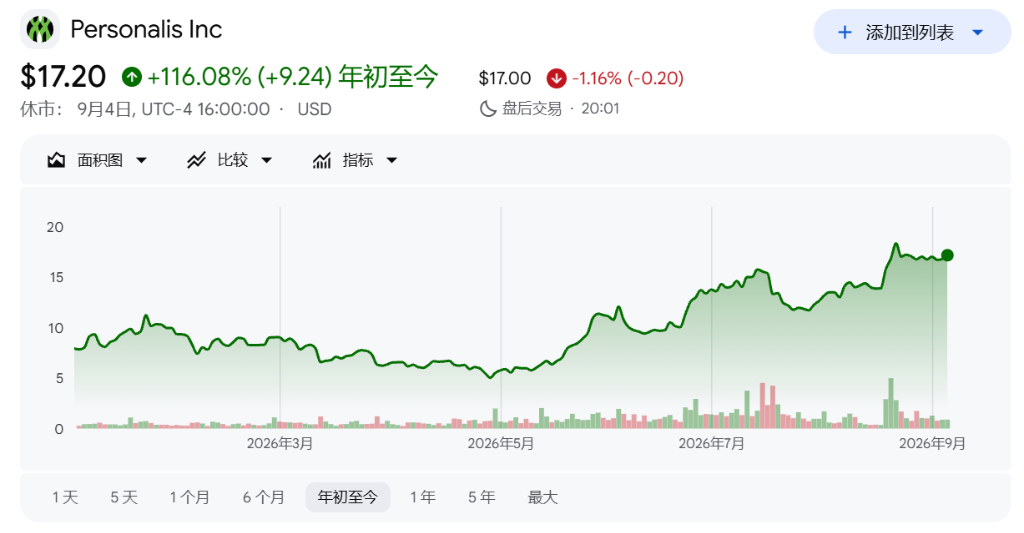
As personalized cancer therapies show potential to become blockbuster drugs, diagnostic companies providing gene mapping are poised to occupy a key “tollbooth” position in every treatment. This is rapidly making related stocks the focus of Wall Street capital pursuits.
Vaccine Breakthrough Drives Sequencing Demand
The core of personalized cancer therapy is providing each patient with a customized gene map. Medical institutions must sequence tumors to identify the mutated genes the vaccine should target. According to The Wall Street Journal, Tempus AI has confirmed that if Moderna and Merck’s vaccine is approved, it will be chosen as the sequencing partner.
The commercial value of this potential market is being reassessed by Wall Street. Piper Sandler estimates that if the vaccine is approved for melanoma, it would generate at least $50 million in sequencing revenue annually. BTIG analyst Mark Massaro further predicts that if this therapy expands to lung, bladder, and kidney cancers, related sequencing revenue could exceed $600 million—and this massive market opportunity is not yet fully reflected in the current share price.
Under-the-Radar M&A Battle Intensifies
Amid industry tailwinds, Tempus AI’s proposed acquisition of Personalis is facing market uncertainty. On July 20 this year, Tempus AI agreed to acquire Personalis for $16.25 per share, valuing the deal at $1.5 billion after deducting Tempus AI’s existing shares. However, as Personalis’ stock price surpassed the acquisition price, expectations for changes to the deal are mounting in the market.
A transaction proxy statement released by Tempus AI this week has confirmed investor speculation. The document reveals that before accepting the deal with Tempus AI, Personalis had held talks with several potential buyers and had even received an oral offer of $17 per share. Wall Street analysts speculate that competitors such as Natera or Guardant Health could be potential bidders.
Currently, Tempus AI holds 12% of Personalis shares and, with Merck’s agreement to vote its 13% stake in favor of the deal, about a quarter of the voting power is locked in. However, other shareholders could still push for a higher bid. On this, a Tempus AI spokesperson said: “As disclosed regarding this transaction by Personalis, extensive due diligence was conducted with several independent parties, who either declined to participate or proposed offers deemed less attractive by the Personalis board.”
Aiming for the Billion-Dollar MRD Testing Market
For Tempus AI founder Eric Lefkofsky, the acquisition of Personalis is not only about capturing upfront sequencing revenue, but also about breaking through the company’s valuation bottleneck. Currently, Tempus AI’s price-to-sales ratio is about 6 times, while its faster-growing peers trade at around 13 times. Lefkofsky’s background as the founder of Groupon also weighs on the company—he cashed out over $300 million during Groupon’s IPO, but the company’s tens-of-billions valuation shrank sharply shortly after listing.
Personalis provides Tempus AI with a bridge to a higher valuation, with its true strategic target being the minimal residual disease (MRD) testing market. This is a blood test technique used to find tiny traces of circulating tumor DNA after treatment, potentially detecting cancer recurrence before it’s seen through imaging scans. Investors view MRD as a massive multi-billion dollar opportunity, currently dominated by the $45 billion market cap leader Natera.
Douglas Eby, CEO of life sciences value investor Bioaxia—which holds shares in both Tempus AI and Personalis—explains that if the mRNA business takes off, Tempus AI will gain a powerful entry point into the MRD field. The mRNA vaccine business can serve as a customer acquisition funnel: initial sequencing draws patients into the Tempus AI ecosystem, while recurring MRD testing can keep them there for years of ongoing monitoring.
Commercialization Prospects and Potential Risks
Despite the vast potential, the mRNA cancer therapy field remains uncertain. Just weeks after Moderna’s favorable news, competitor BioNTech encountered a setback in a mid-stage trial of its colorectal cancer vaccine, highlighting clinical risks in the area.
Additionally, the long-term business model remains to be seen. It is still unclear whether pharmaceutical companies will eventually move some sequencing in-house or split the workload among multiple competing diagnostic labs. For Eric Lefkofsky, Personalis does offer him an entry ticket into the precision cancer treatment arena, but only if he can complete the acquisition—and judging from the market’s price action, this is unlikely to be a smooth journey.
Disclaimer: The content of this article solely reflects the author's opinion and does not represent the platform in any capacity. This article is not intended to serve as a reference for making investment decisions.
You may also like
Just bet on AI and already faced a market blow! Berkshire reports earnings tonight, Abel faces a major test in his transformation
Greg Abel has been leading Berkshire Hathaway for less than a year, yet he has already made a bet of over $10.9 billion on the AI sector, marking a complete break from Buffett’s traditional avoidance of tech stocks. However, Alphabet’s stock price has fallen below their initial purchase cost, and Bending Spoons continues to decline, putting this bold AI gamble to the test. At the same time, third-quarter earnings per share are expected to drop 6% year-over-year, and the share repurchase program is likely to plummet from $4.5 billion to $1.6 billion. How to deploy $358 billion in cash will be a major challenge for the new leader’s capital allocation skills.

Has the AI bubble burst? Goldman Sachs: It's more like 1998 than 2000 right now
The Goldman Sachs trading desk stated that the current wave of sell-offs resembles the 1998 liquidity crisis more than the bursting of the 2000 bubble. It is a forced deleveraging rather than a refutation of business fundamentals. The market is drastically repricing construction financing and timeline expectations, rather than underlying demand. Moreover, the issues currently drawing the most attention from the market—electricity and licensing—are actually the least important, as limited supply does not equate to disappearing demand. The real question that needs to be answered is whether long-term revenues can ultimately justify the capital invested.

Pundit: XRP and XLM Holders, Do You Know How Big This Is?

Tesla Cybertruck: From Cracked Windows to Production Halt, a Three-and-a-Half Year Journey Ends
Since its launch in 2019, Cybertruck has been mired in controversy—ranging from a failed window demonstration on release day, a four-year delay in mass production, and its price rising from $39,900 to more than $100,000, along with a total of 11 recalls. The day before the halt of production was announced, Tesla raised the price once again, bringing a dramatic and intriguing end to the saga of this vehicle.
Crypto prices
More


