
Super Central Bank Week: Will the U.S. Dollar Face a Turning Point?

Morning FX
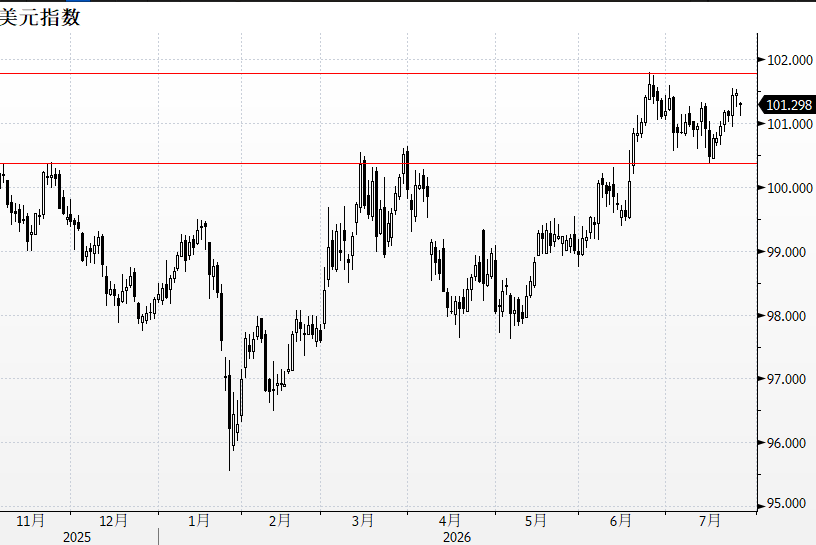
This week will be a significant one, with rate decisions from the US, UK, and Japanese central banks, combined with the start of a heavy tech earnings season. The low-volatility trend in the forex market may be disrupted. The US Dollar Index is also at a crossroads, and some potential bearish factors include: cooling US-Iran tensions, a high likelihood that the September FOMC will maintain rates, and signs of improving European economic data.
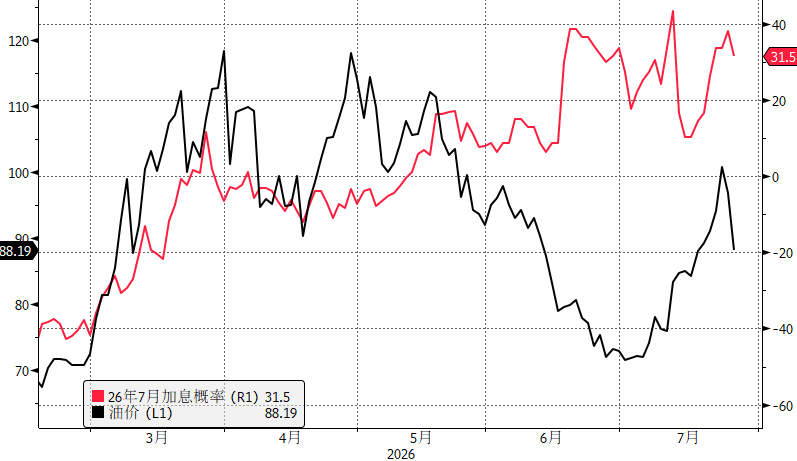
1. US-Iran tensions ease, oil prices retreat
Over the weekend, the US announced a halt to airstrikes against Iran, rapidly boosting market expectations for a return to negotiations between the US and Iran and significantly lowering the risk of large-scale conflict escalation in the Middle East. Sources indicate that the main reason for this TCAO is that America’s current usable ammunition reserves are running low, making it difficult to support prolonged, large-scale Middle East military operations.Brent crude dropped below $90/barrel on Monday.
2. High probability of FOMC holding rates this month, current rate hike odds are overstated
June’s nonfarm payroll gains slowed and inflation cooled, reducing the urgency for rate hikes. However, due to rising oil prices and initial jobless claims dropping to historical lows, last week markets briefly priced in a 40% chance of a July rate hike, before falling back to around 30% as oil fell over the weekend. Currently, the most likely outcome is for rates to remain unchanged, which would likely trigger a correction in both US dollar rates and the Dollar Index.
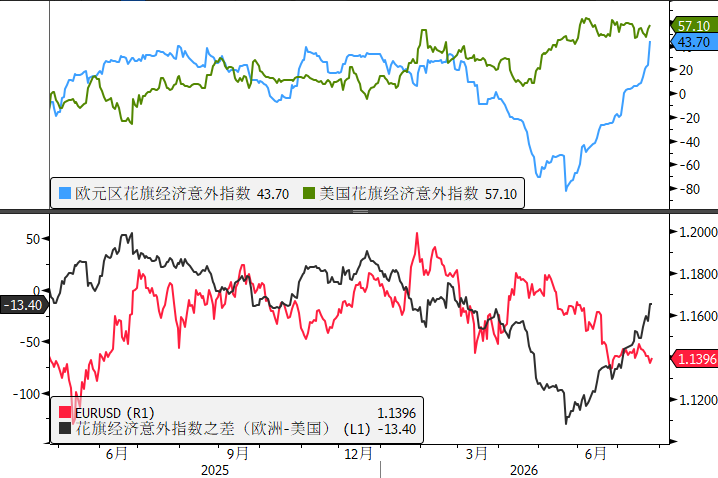
3. European economic data recovering
Eurozone July flash PMI readings beat expectations across the board: manufacturing PMI climbed to 52.0, a three-month high; services PMI rose to 51.6, a five-month high. In contrast, July’s US manufacturing PMI unexpectedly fell to 53.8, the lowest since March and below market expectations; services PMI was boosted by the World Cup, rising to 53.6. The Citi Economic Surprise Index difference between Europe and the US has increased, supporting the euro.
In summary, current views are:
1. The current main trading themes: oil prices + AI narrative
1) On oil prices, volatility from renewed conflict is expected, but as midterm elections approach, Trump’s time window is closing quickly, making another TCAO increasingly likely. So if conflict resumes and oil surges again, it presents a fade opportunity.
2) In AI capital expenditure, after Alphabet’s free cash flow turned negative last week and the stock plunged, markets are no longer tolerating unchecked CapEx expansion from cloud tech giants. This week, Microsoft, Meta, Amazon, and Apple will all report earnings. If tech giants underperform, US equities could drop sharply, which may affect dollar liquidity and increase the risk of the Fed turning dovish.
2. In terms of trading strategies, given the high probability that the FOMC keeps rates unchanged, the current risk-reward favors shorting USD and receiving on the short end of dollar rates. However, as overall market volatility remains low, tactical and range trading is still needed: DXY is expected to trade in the 100–102 band, EURUSD at 1.1350–1.15, and USDJPY waiting for a hawkish BOJ move or an intervention dip to buy.
Disclaimer: The content of this article solely reflects the author's opinion and does not represent the platform in any capacity. This article is not intended to serve as a reference for making investment decisions.
You may also like
The AI boom may follow the path of the 19th-century railway bubble, and builders may not be the ultimate winners
Goldman Sachs analyst Bobby Molavi compared the current situation to the 19th-century British railway mania: 500 companies spent more than the nation's annual income building 8,000 miles of railway, with most early investors losing out, while the real beneficiaries were the later "passengers." He pointed out that the current AI craze is driven by both debt and momentum, and that the S&P 500’s forward P/E ratio of 18x is only "a bit cheaper." Whether the builders can retain value is uncertain, and history does not offer an optimistic answer.

If Anthropic's IPO goes smoothly and the stock price rises next week, then everything remains the same for AI. Otherwise, some companies will go bankrupt.
The shrinking valuations of two major giants have triggered a chain reaction—investors are adopting more conservative revenue multiples for AI startups and are directly halting high-valuation financing for companies with zero revenue. Multiple venture capital firms have advised their portfolio companies to lower valuation expectations and to quickly build up cash reserves. Market participants warn that the outcome of Anthropic’s IPO will be a barometer for the industry: if successful, the boom will continue; if it fails, some companies may face elimination.
After the Brazilian election, political discount deepens; Morgan Stanley remains bullish on Petrobras (PBR.US), focusing on fuel pricing and dividends
Morgan Stanley still maintains its most optimistic "Overweight" rating, but has lowered its year-end 2027 target price from $31 to $25.

Corning (GLW.US) receives initial "Buy" rating from Jefferies! AI factories driving a fiber optic rush, with a potential global supply gap of up to 30%
For Corning, the recent profit growth mainly comes from the expansion of AI clusters. As the number of optical links crossing cabinets and campuses increases, customers need to deploy more optical fibers within limited conduit and cabinet space, thus driving demand for high-density optical cables and connection systems.

Crypto prices
More


