
Nigerian president signs order on approach to crypto regulation, taxes

President Bola Ahmed Tinubu of Nigeria has moved to address what his office called the fragmentation of digital asset regulation.
The Nigerian president’s special adviser Bayo Onanuga said that an executive order signed on Friday would “harmonize the regulation of virtual assets, strengthen cooperation among the nation’s financial, revenue and capital markets agencies, protect citizens from fraud, and safeguard the integrity of the financial system while enabling responsible innovation.”
It also established a virtual asset council headed by some of the nation’s top financial regulators to direct related policies, and Nigeria’s tax authority will update its policies on digital assets.
“[T]he order does not create a new regulator or transfer powers between agencies,” said Onanuga. “Each institution retains its full statutory mandate and independence, and the framework coordinates their work rather than replacing it. To provide certainty for operators and protection for the public, registration will follow the nature of the activity and the asset involved [...] This closes the gaps through which unregistered operators have previously escaped oversight.“
Nigeria has seen some of the strongest growth in digital asset adoption in Africa, in both cryptocurrencies and stablecoins. According to a June report from the International Monetary Fund (IMF), the country accounted for about 60% of stablecoin inflows within sub-Saharan Africa since 2019 and had about $59 billion in crypto inflows between July 2023 and June 2024.
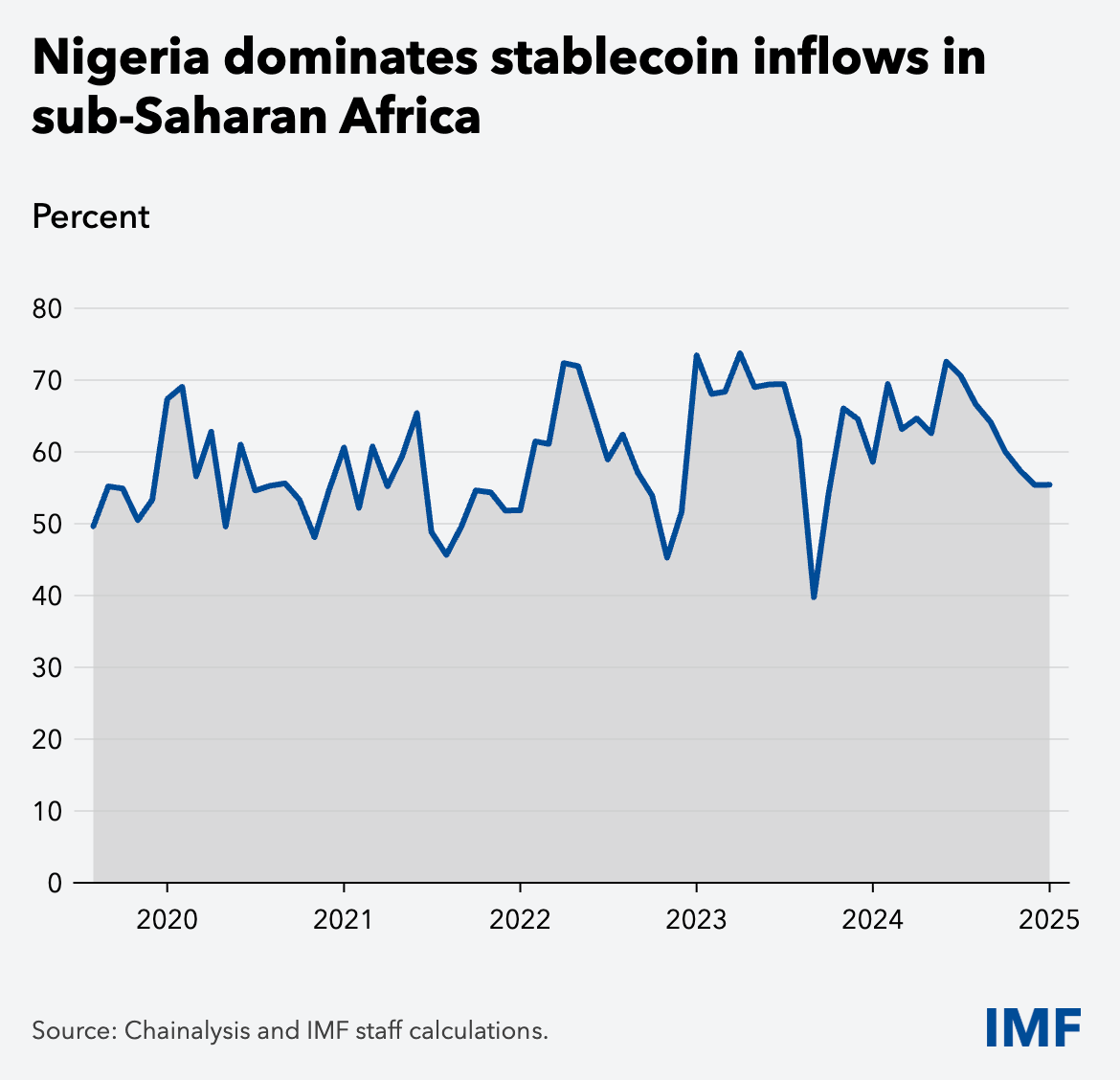
“The policy challenge is to narrow the gap that made the workaround [in cross-border payments] attractive, while ensuring that new risks remain contained,” said the IMF on Nigeria’s stablecoin adoption. “That requires a clear strategy: open to innovation but anchored in sound macroeconomic policy and effective regulation.”
Nigerian tax authority revamped digital assets approach
While the executive order said that the country’s tax authority, the Nigerian Revenue Service, would provide additional details on the effects on taxpayers, the agency had already announced policy reforms.
In January, authorities said that under the Nigeria Tax Administration Act, crypto service providers were required to link transactions to tax identification numbers and, in some cases, national identification numbers.
Disclaimer: The content of this article solely reflects the author's opinion and does not represent the platform in any capacity. This article is not intended to serve as a reference for making investment decisions.
You may also like
Sunshine Silver weighs doubling mill capacity
Central banks are exploring Asian gold hubs for safe storage of reserves - DBS

CoreWeave’s $132.5 billion backlog raises pressure on Nebius ahead of Q3 results
New Statements and Predictions from an Executive Who Expects Bitcoin to Reach $1.6 Million

Crypto prices
More


