
BTC Market Pulse: Week 27

Overview
Bitcoin extended its decline over the past week, breaking below the $60K level before finding support near $58K and stabilising around $60K into the weekend. While downside momentum has eased relative to the sharp sell-off earlier this month, buyers have so far lacked the conviction required to establish a sustained recovery, leaving price range-bound near local lows.
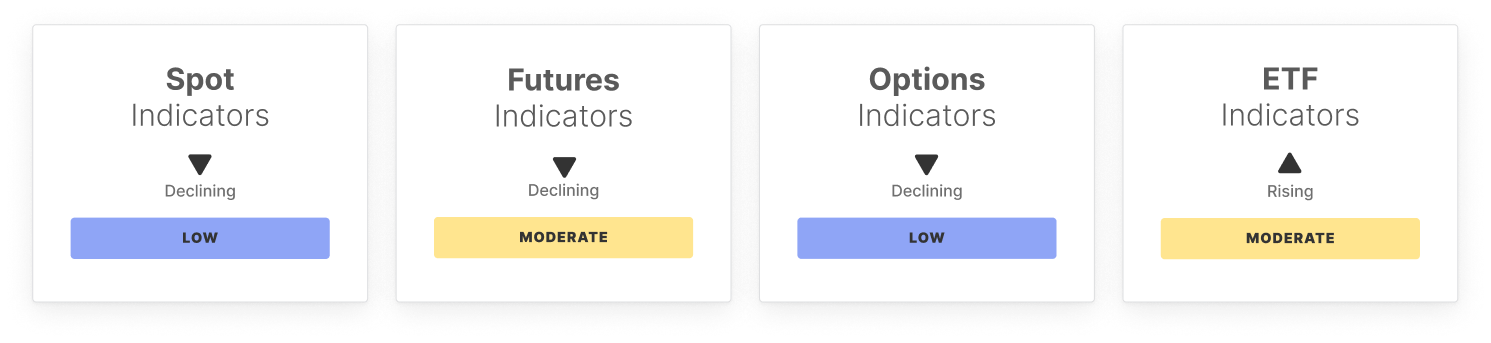
Beneath the surface, the market remains in a phase of structural adjustment as capital continues to contract and participants adopt a more defensive posture. Spot markets are still experiencing persistent net selling despite an increase in trading activity, suggesting that available liquidity is being used primarily to distribute rather than accumulate Bitcoin at current prices.
In derivatives markets, leverage continues to unwind as open interest contracts and traders increasingly favour downside protection over directional exposure. Options skew has pushed well above its historical range, highlighting elevated demand for protective positioning, while funding remains relatively subdued, reflecting a market that has become increasingly cautious despite stabilising prices.
Institutional sentiment has also softened. US Spot ETFs have slipped into an aggregate unrealized loss position, and continued net outflows suggest institutional investors remain reluctant to add exposure. Elevated ETF trading volumes indicate activity remains high, but the balance of flows continues to favour capital exiting rather than entering the asset class.
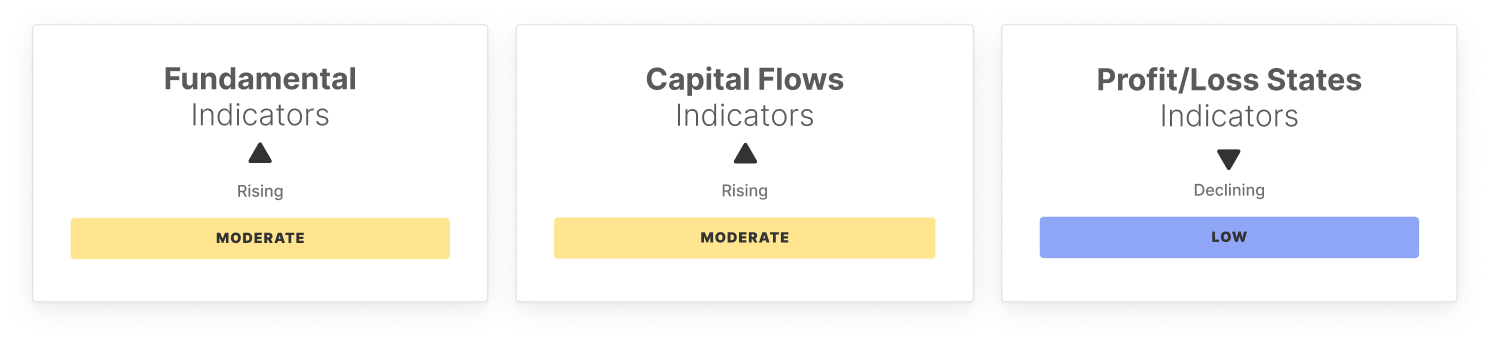
On-chain, the picture is more balanced. Entity-adjusted transfer volume has recovered, pointing to continued large-scale capital movement, while subdued network fee demand suggests underlying network activity remains muted. At the same time, rising hot capital indicates that a greater share of supply is now held by short-term, price-sensitive investors, increasing the market's susceptibility to volatility. Taken together, Bitcoin appears to be stabilising around the $60K region, but with spot order flow, derivatives positioning, and institutional demand all remaining defensive, a sustained recovery is likely to require a meaningful return of buyer conviction.
Off-Chain Indicators
On-Chain Indicators

Don't miss it!
Smart market intelligence, straight to your inbox.
Disclaimer: The content of this article solely reflects the author's opinion and does not represent the platform in any capacity. This article is not intended to serve as a reference for making investment decisions.
You may also like
Wall Street giants collectively raise rate hike forecasts, US Treasury futures continue to fall, gold drops over 1% to break 4000
After the US October CPI exceeded expectations, Goldman Sachs and Nomura added a forecast for an interest rate hike in March next year, while Deutsche Bank included a forecast for a rate hike in January next year. Currently, the market has fully priced in a 25 basis point rate hike in December, with a 13% probability for a 50 basis point hike. On Wednesday, the US Treasury spot market was closed, but Treasury futures continued to fall, with corresponding yields rising by about 2 to 4 basis points, and spot gold came under pressure, dropping by 1.1%.

No Need to Worry About the Cooling Down of AI Data Center Construction? The US Import Boom Is Unlikely to Subside in the Short Term, Real Impact May Come in 2029
It takes an average of 4.8 years from finalizing investment to starting construction of a data center project, and an additional 2.6 years from construction start to becoming operational. Servers usually cannot be installed until after the building structure and racks are completed. For trade partners such as Taiwan (China), South Korea, and Mexico who rely on US data center supply chain demand, the inertia in construction timelines provides at least a one- to two-year buffer for future exports.

Federal Reserve Major Debate: When Should the Tenure of “Number Three” Williams End?
The main point of contention is whether Williams should step down in June 2028, upon completing a full 10-year term, or in June 2027, when he reaches the mandatory retirement age of 65. Analysts point out that the Federal Reserve Board holds ultimate discretion; if he leaves early, Fed Chair Waller would be able to assert greater control over the appointment to this critical position. However, forcing Williams to shorten his term could easily be interpreted as political manipulation. Williams himself is expected to serve until June 2028.

Sunshine Silver weighs doubling mill capacity
Crypto prices
More


