Bitget App
Trade smarter
Buy cryptoMarketsTradeFuturesStocksEarnInstitutionAI & More
Ethereum uses less power than British Museum – Here’s what changed

Ethereum uses less power than British Museum – Here’s what changed

AMBCryptoAMBCrypto2026/07/11 16:03
By:AMBCrypto

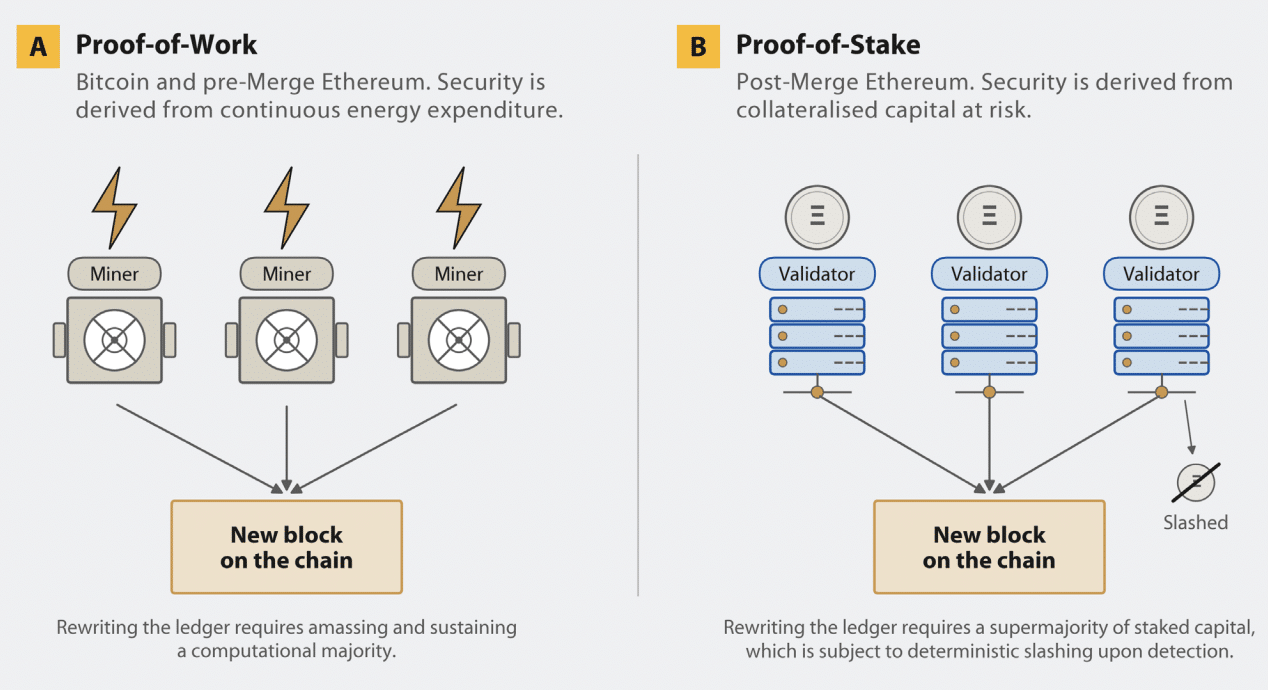
Ethereum has undergone significant change over time, particularly since The Merge.The upgrade replaced the energy-intensive Proof-of-Work (PoW) system with Proof-of-Stake (PoS).

With this change, Ethereum currently uses about 8,522 physical nodes, many of which house multiple validators, and nearly 894,000 validators.
Ethereum uses less power than British Museum – Here’s what changed image 0 Source: CCAF Report

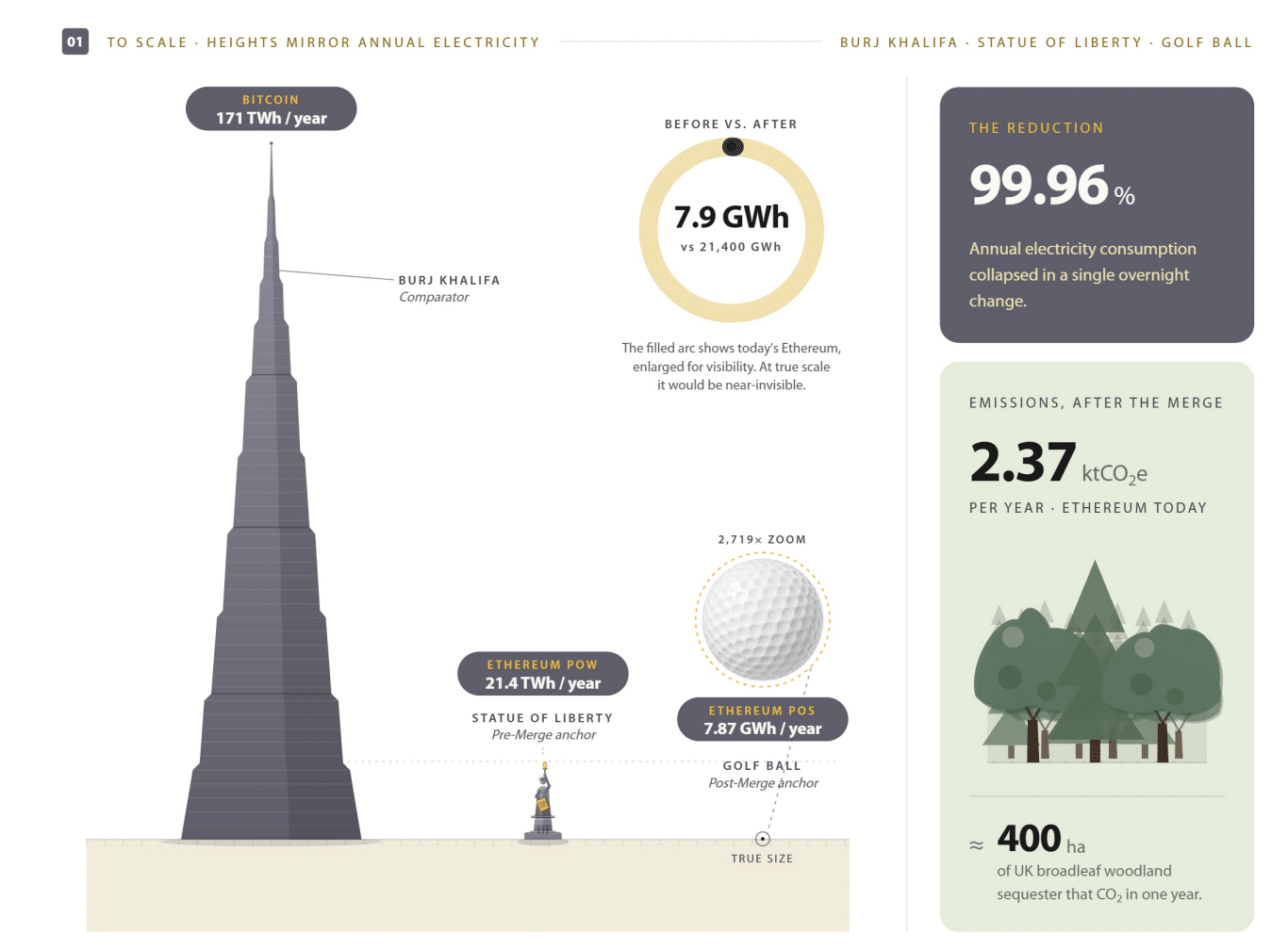
As a result, Ethereum now consumes only 7.87 GWh of electricity annually, or about 0.90 MW of continuous power. That is less than half the British Museum’s annual electricity consumption.

@media only screen and (min-width: 0px) and (min-height: 0px) { div[id^="bsa-zone_1774359638628-7_123456"] { min-height: 50px; transition: min-height 0.3s ease; } } @media only screen and (min-width: 640px) and (min-height: 0px) { div[id^="bsa-zone_1774359638628-7_123456"] { min-height: 90px; } }
AD

Before The Merge, the network required roughly 2.4 GW of continuous power.

Since then, Ethereum’s electricity consumption has fallen by more than 99.9%, marking one of the largest energy reductions by a major blockchain.

Is Ethereum truly decentralized?

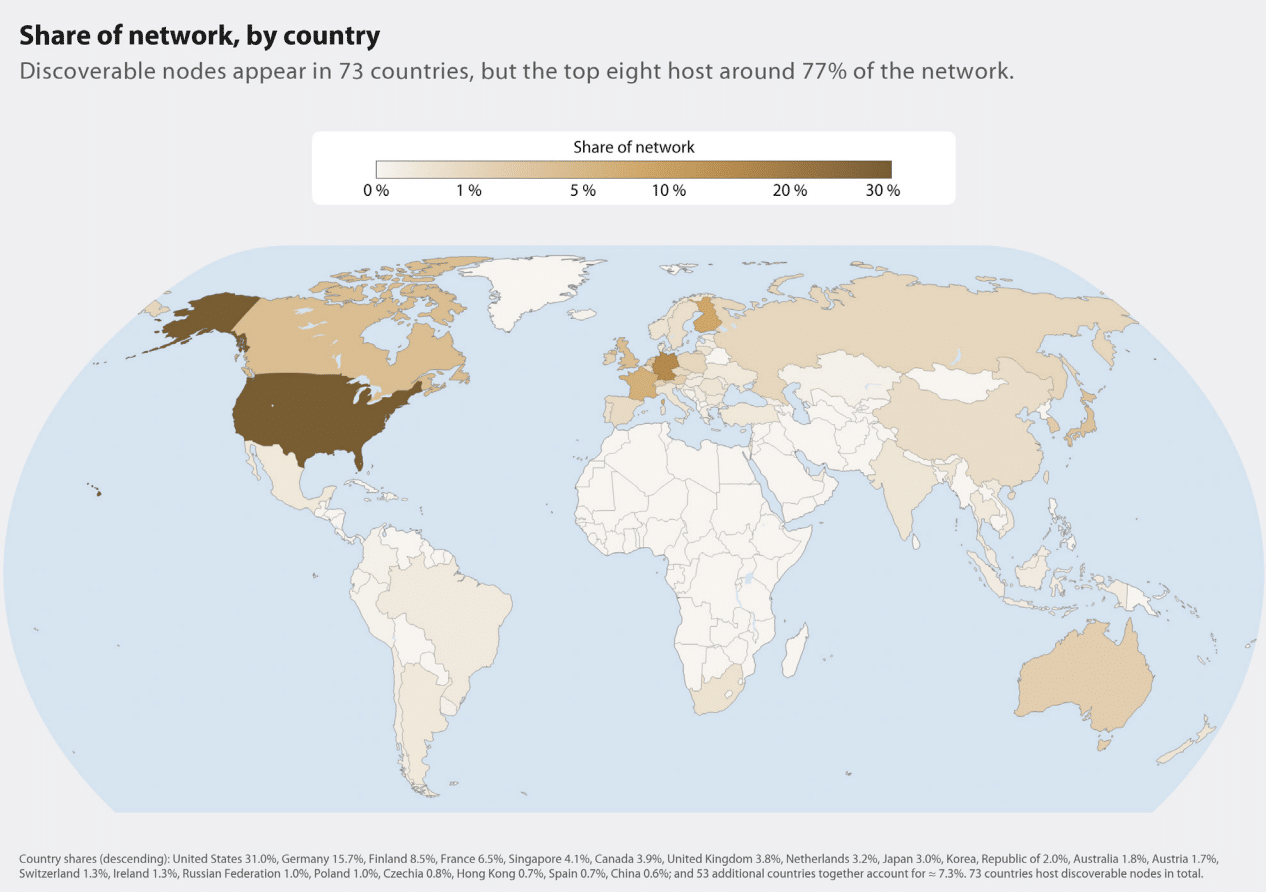
Additionally, the Cambridge Centre for Alternative Finance (CCAF) report highlighted that Ethereum’s infrastructure is decentralized despite being geographically concentrated. Of all nodes, roughly 62% are hosted by the United States (31%), Germany (16%), Finland (8%), and France (6%). 
Ethereum uses less power than British Museum – Here’s what changed image 1 Source: CCAF Report

Another significant discovery is that 56.4% of the electricity used to power Ethereum originates from sustainable sources, such as 17% nuclear energy and 39.4% renewable energy.

Given the electricity mix of the main host nations, natural gas continues to be the largest fossil fuel source at 27.7%. The fact that Ethereum’s sustainable energy share is higher overall than the global average of about 43% shows how much the network depends on cleaner electrical grids.

What does Ethereum’s carbon footprint mean for the network? 

At the same time, Ethereum’s carbon footprint has dramatically decreased in tandem with its dramatic decrease in electricity consumption. As per the report, the network has reduced its emissions by 99.98% from its final Proof-of-Work era to an estimated 2.37 kilotonnes of CO₂ equivalent (ktCO₂e) per year. 
Ethereum uses less power than British Museum – Here’s what changed image 2 Source: CCAF Report

To put this into perspective, Ethereum’s yearly emissions are equivalent to the carbon footprint of roughly 900 households in the UK. 

Interestingly, future developments, like stateless verification, may further minimize the need for energy and hardware, reducing Ethereum’s carbon footprint while maintaining its decentralization and security.

What’s ahead? 

This further coincided with Ethereum’s development that has entered a new phase as researchers unveiled “Lean Ethereum,” a multi-year overhaul aimed at the network’s long-term evolution. The plan intends to replace the Ethereum protocol’s cores over a period of roughly three to four years, as opposed to a single upgrade.

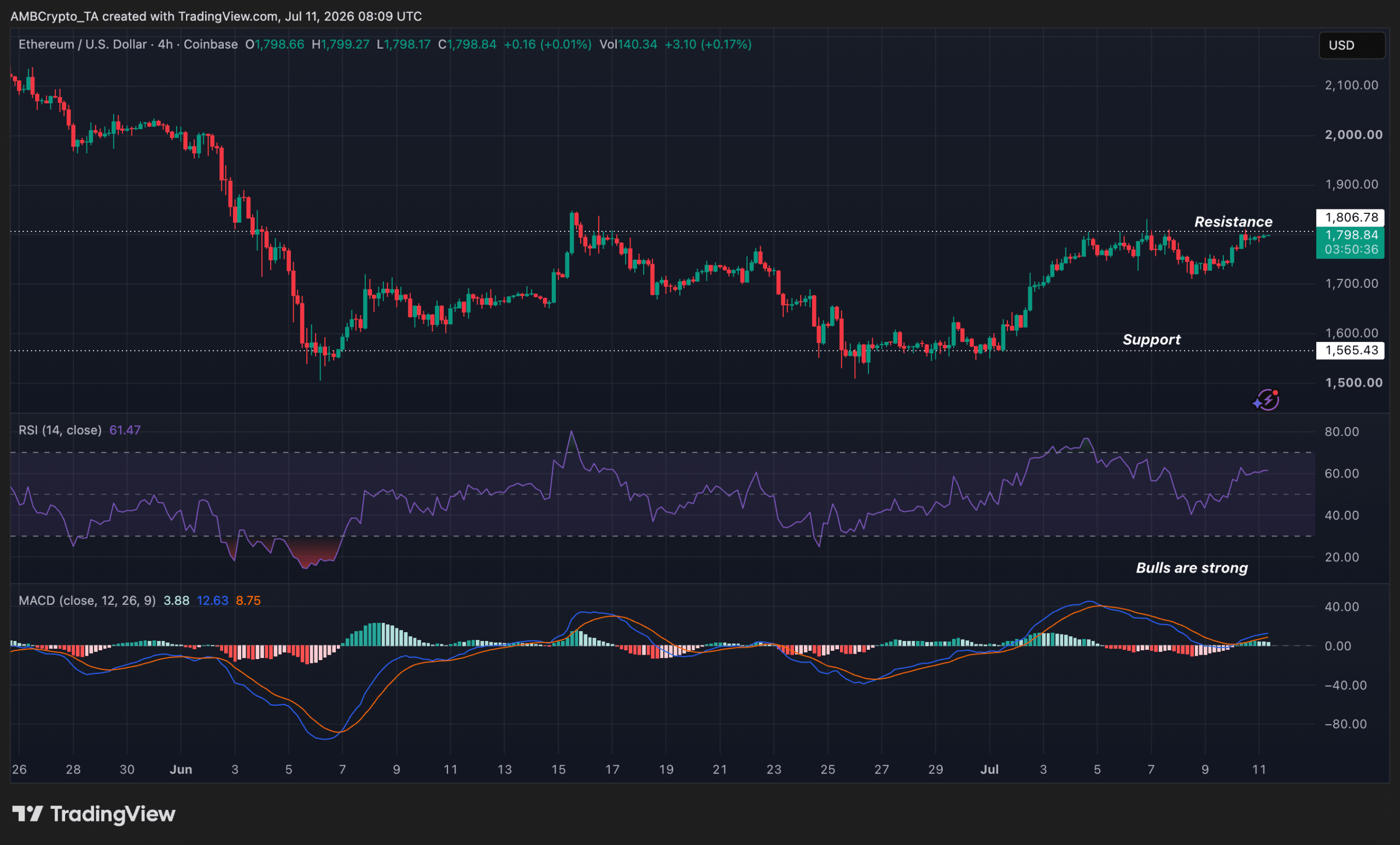
While these developments were happening, Ethereum’s price surged by 1.42% in the previous day and was now trading at $1,798.71 at press time. The MACD and RSI indicators also showed that bulls are more aggressive than they were previously. However, ETH needs to surpass the $1.8k mark in order for the bulls to continue. 
Ethereum uses less power than British Museum – Here’s what changed image 3 Source: Trading View

Final Summary

  • Ethereum roughly has 62% of all nodes hosted by the United States, followed by Germany, Finland, and France.
  • The network has reduced its emissions to an estimated 2.37 kilotonnes of CO₂ equivalent (ktCO₂e) per year.

0
0

Disclaimer: The content of this article solely reflects the author's opinion and does not represent the platform in any capacity. This article is not intended to serve as a reference for making investment decisions.

Understand the market, then trade.
Bitget offers one-stop trading for cryptocurrencies, stocks, and gold.
Trade now!

You may also like

Wall Street giants collectively raise rate hike forecasts, US Treasury futures continue to fall, gold drops over 1% to break 4000

After the US October CPI exceeded expectations, Goldman Sachs and Nomura added a forecast for an interest rate hike in March next year, while Deutsche Bank included a forecast for a rate hike in January next year. Currently, the market has fully priced in a 25 basis point rate hike in December, with a 13% probability for a 50 basis point hike. On Wednesday, the US Treasury spot market was closed, but Treasury futures continued to fall, with corresponding yields rising by about 2 to 4 basis points, and spot gold came under pressure, dropping by 1.1%.

华尔街见闻•2026/11/11 21:18
Wall Street giants collectively raise rate hike forecasts, US Treasury futures continue to fall, gold drops over 1% to break 4000

No Need to Worry About the Cooling Down of AI Data Center Construction? The US Import Boom Is Unlikely to Subside in the Short Term, Real Impact May Come in 2029

It takes an average of 4.8 years from finalizing investment to starting construction of a data center project, and an additional 2.6 years from construction start to becoming operational. Servers usually cannot be installed until after the building structure and racks are completed. For trade partners such as Taiwan (China), South Korea, and Mexico who rely on US data center supply chain demand, the inertia in construction timelines provides at least a one- to two-year buffer for future exports.

华尔街见闻•2026/11/11 21:18
No Need to Worry About the Cooling Down of AI Data Center Construction? The US Import Boom Is Unlikely to Subside in the Short Term, Real Impact May Come in 2029

Federal Reserve Major Debate: When Should the Tenure of “Number Three” Williams End?

The main point of contention is whether Williams should step down in June 2028, upon completing a full 10-year term, or in June 2027, when he reaches the mandatory retirement age of 65. Analysts point out that the Federal Reserve Board holds ultimate discretion; if he leaves early, Fed Chair Waller would be able to assert greater control over the appointment to this critical position. However, forcing Williams to shorten his term could easily be interpreted as political manipulation. Williams himself is expected to serve until June 2028.

华尔街见闻•2026/11/11 21:18
Federal Reserve Major Debate: When Should the Tenure of “Number Three” Williams End?

