
RMB: The East Wind and West Wind at the 6.8 Threshold

Morning FX
Although I expected the dollar to strengthen, the ferocity of this upward move in the dollar has still exceeded my expectations.
Over the past week, the US Dollar Index jumped by more than 1%, with both USDCNY and USDCNH returning together to the 6.8 level. On Wednesday, onshore USDCNY trading volume surged to $71 billion, the second highest this year.Behind the surge in trading volume, market divergence is gradually emerging.
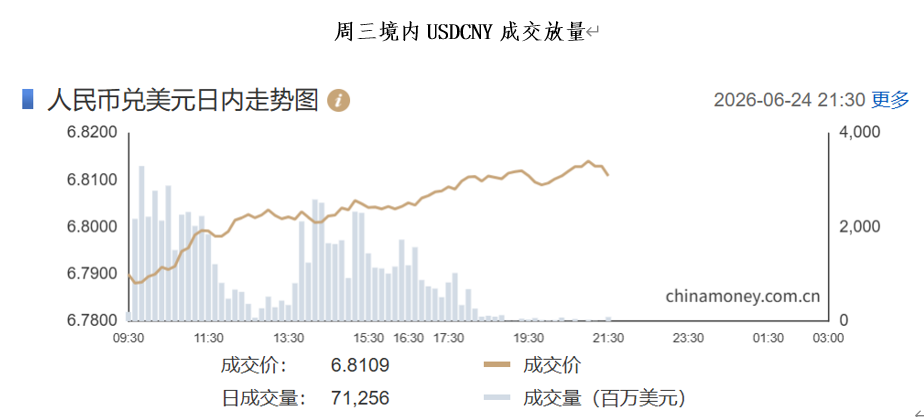
At the 6.8 threshold, how should the RMB exchange rate be viewed at mid-year? Behind the market tug-of-war, there are forces coming from both the east and the west.
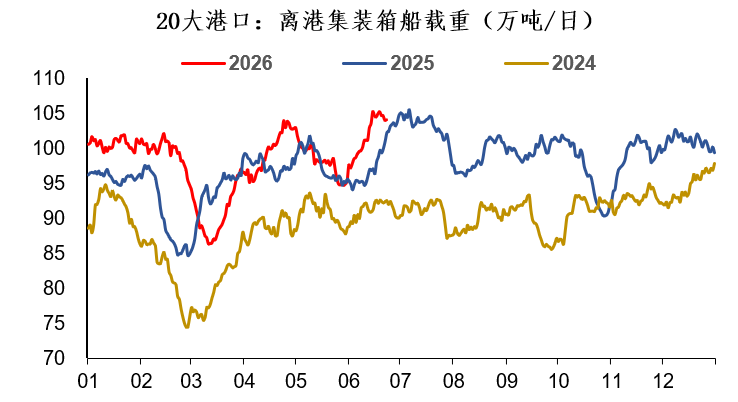
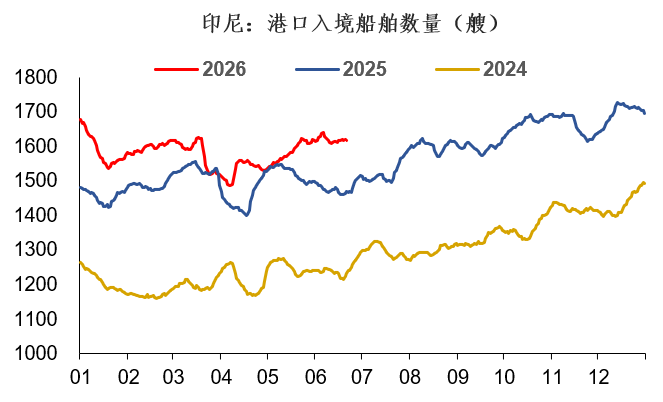
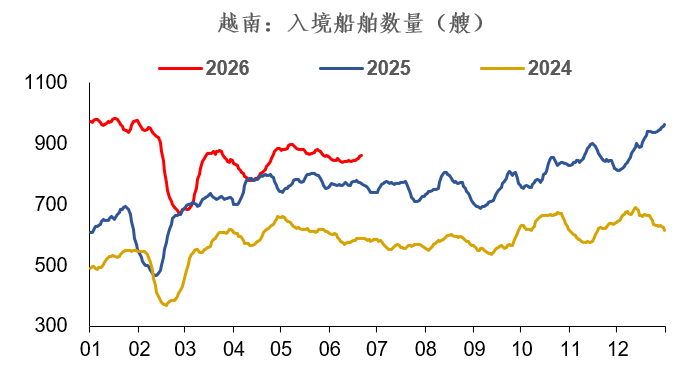
Let's look at the east wind first: the most solid logic for RMB appreciation—strong exports.How are the mid-year high-frequency export data? Still strong, very strong. Many high-frequency data sets tell us one thing:Do not easily doubt China’s exports.
Take a look at this trend: here's the domestic container throughput data, with a year-on-year growth rate of 5%-10%:
This is Indonesia’s inbound vessel data, with a year-on-year growth rate of over 10%:
This is Vietnam’s inbound vessel data, with a year-on-year growth of over 10%:
Looking at this year’s forex market overall, under the general sluggishness of most non-dollar currencies, the RMB has performed independently, even acquiring a “safe haven” label; strong exports are the principal “east wind”. But on the other hand, the mid-year market environment seems to be changing. The “west wind” is showing in the form of—declining settlement rates.
Data shows that in April-May, the export settlement rate dropped to 60%, a significant decrease compared to 68% in the first quarter, and below the seasonal average. From a market perspective, most export enterprises practice a “settle exchange at highs” mentality, resulting in exchange flows being time-pointed and pulsed. After the settlement peak in Q1, settlement sentiment in the market gradually faded.
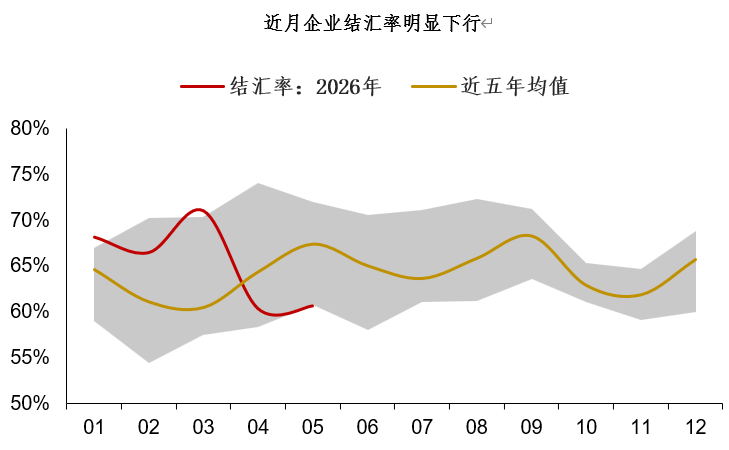
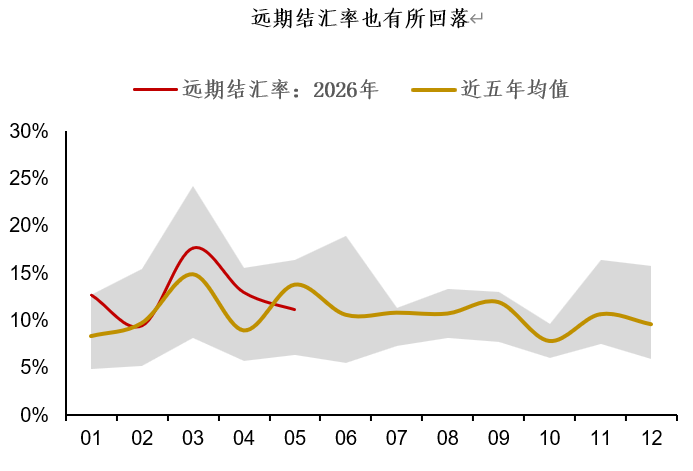
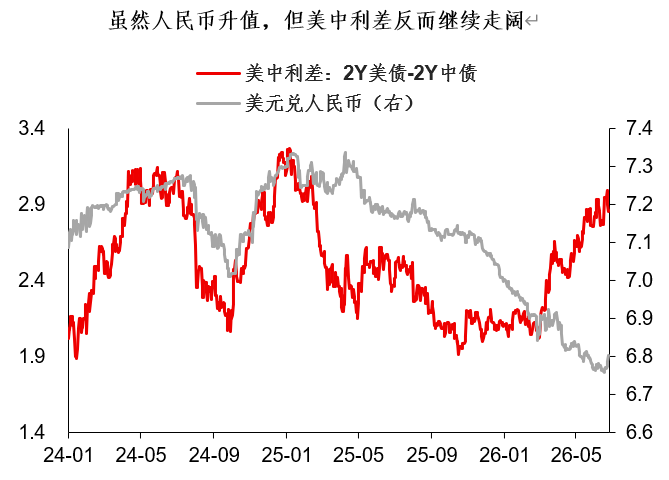
Why, in the context of appreciation, has the corporate settlement rate instead declined? This is mainly related to the unique market environment this year. Although the RMB is appreciating, the US-China interest rate spread continues to widen—something very rare in history. Thus, some company owners are calculating whether holding a 4% USD deposit can resist RMB appreciation. And the pronounced mid-year dollar strength has further intensified the wait-and-see mentality.
In the complex environment with both east and west winds, how should one view the RMB exchange rate market at mid-year?In my view, under this year’s market conditions, China’s current account sets the direction, and the capital account affects the pace.Strong exports are the underlying support for the RMB—backed by logic from industry, trade, military and other dimensions, which need no further elaboration. External factors (including the dollar exchange rate, interest rates, etc.) mostly influence the rhythm.
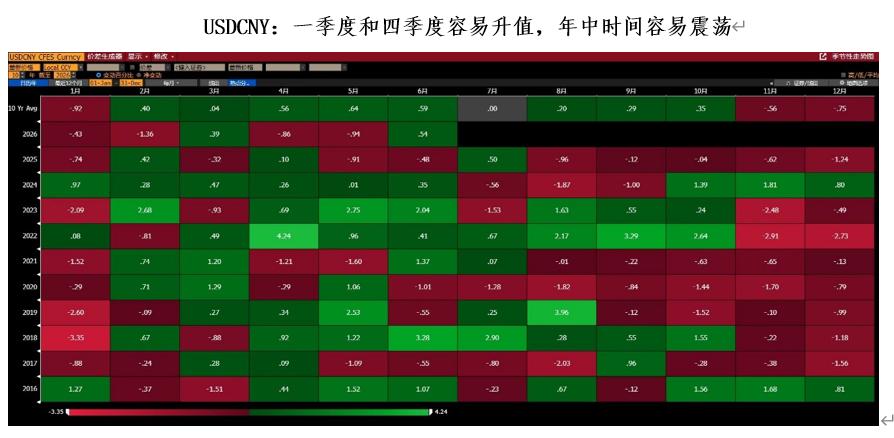
Strategically, the east wind is much more likely to overpower the west wind. Tactically, two-way volatility in USDCNY in the mid-year is actually beneficial, providing more opportunities for settling at high points. Let’s bring out this magic chart again:
Summary of today's insights:
1. This dollar rally is very fierce, causing both USDCNY and USDCNH to return to the 6.8 threshold. Behind the market’s tug-of-war, there are two forces: east wind and west wind;
2. East wind of the RMB exchange rate—strong exports. High-frequency data shows that the mid-year export situation remains robust (including Chinese, Indonesian, and Vietnamese port throughput, etc.), constituting the hard-core support for the RMB exchange rate; West wind of the RMB exchange rate—decline in settlement rate. Exchange settlement flow now appears pulse-like and time-pointed, while mid-year dollar strength deepens the wait-and-see mentality among enterprises;
3. I believe that in this year’s market environment, the RMB’s current account determines the direction, and the capital account affects the pace. Strong exports are the trump card—the east wind overpowers the west. At mid-year, the two-way volatility of USDCNY is actually a good thing, offering more opportunities to settle at highs. Opportunity knocks but once—don’t let it slip by.
Disclaimer: The content of this article solely reflects the author's opinion and does not represent the platform in any capacity. This article is not intended to serve as a reference for making investment decisions.
You may also like
Wall Street giants collectively raise rate hike forecasts, US Treasury futures continue to fall, gold drops over 1% to break 4000
After the US October CPI exceeded expectations, Goldman Sachs and Nomura added a forecast for an interest rate hike in March next year, while Deutsche Bank included a forecast for a rate hike in January next year. Currently, the market has fully priced in a 25 basis point rate hike in December, with a 13% probability for a 50 basis point hike. On Wednesday, the US Treasury spot market was closed, but Treasury futures continued to fall, with corresponding yields rising by about 2 to 4 basis points, and spot gold came under pressure, dropping by 1.1%.

No Need to Worry About the Cooling Down of AI Data Center Construction? The US Import Boom Is Unlikely to Subside in the Short Term, Real Impact May Come in 2029
It takes an average of 4.8 years from finalizing investment to starting construction of a data center project, and an additional 2.6 years from construction start to becoming operational. Servers usually cannot be installed until after the building structure and racks are completed. For trade partners such as Taiwan (China), South Korea, and Mexico who rely on US data center supply chain demand, the inertia in construction timelines provides at least a one- to two-year buffer for future exports.

Federal Reserve Major Debate: When Should the Tenure of “Number Three” Williams End?
The main point of contention is whether Williams should step down in June 2028, upon completing a full 10-year term, or in June 2027, when he reaches the mandatory retirement age of 65. Analysts point out that the Federal Reserve Board holds ultimate discretion; if he leaves early, Fed Chair Waller would be able to assert greater control over the appointment to this critical position. However, forcing Williams to shorten his term could easily be interpreted as political manipulation. Williams himself is expected to serve until June 2028.

Crypto prices
More


