
Fed June Meeting Minutes Breakdown: Hawkish Dissent + AI Inflation Double Hit — How Smart Money Is Positioning
 Bitget2026/07/09 03:28
The Federal Reserve released the minutes from its June 16-17 FOMC meeting in the early hours of July 9 Beijing time. Overall, the tone was hawkish, but with notable internal divisions. The federal funds rate stayed unchanged at 3.50%-3.75%. Most participants viewed current policy as “somewhat restrictive,” while inflation remains significantly above the 2% target.
Pressures include energy supply shocks, Middle East geopolitical tensions, and AI-driven demand surges (chips, memory, power, and data centers). A few officials explicitly supported rate hikes this year, stressing that if inflation pressures persist, further tightening may be needed.
At the same time, the minutes acknowledged AI’s potential for long-term productivity gains, though short-term effects are limited. The Fed continued to emphasize its “data-dependent” approach, keeping flexibility open for future hikes or adjustments. This “hawkish but leaves the door open” document immediately tightened nerves in the already high-level oscillating U.S. stock market.
I. Current Market Theme: AI Bull Market vs. Inflation Ghost
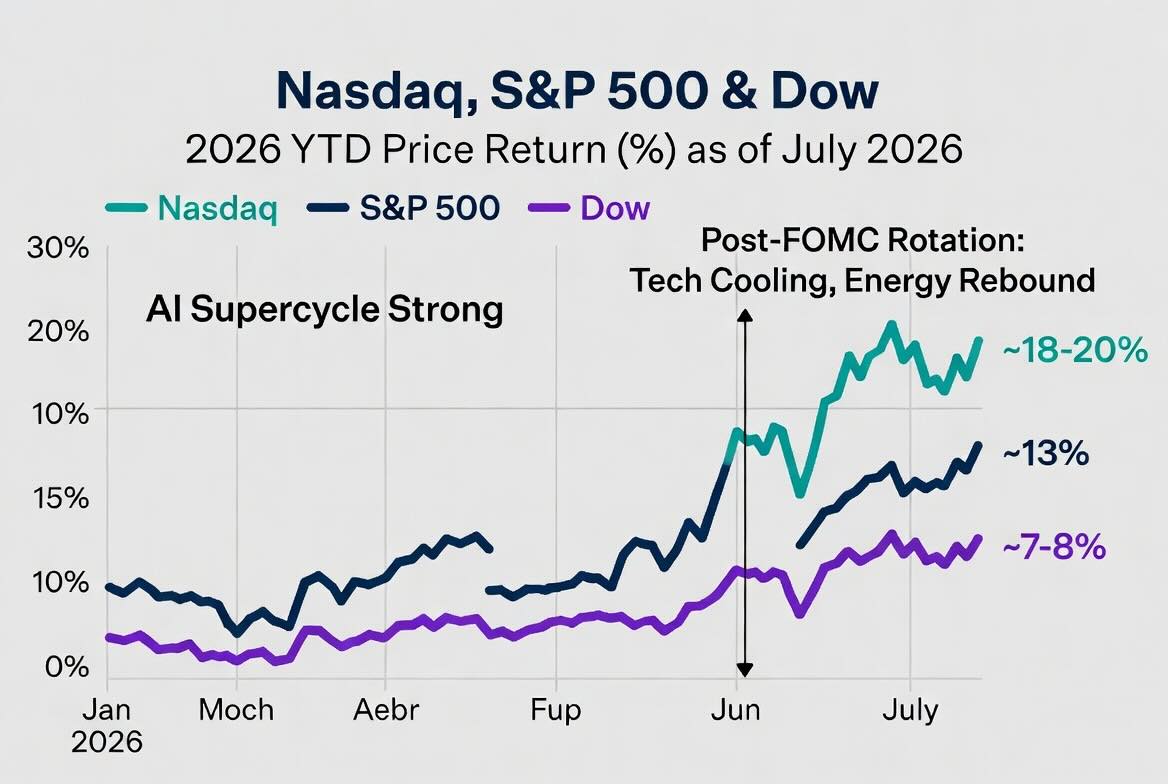
The U.S. stock market is still dominated by the AI supercycle. The S&P 500 is oscillating at high levels, supported by strong corporate earnings growth (2026 full-year expectations exceeding 25%). However, high valuations and sector concentration risks stand out.
After the minutes release, market focus quickly shifted to AI-related inflation transmission, geopolitical energy uncertainty, and Fed policy signals. Capital showed clear defensive rotation: some tech growth stocks faced short-term pressure, while financials, energy, and traditional value sectors displayed relative resilience.
Leveraged traders (especially Bitget UEX users) should pay special attention to potential upside in U.S. Treasury yields pressuring high-valuation assets, as well as amplified volatility in the night session. Overall, the minutes reinforced the possibility of “higher for longer,” but the internal divisions also leave room for imagination if data improves and policy pivots.
II. Recommended Watchlist (Directly Actionable, Based on Minutes Impact)
Based on the minutes, here’s a practical Watchlist (adjust dynamically with real-time data):
- AI/Tech Growth (Neutral to Cautious — Buy on Dips Preferred): NVDA (AI leader), AMD (chips), PLTR (data intelligence), TSLA (robotics + energy), AMZN/META (cloud + advertising)
- Financials (Hawkish Tailwind): JPM, BAC, GS — net interest margins expand in a high-rate environment, delivering steady returns
- Energy/Inflation Hedges (Solid Defense): XOM, CVX, OXY — supply shocks + surging data center power demand, dual drivers
- Defensive/Value Stocks (Volatility Resistant): PG, JNJ, LMT, RTX — downside protection + dividends
- Small-Cap/Cyclical Reference: IWM (small-cap ETF)
Suggested Position Allocation: AI 40%, Financials & Energy 35%, Defensive 25%. This list covers the minutes’ two core themes (AI pressures + inflation hedging) and works well for a mix of spot and leveraged positions.
III. Detailed Investment Logic
The minutes highlight the Fed’s deep understanding of AI’s “double-edged sword” effect: in the short term, AI infrastructure expansion drives up power and hardware demand, intensifying inflation pressure. Over the long term, it is expected to ease supply-demand imbalances through productivity gains.
Short-term Strategy: Play both offense and defense. Prioritize adding to financials (widening NIMs) and energy (inflation hedge), while holding core AI positions and waiting for better entry points on pullbacks. Medium-term Opportunity: Once inflation cools and employment data stabilizes, AI growth stocks should regain valuation expansion momentum.
Risk management is critical: strictly control leverage (recommend no more than 30% of total capital), set dynamic stop-losses at 5-8%, and closely monitor U.S. stock night-session moves (Beijing time) along with upcoming July macro data (e.g., jobs report, CPI).
The overall logic centers on “quality first”: in a macro-uncertain environment, prioritize companies with strong cash flows, deep moats, and pricing power. Avoid blindly chasing highs.
IV. AI Data Centers: The Hidden “Power-Hungry Tiger” Opportunity
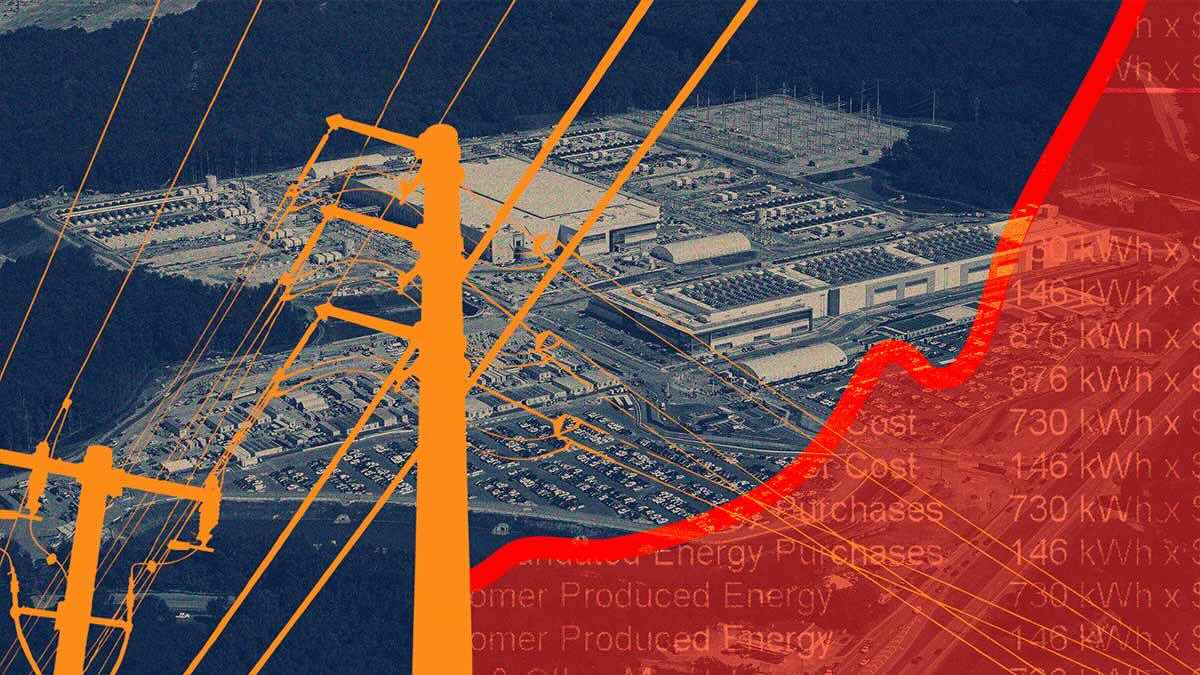
The minutes unusually highlighted the massive electricity consumption of AI data centers. This isn’t sci-fi — it’s a supply-chain revolution happening right now.
The sharp rise in data center power usage not only directly affects energy prices but can also ripple through broader supply chains. Smart investors are already positioning in upstream energy infrastructure and AI hardware suppliers, while watching for potential policy responses. Short term: inflation pressure. Medium to long term: productivity explosion once AI scales.
This is the golden window to build the energy + AI dual-mainline theme. Don’t just watch stock prices — look at the real world where data center lights stay on 24/7.
V. Summary & Outlook
The June FOMC minutes further confirm the Fed’s firm stance on inflation control in the Warsh era, while preserving data-driven flexibility. In an environment where AI-driven earnings growth and inflation pressures coexist, the foundation of the U.S. stock bull market remains intact, but sector rotation will accelerate.
Bitget UEX users can use leverage to capture short-term opportunities while building a balanced long-term portfolio: AI tech as the core, financials & energy as defense, and value stocks as the base. Keep tracking follow-up data and official comments, and maintain disciplined position management.
In the coming months, the interplay between the AI productivity narrative and the Fed’s policy path will continue to dominate market moves. Grasping high-conviction themes will be the key to winning.
Disclaimer: The content of this article solely reflects the author's opinion and does not represent the platform in any capacity. This article is not intended to serve as a reference for making investment decisions.
You may also like
Wall Street giants collectively raise rate hike forecasts, US Treasury futures continue to fall, gold drops over 1% to break 4000
After the US October CPI exceeded expectations, Goldman Sachs and Nomura added a forecast for an interest rate hike in March next year, while Deutsche Bank included a forecast for a rate hike in January next year. Currently, the market has fully priced in a 25 basis point rate hike in December, with a 13% probability for a 50 basis point hike. On Wednesday, the US Treasury spot market was closed, but Treasury futures continued to fall, with corresponding yields rising by about 2 to 4 basis points, and spot gold came under pressure, dropping by 1.1%.

No Need to Worry About the Cooling Down of AI Data Center Construction? The US Import Boom Is Unlikely to Subside in the Short Term, Real Impact May Come in 2029
It takes an average of 4.8 years from finalizing investment to starting construction of a data center project, and an additional 2.6 years from construction start to becoming operational. Servers usually cannot be installed until after the building structure and racks are completed. For trade partners such as Taiwan (China), South Korea, and Mexico who rely on US data center supply chain demand, the inertia in construction timelines provides at least a one- to two-year buffer for future exports.

Federal Reserve Major Debate: When Should the Tenure of “Number Three” Williams End?
The main point of contention is whether Williams should step down in June 2028, upon completing a full 10-year term, or in June 2027, when he reaches the mandatory retirement age of 65. Analysts point out that the Federal Reserve Board holds ultimate discretion; if he leaves early, Fed Chair Waller would be able to assert greater control over the appointment to this critical position. However, forcing Williams to shorten his term could easily be interpreted as political manipulation. Williams himself is expected to serve until June 2028.

Crypto prices
More


