
Bitcoin tumbles back to key $60K support level: What’s behind the sell pressure?

Key takeaways:
- War, rising oil prices and Strategy’s Bitcoin sales put extra pressure on BTC’s $60,000 support.
- Strategy’s Bitcoin sales and fears that a global regulatory crackdown on crypto is being reignited are adding to fragile crypto market conditions.
Bitcoin traded down 3.5% on Wednesday as new developments in the US-Iran war pushed oil prices higher and Japan’s bond markets faced renewed stress. That combination triggered broader de-risking across markets. At the same time, concerns over potential Bitcoin sales from Strategy intensified, with traders now bracing for a possible correction below $60,000.
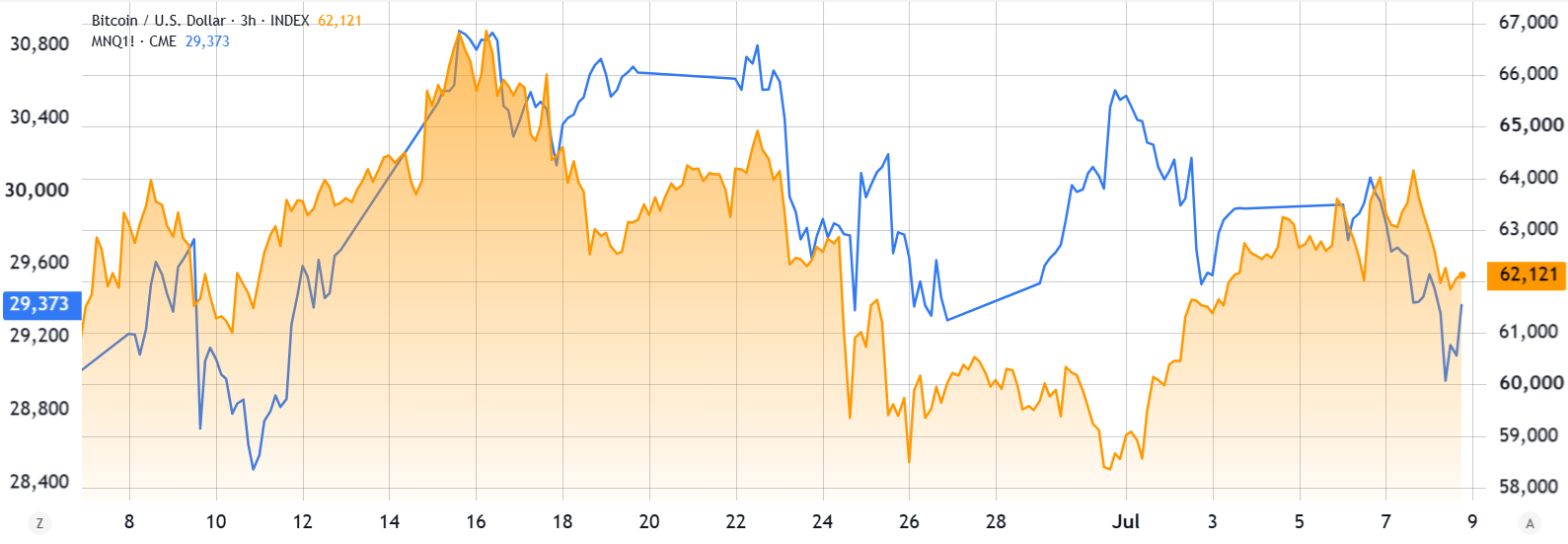
Nasdaq-100 futures (left) vs. Bitcoin/USD (right).
Bitcoin’s failed attempt to reclaim $64,500 on Monday coincided with a downtrend in the tech-heavy Nasdaq Index. However, the stock market recovered some of its losses on Wednesday while Bitcoin was unable to bounce back from the $62,000 level. This underperformance suggests something else might be pressuring the cryptocurrency.
The surge in Brent crude oil to $74 from $68 the prior week raised inflationary risks due to disruptions in energy supplies following the official breakdown of the US-Iran memorandum of understanding. US President Donald Trump declared the deal “over” after US strikes targeted Iranian sites in response to vessel attacks.
Higher energy costs feed directly into broader price pressures, reducing the likelihood of near-term Federal Reserve (Fed) interest rate cuts and limiting odds of economic stimulus packages.
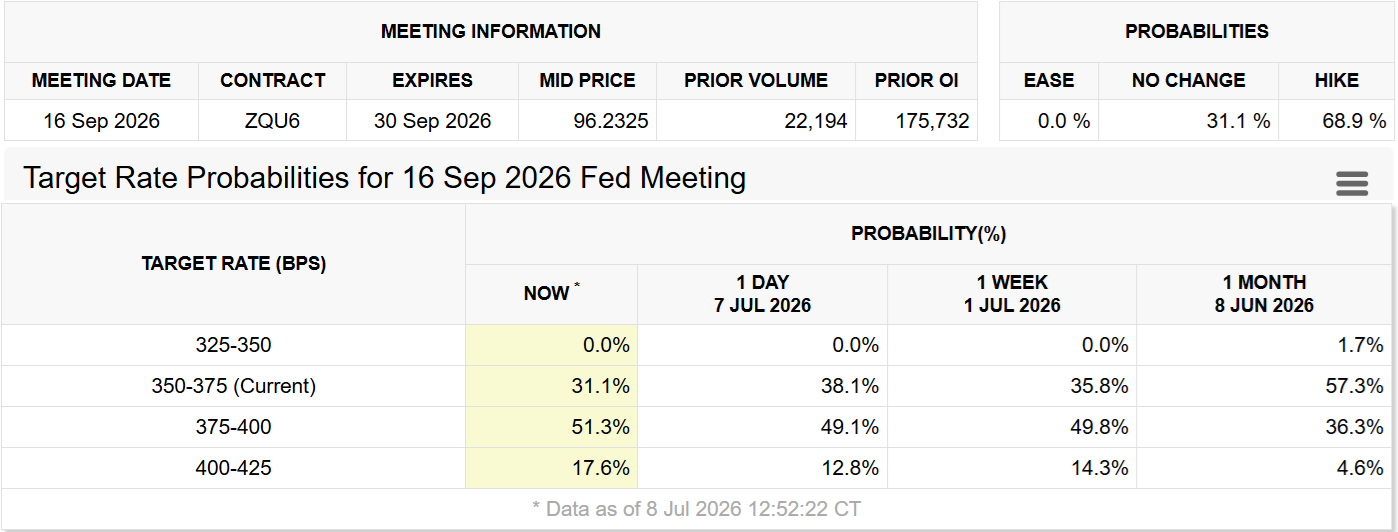
Implied odds for FED Funds target rate on Sept. 16.
Traders are currently pricing 69% odds of interest rate hikes by September, up from 42% one month prior. This environment weighs heavily on risk assets, with Bitcoin still not widely perceived as an effective hedge.
Global economic uncertainty amid Strategy’s sell pressure
Adding to the cautious mood, President Trump demanded an end to US trade with Spain at the NATO summit, labeling the key ally a “wasted cause” for failing to commit to new defense spending targets. Such trade frictions risk slowing global economic activity and amplifying fears of global economic contraction.
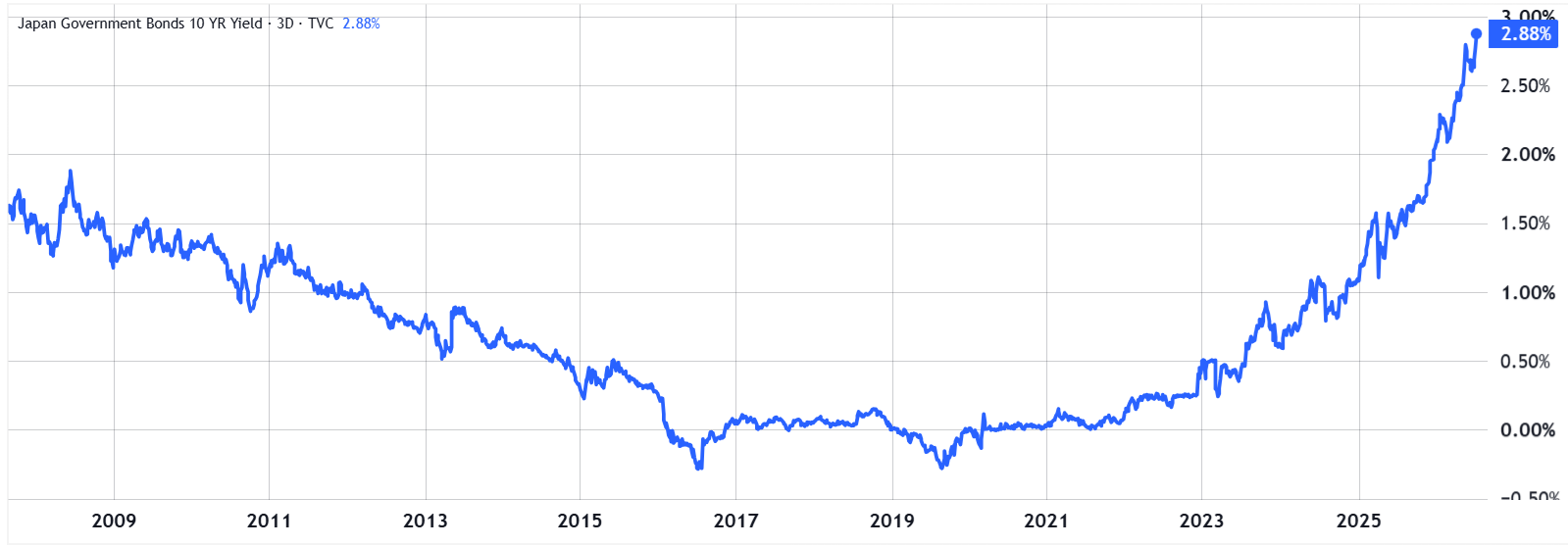
Japan 10-year government bonds yield.
In Japan, government bond yields jumped to a 30-year high, reflecting fears over a lack of central bank independence as the government attempts to adjust the Japan Central Bank’s policy mandate to “achieve a stronger economy.” Japan is the largest foreign holder of US Treasuries, which heightens the risk of global contagion.
The latest round of Bitcoin sales, totaling $216 million, announced by Strategy (MSTR US) on Monday, negatively surprised many after it was revealed that they occurred outside the core $1.25 billion Monetization Program. The company’s 8-K filings stated the program accounts only for proceeds used to fund its cash reserves.
Investors now fear persistent selling pressure from Strategy as the company manages its capital structure and debt obligations, with total annual dividends of $1.76 billion alone. Moreover, Strategy holds over $3.8 billion in convertible debt with the earliest call date before April 2027.
Related: Lyn Alden says Bitcoin needs no savior as Strategy sells $216M of BTC
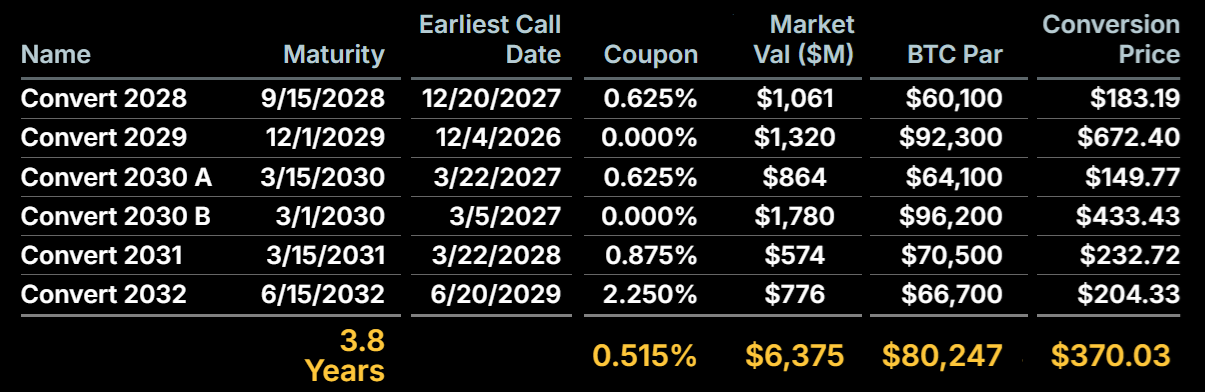
Strategy convertible debt maturity and market value, USD.
On the regulatory front, documents show India’s central bank strongly backing policies that lean toward prohibiting crypto activities, including barring banks from any exposure to virtual assets to safeguard financial stability. The India tax department additionally highlighted risks of evasion.
The signals of tightening global oversight add another layer of negative pressure on Bitcoin’s price and market sentiment. Bitcoin bears remain in control, with risk appetite diminishing due to socio-political instability, prospects of a more restrictive US Fed monetary stance, and Strategy’s ongoing cash needs.
Sentiment is likely to remain fragile, making a retest of the $60,000 support level increasingly probable in the near term.
Disclaimer: The content of this article solely reflects the author's opinion and does not represent the platform in any capacity. This article is not intended to serve as a reference for making investment decisions.
You may also like

Wall Street giants collectively raise rate hike forecasts, US Treasury futures continue to fall, gold drops over 1% to break 4000
After the US October CPI exceeded expectations, Goldman Sachs and Nomura added a forecast for an interest rate hike in March next year, while Deutsche Bank included a forecast for a rate hike in January next year. Currently, the market has fully priced in a 25 basis point rate hike in December, with a 13% probability for a 50 basis point hike. On Wednesday, the US Treasury spot market was closed, but Treasury futures continued to fall, with corresponding yields rising by about 2 to 4 basis points, and spot gold came under pressure, dropping by 1.1%.

No Need to Worry About the Cooling Down of AI Data Center Construction? The US Import Boom Is Unlikely to Subside in the Short Term, Real Impact May Come in 2029
It takes an average of 4.8 years from finalizing investment to starting construction of a data center project, and an additional 2.6 years from construction start to becoming operational. Servers usually cannot be installed until after the building structure and racks are completed. For trade partners such as Taiwan (China), South Korea, and Mexico who rely on US data center supply chain demand, the inertia in construction timelines provides at least a one- to two-year buffer for future exports.

Federal Reserve Major Debate: When Should the Tenure of “Number Three” Williams End?
The main point of contention is whether Williams should step down in June 2028, upon completing a full 10-year term, or in June 2027, when he reaches the mandatory retirement age of 65. Analysts point out that the Federal Reserve Board holds ultimate discretion; if he leaves early, Fed Chair Waller would be able to assert greater control over the appointment to this critical position. However, forcing Williams to shorten his term could easily be interpreted as political manipulation. Williams himself is expected to serve until June 2028.

Crypto prices
More


