
Ether climbs toward $2K as Bitmine buys ETH, Robinhood L2 boost

Key takeaways:
- BitMine’s aggressive ETH accumulation has reinforced the $1,500 support despite $8B unrealized losses.
- Glamsterdam upgrade and Robinhood Chain launch signal stronger TradFi focus for Ethereum’s base layer.
Ether (ETH) price rallied 15% in five days, distancing itself from the $1,500 low hit on June 26. Part of the improvement in investor sentiment can be pinned to the final tests on Ethereum’s Glamsterdam upgrade, targeted for later in 2026. Moreover, BitMine Immersion Technologies' continued Ether accumulation helped strengthen the support level. Will $2,000 come next?
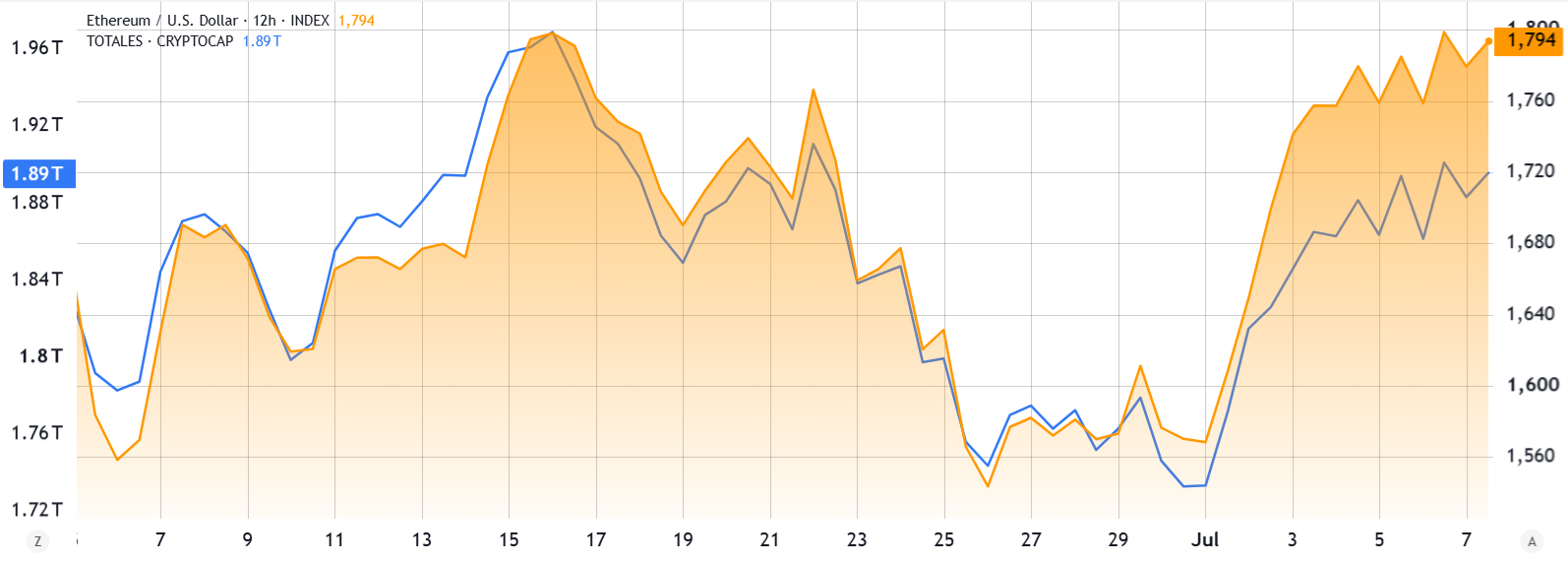
Total crypto capitalization/USD (left) vs. ETH/USD (right). Source:
Ether outperformed the total crypto market capitalization by 7% over the past 30 days. Some excitement came from optimism about the passage of the Digital Assets CLARITY Act, a bill that has faced several hurdles advancing in Congress after pushback from the banking sector on stablecoin regulation and potential rewards to its holders.
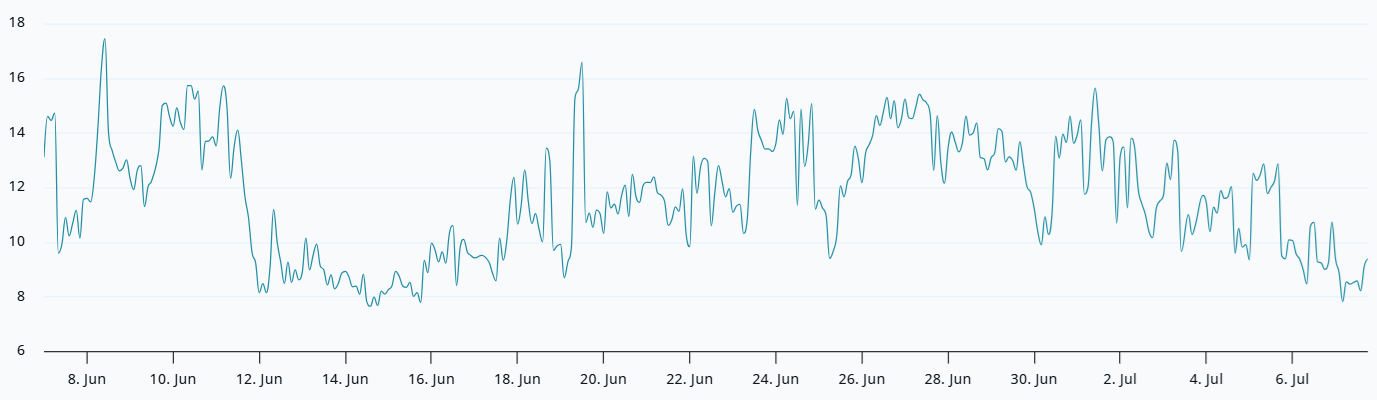
ETH options 25% delta skew (put-call) at Deribit. Source:
Ether’s recent rally toward $1,800 was enough to instill some confidence in ETH options markets as the skew (put-call) metric exited the fear levels that prevailed until Friday. The current 9% premium in put (sell) options relative to equivalent call (buy) instruments is far from bullish, but it distances itself from the 15% mark from the prior week. Levels above 12% typically indicate extreme fear.
Ethereum network upgrade, Robinhood Chain behind ETH price rally
One of Ethereum’s main criticisms lies in its scalability using layer-2 rollups facilitated by data packages (blobs) that drastically reduced transaction fees but triggered fierce debates over long-term data censorship and centralization. Base layer network fees took a hit, which in turn reduced ETH burning and ultimately led to inflationary supply dynamics.
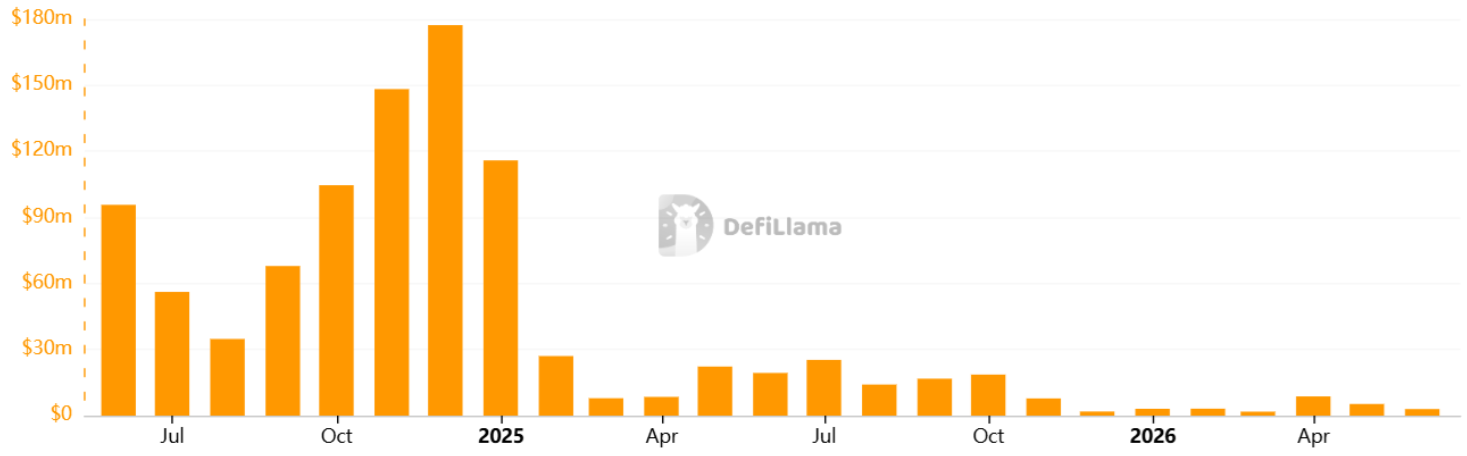
Ethereum base layer monthly network revenue, USD. Source: DefiLlama
The Ethereum Glamsterdam upgrade, currently in the testing phase, should improve network processing speeds by allowing more transactions to be processed in parallel. The proposal will also expand capacity for Ethereum to handle more data at higher throughput and reduce database bloat. One goal is providing institutional-grade infrastructure for financial use cases.
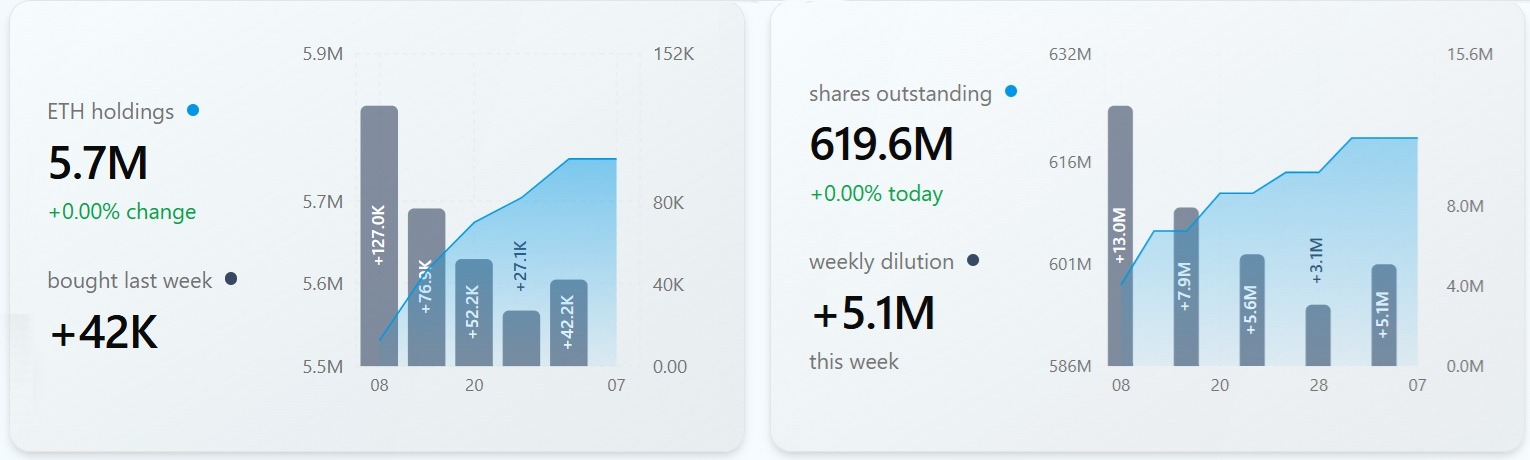
The continued accumulation by the US-listed company BitMine Immersion has likely helped strengthen the $1,500 support. The company increased its holdings by 325,000 ETH over the past month, boosting its reserves to 5.74 million ETH. Regardless of the current $8 billion in unrealized losses on its ETH holdings, BitMine continues its path toward acquiring 5% of the existing supply.
Related: Vitalik Buterin shares priorities for new 'Lean Ethereum' strawmap
The launch of Robinhood Chain on July 2, an EVM-compatible Ethereum layer-2 built using Arbitrum technology, helped consolidate the ecosystem with the traditional finance industry. More importantly, Robinhood rolled out tokenized stock trading in more than 120 countries along with major decentralized finance (DeFi) integrations, including Uniswap, 1inch and Morpho.
While Ethereum onchain and derivatives metrics paint a somewhat bearish picture with low network fees and low conviction in options markets, Ether’s upside comes from real-world traditional finance use case growth and network upgrades capable of significantly expanding base layer capacity. Overall, the path to ETH at $2,000 appears entirely viable in the near term.
Disclaimer: The content of this article solely reflects the author's opinion and does not represent the platform in any capacity. This article is not intended to serve as a reference for making investment decisions.
You may also like
Wall Street giants collectively raise rate hike forecasts, US Treasury futures continue to fall, gold drops over 1% to break 4000
After the US October CPI exceeded expectations, Goldman Sachs and Nomura added a forecast for an interest rate hike in March next year, while Deutsche Bank included a forecast for a rate hike in January next year. Currently, the market has fully priced in a 25 basis point rate hike in December, with a 13% probability for a 50 basis point hike. On Wednesday, the US Treasury spot market was closed, but Treasury futures continued to fall, with corresponding yields rising by about 2 to 4 basis points, and spot gold came under pressure, dropping by 1.1%.

No Need to Worry About the Cooling Down of AI Data Center Construction? The US Import Boom Is Unlikely to Subside in the Short Term, Real Impact May Come in 2029
It takes an average of 4.8 years from finalizing investment to starting construction of a data center project, and an additional 2.6 years from construction start to becoming operational. Servers usually cannot be installed until after the building structure and racks are completed. For trade partners such as Taiwan (China), South Korea, and Mexico who rely on US data center supply chain demand, the inertia in construction timelines provides at least a one- to two-year buffer for future exports.

Federal Reserve Major Debate: When Should the Tenure of “Number Three” Williams End?
The main point of contention is whether Williams should step down in June 2028, upon completing a full 10-year term, or in June 2027, when he reaches the mandatory retirement age of 65. Analysts point out that the Federal Reserve Board holds ultimate discretion; if he leaves early, Fed Chair Waller would be able to assert greater control over the appointment to this critical position. However, forcing Williams to shorten his term could easily be interpreted as political manipulation. Williams himself is expected to serve until June 2028.

Crypto prices
More


