
Bitcoin nears $63.5K into weekly close as trader warns of 'terrible' Monday

Bitcoin (BTC) consolidated near two-week highs into Sunday’s weekly close as traders geared up for fresh market turbulence.
Key points:
- Bitcoin approaches its highest levels in two weeks, but Mondays have been "terrible" for BTC price action, a trader warns.
- BTC/USD is in the process of deciding the fate of its 200-week moving average.
- Crypto market analysis sees "greener shoots" on the back of the latest US macro data.
Trader: Past seven Mondays "absolutely terrible" for BTC price
Data from TradingView showed BTC/USD focusing on $62,700, the site of a key long-term trend line, the 200-week simple moving average (SMA).
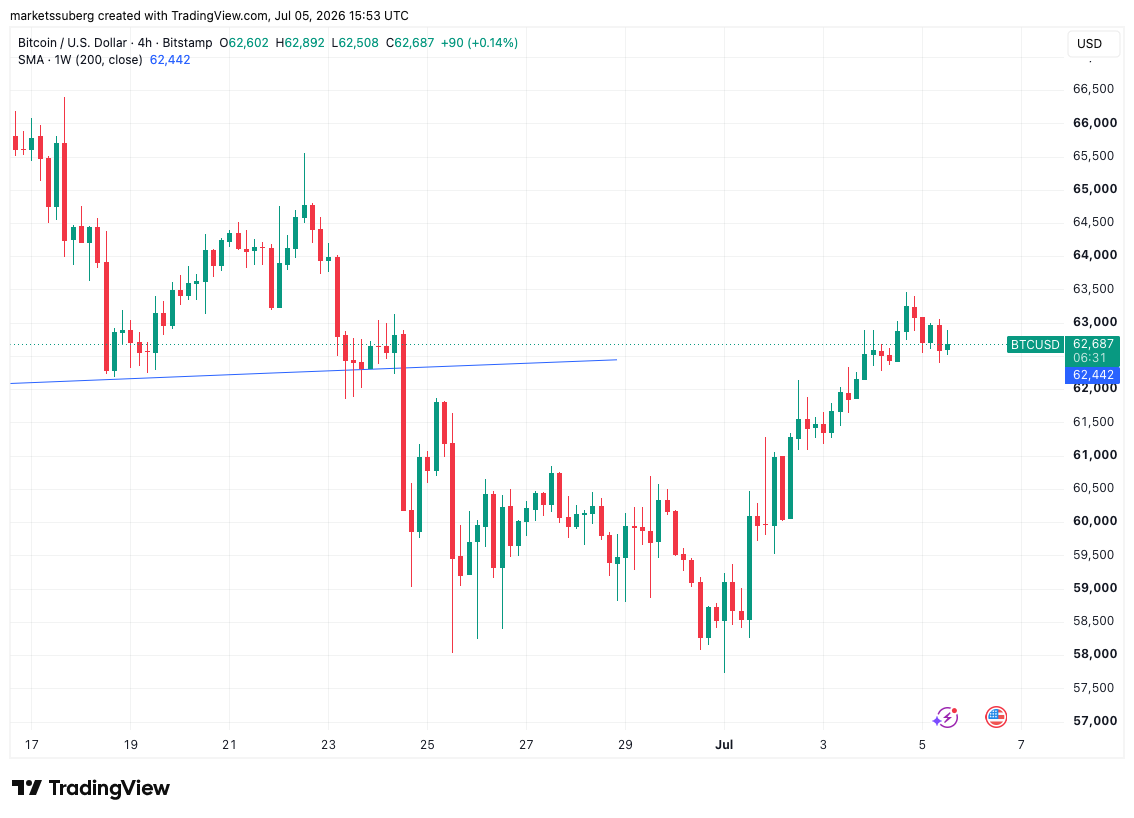
BTC/USD four-hour chart with 200-week SMA. Source: Cointelegraph/TradingView
Bulls managed a trip to $63,450 on Saturday amid thinner exchange order books and a three-day US holiday weekend.
“Seeing stronger passive supply here pressing price from above,” commentator Exitpump wrote in their latest analysis on X.
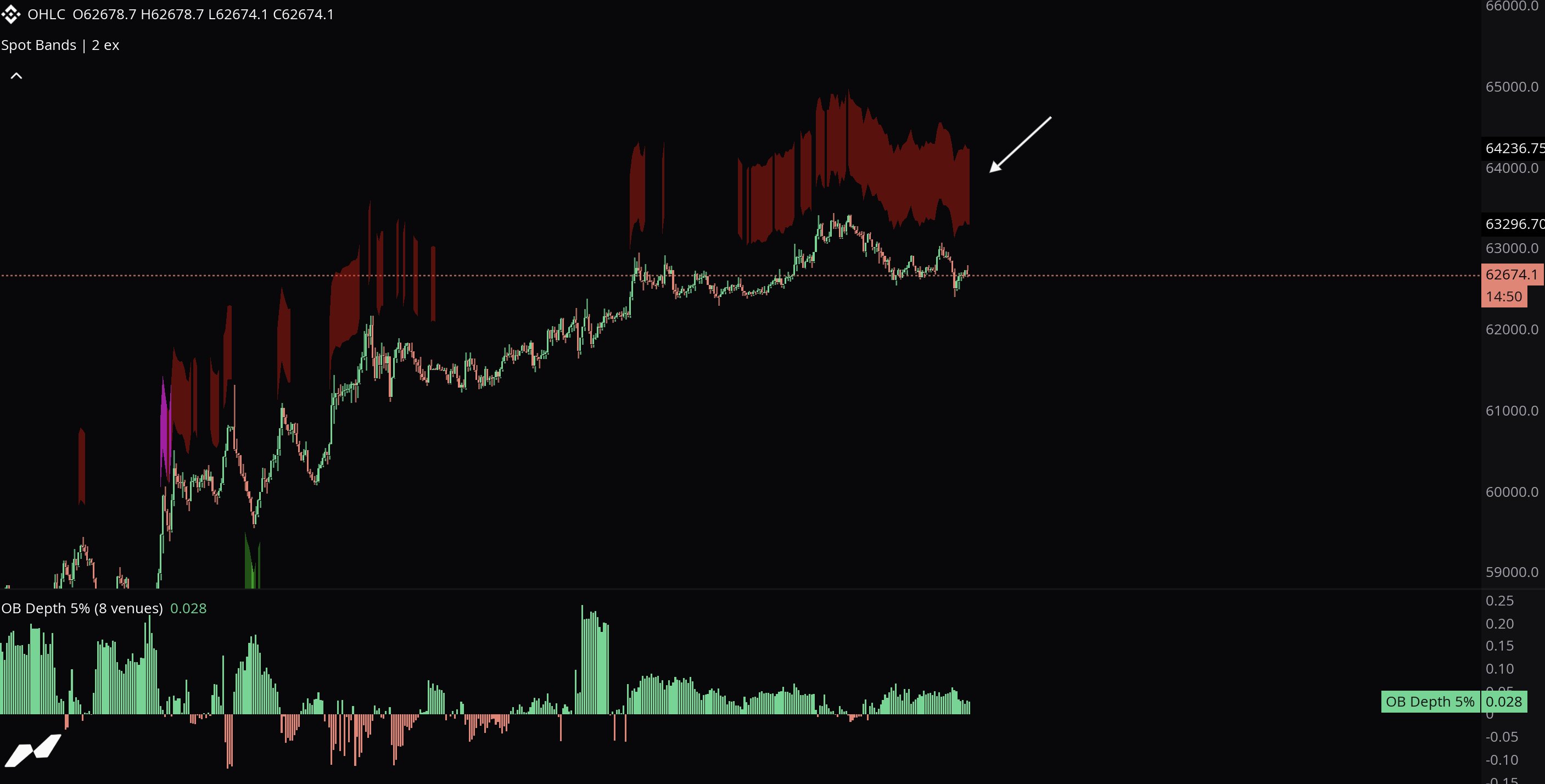
BTC order-book data. Source: Exitpump/X
Trader Daan Crypto Trades flagged short position liquidations as the price gained, with data from CoinGlass putting the 24-hour crypto total at $167 million.
“Classic short squeeze, price grinds higher into a level everyone's shorting until forced covering does the rest,” he commented on X.
“Now the question is whether $62.6K (Weekly 200MA) holds as support or if this was just liquidity getting cleared before rolling over again.”
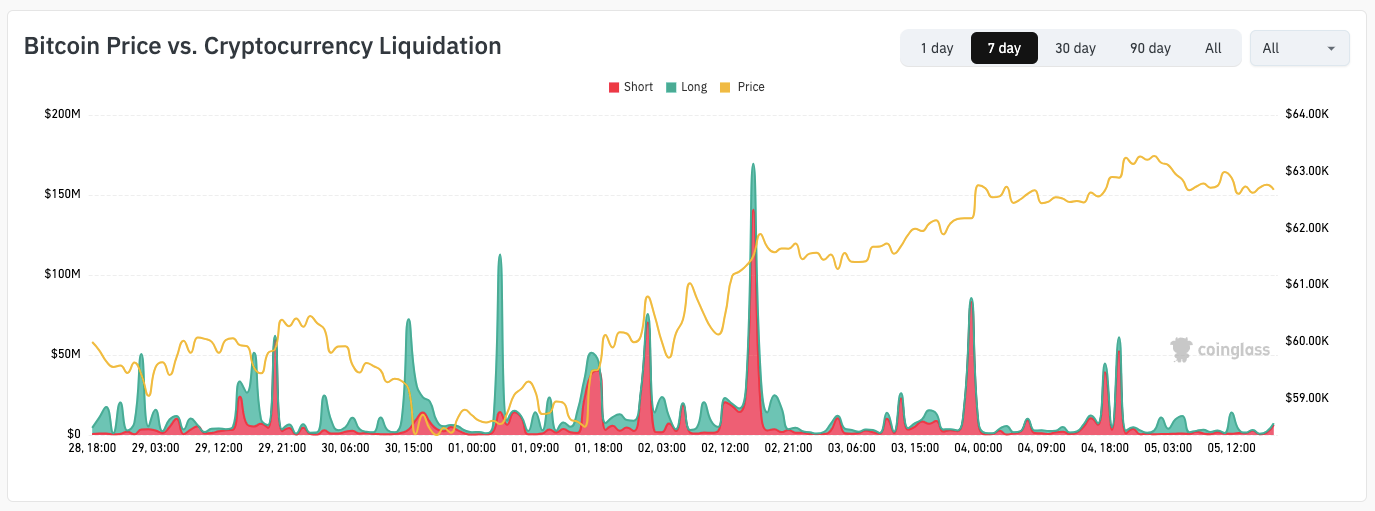
BTC/USD vs. crypto liquidation history (screenshot). Source: CoinGlass
Fellow trader Killa had a word of warning, reiterating that the past seven Mondays had seen major price weakness.
“7/7 Mondays have been absolutely terrible for $BTC,” they told X followers.
“Will we repeat the exact same pattern next week?”
Bitcoin ETFs contribute to crypto's "greener shoots"
In a new analysis published on Friday, trading company QCP Capital eyed potential tailwinds forming for crypto and risk assets.
Related: Bollinger Bands creator eyes Bitcoin bear-market end, 'W'-shaped reversal
These included renewed net inflows to the US spot Bitcoin exchange-traded funds (ETFs).
As Cointelegraph reported, last week’s US nonfarm payrolls report came in below anticipated levels, sparking a softening in hawkish expectations of interest rate hikes by the Federal Reserve.
“The clearest dovish tell was a 2% pop in gold, though that reads more as a real-rate and safe-haven hedge than growth conviction,” it acknowledged.
“Crypto, though, is showing greener shoots: BTC spot ETFs snapped a six-session outflow streak to pull in $224mn on Thursday, their first positive print in over a week and an early sign that dip buyers are stepping back in after roughly $2.4bn of redemptions.”
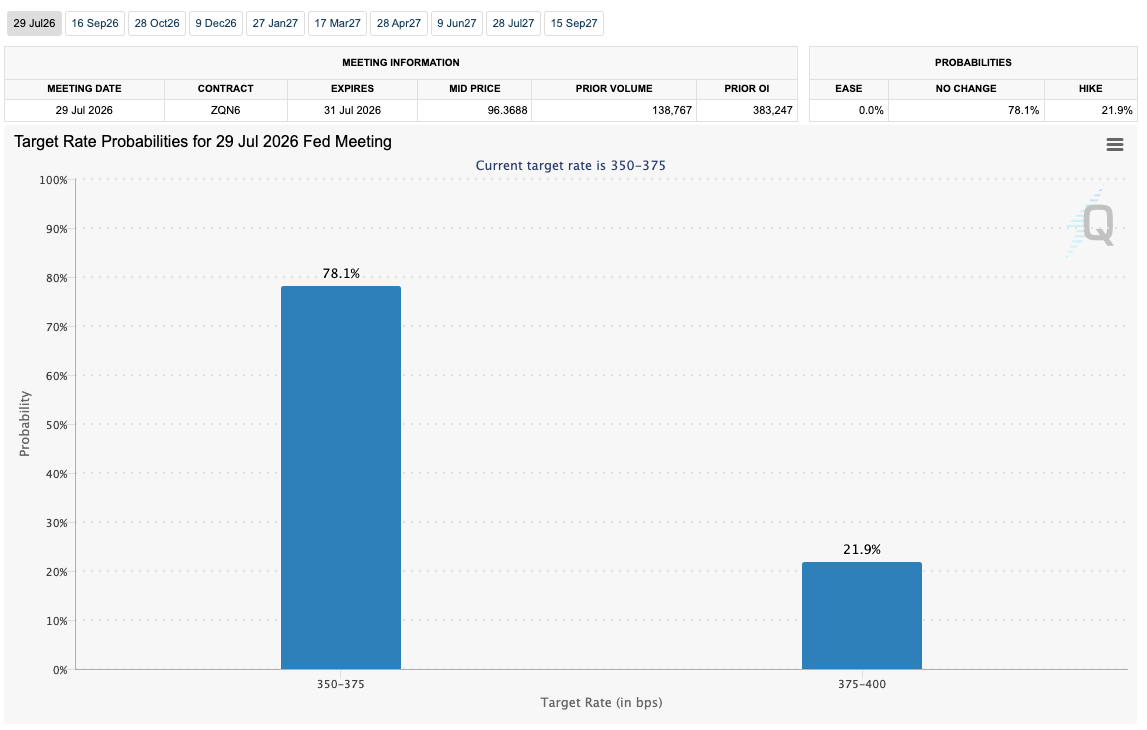
Fed target rate probabilities for July 29 FOMC meeting (screenshot). Source: CME Group
The latest data from CME Group’s FedWatch Tool saw a near-80% chance of the Fed holding rates at current levels at its July 29 meeting.
QCP added that before then, conducive Consumer Price Index (CPI) inflation data would be needed for “broader confirmation of a front-end dovish repricing.”
Disclaimer: The content of this article solely reflects the author's opinion and does not represent the platform in any capacity. This article is not intended to serve as a reference for making investment decisions.
You may also like

Wall Street giants collectively raise rate hike forecasts, US Treasury futures continue to fall, gold drops over 1% to break 4000
After the US October CPI exceeded expectations, Goldman Sachs and Nomura added a forecast for an interest rate hike in March next year, while Deutsche Bank included a forecast for a rate hike in January next year. Currently, the market has fully priced in a 25 basis point rate hike in December, with a 13% probability for a 50 basis point hike. On Wednesday, the US Treasury spot market was closed, but Treasury futures continued to fall, with corresponding yields rising by about 2 to 4 basis points, and spot gold came under pressure, dropping by 1.1%.

No Need to Worry About the Cooling Down of AI Data Center Construction? The US Import Boom Is Unlikely to Subside in the Short Term, Real Impact May Come in 2029
It takes an average of 4.8 years from finalizing investment to starting construction of a data center project, and an additional 2.6 years from construction start to becoming operational. Servers usually cannot be installed until after the building structure and racks are completed. For trade partners such as Taiwan (China), South Korea, and Mexico who rely on US data center supply chain demand, the inertia in construction timelines provides at least a one- to two-year buffer for future exports.

Federal Reserve Major Debate: When Should the Tenure of “Number Three” Williams End?
The main point of contention is whether Williams should step down in June 2028, upon completing a full 10-year term, or in June 2027, when he reaches the mandatory retirement age of 65. Analysts point out that the Federal Reserve Board holds ultimate discretion; if he leaves early, Fed Chair Waller would be able to assert greater control over the appointment to this critical position. However, forcing Williams to shorten his term could easily be interpreted as political manipulation. Williams himself is expected to serve until June 2028.

Crypto prices
More


