
Bitcoin price tags $62.3K nine-day high after global stocks hit historic record

Bitcoin (BTC) saw new July highs on Friday as bulls kept pushing over the US holiday period.
Key points:
- Bitcoin sustains upside momentum as BTC price action nears its 200-week moving average.
- That trend line now forms the centerpoint of a "strong resistance area."
- Global equities hit record levels as Fed rate-hike odds simmer on weaker jobs data.
Bitcoin buyers "chasing" as BTC price eyes key trend line
Data from TradingView showed BTC/USD reaching $62,295 on Bitstamp, its highest since June 24.
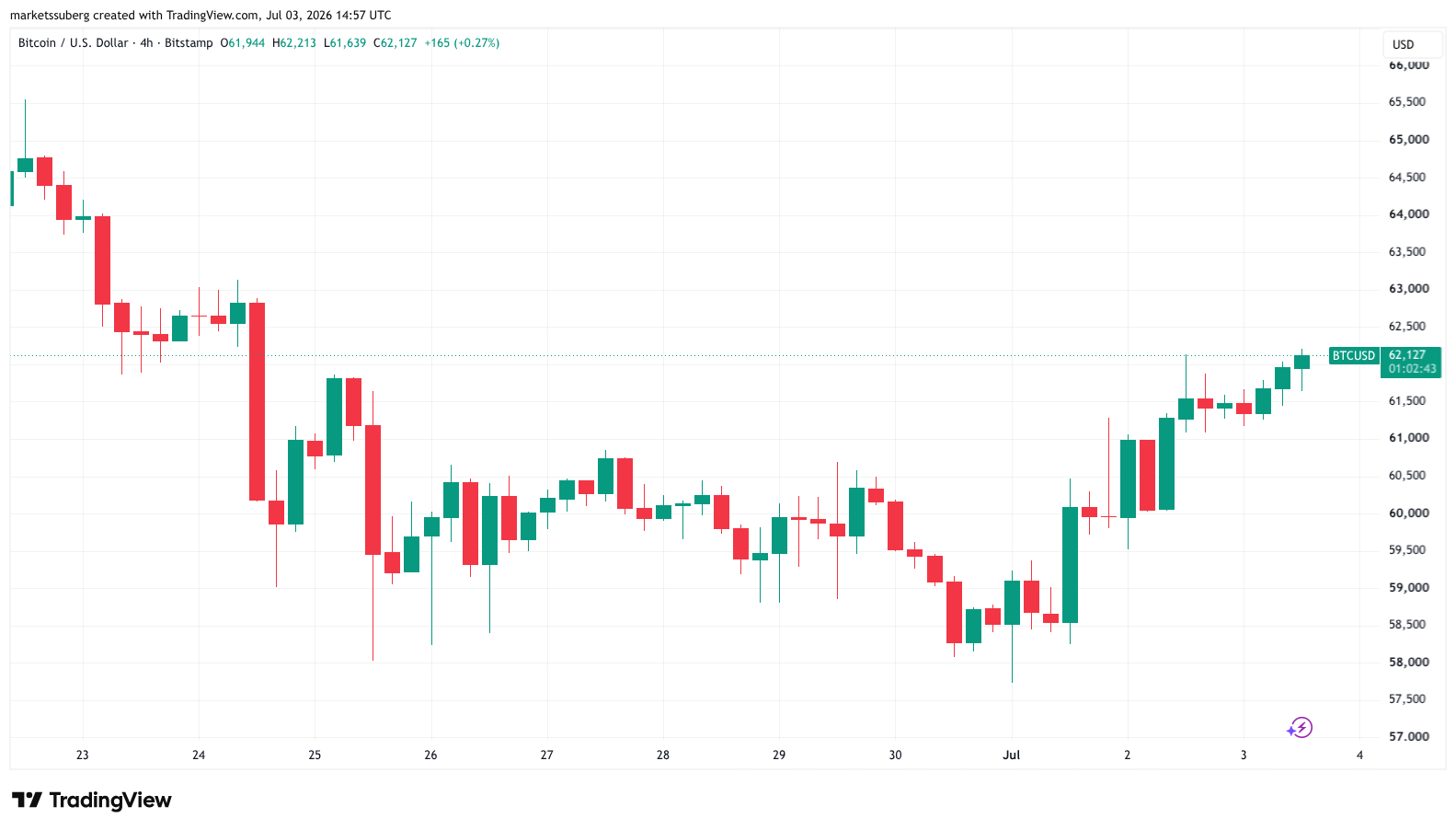
BTC/USD four-hour chart. Source: Cointelegraph/
US markets were closed for the Independence Day holiday, with the Dow Jones closing at record highs the day prior. As noted by trading resource The Kobeissi Letter, the global stock market cap also hit new all-time highs.
“Global equities are in the midst of one of the most powerful rallies in history,” it wrote in a post on X.
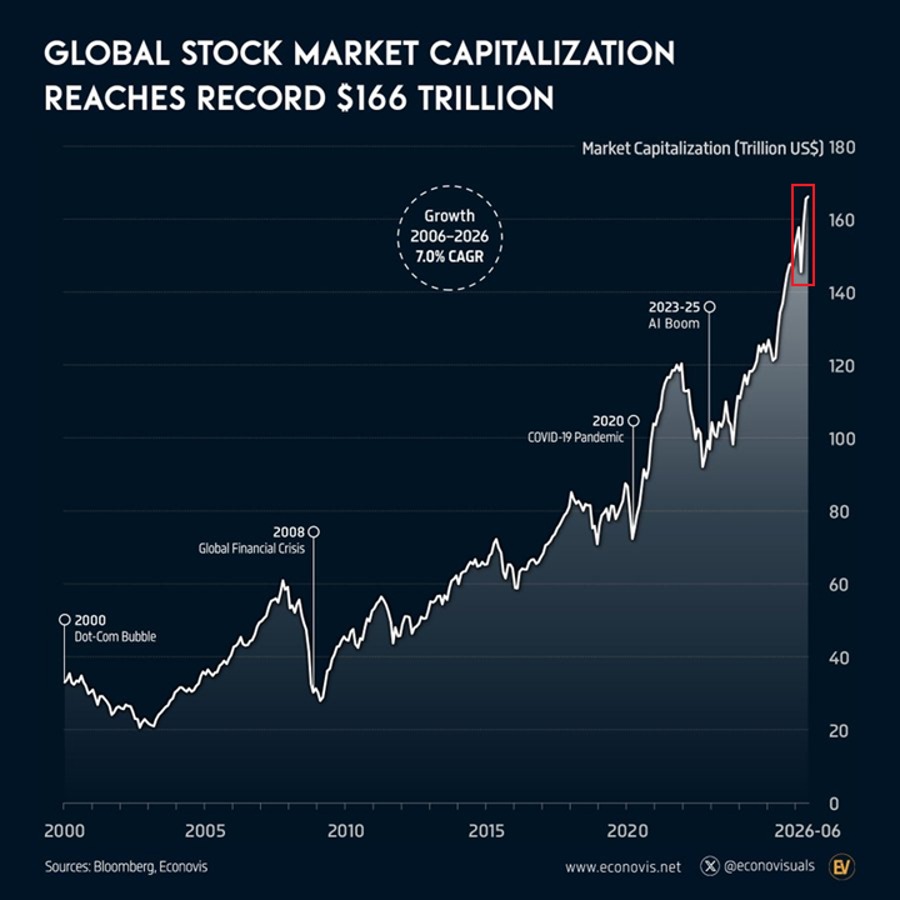
Source: The Kobeissi Letter/X
Commenting on the latest BTC price action, X commentator Exitpump eyed “controlled slow buying” on exchanges.
“Looks good for continuation higher, although keeping in mind 62K - 62.5K as a strong resistance area,” they told X followers.
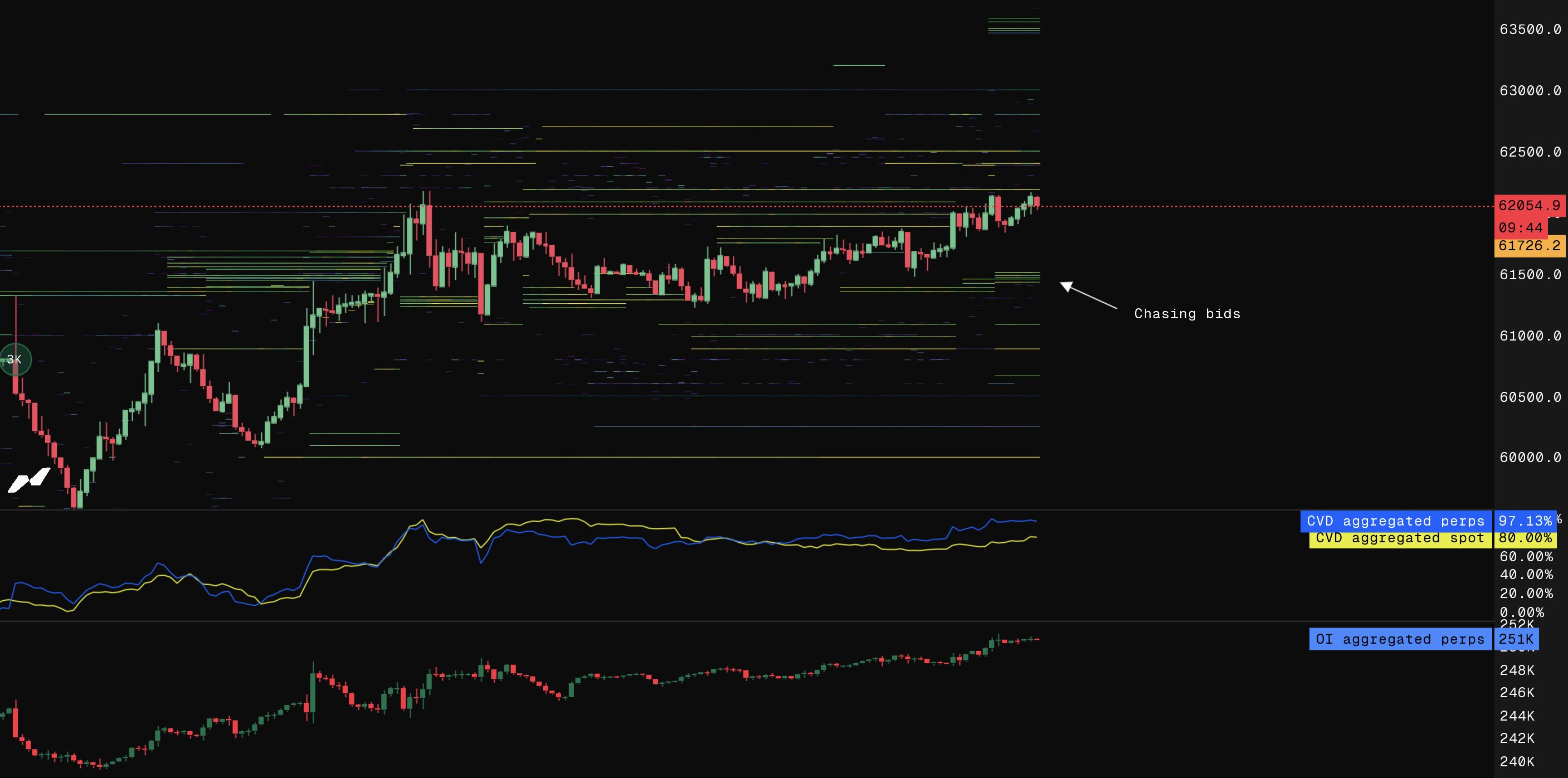
BTC/USD order-book data. Source: Exitpump/X
Trader Daan Crypto Trades focused on the 200-week simple moving average (SMA), currently at $62,652, for the weekly candle close.
“It is key for BTC now to hold this breakout and maintain its low timeframe bullish market structure,” he commented, calling the current trading zone “important.”
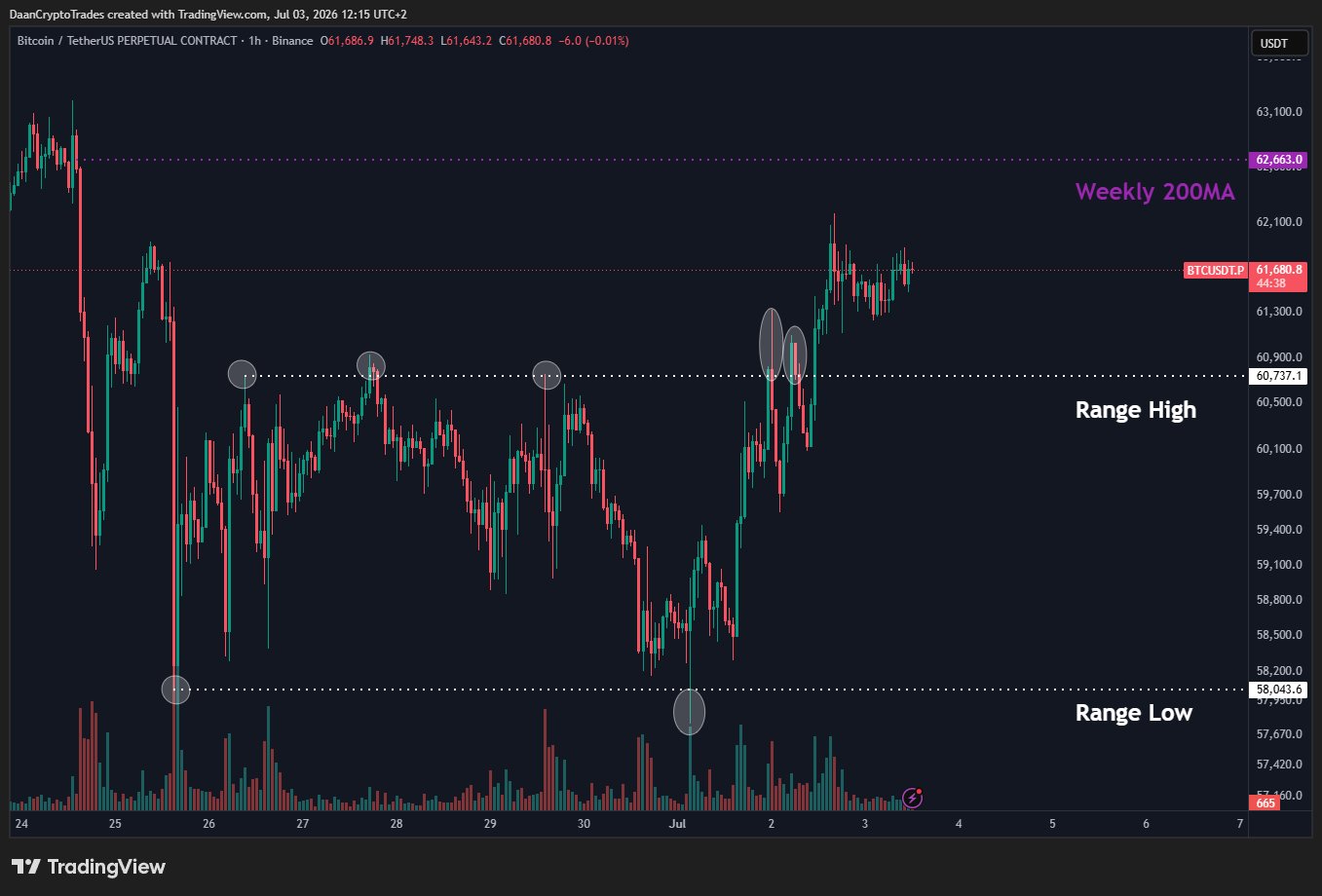
BTC/USDT perpetual contract one-hour chart. Source: Daan Crypto Trades/X
Fed rate-hike headwinds slowly cool
On the back of weak US nonfarm payrolls data, which helped fuel the crypto rebound, trading resource Mosaic Asset Company noted that expectations for Federal Reserve policy remained conservative.
Related:
“The knee-jerk reaction from investors was to push stock index futures higher, signaling a regime where bad economic news is good for stocks due to the impact on the rate outlook,” it wrote in its latest update.
Mosaic referred to interest-rate changes from the Fed, with potential hikes forming a headwind for crypto and risk assets.
The latest data from CME Group’s showed roughly equal odds of a pause or hike at the Fed’s September meeting, with rates staying at current levels until then.
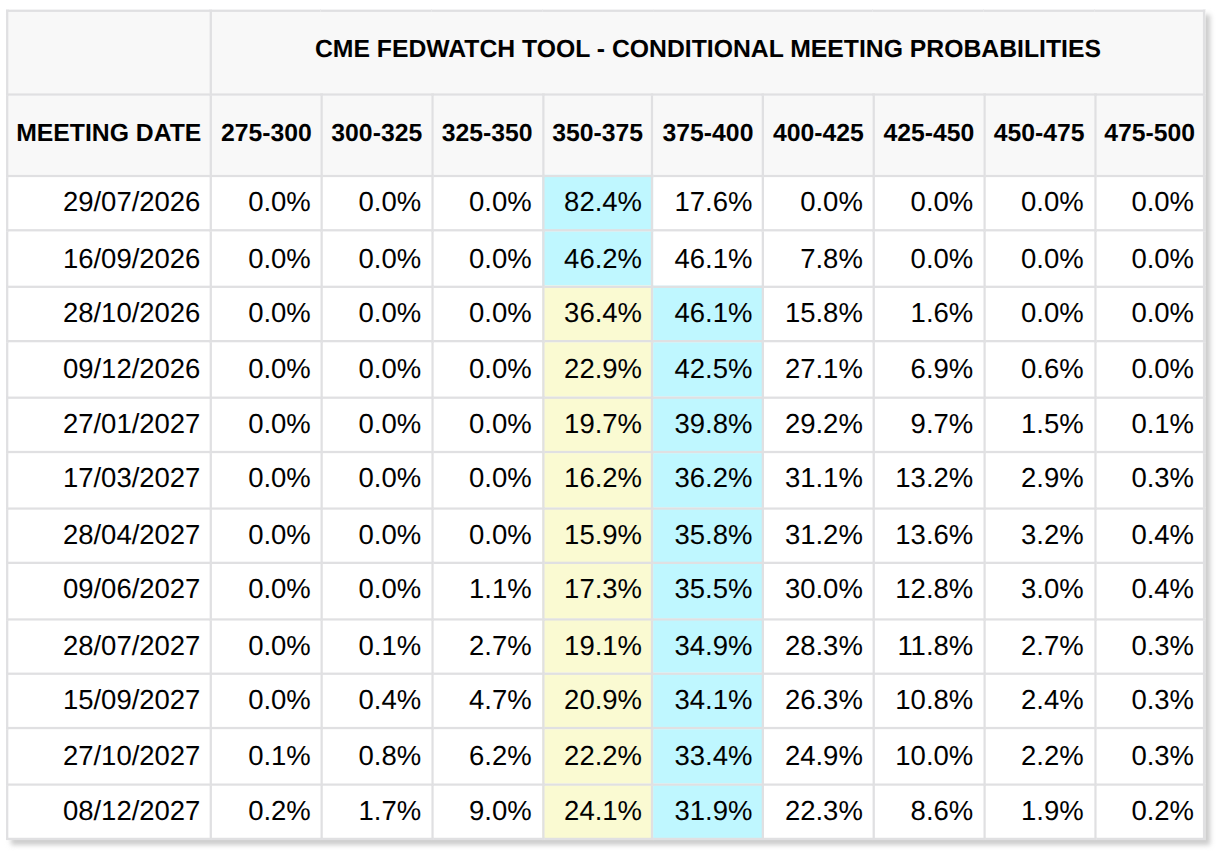
Fed target rate probabilities (screenshot). Source: CME Group
“The reality is that the payrolls report reflects a “Goldilocks” figure for the average stock, which isn’t too cold to stoke growth fears and not too hot to pull additional rate hikes forward,” it summarized about the jobs figures.
Disclaimer: The content of this article solely reflects the author's opinion and does not represent the platform in any capacity. This article is not intended to serve as a reference for making investment decisions.
You may also like

Wall Street giants collectively raise rate hike forecasts, US Treasury futures continue to fall, gold drops over 1% to break 4000
After the US October CPI exceeded expectations, Goldman Sachs and Nomura added a forecast for an interest rate hike in March next year, while Deutsche Bank included a forecast for a rate hike in January next year. Currently, the market has fully priced in a 25 basis point rate hike in December, with a 13% probability for a 50 basis point hike. On Wednesday, the US Treasury spot market was closed, but Treasury futures continued to fall, with corresponding yields rising by about 2 to 4 basis points, and spot gold came under pressure, dropping by 1.1%.

No Need to Worry About the Cooling Down of AI Data Center Construction? The US Import Boom Is Unlikely to Subside in the Short Term, Real Impact May Come in 2029
It takes an average of 4.8 years from finalizing investment to starting construction of a data center project, and an additional 2.6 years from construction start to becoming operational. Servers usually cannot be installed until after the building structure and racks are completed. For trade partners such as Taiwan (China), South Korea, and Mexico who rely on US data center supply chain demand, the inertia in construction timelines provides at least a one- to two-year buffer for future exports.

Federal Reserve Major Debate: When Should the Tenure of “Number Three” Williams End?
The main point of contention is whether Williams should step down in June 2028, upon completing a full 10-year term, or in June 2027, when he reaches the mandatory retirement age of 65. Analysts point out that the Federal Reserve Board holds ultimate discretion; if he leaves early, Fed Chair Waller would be able to assert greater control over the appointment to this critical position. However, forcing Williams to shorten his term could easily be interpreted as political manipulation. Williams himself is expected to serve until June 2028.

Crypto prices
More


