
Bitcoin supply metric prints first 'buy' signal since late 2022 as bear market continues

Bitcoin (BTC) has added another bear-market bottom signal this month as analysis draws comparisons to November 2022.
Key points:
- Bitcoin adds to its list of bear-market bottom signals with a key supply ratio "buy" trigger.
- A bear-market floor could still be some time off, analysis says, with supply held at a loss still relatively low.
- Demand is the missing piece of the puzzle to shore up a bullish rebound.
Bitcoin profit metric echoes 2022 bear-market bottom zone
Crypto analyst Axel Adler Jr., a contributor to onchain analytics platform CryptoQuant, confirmed the return of a key Bitcoin buy signal.
Advanced Net UTXO Supply Ratio, which measures the proportion of the BTC supply which last moved in profit or loss, is back in negative territory for the first time in nearly four years.
“The ratio dropped into deeply negative territory and then crossed back above the signal threshold on the rebound, which caused the model to print BUY on several sessions in late June and early July,” Adler wrote.
“This is the first buy trigger since November 2022, which was the bottom of the previous bear cycle.”
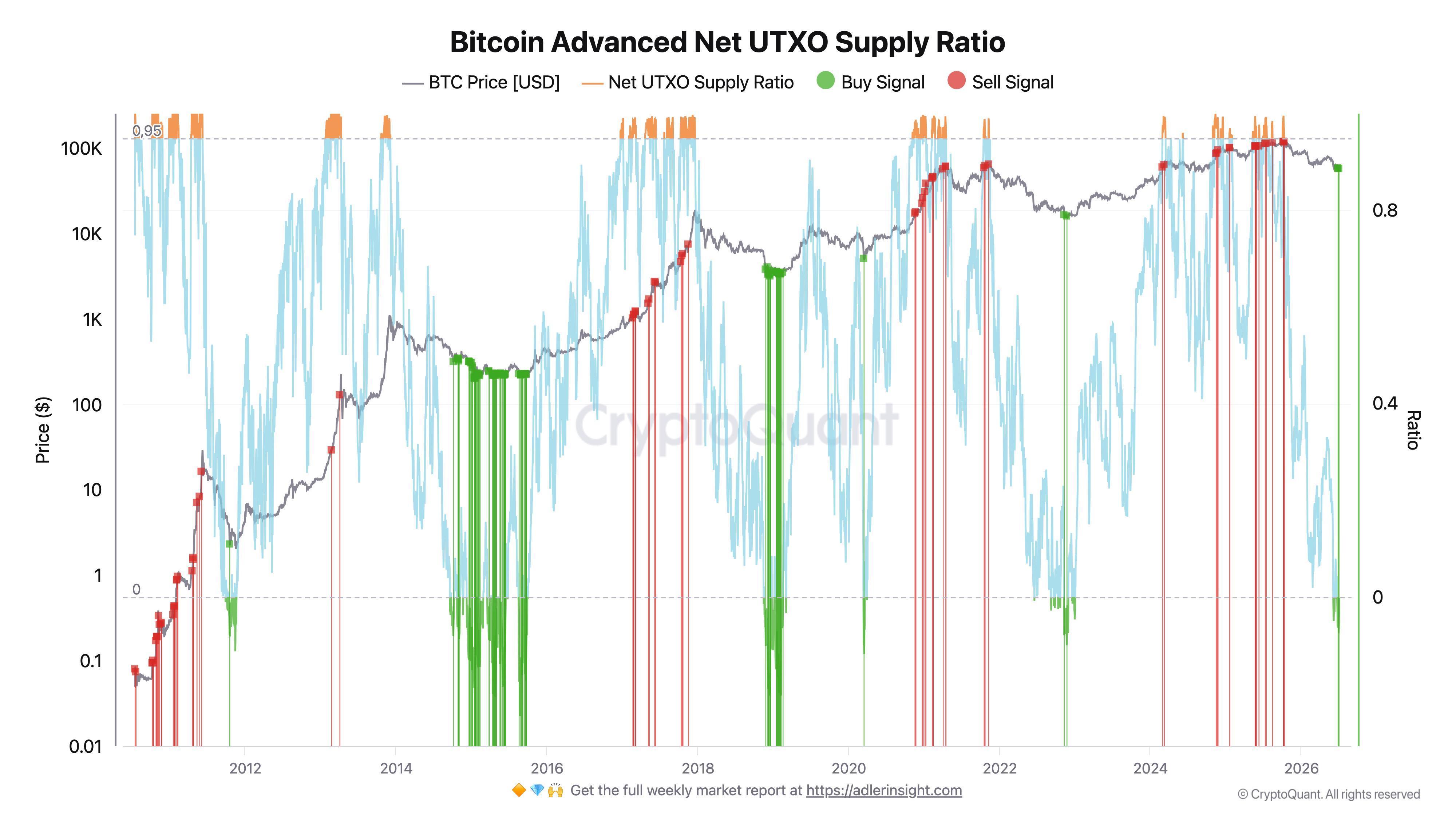
Bitcoin Advanced Net UTXO Supply Ratio. Source: CryptoQuant
UTXO Supply Ratio cues do not imply that a macro bottom has arrived, but occur “near cyclical lows.”
“Confirmation would be the ratio holding above zero together with rising price. The negative scenario is a move back into negative territory without price support,” Adler explained.
A missing piece of the puzzle involves supply being held at a loss, which has not yet reached the levels seen during previous bear markets.
Adler forecast that the 90-day simple moving average (SMA) of supply in loss should hit its bear-market reversal target within two months.
“Until then, it is more accurate to treat capitulation as a process rather than a completed fact,” he continued.
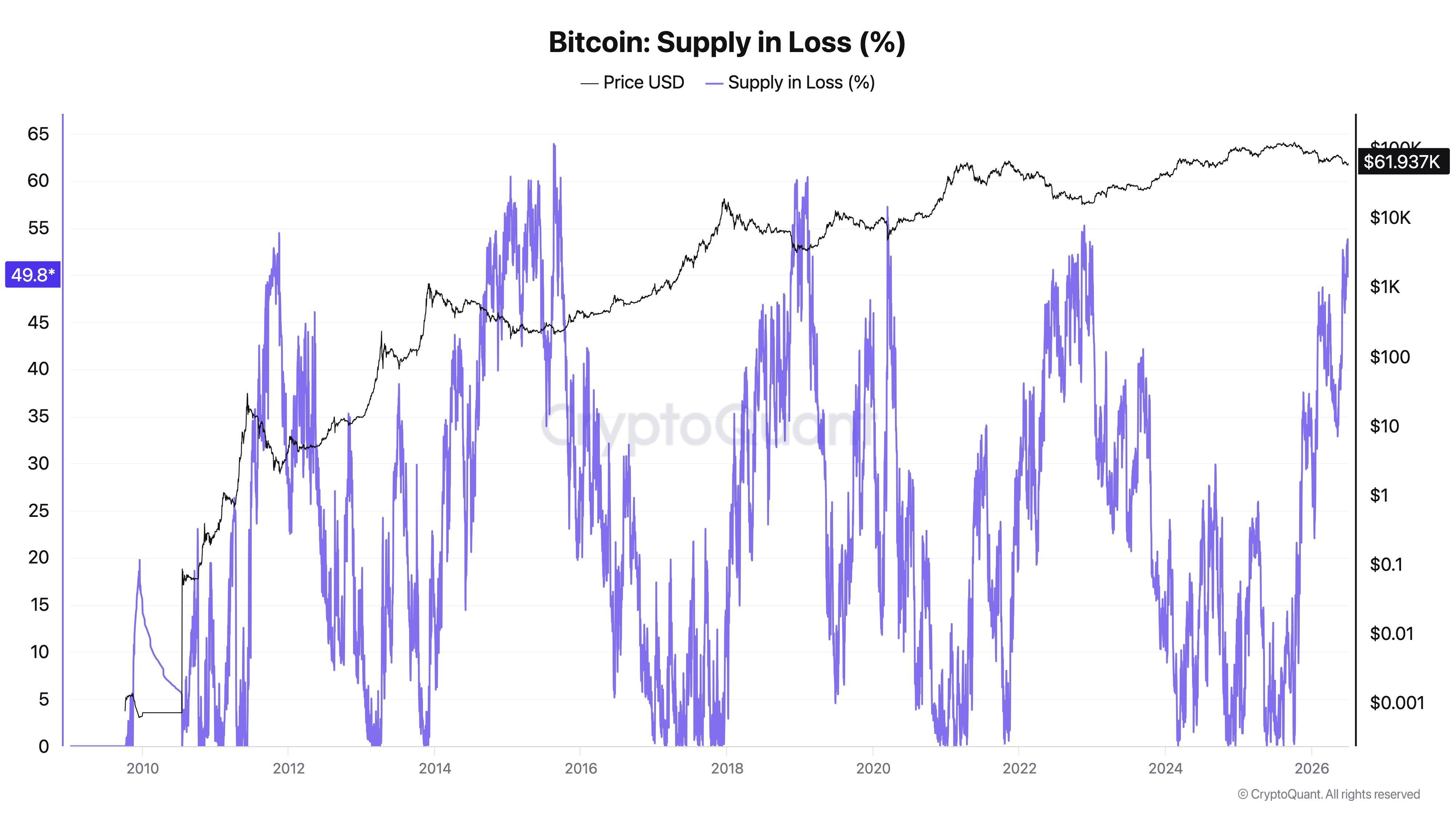
Bitcoin supply in loss. Source: CryptoQuant
Signals will not "stop BTC from going lower"
On the topic of UTXO Supply, fellow CryptoQuant contributor Darkfost also eyed a potential market inflection point this week.
Related: Bitcoin bear market ‘dead’ after first TD9 reversal signal since July 2022 fires
“Since it depends on the profit and loss of UTXOs, it can very well signal something during either a sharp drop or a sharp rise. That said, in terms of cyclicality, it wouldn’t be inconsistent to think that the end of this bear market could be approaching,” he wrote this week.
“This won’t stop BTC from going lower, but we now have several signals pointing to seller exhaustion. The next step is a renewal of demand, and that could take some time.”
As BTC price expectations tend to favor a bear-market bottom coming in Q3 or later.
Disclaimer: The content of this article solely reflects the author's opinion and does not represent the platform in any capacity. This article is not intended to serve as a reference for making investment decisions.
You may also like

Wall Street giants collectively raise rate hike forecasts, US Treasury futures continue to fall, gold drops over 1% to break 4000
After the US October CPI exceeded expectations, Goldman Sachs and Nomura added a forecast for an interest rate hike in March next year, while Deutsche Bank included a forecast for a rate hike in January next year. Currently, the market has fully priced in a 25 basis point rate hike in December, with a 13% probability for a 50 basis point hike. On Wednesday, the US Treasury spot market was closed, but Treasury futures continued to fall, with corresponding yields rising by about 2 to 4 basis points, and spot gold came under pressure, dropping by 1.1%.

No Need to Worry About the Cooling Down of AI Data Center Construction? The US Import Boom Is Unlikely to Subside in the Short Term, Real Impact May Come in 2029
It takes an average of 4.8 years from finalizing investment to starting construction of a data center project, and an additional 2.6 years from construction start to becoming operational. Servers usually cannot be installed until after the building structure and racks are completed. For trade partners such as Taiwan (China), South Korea, and Mexico who rely on US data center supply chain demand, the inertia in construction timelines provides at least a one- to two-year buffer for future exports.

Federal Reserve Major Debate: When Should the Tenure of “Number Three” Williams End?
The main point of contention is whether Williams should step down in June 2028, upon completing a full 10-year term, or in June 2027, when he reaches the mandatory retirement age of 65. Analysts point out that the Federal Reserve Board holds ultimate discretion; if he leaves early, Fed Chair Waller would be able to assert greater control over the appointment to this critical position. However, forcing Williams to shorten his term could easily be interpreted as political manipulation. Williams himself is expected to serve until June 2028.

Crypto prices
More


