
Want a rate cut? The Missing 20 Basis Points: How Statistical Revisions Created a Cooling PCE

On June 26, the U.S. Bureau of Economic Analysis (BEA) announced that it would implement systematic adjustments to the price calculation methods for the three core components of PCE in the annual GDP revision on September 30. These adjustments will cover computer software and accessories, portfolio management and investment advisory services, and legal services, with historical data revisions tracing back to 2021.
As the inflation gauge most closely watched by the Federal Reserve, with the current year-over-year core PCE as high as 3.4%, this adjustment to the PCE’s statistical algorithm by BEA is not neutral but carries a clear downward bias. This change is expected to reduce the year-over-year core PCE reading for May by around 20 basis points to 3.2%, making a surgical downward adjustment to inflation readings from the data source itself; the forecast for core PCE in Q4 2026 will also be revised from 3.1% down to nearly 2.8%. This is significantly below the Fed’s median forecast of 3.3%.
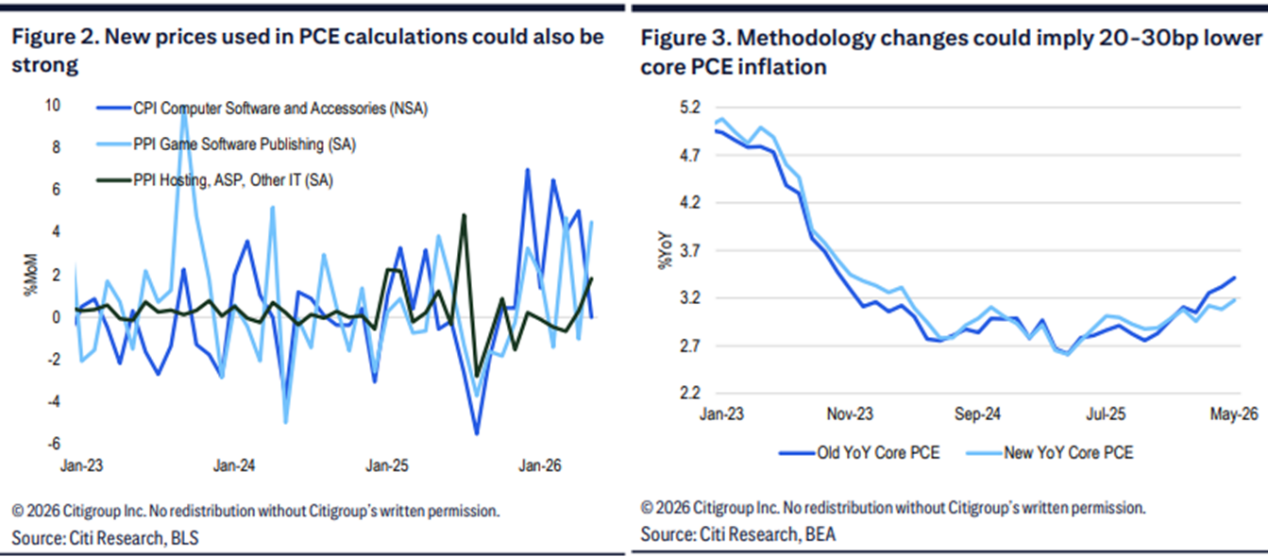
Such a “paper-based” cooling of inflation data will bring two profound macro consequences: First, the divergence between inflation indicators will intensify further. Since core CPI is unaffected by this adjustment, in the coming months, core CPI may show more resilience compared to core PCE, highlighting the discrepancy between different fundamental inflation measurement methods. Second, the revised components are all major positive contributors to core PCE inflation, with a clear bias in the choice of items, revealing an intention to suppress inflation readings.
More critically, the new method will no longer be directly linked to publicly available price indexes, with significantly reduced transparency, making it difficult for external organizations to independently verify the official data. This not only undermines the credibility of statistical indicators, but also makes inflation data more susceptible to influence from political cycles, posing the risk of concealing genuine inflationary pressures.
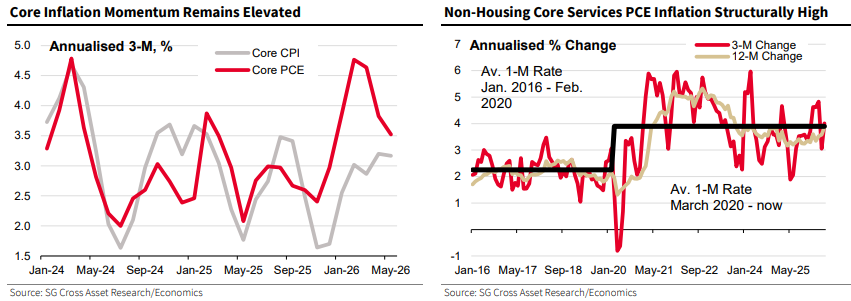
Paper-Based Cooling: How Do 20 Basis Points Disappear Out of Thin Air?
This PCE algorithm revision is essentially a statistical technique adjustment that filters out short-term economic volatility by altering the “price proxy variables.”
Disclaimer: The content of this article solely reflects the author's opinion and does not represent the platform in any capacity. This article is not intended to serve as a reference for making investment decisions.
You may also like
CoreWeave's surge gives AI cloud a breather, now all eyes are on the Anthropic IPO and Nvidia
CoreWeave’s Q3 revenue and guidance both exceeded expectations, with its stock price surging 25% in a single day and the new cloud sector soaring over 12%. Reports of Anthropic’s potential $1.5 trillion IPO valuation, OpenAI’s quarterly revenue surpassing $10 billion for the first time, and these three positive catalysts together have boosted confidence in the AI computing power industry chain, which was previously troubled by doubts about AI returns. Next week’s Nvidia earnings report and Anthropic’s IPO will be the true test of whether this rally can continue.

AI Computing Power and Semiconductors Stage a Strong Rebound—Why Is Wall Street Cautious About U.S. Stocks? Key Indicators Reveal the Bottom Hasn't Been Reached
The sharp volatility in the US stock market has prompted investors to carefully analyze various data to determine whether the sell-off has ended. Early indicators suggest that it may be too soon to declare that the market has resumed its normal upward trajectory.
Nvidia (NVDA.US) Governance Crisis Escalates: Jensen Huang Exposed for Another Affair, Board Considers Dismissal, and Wall Street Begins Pricing in a “No Jensen” Scenario
The world's most valuable semiconductor company is experiencing the most severe corporate governance crisis since its establishment.
Crypto prices
More


