Bitget App
Trade smarter
Buy cryptoMarketsTradeFuturesStocksEarnInstitutionAI & More
Why is SOL losing despite Solana beating Hyperliquid on the revenue front?

Why is SOL losing despite Solana beating Hyperliquid on the revenue front?

CryptoNewsNetCryptoNewsNet2026/06/23 12:30
By:CryptoNewsNet
Back to the list

Why is SOL losing despite Solana beating Hyperliquid on the revenue front?

Why is SOL losing despite Solana beating Hyperliquid on the revenue front? image 0  ambcrypto.com 26 m
Why is SOL losing despite Solana beating Hyperliquid on the revenue front? image 1

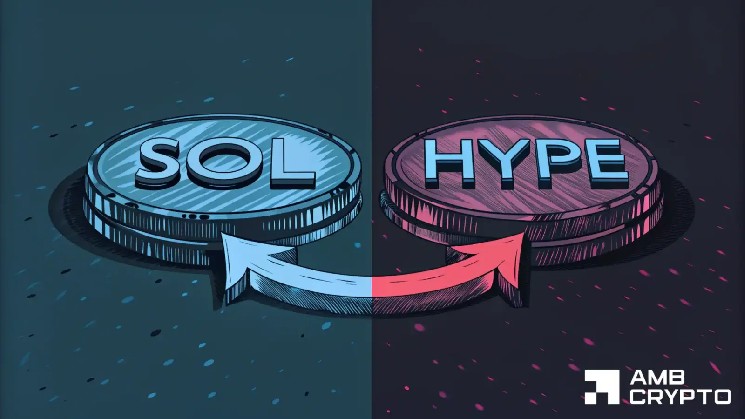
Solana [$SOL] is generating more app revenue than Hyperliquid [$HYPE], but does that translate to value for token holders?

While the former’s revenue stays with apps built on the network, the latter’s model is more directly linked to the $HYPE token. Here’s why that matters…

Solana leads app revenue, but Hyperliquid has a clear token link!

At the time of writing, Solana was ahead in 24-hour app revenue, generating almost twice as much as Hyperliquid. Now, it may look like a clear win for Solana but for token holders, there’s more.

A large part of Solana’s app revenue goes to the applications built on the network, not directly to $SOL holders. Hence, it’s clear that network activity isn’t translating into direct value for the $SOL token.

Hyperliquid works differently though. Since much of its revenue comes from its own perpetuals exchange, it has a more direct connection to the $HYPE token through buybacks and burns.

$SOL leads Open Interest, but $HYPE isn’t far behind

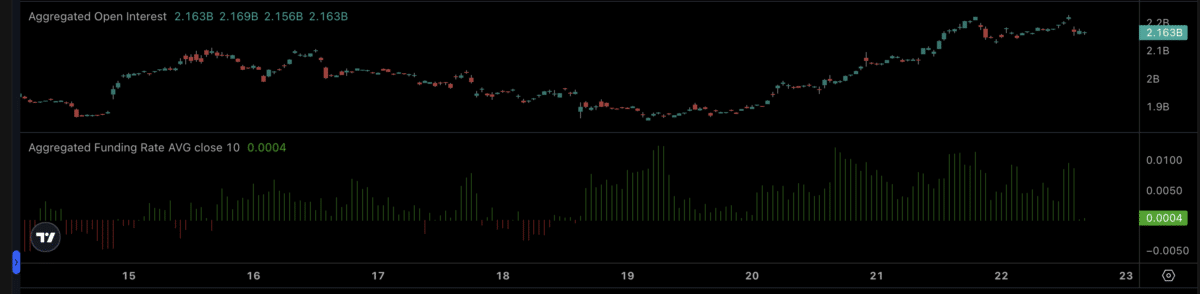
At press time, $SOL had slightly higher aggregated Open Interest at around $2.16 billion, compared to $HYPE’s $2.06 billion. Traders still seemed to have a little more capital around $SOL contracts.
Why is SOL losing despite Solana beating Hyperliquid on the revenue front? image 2 Source: Coinalyze

The gap didn’t appear to be too wide though. In fact, for a newer token like $HYPE, staying close to $SOL on Open Interest is actually notable.
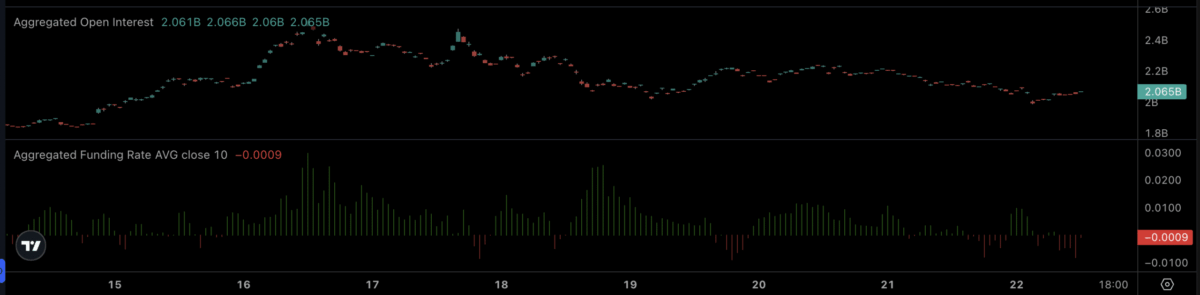
Why is SOL losing despite Solana beating Hyperliquid on the revenue front? image 3 Source: Coinalyze

However, $SOL’s funding was mildly positive at 0.0004 too. $HYPE’s funding was negative at -0.0009, implying that its positioning was less crowded on the long side.

Usage matters, but value capture matters more

On the price charts, $HYPE has gone up nearly 64% in the past two months, while $SOL went down by around 15%. That is a wide gap, especially when Solana is still leading in app revenue.

By extension, this means revenue alone may not be enough. Investors should also look at how that revenue supports the token.
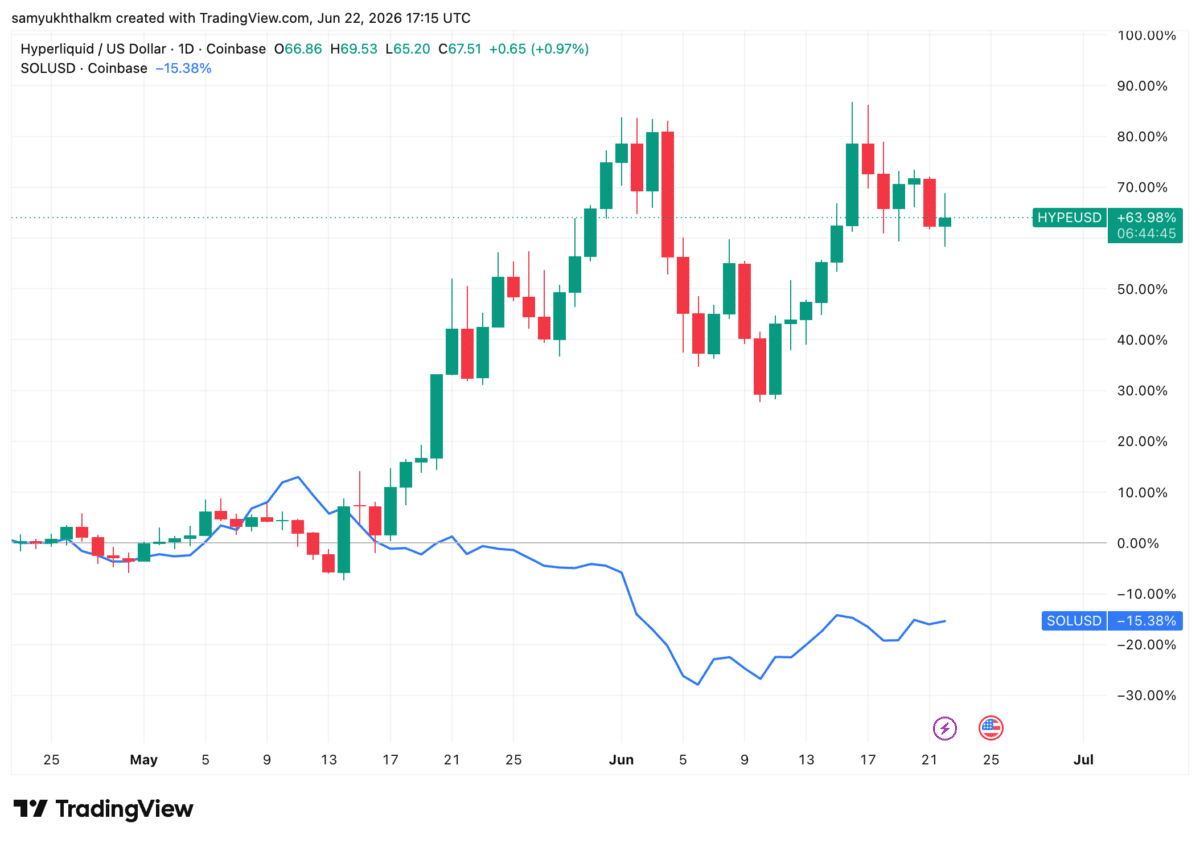
Why is SOL losing despite Solana beating Hyperliquid on the revenue front? image 4 Source: TradingView

For $SOL, the network activity has not translated into stronger token performance. As far as $HYPE is concerned, the market is rewarding a model which helps increase token value.

Final Summary

  • Solana leads Hyperliquid in 24-hour app revenue, but that revenue isn’t coming back to $SOL holders.
  • Token value capture can matter more than network activity.

0
0

Disclaimer: The content of this article solely reflects the author's opinion and does not represent the platform in any capacity. This article is not intended to serve as a reference for making investment decisions.

Understand the market, then trade.
Bitget offers one-stop trading for cryptocurrencies, stocks, and gold.
Trade now!

You may also like

The AI boom may follow the path of the 19th-century railway bubble, and builders may not be the ultimate winners

Goldman Sachs analyst Bobby Molavi compared the current situation to the 19th-century British railway mania: 500 companies spent more than the nation's annual income building 8,000 miles of railway, with most early investors losing out, while the real beneficiaries were the later "passengers." He pointed out that the current AI craze is driven by both debt and momentum, and that the S&P 500’s forward P/E ratio of 18x is only "a bit cheaper." Whether the builders can retain value is uncertain, and history does not offer an optimistic answer.

华尔街见闻•2026/11/12 03:56
The AI boom may follow the path of the 19th-century railway bubble, and builders may not be the ultimate winners

If Anthropic's IPO goes smoothly and the stock price rises next week, then everything remains the same for AI. Otherwise, some companies will go bankrupt.

The shrinking valuations of two major giants have triggered a chain reaction—investors are adopting more conservative revenue multiples for AI startups and are directly halting high-valuation financing for companies with zero revenue. Multiple venture capital firms have advised their portfolio companies to lower valuation expectations and to quickly build up cash reserves. Market participants warn that the outcome of Anthropic’s IPO will be a barometer for the industry: if successful, the boom will continue; if it fails, some companies may face elimination.

华尔街见闻•2026/11/12 03:46

After the Brazilian election, political discount deepens; Morgan Stanley remains bullish on Petrobras (PBR.US), focusing on fuel pricing and dividends

Morgan Stanley still maintains its most optimistic "Overweight" rating, but has lowered its year-end 2027 target price from $31 to $25.

智通财经•2026/11/12 03:42
After the Brazilian election, political discount deepens; Morgan Stanley remains bullish on Petrobras (PBR.US), focusing on fuel pricing and dividends

Corning (GLW.US) receives initial "Buy" rating from Jefferies! AI factories driving a fiber optic rush, with a potential global supply gap of up to 30%

For Corning, the recent profit growth mainly comes from the expansion of AI clusters. As the number of optical links crossing cabinets and campuses increases, customers need to deploy more optical fibers within limited conduit and cabinet space, thus driving demand for high-density optical cables and connection systems.

智通财经•2026/11/12 02:47
Corning (GLW.US) receives initial "Buy" rating from Jefferies! AI factories driving a fiber optic rush, with a potential global supply gap of up to 30%