
Indonesia Stock Market Retains Its Status, But Bigger Challenges Lie Ahead?

On the morning of June 24, MSCI will announce the results of its annual market classification review. Currently, the market generally expects Indonesia to retain its emerging market status, and the previously feared risk of a downgrade to frontier market has been largely ruled out.
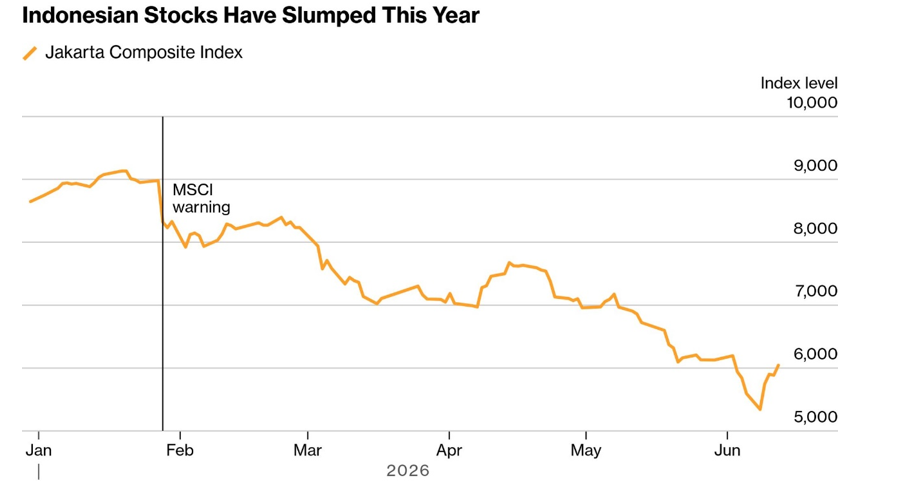
Back in January, MSCI issued a rare warning of downgrade to Indonesia due to insufficient shareholding structure transparency, a low proportion of free float shares, and concerns regarding market integrity. After the announcement, investors feared that Indonesia might be excluded from the MSCI Emerging Markets Index system, triggering large-scale passive capital outflows. The Jakarta Composite Index plummeted over 15% in two days, triggering circuit breakers successively and marking its steepest decline since the 1998 Asian financial crisis.
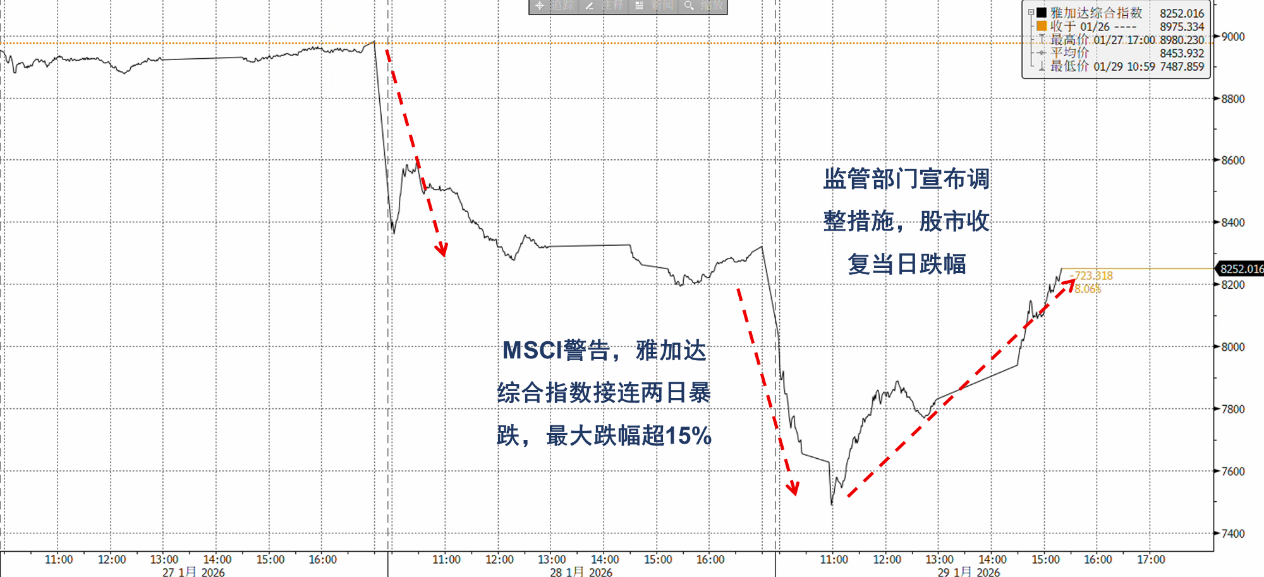
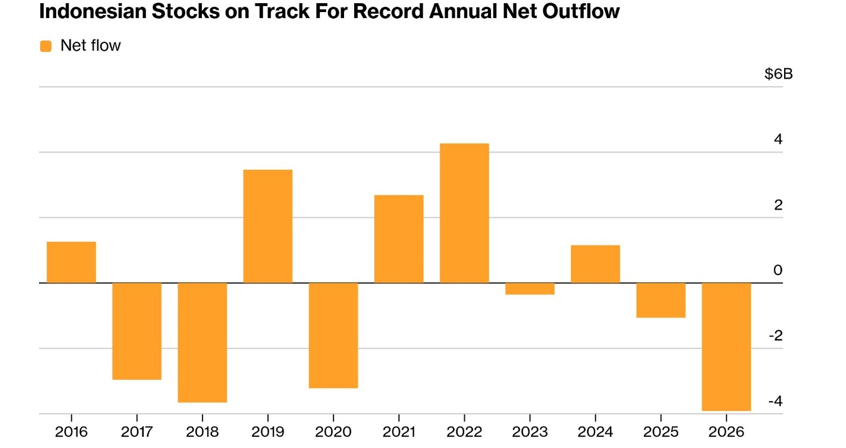
Although Indonesian regulators subsequently launched several urgent reform measures—such as raising the minimum free float ratio from 7.5% to 15%, lowering the shareholder disclosure threshold from 5% to 1% with monthly disclosures, and publishing a list of companies with highly concentrated shareholding—in May, MSCI still removed 18 Indonesian stocks from its indices. This shows that fundamental doubts about Indonesia's capital market reforms remain. So far this year, the Indonesian stock market has fallen by 31%, with a cumulative net foreign capital outflow approaching $4 billion, making it the worst performing major stock market globally.
However, according to MSCI’s latest market accessibility assessment released on June 19, despite downgrading Indonesia’s information flow indicator to negative, the other 17 key indicators covering market access, capital mobility, and investment convenience remained unchanged. This suggests that MSCI is more inclined to urge Indonesia to continue its reforms rather than trigger a downgrade process.
The worst-case scenario is avoided, but it does not mean a market rebound is imminent
The short-term removal of downgrade risk has helped Indonesia avoid tail-end risks of up to $13 billion in passive capital outflows, prevented similar actions by FTSE Russell, S&P Dow Jones, and other index providers, and is also helping ease the ongoing foreign capital withdrawal. The market no longer needs to price in extreme scenarios.
Secondly, the reforms pushed by regulators over the past few months have received a degree of recognition from MSCI. Although these measures have not fully resolved the issues, they at least indicate the regulatory body’s willingness to improve market transparency.
However, maintaining MSCI status mainly means things won't get worse, rather than starting to get better.
Disclaimer: The content of this article solely reflects the author's opinion and does not represent the platform in any capacity. This article is not intended to serve as a reference for making investment decisions.
You may also like
The AI boom may follow the path of the 19th-century railway bubble, and builders may not be the ultimate winners
Goldman Sachs analyst Bobby Molavi compared the current situation to the 19th-century British railway mania: 500 companies spent more than the nation's annual income building 8,000 miles of railway, with most early investors losing out, while the real beneficiaries were the later "passengers." He pointed out that the current AI craze is driven by both debt and momentum, and that the S&P 500’s forward P/E ratio of 18x is only "a bit cheaper." Whether the builders can retain value is uncertain, and history does not offer an optimistic answer.

If Anthropic's IPO goes smoothly and the stock price rises next week, then everything remains the same for AI. Otherwise, some companies will go bankrupt.
The shrinking valuations of two major giants have triggered a chain reaction—investors are adopting more conservative revenue multiples for AI startups and are directly halting high-valuation financing for companies with zero revenue. Multiple venture capital firms have advised their portfolio companies to lower valuation expectations and to quickly build up cash reserves. Market participants warn that the outcome of Anthropic’s IPO will be a barometer for the industry: if successful, the boom will continue; if it fails, some companies may face elimination.
After the Brazilian election, political discount deepens; Morgan Stanley remains bullish on Petrobras (PBR.US), focusing on fuel pricing and dividends
Morgan Stanley still maintains its most optimistic "Overweight" rating, but has lowered its year-end 2027 target price from $31 to $25.

Corning (GLW.US) receives initial "Buy" rating from Jefferies! AI factories driving a fiber optic rush, with a potential global supply gap of up to 30%
For Corning, the recent profit growth mainly comes from the expansion of AI clusters. As the number of optical links crossing cabinets and campuses increases, customers need to deploy more optical fibers within limited conduit and cabinet space, thus driving demand for high-density optical cables and connection systems.

Crypto prices
More


