Bitget App
Trade smarter
Buy cryptoMarketsTradeFuturesStocksEarnInstitutionAI & More
Why Isn’t Robert Kiyosaki Buying the Dip in BTC, ETH, Gold, and Silver?

Why Isn’t Robert Kiyosaki Buying the Dip in BTC, ETH, Gold, and Silver?

CryptoNewsNetCryptoNewsNet2026/06/20 23:03
By:CryptoNewsNet
Back to the list

Why Isn’t Robert Kiyosaki Buying the Dip in BTC, ETH, Gold, and Silver?

Why Isn’t Robert Kiyosaki Buying the Dip in BTC, ETH, Gold, and Silver? image 0  cryptopotato.com 11 m
Why Isn’t Robert Kiyosaki Buying the Dip in BTC, ETH, Gold, and Silver? image 1

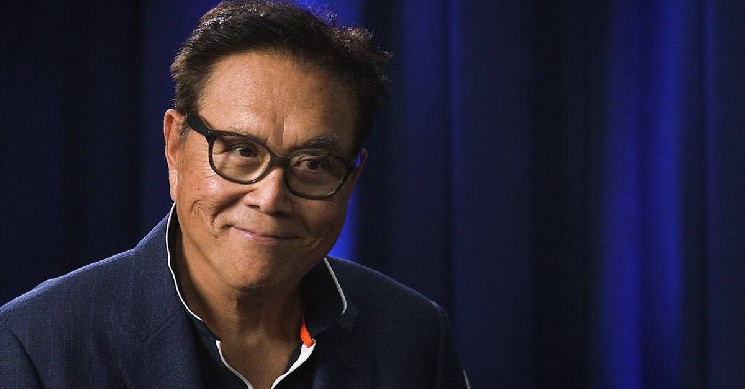
Current prices are not the most important thing when it comes to determining whether it’s the right time to acquire a certain asset, said the person behind one of the most popular investment books, Rich Dad, Poor Dad.

Kiyosaki further explained when he is prepared to start acquiring more BTC, $ETH, silver, and gold amid all assets’ recent declines.

When Will Kiyosaki Start Buying Again?

It has been a wild year for investors in all assets. Bitcoin’s price began the year with a surge toward $100,000, where it was stopped, and the subsequent months were quite painful. The correction culmination, at least for now, was in early June at $59,100. $ETH followed a similar path, dumping to $1,500 a few weeks back. Although both have recovered some ground since then, they are still deep in the red YTD.

Even the two largest precious metals, typically considered more stable and reliable, have bled out. Silver pumped above $120 at the start of the month, but now sits nearly 50% away from that peak. Gold rocketed to $5,600/oz, but its crash has been quite painful, ending the business week at under $4,160/oz (a 25% correction).

Robert Kiyosaki believes these dips are not the only factor that matters. In fact, he admitted that he has recently made this mistake of “letting price determine reasons to buy or sell any asset.” He has now learned to “understand the ‘context’ or the environment the asset is in… not the price.”

The author and investor explained that he has shifted his focus to the technical charts of the four assets mentioned above and “will buy when prices reverse their decline.” Moreover, he predicted that the two precious metals are “poised for a massive rise in prices.”

No Safe-Haven Status?

Being down YTD and since their respective peaks marked in January, both bitcoin and gold raised some analysts’ eyebrows regarding their safe-haven status. Market observer and commentator Charlie Bilello recently pointed out that this decline in both assets’ prices is quite hard to explain, especially since most major stocks are up by double digits.

You may also like:

  • A $2.1B Crypto Expiring Event Is Happening Today – How Will Markets Move?
  • Trump Says ‘You’re Welcome’ as Oil Is Flowing and Prices Are Dumping
  • $400M Wiped Out in Hours as Bitcoin Crashes After FOMC and Warsh Speech

He believes a major part of this is due to rotation, as investors have turned their attention to the tech sector, mostly because of the AI boom. He added that capital has opted to move to assets with earnings momentum rather than staying on stores of value with negligible yield.


0
0

Disclaimer: The content of this article solely reflects the author's opinion and does not represent the platform in any capacity. This article is not intended to serve as a reference for making investment decisions.

Understand the market, then trade.
Bitget offers one-stop trading for cryptocurrencies, stocks, and gold.
Trade now!

You may also like

The AI boom may follow the path of the 19th-century railway bubble, and builders may not be the ultimate winners

Goldman Sachs analyst Bobby Molavi compared the current situation to the 19th-century British railway mania: 500 companies spent more than the nation's annual income building 8,000 miles of railway, with most early investors losing out, while the real beneficiaries were the later "passengers." He pointed out that the current AI craze is driven by both debt and momentum, and that the S&P 500’s forward P/E ratio of 18x is only "a bit cheaper." Whether the builders can retain value is uncertain, and history does not offer an optimistic answer.

华尔街见闻•2026/11/12 03:56
The AI boom may follow the path of the 19th-century railway bubble, and builders may not be the ultimate winners

If Anthropic's IPO goes smoothly and the stock price rises next week, then everything remains the same for AI. Otherwise, some companies will go bankrupt.

The shrinking valuations of two major giants have triggered a chain reaction—investors are adopting more conservative revenue multiples for AI startups and are directly halting high-valuation financing for companies with zero revenue. Multiple venture capital firms have advised their portfolio companies to lower valuation expectations and to quickly build up cash reserves. Market participants warn that the outcome of Anthropic’s IPO will be a barometer for the industry: if successful, the boom will continue; if it fails, some companies may face elimination.

华尔街见闻•2026/11/12 03:46

After the Brazilian election, political discount deepens; Morgan Stanley remains bullish on Petrobras (PBR.US), focusing on fuel pricing and dividends

Morgan Stanley still maintains its most optimistic "Overweight" rating, but has lowered its year-end 2027 target price from $31 to $25.

智通财经•2026/11/12 03:42
After the Brazilian election, political discount deepens; Morgan Stanley remains bullish on Petrobras (PBR.US), focusing on fuel pricing and dividends

Corning (GLW.US) receives initial "Buy" rating from Jefferies! AI factories driving a fiber optic rush, with a potential global supply gap of up to 30%

For Corning, the recent profit growth mainly comes from the expansion of AI clusters. As the number of optical links crossing cabinets and campuses increases, customers need to deploy more optical fibers within limited conduit and cabinet space, thus driving demand for high-density optical cables and connection systems.

智通财经•2026/11/12 02:47
Corning (GLW.US) receives initial "Buy" rating from Jefferies! AI factories driving a fiber optic rush, with a potential global supply gap of up to 30%