
Pudgy Penguins expands retail footprint with Target trading card rollout

Non-fungible token (NFT) project Pudgy Penguins has expanded the retail reach of its trading card game through a nationwide rollout at Target stores in the United States.
According to a press release sent to Cointelegraph, the launch of Vibes Series 3 marks the game's biggest retail expansion to date and brings the total number of circulated cards to 15 million. The new set includes additional gameplay mechanics, original artwork and appearances from characters in the Moonbirds collection.
The rollout shows how Pudgy Penguins is extending its NFT-born intellectual property into mainstream consumer products as it aims to build a broader entertainment franchise beyond digital assets.
Pudgy Penguins developed Vibes in partnership with Orange Cap Games, with Series 3 following two earlier releases. The digital collectible project is the fourth-largest NFT collection by market capitalization, according to data tracker NFT Price Floor.
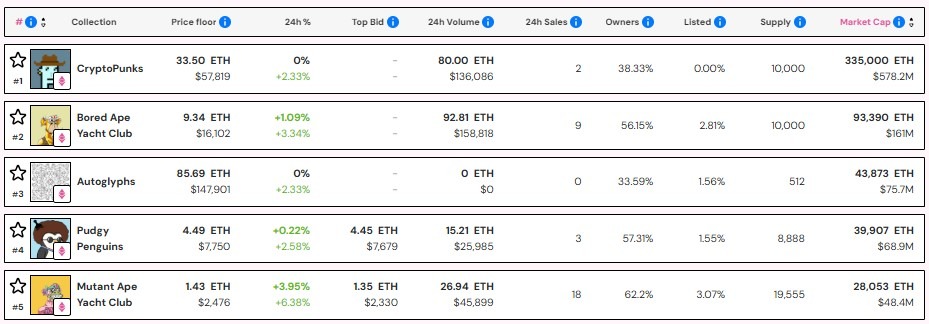
Top five NFT collections by market capitalization. Source: NFT Price Floor
Pudgy Penguins builds beyond NFTs
The project has also expanded into toys, gaming, licensing and other consumer products.
Pudgy Penguins has spent years turning its Ethereum-based NFT collection into a broader consumer brand. Its physical toys entered more than 2,000 Walmart stores in 2023, and CEO Luca Netz said in May 2024 that more than 1 million toys had been sold over the preceding 12 months.
The project’s licensing model also allows NFT holders to receive 5% of net revenue from physical products featuring their individual penguins.
Related: Binance to end NFT support on exchange, shift service to wallet
The franchise has pursued a similar expansion through gaming. In 2025, Pudgy Penguins launched the skill-based Pengu Clash game on The Open Network. At the time, Netz described gaming as a vehicle for bringing the project’s intellectual property to wider audiences.
It also launched a mobile game called Pudgy Party in August 2025. According to Pudgy Penguins, the game's downloads exceeded 1 million. However, the project said on Monday that it would halt further development of the game and focus its resources on a browser-based game called Pudgy World.
Magazine: Vietnam preps crypto pilot, HK pushes tokenization: Asia Express
Disclaimer: The content of this article solely reflects the author's opinion and does not represent the platform in any capacity. This article is not intended to serve as a reference for making investment decisions.
You may also like
The AI boom may follow the path of the 19th-century railway bubble, and builders may not be the ultimate winners
Goldman Sachs analyst Bobby Molavi compared the current situation to the 19th-century British railway mania: 500 companies spent more than the nation's annual income building 8,000 miles of railway, with most early investors losing out, while the real beneficiaries were the later "passengers." He pointed out that the current AI craze is driven by both debt and momentum, and that the S&P 500’s forward P/E ratio of 18x is only "a bit cheaper." Whether the builders can retain value is uncertain, and history does not offer an optimistic answer.

If Anthropic's IPO goes smoothly and the stock price rises next week, then everything remains the same for AI. Otherwise, some companies will go bankrupt.
The shrinking valuations of two major giants have triggered a chain reaction—investors are adopting more conservative revenue multiples for AI startups and are directly halting high-valuation financing for companies with zero revenue. Multiple venture capital firms have advised their portfolio companies to lower valuation expectations and to quickly build up cash reserves. Market participants warn that the outcome of Anthropic’s IPO will be a barometer for the industry: if successful, the boom will continue; if it fails, some companies may face elimination.
After the Brazilian election, political discount deepens; Morgan Stanley remains bullish on Petrobras (PBR.US), focusing on fuel pricing and dividends
Morgan Stanley still maintains its most optimistic "Overweight" rating, but has lowered its year-end 2027 target price from $31 to $25.

Corning (GLW.US) receives initial "Buy" rating from Jefferies! AI factories driving a fiber optic rush, with a potential global supply gap of up to 30%
For Corning, the recent profit growth mainly comes from the expansion of AI clusters. As the number of optical links crossing cabinets and campuses increases, customers need to deploy more optical fibers within limited conduit and cabinet space, thus driving demand for high-density optical cables and connection systems.

Crypto prices
More


