
Glass substrates are not a materials story, but a battle of process integration

Glass Substrate is Not a Materials Story, But a Battle of Process Integration
LPKF currently holds about 80% of the glass through-hole market, but the CEO expects this to drop to around 70% as competition intensifies. He believes that the TGV process itself is no longer the bottleneck for glass substrate ramp-up; the real yield loss comes at the subsequent steps of copper filling and metallization.
Content Summary
LPKF currently holds about 80% of the glass through-hole market, but the CEO expects this to drop to around 70% as competition intensifies. He believes that the TGV process itself is no longer the bottleneck for glass substrate ramp-up; the real yield loss comes at the subsequent steps of copper filling and metallization.
The CEO sees TRUMPF as their greatest threat. TRUMPF, in cooperation with SCHMID, offers a full production line from copper seed layer to electroplating filling, with stronger vertical integration. Philoptics is deeply embedded in the Korean ecosystem, while Chinese companies are rapidly catching up. Regarding panel-level packaging, the CEO firmly believes that PLP will ramp up 100% in parallel with glass substrates. This differs from the public timelines of companies like TSMC, but the aggressive plans from SEMCO and Absolics do support this view.
Glass Substrate: A Conversation with LPKF’s CEO
I spoke with LPKF’s CEO. Here’s what I’ve learned and why I am now more optimistic.
Introduction
This is exactly why LPKF has emerged as a leader. The company’s core LIDE technology uses laser and chemical etching to manufacture TGVs with extremely high precision. Because of this, LPKF has become one of the most closely-watched small-cap companies in the glass substrate supply chain.
For an in-depth and comprehensive analysis of LPKF, including its technology, valuation, and investment logic, you can read my previous article:
Semiconductor Bottleneck Microcaps

Over the past few months, I have been researching several companies in the semiconductor supply chain, especially those facing current bottlenecks and even more interesting future bottlenecks.
Read the full report
Market Share
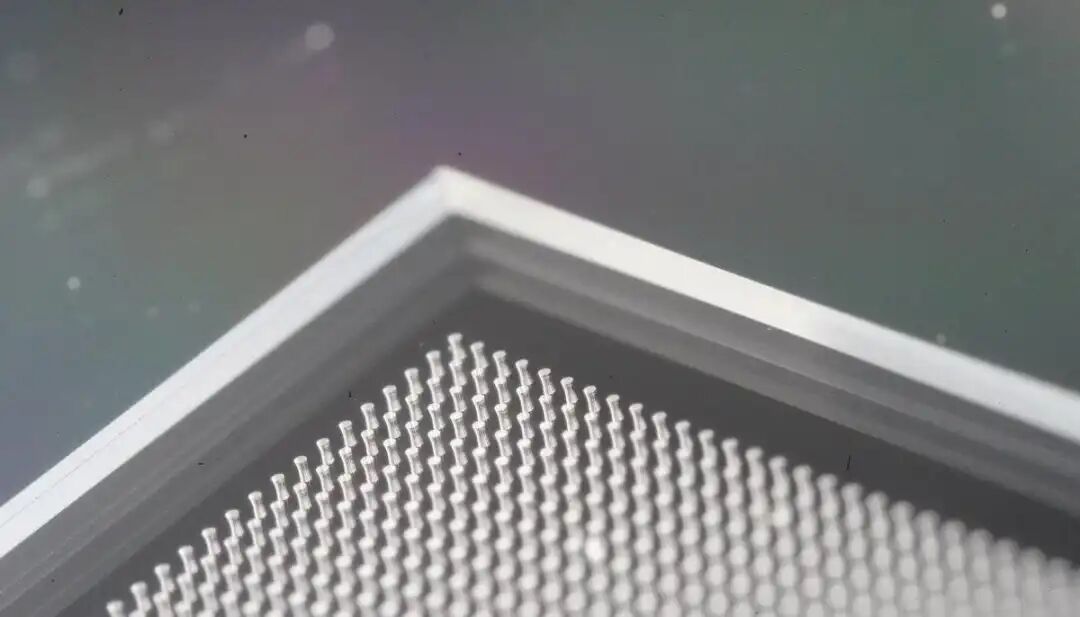
The CEO told me that they hold 80% market share in the TGV space, but expect this number to fall to 70%. Even so, this figure is still quite astonishing.
I then asked how the company would finance production of all these machines if they had such market share.
The reason I asked is that their balance sheet is not very robust against risk.
Capital Expansion
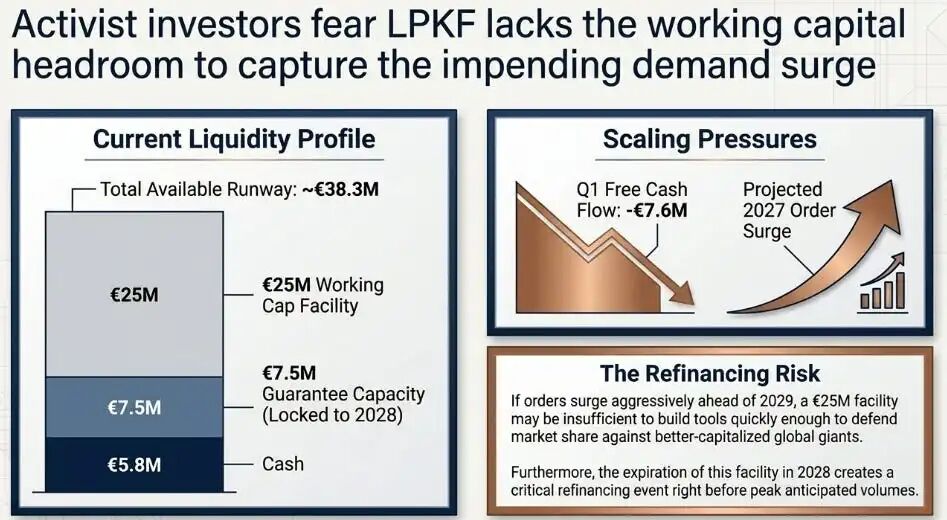
First quarter free cash flow was -€7.6 million; they hold €5.8 million in cash, and inventory has ramped prior to delivery. The syndicated loan offers €25 million in working capital—which exists precisely because tool ramp-up absorbs working capital.
This is why activist investors are pushing for a capital raise. They believe €25 million in working capital is not enough for the company to accelerate product development and seize market share before SCHMID, TRUMPF, and domestic firms scale up.
Fiedler’s response is that LPKF can achieve expansion with very little funding. In other words, their existing facilities, 1.4 order-to-shipment ratio, and the North Star cost reduction plan allow them to hit targets without diluting equity.
The risk he is taking on is clear: if orders surge in 2027, the company could be constrained by working capital and unable to build enough machines when the window opens.
Disclaimer: The content of this article solely reflects the author's opinion and does not represent the platform in any capacity. This article is not intended to serve as a reference for making investment decisions.
You may also like
The AI boom may follow the path of the 19th-century railway bubble, and builders may not be the ultimate winners
Goldman Sachs analyst Bobby Molavi compared the current situation to the 19th-century British railway mania: 500 companies spent more than the nation's annual income building 8,000 miles of railway, with most early investors losing out, while the real beneficiaries were the later "passengers." He pointed out that the current AI craze is driven by both debt and momentum, and that the S&P 500’s forward P/E ratio of 18x is only "a bit cheaper." Whether the builders can retain value is uncertain, and history does not offer an optimistic answer.

If Anthropic's IPO goes smoothly and the stock price rises next week, then everything remains the same for AI. Otherwise, some companies will go bankrupt.
The shrinking valuations of two major giants have triggered a chain reaction—investors are adopting more conservative revenue multiples for AI startups and are directly halting high-valuation financing for companies with zero revenue. Multiple venture capital firms have advised their portfolio companies to lower valuation expectations and to quickly build up cash reserves. Market participants warn that the outcome of Anthropic’s IPO will be a barometer for the industry: if successful, the boom will continue; if it fails, some companies may face elimination.
After the Brazilian election, political discount deepens; Morgan Stanley remains bullish on Petrobras (PBR.US), focusing on fuel pricing and dividends
Morgan Stanley still maintains its most optimistic "Overweight" rating, but has lowered its year-end 2027 target price from $31 to $25.

Corning (GLW.US) receives initial "Buy" rating from Jefferies! AI factories driving a fiber optic rush, with a potential global supply gap of up to 30%
For Corning, the recent profit growth mainly comes from the expansion of AI clusters. As the number of optical links crossing cabinets and campuses increases, customers need to deploy more optical fibers within limited conduit and cabinet space, thus driving demand for high-density optical cables and connection systems.

Crypto prices
More


