
Hedging Strategies for Import and Export Enterprises: Importers Edition

Morning FX
1. The market environment is very favorable for companies needing to purchase foreign currency
This year may be the most comfortable year in the past decade for companies conducting foreign currency purchases. RMB appreciation, deep swap discounts, RR at historical lows, and the removal of forward FX risk reserve requirements—multiple rare factors are all neatly in favor of currency buying.
RMB appreciation: Since last year, USDCNY has shown a relatively moderate trending bull market.
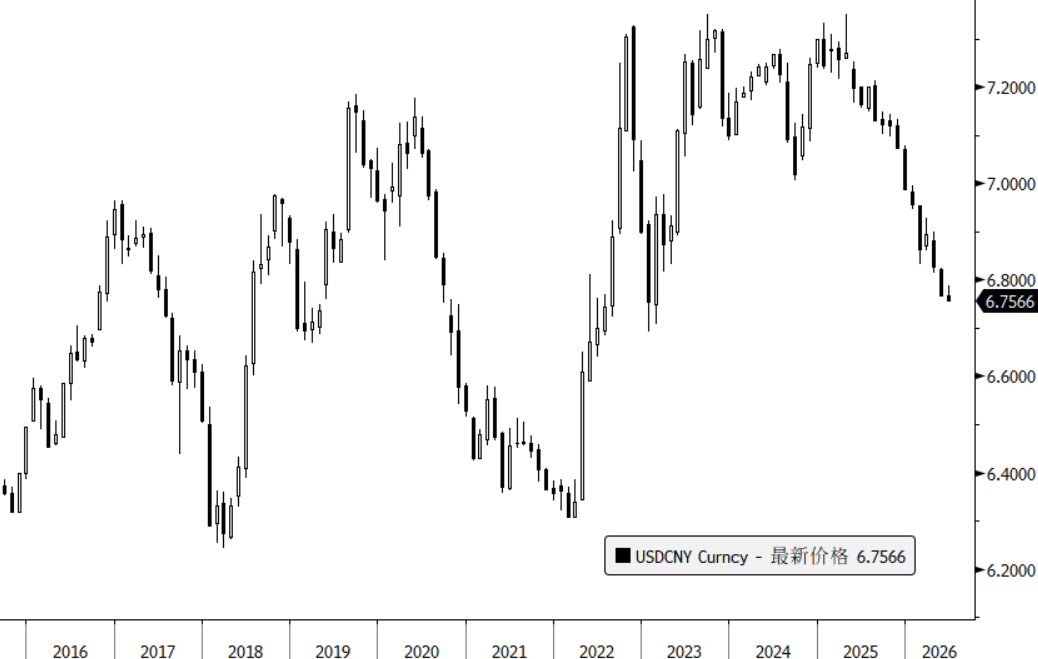
Deep swap discounts: The key difference in this appreciation cycle versus 2020. In 2020, the one-year USDCNY swap points were +1700 pips, now it is -1700 pips.
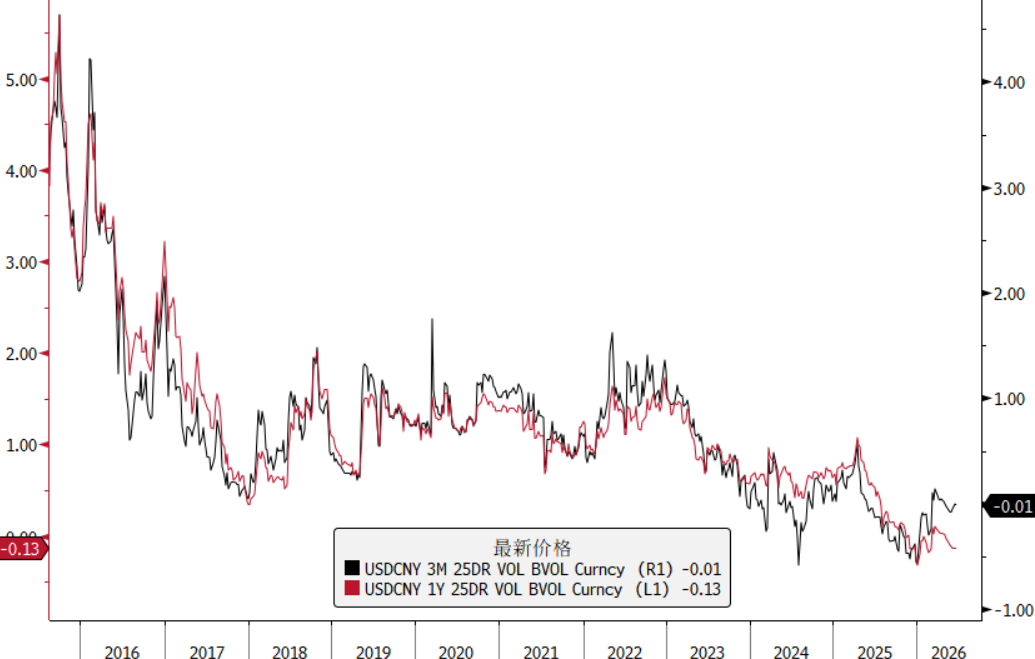
RR at historical lows: Option market sentiment is strongly bullish on the RMB, with USDCNY RR at its lowest since the 2015 exchange rate reform, meaning call options are cheaper and put options are more expensive.
Domestic cancellation of forward FX risk reserve requirement: No more barriers for hedging foreign currency purchases.
Although the market environment is in favor of foreign currency purchase, from the principle of exchange rate neutrality, not hedging any positions at all is not a prudent choice. After all, no one can predict a "black swan" tomorrow, such as the unexpected hawkish tone from Waller last night…
My personal suggestion is that companies consider their own billing cycles and make comprehensive use of multiple tools to lock in their FX exposure:
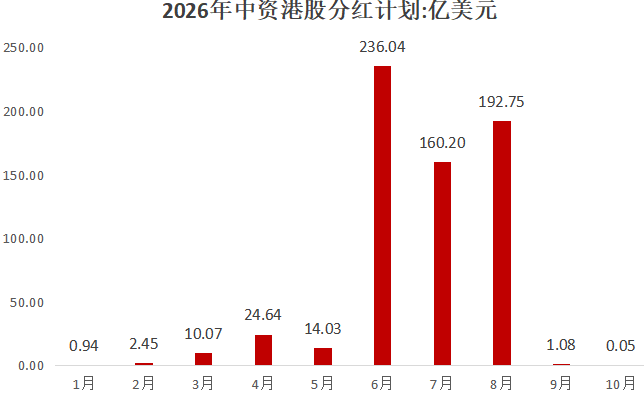
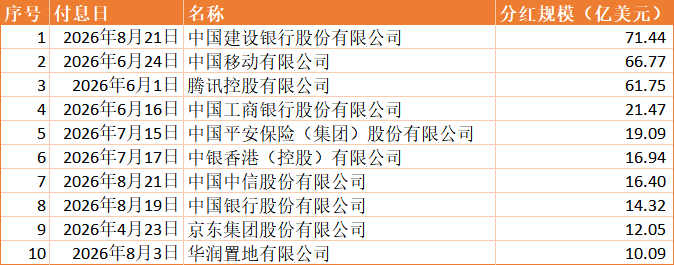
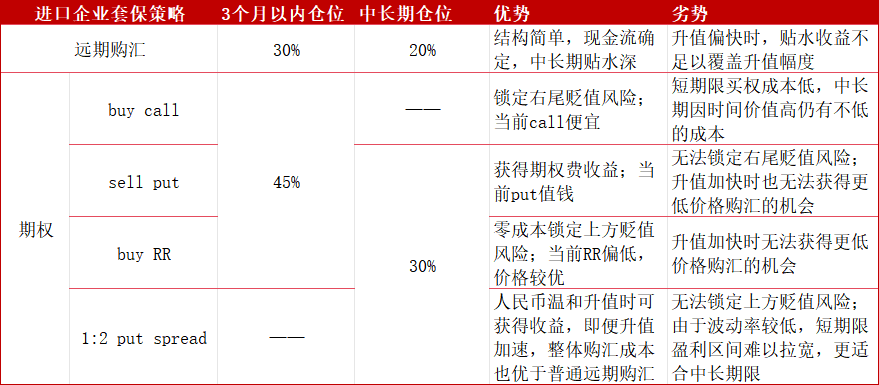
(1) Forward FX purchase: 30% position for within 3 months,20% for medium and long term positions. Seasonal summer dividend-related FX buying provides support for RMB spot, and the pace of appreciation may slow further in June–August. Short-term FX demand can moderately increase the hedging percentage. Although medium and long-term FX swaps are deeply discounted, the appreciation during the FX settlement high season in Q4 may exceed the swap discount gains.
(2) Options: 45% position for within 3 months, 30% for medium and long term.
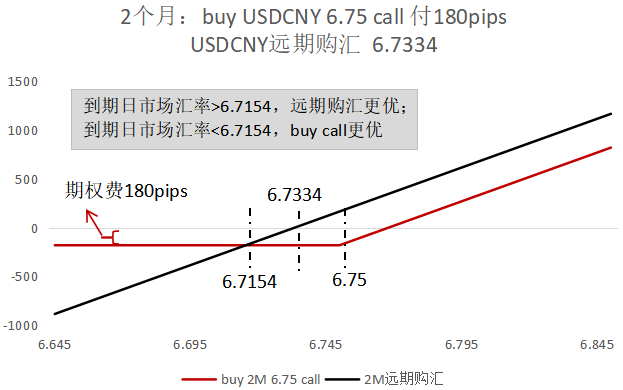
Buy USDCNY call options: By paying a certain option premium, you can lock in the right-tail risk of RMB depreciation without having to bear the left-tail risk of substantial RMB appreciation. Short-term calls are relatively cheap and more worthwhile to buy.
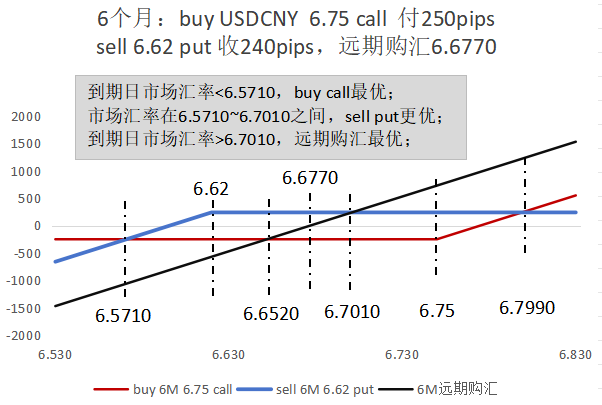
Sell USDCNY put options: Currently, puts are valuable and this product can earn considerable option premiums. However, if the RMB depreciates, the right-tail risk is unlimited. Consider combining with forward FX purchases to use option premiums to optimize the cost of forward FX, but note that locked amounts will be proportionally amplified, so avoid excessive hedging.
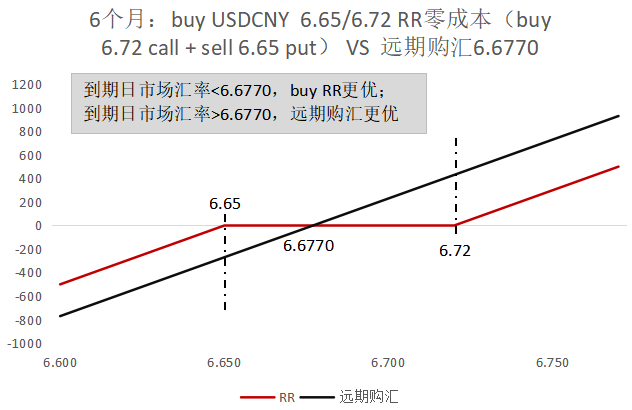
Buy USDCNY risk reversal options (buy RR, i.e., buy call + sell put): Not for the purpose of earning option premiums but to construct a zero-cost combination.
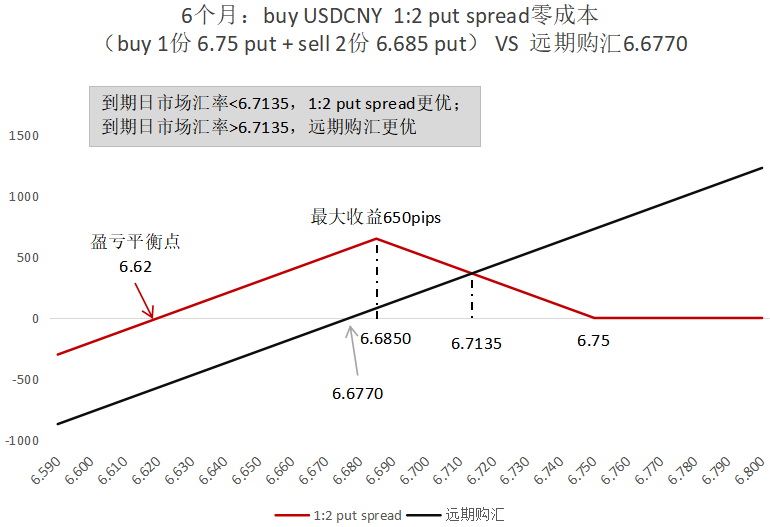
1:2 put spread combination: By buying one higher strike put and selling two lower strike puts, a zero-cost combination is created—suitable for FX buyers who expect moderate RMB appreciation. One limitation is that option volatility is presently low, making it difficult to widen the profit zone for shorter tenors under 3 months; it’s more suitable for 6 months or longer tenors.
3. Summary
Currently, currency-buying companies enjoy multiple hedging benefits: RMB appreciation, deep swap discounts, RR at historical lows, and the removal of forward FX risk reserve requirements. It is reasonable to leave part of the exposure uncovered but not advisable to go completely unhedged.
It is recommended that FX buyers flexibly construct a multi-product portfolio basket based on their billing cycles:
Disclaimer: The content of this article solely reflects the author's opinion and does not represent the platform in any capacity. This article is not intended to serve as a reference for making investment decisions.
You may also like
The AI boom may follow the path of the 19th-century railway bubble, and builders may not be the ultimate winners
Goldman Sachs analyst Bobby Molavi compared the current situation to the 19th-century British railway mania: 500 companies spent more than the nation's annual income building 8,000 miles of railway, with most early investors losing out, while the real beneficiaries were the later "passengers." He pointed out that the current AI craze is driven by both debt and momentum, and that the S&P 500’s forward P/E ratio of 18x is only "a bit cheaper." Whether the builders can retain value is uncertain, and history does not offer an optimistic answer.

If Anthropic's IPO goes smoothly and the stock price rises next week, then everything remains the same for AI. Otherwise, some companies will go bankrupt.
The shrinking valuations of two major giants have triggered a chain reaction—investors are adopting more conservative revenue multiples for AI startups and are directly halting high-valuation financing for companies with zero revenue. Multiple venture capital firms have advised their portfolio companies to lower valuation expectations and to quickly build up cash reserves. Market participants warn that the outcome of Anthropic’s IPO will be a barometer for the industry: if successful, the boom will continue; if it fails, some companies may face elimination.
After the Brazilian election, political discount deepens; Morgan Stanley remains bullish on Petrobras (PBR.US), focusing on fuel pricing and dividends
Morgan Stanley still maintains its most optimistic "Overweight" rating, but has lowered its year-end 2027 target price from $31 to $25.

Corning (GLW.US) receives initial "Buy" rating from Jefferies! AI factories driving a fiber optic rush, with a potential global supply gap of up to 30%
For Corning, the recent profit growth mainly comes from the expansion of AI clusters. As the number of optical links crossing cabinets and campuses increases, customers need to deploy more optical fibers within limited conduit and cabinet space, thus driving demand for high-density optical cables and connection systems.

Crypto prices
More


