
FOMC Preview: Warsh's First Show — Can Risk On Continue?【Buy US Spot Stocks, Get NVIDIA Free】
 Bitget2026/06/16 09:32
— With the US-Iran peace deal landing and inflation alarm easing, seize the repair window
I. Current Market Conditions & Core Logic
U.S. stocks have experienced a notable pullback recently. Stronger-than-expected nonfarm payrolls, persistent inflation readings, and rising geopolitical risks have driven profit-taking in hot sectors like tech, reducing crowding. Market sentiment has cooled from overheated to rational.
But a key inflection point is approaching.
This Friday (June 19), the US-Iran Peace Agreement will be officially signed in Switzerland, reopening the Strait of Hormuz. The core impact: the oil price center is set to decline rapidly, significantly reducing the second-order inflation transmission risk—where energy prices spill over into wages and services.
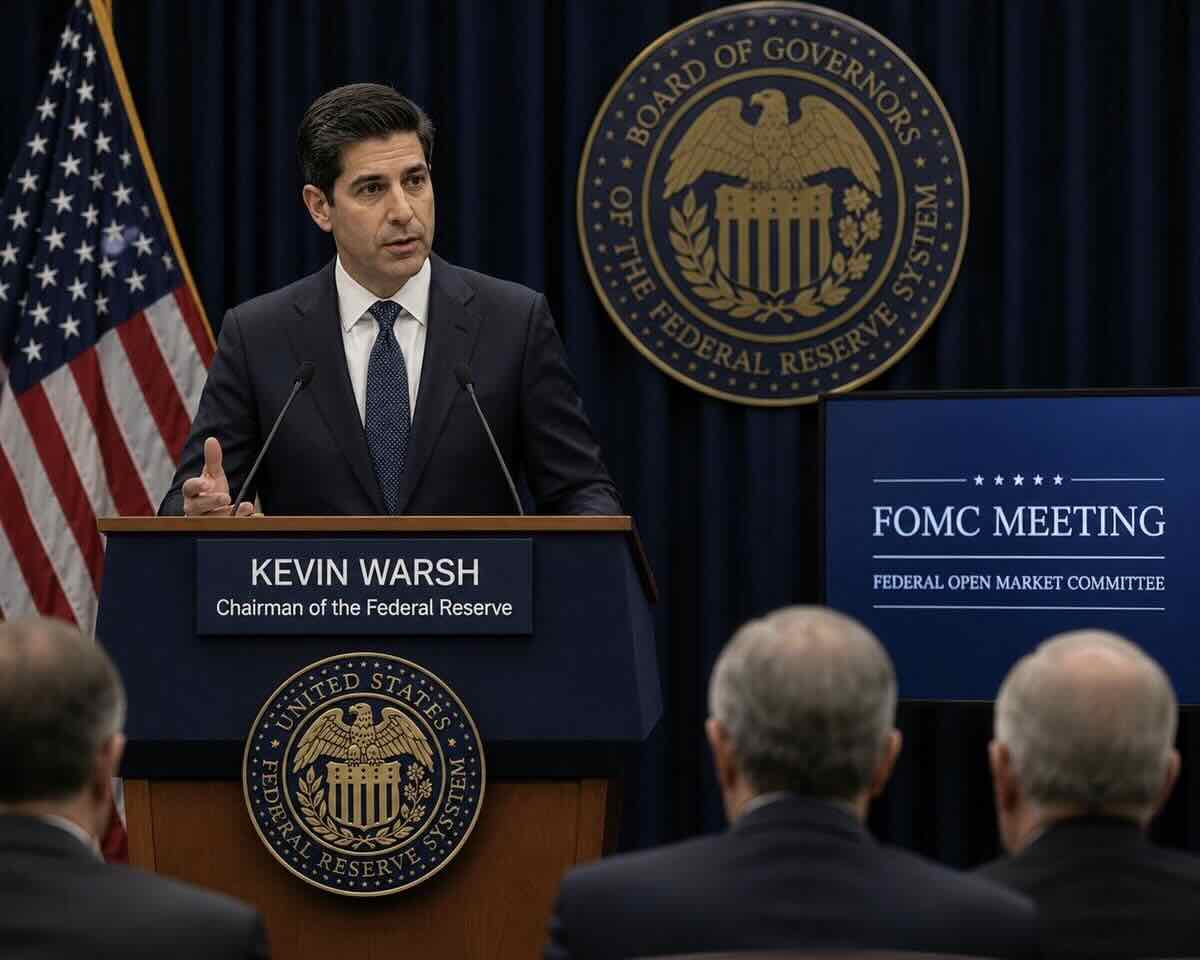
Meanwhile, new Fed Chair Kevin Warsh will preside over his first FOMC meeting on June 16-17. Warsh has remained silent since taking office on May 22, consistent with his style of opposing excessive forward guidance. He believes the Fed should not act like a "nanny" that spoils market surprises in advance.
Market pricing implies a greater than 96% probability of holding rates steady this meeting. The only thing that truly matters: whether the dot plot will be diluted or even phased out.
Warsh's preferred trimmed-mean PCE currently stands at approximately 2.3%, giving him ample policy flexibility. With the inflation alarm de-escalated, there's no urgency to hike, and room is preserved for timely rate cuts when needed.
Combined with the US-Iran deal, the worst macro uncertainties have largely been priced in. As long as Warsh's debut doesn't deliver an unexpectedly hawkish shock, "bad news priced in" sets the stage for Risk On to restart.
II. Beneficiaries Under Different Scenarios
Base Case: Warsh "Hawkish in Tone, Dovish in Action"
Tough anti-inflation rhetoric, but moderate action; no aggressive balance sheet reduction; gradual fading of the dot plot.
Beneficiaries:
- Nasdaq AI Tech Leaders (greatest rebound elasticity): QQQ, NVDA, MSFT, AAPL, GOOGL, AMZN, META
- S&P 500 ETFs: SPY, VOO, IVV
- Financials: JPM, GS, BAC
- Energy Downstream / Consumer: DAL, UAL, UPS, FDX (airlines and logistics benefiting directly from lower oil prices)
- Growth Stocks Overall: IWF, VUG
Tail Risk: Sudden Dot Plot Removal or Aggressively Hawkish Balance Sheet
Short-term market turbulence; defensive assets outperform:
- Gold
- Treasuries
- Defensive consumer staples
- Utilities
Under either scenario, the US-Iran deal itself is a tailwind for global risk assets. Upstream oil may face pressure, while downstream and service sectors benefit. The tech correction has already reduced crowding, creating room for a rebound.
III. Tactical Positioning Advice
Stay flexible as uncertainty resolves. Different strategies for different postures:
Bullish on a Rebound: Buy U.S. Stock Spot or Go Long on Stock Contracts Key beneficiaries (QQQ, NVDA, SPY, etc.) are at attractive entry levels after the pullback. Buy spot directly, or use stock contracts with moderate leverage to amplify returns when the direction is clear.
Looking to Buy the Dip: Accumulate Spot in Batches, Add Contract Longs at Support Levels Build spot positions gradually near key support levels to lower average cost. Simultaneously, open small long positions in stock contracts at support levels to capture rebound upside with higher flexibility.
Already Heavily Positioned: Hedge with Stock Contract Shorts to Lock in Profits If you already hold a heavy position, open short stock contracts to hedge against short-term volatility during the event. Close the shorts once the FOMC outcome is confirmed. Only a small funding cost is incurred, protecting your spot portfolio from significant drawdowns.
On position sizing: avoid over-concentration. Diversify across growth, cyclical, and a modest defensive allocation. Post-meeting, closely monitor dot plot signals and crowding indicators—don't chase rallies. Keep contract leverage within reasonable levels (suggest 3-5x max), always set stop-losses, and align with individual stock trends.
Summary
This FOMC hinges on two variables: the policy signal from Warsh's debut, and the impact of the US-Iran deal on inflation expectations. The worst is likely behind us.
As long as no destructive hawkish surprise emerges, the Risk On repair window is about to open. AI growth and cyclical names deserve attention, complemented by sensible options-based volatility management.
The market is shifting from "policy dependency" toward "independent pricing." Investors who understand the logic and manage risk well will be the first to capture this recovery dividend.
Buy U.S. stocks spot, get NVIDIA shares free >> [Promotion Link]
Disclaimer: The content of this article solely reflects the author's opinion and does not represent the platform in any capacity. This article is not intended to serve as a reference for making investment decisions.
You may also like
CoreWeave's quarterly report hits record highs, but Bernstein and HSBC still maintain "sell" ratings
The main concerns focus on three major issues: management claims an annual price of $20-25 million per megawatt, while actual financial data shows only $9.2 million; independent calculations by two institutions both indicate a financing gap of about $33 billion; by 2028, the market will see an influx of 55 gigawatts of new computing power, 20 times CoreWeave’s own capacity. With current debt at $46.9 billion and equity only $4 billion, and no free cash flow within this decade—the question of whether its scarce performance can last until the loans are repaid is something even strong quarterly reports cannot answer.
The AI boom may follow the path of the 19th-century railway bubble, and builders may not be the ultimate winners
Goldman Sachs analyst Bobby Molavi compared the current situation to the 19th-century British railway mania: 500 companies spent more than the nation's annual income building 8,000 miles of railway, with most early investors losing out, while the real beneficiaries were the later "passengers." He pointed out that the current AI craze is driven by both debt and momentum, and that the S&P 500’s forward P/E ratio of 18x is only "a bit cheaper." Whether the builders can retain value is uncertain, and history does not offer an optimistic answer.

If Anthropic's IPO goes smoothly and the stock price rises next week, then everything remains the same for AI. Otherwise, some companies will go bankrupt.
The shrinking valuations of two major giants have triggered a chain reaction—investors are adopting more conservative revenue multiples for AI startups and are directly halting high-valuation financing for companies with zero revenue. Multiple venture capital firms have advised their portfolio companies to lower valuation expectations and to quickly build up cash reserves. Market participants warn that the outcome of Anthropic’s IPO will be a barometer for the industry: if successful, the boom will continue; if it fails, some companies may face elimination.
After the Brazilian election, political discount deepens; Morgan Stanley remains bullish on Petrobras (PBR.US), focusing on fuel pricing and dividends
Morgan Stanley still maintains its most optimistic "Overweight" rating, but has lowered its year-end 2027 target price from $31 to $25.
Crypto prices
More


