
Hormuz Strait Reopens: Will the Federal Reserve Pivot Dovishly and Will the Market Reprice Rate Cuts?

Two major catalysts for declining inflation are fermenting simultaneously, providing ample justification for Federal Reserve Chair Walsh to adopt a dovish shift at this week’s Federal Open Market Committee (FOMC) meeting.
According to Wind Trading Desk, a June 15 report from Citi Research states that the planned reopening of the Strait of Hormuz will drive oil prices lower, eliminating the upward risk from energy prices to inflation; meanwhile, the core CPI released last week was significantly subdued, with a monthly increase of only 0.21%.
The combination of these two developments further weakens the Federal Reserve’s rationale for maintaining a hawkish stance, bringing the prospect of rate cuts back to the table.
For the markets, this assessment has direct implications for pricing. The 2-year U.S. Treasury yield has fallen about 13 basis points from a week ago, but remains more than 60 basis points higher than February levels. There is still room for the market to compress rate hike expectations and raise pricing for rate cuts.
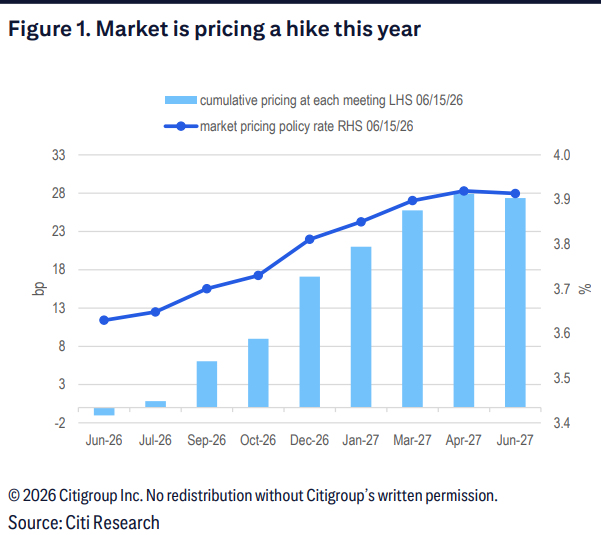
Energy Price Pressure Diminishes, Inflation Risks Neutralize
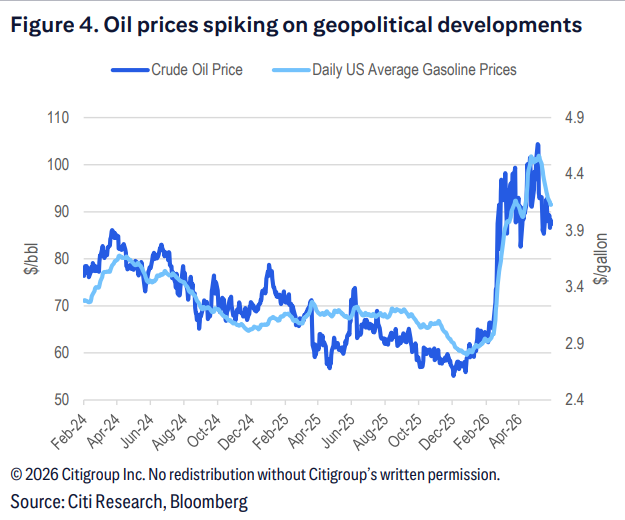
The expected reopening of the Strait of Hormuz is one of the core drivers behind the latest dovish logic. Once the strait resumes passage, increased crude oil supply will push down oil and other energy prices.
Gasoline prices have declined for a month straight, with the national average dropping from around $4.50 per gallon to $4.00. Citi expects this will be followed by further declines in other energy commodities. This trend will likely deliver several months of negative overall inflation readings in the coming months, prompting Federal Reserve officials to shift their characterization of energy prices from an "inflation risk" to a "neutral or even deflationary factor."
Core CPI Cools, Divergence in Inflation Indicators Widens
At the core inflation level, although core PCE for May is still expected to remain robust, core CPI has shown clear signs of cooling, posting a monthly increase of just 0.21%.
Core PCE has increasingly become an "outlier" among inflation indicators—trimmed mean PCE and core CPI are both closer to target levels and show a clearer downward trend. This divergence is being more widely recognized by the market and Fed officials, providing data support for a dovish stance.
Hawkish Adjustments Have Been Priced In, Dovish Statements Have Room to Upside
The report predicts that this week’s FOMC statement will remove “easing bias” wording, and the median of the interest rate dot plot will show rates being held steady this year. However, these hawkish adjustments are already priced in by the market and do not constitute new information.
The real variable is Chair Walsh’s tone. Considering the latest developments on the reopening of the Strait of Hormuz and the cooling trend in core inflation, the risk of Walsh sending a dovish signal at this meeting is tilted to the upside. If his language is softer than expected, the market’s repricing of the rate cut path could accelerate.
U.S. Treasury Yields Still Have Downside, Room for Market Pricing Adjustment
From the perspective of market pricing, the report believes that the implied probability of rate hikes in current rate futures remains elevated. The 2-year U.S. Treasury yield, although it has declined by about 13 basis points from a week ago, is still more than 60 basis points higher than in February, showing that the market has yet to fully price in the impact of easing inflation risks.
As the inflation risks that previously supported hawkish expectations continue to fade, the market is likely to further compress rate hike pricing while simultaneously raising market pricing for rate cuts, meaning U.S. Treasury yields still have room to fall.
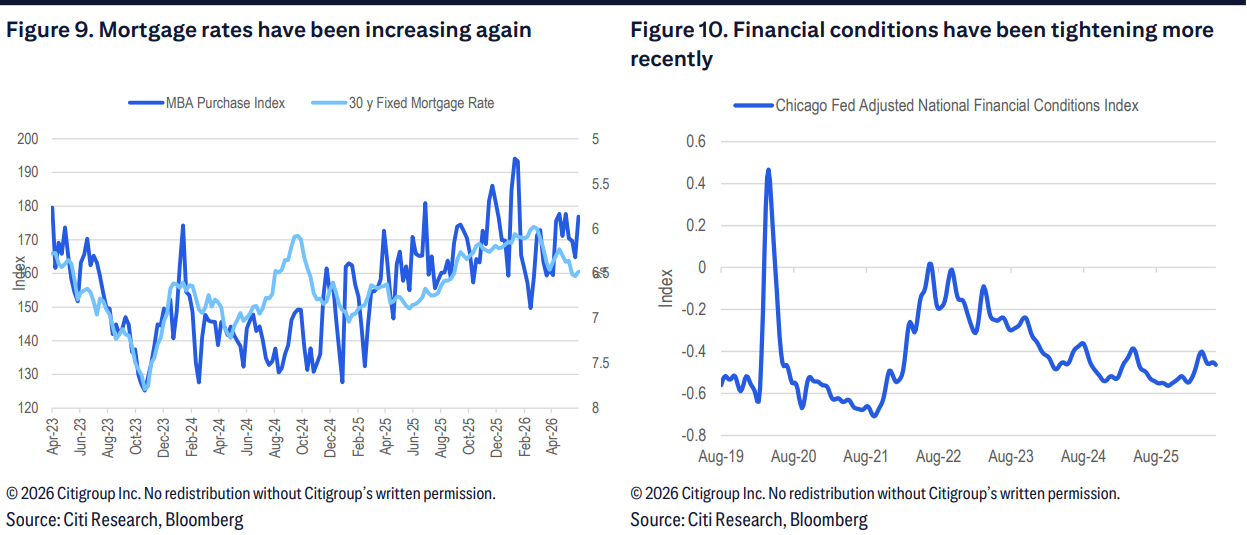
Disclaimer: The content of this article solely reflects the author's opinion and does not represent the platform in any capacity. This article is not intended to serve as a reference for making investment decisions.
You may also like
USD/JPY Price Forecast: Enters fresh upside leg on consolidation breakout

CoreWeave's quarterly report hits record highs, but Bernstein and HSBC still maintain "sell" ratings
The main concerns focus on three major issues: management claims an annual price of $20-25 million per megawatt, while actual financial data shows only $9.2 million; independent calculations by two institutions both indicate a financing gap of about $33 billion; by 2028, the market will see an influx of 55 gigawatts of new computing power, 20 times CoreWeave’s own capacity. With current debt at $46.9 billion and equity only $4 billion, and no free cash flow within this decade—the question of whether its scarce performance can last until the loans are repaid is something even strong quarterly reports cannot answer.
The AI boom may follow the path of the 19th-century railway bubble, and builders may not be the ultimate winners
Goldman Sachs analyst Bobby Molavi compared the current situation to the 19th-century British railway mania: 500 companies spent more than the nation's annual income building 8,000 miles of railway, with most early investors losing out, while the real beneficiaries were the later "passengers." He pointed out that the current AI craze is driven by both debt and momentum, and that the S&P 500’s forward P/E ratio of 18x is only "a bit cheaper." Whether the builders can retain value is uncertain, and history does not offer an optimistic answer.

If Anthropic's IPO goes smoothly and the stock price rises next week, then everything remains the same for AI. Otherwise, some companies will go bankrupt.
The shrinking valuations of two major giants have triggered a chain reaction—investors are adopting more conservative revenue multiples for AI startups and are directly halting high-valuation financing for companies with zero revenue. Multiple venture capital firms have advised their portfolio companies to lower valuation expectations and to quickly build up cash reserves. Market participants warn that the outcome of Anthropic’s IPO will be a barometer for the industry: if successful, the boom will continue; if it fails, some companies may face elimination.
Crypto prices
More


