
"Sell everything in Europe"! The third-largest sell-off in a decade, all funds capitulate

Multiple data sources indicate that European assets are experiencing one of the most intense sell-off waves in nearly a decade, with institutional investors reducing their European exposure at an extremely rapid pace.
According to Goldman Sachs Prime Brokerage data, last month's net selling of European assets saw the largest monthly decline since March 2025, ranking third highest over the past ten years, with a short-to-long ratio as high as 2.2 to 1.
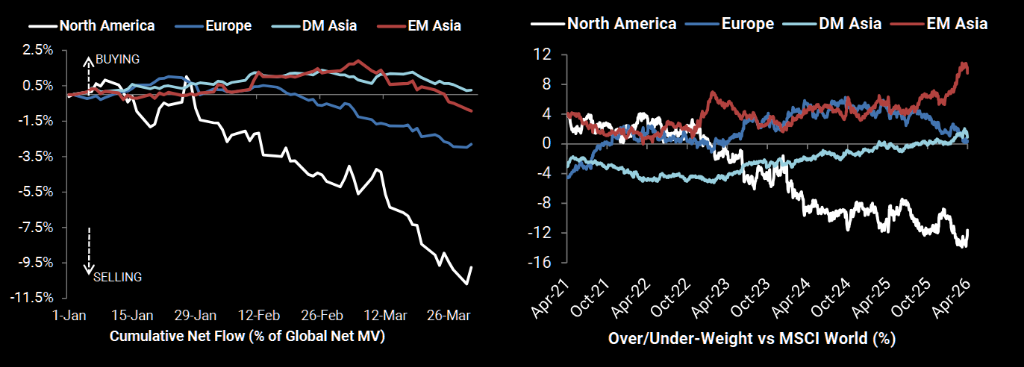
Meanwhile, JPMorgan data shows that the composite European positioning indicator has fallen to its third lowest level since 2015, with the standard deviation below negative 1.5, and the 4-week position change dropping even further beneath negative 2 standard deviations.
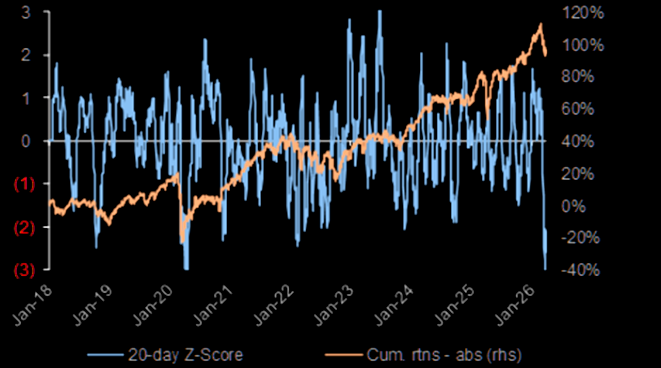
This figure means that the current net short pressure on European positions is already at an extreme in the past decade's historical distribution, with similar readings only occurring after a few significant episodes of market stress.
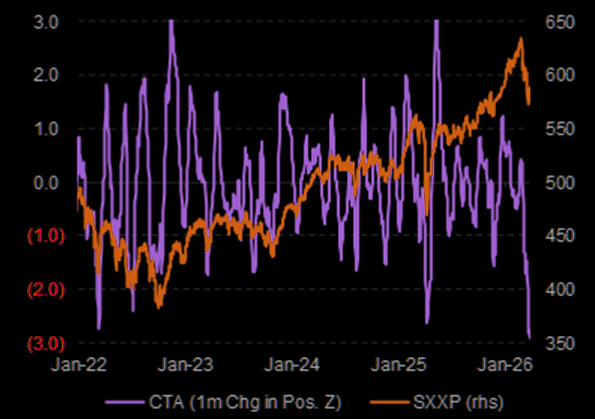
JPMorgan data further shows that, based on the 1-month positioning change Z-score, the scale of position reduction in European assets by CTA groups has reached the most extreme level in the history of this data series.
As representatives of trend-following strategies, sudden CTA exits often have a self-reinforcing effect, creating additional downside technical pressure in the market.
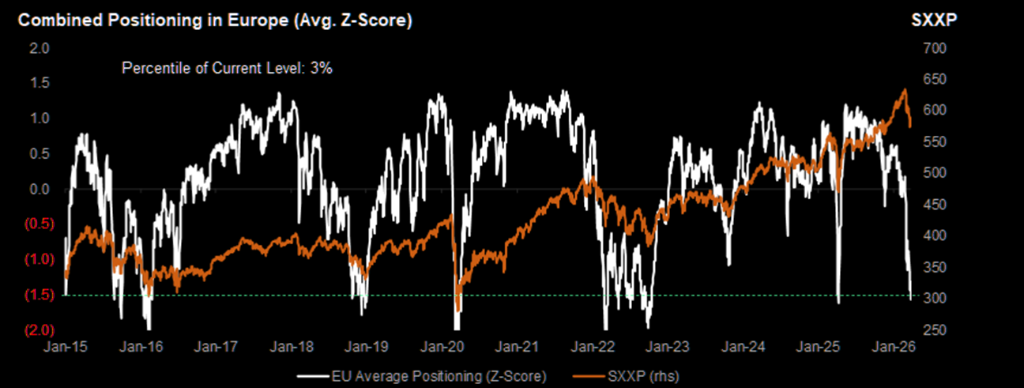
The JPMorgan positioning team points out that when considering hedge funds, CTAs (Commodity Trading Advisors), and pure long-only funds together, overall European positions are at a "very low level."
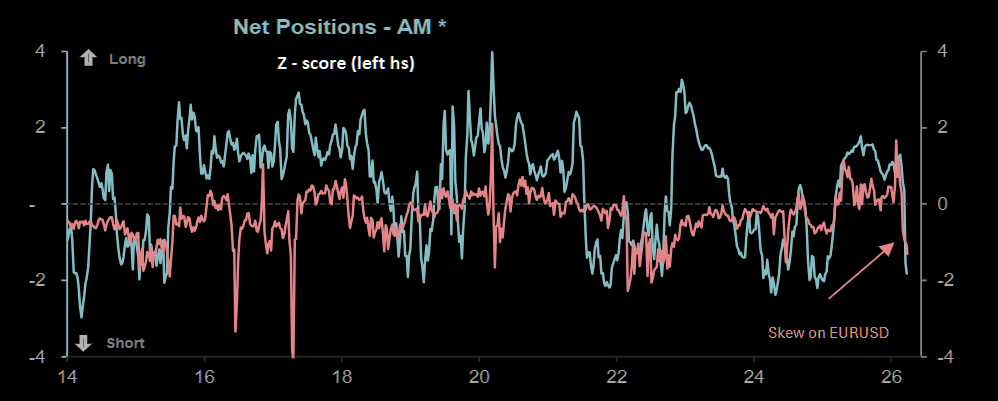
The signs of capital outflow are not only evident in equity holdings, but the foreign exchange market also confirms a systematic risk-averse trend.
The skew in the euro options market continues to decline, indicating that options market participants have largely turned to betting on further euro downside.
Disclaimer: The content of this article solely reflects the author's opinion and does not represent the platform in any capacity. This article is not intended to serve as a reference for making investment decisions.
You may also like
Bitcoin’s MA200 at $73,200 — Inverse H&S Neckline Is the Only Level Left

Bitcoin Supply Velocity Hits 10-Year Low as ETH Supply Diverges

Just bet on AI and already faced a market blow! Berkshire reports earnings tonight, Abel faces a major test in his transformation
Greg Abel has been leading Berkshire Hathaway for less than a year, yet he has already made a bet of over $10.9 billion on the AI sector, marking a complete break from Buffett’s traditional avoidance of tech stocks. However, Alphabet’s stock price has fallen below their initial purchase cost, and Bending Spoons continues to decline, putting this bold AI gamble to the test. At the same time, third-quarter earnings per share are expected to drop 6% year-over-year, and the share repurchase program is likely to plummet from $4.5 billion to $1.6 billion. How to deploy $358 billion in cash will be a major challenge for the new leader’s capital allocation skills.

Has the AI bubble burst? Goldman Sachs: It's more like 1998 than 2000 right now
The Goldman Sachs trading desk stated that the current wave of sell-offs resembles the 1998 liquidity crisis more than the bursting of the 2000 bubble. It is a forced deleveraging rather than a refutation of business fundamentals. The market is drastically repricing construction financing and timeline expectations, rather than underlying demand. Moreover, the issues currently drawing the most attention from the market—electricity and licensing—are actually the least important, as limited supply does not equate to disappearing demand. The real question that needs to be answered is whether long-term revenues can ultimately justify the capital invested.

Crypto prices
More


