
UBS warns: Yen may fall to 175, intervention will only "drain foreign exchange reserves without turning the tide"

Source: Jin10 Data
Strategists at UBS Group AG believe that even as Japanese officials intensify intervention rhetoric, the yen’s decline will persist. They expect the USD/JPY exchange rate to reach 175 by year-end under a scenario of “prolonged turmoil.”
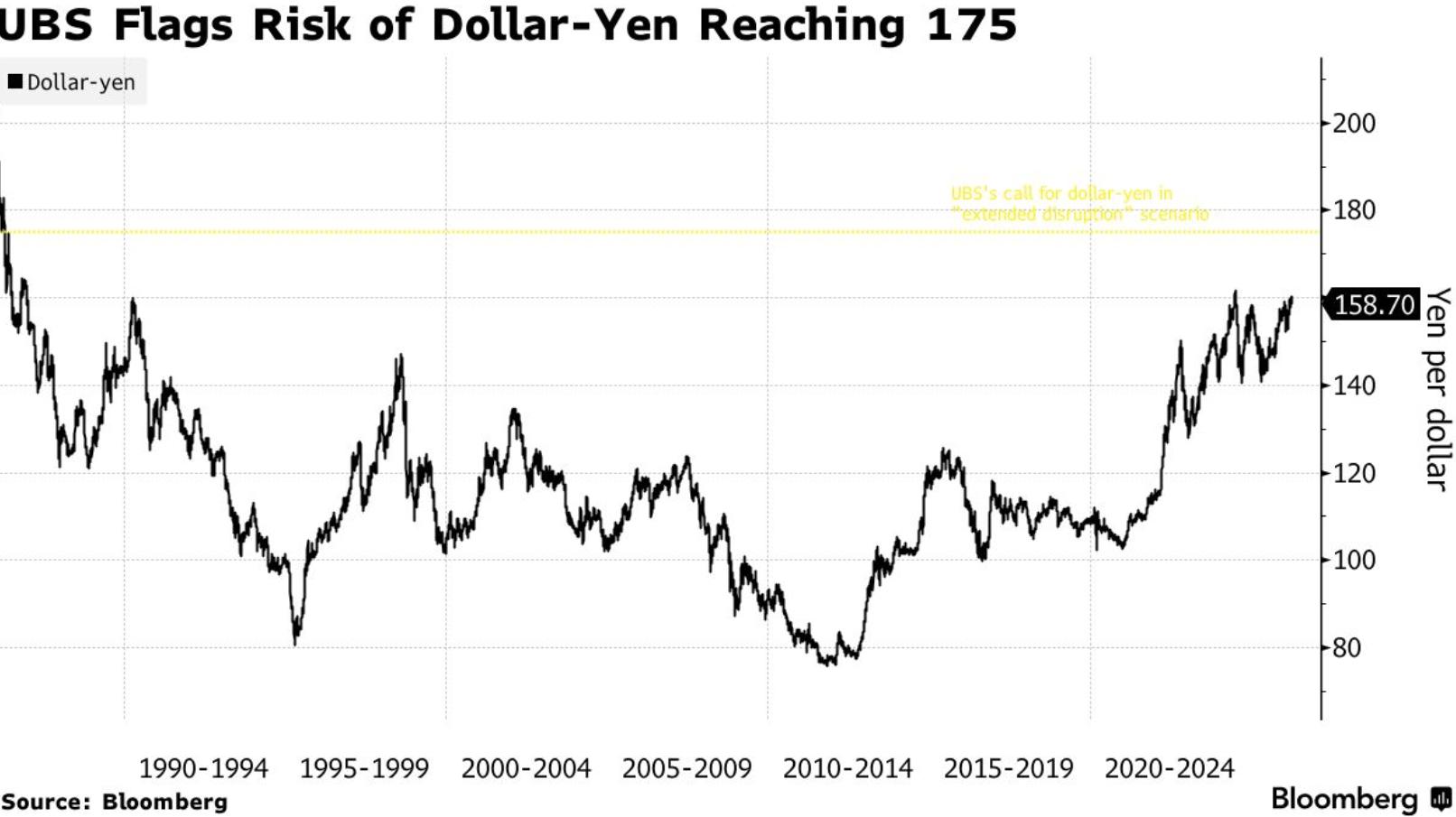
In a report published Wednesday, the bank’s strategists, including Shahab Jalinoos, stated that if oil prices rise to $150 per barrel, “attempts to curb inflation through FX intervention might instead provide the market with higher levels to sell yen, potentially depleting foreign exchange reserves without necessarily altering the currency trajectory.”
They added that efforts to contain inflation may rely more on fiscal measures such as energy subsidies.
In this scenario, the market may perceive that Japanese policymakers have no intention of stopping yen depreciation in a global stagflation environment, which would create a terms of trade shock pushing USD/JPY significantly higher.
This forecast comes as USD/JPY broke above the 160 level for the first time since 2024 last Friday, prompting increasingly stern warnings from policymakers. Japan’s top FX official, Masato Kanda, signaled possible “bold action,” while Bank of Japan Governor Kazuo Ueda reiterated that exchange rate movements are a policy consideration. Finance Minister Shunichi Suzuki also expressed readiness to respond, highlighting Japan’s heightened vigilance toward further yen weakening.
The Israel-Iran war has added new pressure to the yen. Japan relies on imports for almost all of its energy needs, with more than 95% of its oil imports coming from the Middle East, exposing it to disruptions in the region. Rising oil prices mean Japan must pay more for energy imports, increasing demand for foreign exchange and leading to yen depreciation.
Structural factors also continue to play a role. Japan’s ultra-low interest rates and the wide gap versus the US and other major economies encourages investors to borrow yen cheaply and invest in higher-yielding overseas assets, creating sustained selling pressure on the yen. While the Bank of Japan raised rates last December to their highest level in 30 years, they remain low by global standards.
Over the past decade or so, the yen’s depreciation has helped Japan become an affordable tourist destination for millions of foreign visitors and boosted profits for its largest exporters. However, in an economy heavily dependent on imported energy and raw materials, the weak yen has also raised costs, fueled inflation for households, and squeezed domestic firms’ profit margins. The resulting cost-of-living squeeze led to the resignation of the two prime ministers before current leader Sanae Takaichi.
Beyond domestic circumstances, there is another reason the Japanese government may want to act. US President Trump repeatedly criticized Japan’s weak currency, arguing it gives Japanese manufacturers an unfair trade advantage. This issue was raised in bilateral trade negotiations. US officials are sensitive to excessive yen weakness. In January, the New York Fed contacted financial institutions on behalf of the US Treasury to inquire about USD/JPY levels, a move that subsequently triggered a sharp yen rally.
Disclaimer: The content of this article solely reflects the author's opinion and does not represent the platform in any capacity. This article is not intended to serve as a reference for making investment decisions.
You may also like
Nvidia Q3 Earnings Preview: Revenue Expectations and Key Metrics to Watch
AI trading retreats and corporate profit growth boost European stocks! Four-day winning streak halted but still on track for biggest weekly gain since July
European stock markets had previously risen for four consecutive trading days and reached record highs, but this rally could not be sustained. The Stoxx Europe 600 Index has climbed 2.2% this week and is on track for its largest weekly gain since July.
Nebius (NBIS.US) Q3 Conference Call: CEO Says AI “Demand Is Real and Huge”, Expects Pre-tax Break-even by Q4 2027
Nebius Group (NBIS.US) will release its Q3 2026 financial results before the market opens on November 12 (US Eastern Time) and hold a conference call on the same day.
Jensen Huang's resignation drags down AI trading, US three major stock index futures collectively fall, Nvidia stabilizes pre-market, Brent crude rebounds and breaks through $96
Nasdaq 100 index futures fell over 0.3%, and S&P 500 index futures declined 0.14%. Brent crude oil rose 0.37% to $96 per barrel. Spot gold increased 0.4% to $3,893.48 per ounce. Investors are now focusing on the US PPI data to be released tonight.
Crypto prices
More


