
Is the USDHKD carry trade sustainable?

Recently, the HKD funding market has tightened abruptly, sparking widespread discussion about the unwind of USDHKD carry trades. The market generally attributes this to two reasons: first, policy stimulus briefly attracted southbound capital inflows; second, seasonal liquidity strain due to quarter-end timing.Through a statistical analysis of HIBOR historical data from 2022 to 2025, we conclude that: the quarter-end effect is the main driver for the spike in HKD funding rates, which usually shows as "short and sharp" and is most pronounced in the last 2-3 trading days of the month, before quickly falling back to normal ranges after the turn of the month.
1. Historical Validation of the Quarter-End Effect
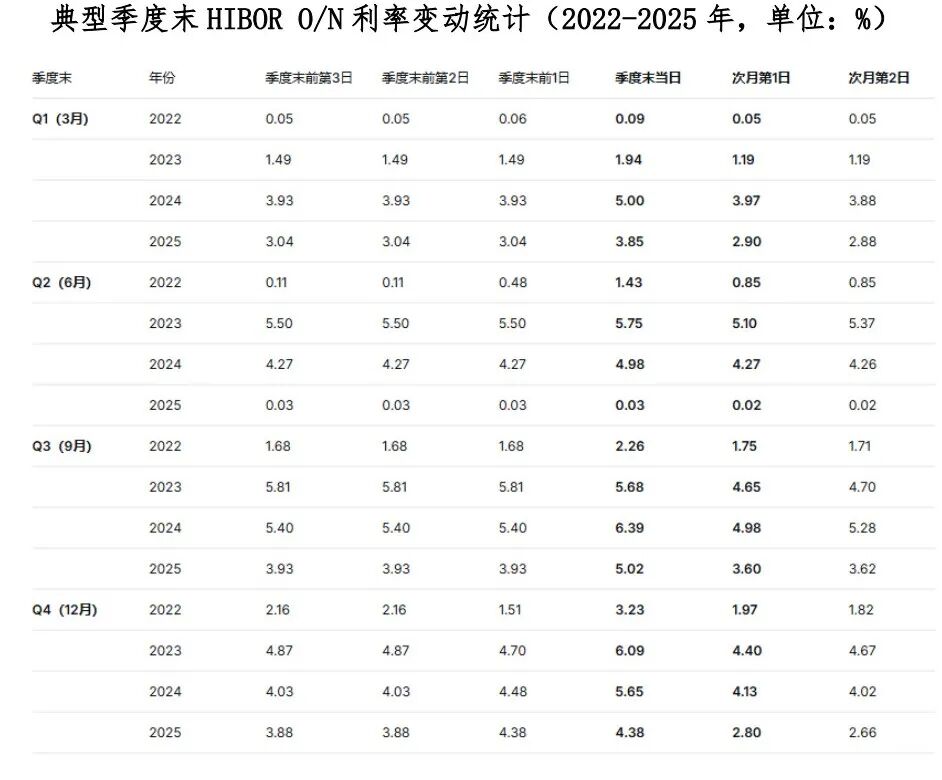
We extracted the last three trading days of each quarter (March, June, September, December) between 2022 and 2025 as the quarter-end interest rate level for observation, combined with the HIBOR overnight (O/N) rate changes in the three trading days prior to the quarter-end and the first two trading days of the following month, in order to measure the degree and persistence of quarter-end liquidity tightening. Analytical logic:
1. Timing Effect: Statistical analysis shows that in the vast majority of quarter-ends, HIBOR O/N rates experience a significant jump.
2. Persistence: The peak of rate spikes usually occurs on the penultimate or last trading day of the month-end.
3. Speed of Reversal: After entering the first trading day of the new month, rates typically fall sharply and by the second trading day, they return to the average level prior to the month-end.
2. Cross-Validation of Recent Market Tightness
According to the above historical pattern, the current (end of March 2026) market perception of HKD funding tightness is highly consistent with the historical quarter-end effect.
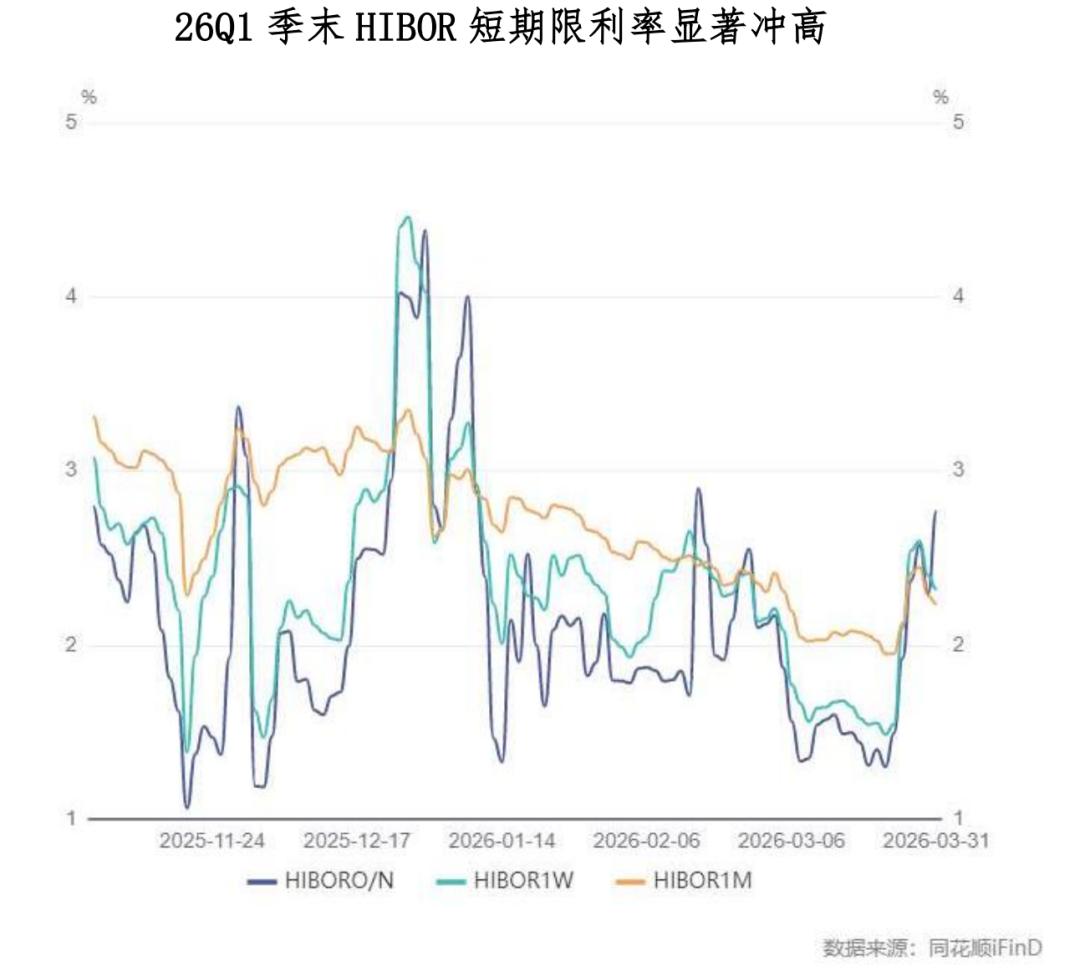
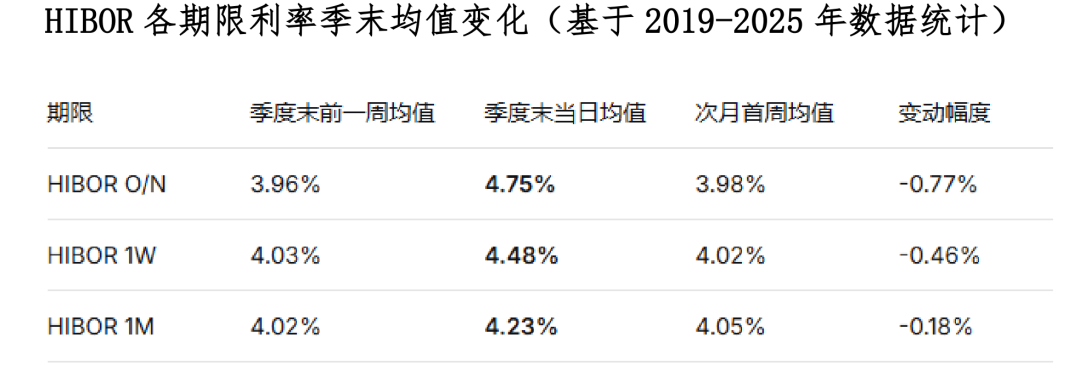
Data shows that even in the absence of special events, endogenous needs such as internal assessments and regulatory target compliance within the banking system at quarter-end are sufficient to cause significant rate spikes. The HIBOR O/N, 1W, and 1M data in the table below all display a clear "quarter-end spike, post-month reversal" pattern, verifying the short-term nature of quarter-end liquidity tightness.
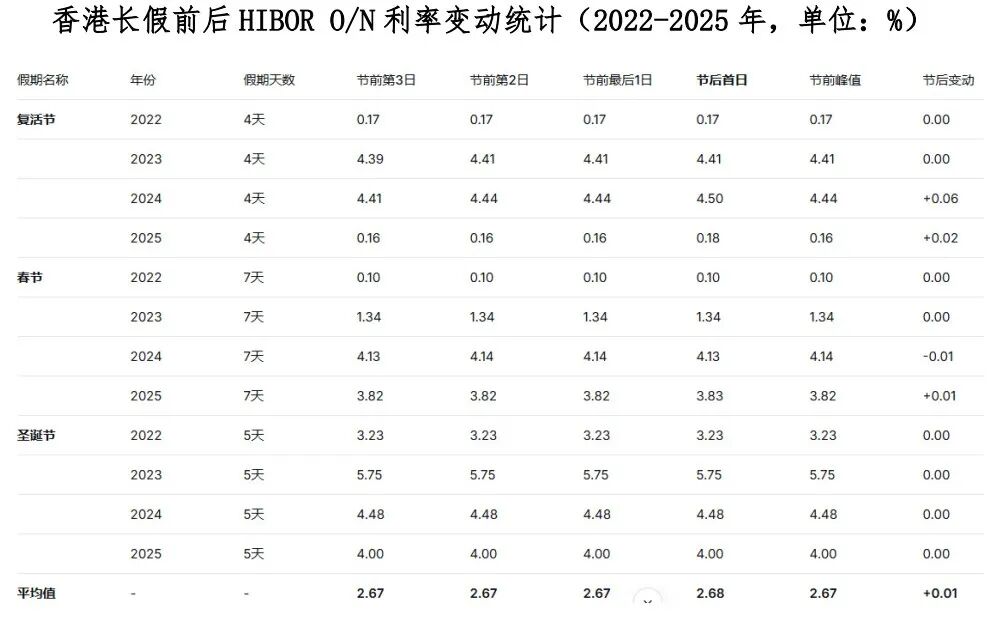
In addition, considering the upcoming Easter holiday in Hong Kong,the author selected periods from 2021 to 2025 during which the Hong Kong market was closed for 4 or more consecutive days (including weekends),and analyzed changes in HIBOR O/N rates for the three trading days before and the first trading day after the holiday. Statistical results show that HIBOR rates tend to spike before the Chinese New Year (especially when the holiday lasts 5 days) and before Christmas, whereas Easter holidays have little effect on HKD liquidity. Therefore, quarter-end disturbances remain the main reason for this round of funding tightening.
3. Conclusion and Market Implications
Quarter-end effect is the main contradiction: Historical data clearly shows there is a notable pattern of spiking HKD funding rates at quarter-ends, especially at half-year and year ends. This round of funding tightness is a typical "quarter-end effect," rather than a structural imbalance.
Duration is short: This effect usually only lasts 2-3 trading days. After the month-end, as liquidity in the banking system returns to normal, funding rates will rapidly drop back. It is expected that in April, HIBOR rates at all tenors will decline substantially and the carry trade environment for USDHKD will improve accordingly.
Trading strategy implications: At quarter-end, traders should make early arrangements for liquidity management, being alert to sharp exchange rate volatility brought by sudden tightening of funding. Meanwhile, with the US-Iran situation remaining uncertain and FX trading directions hard to grasp, as long as HKD funding does not further or persistently tighten, USDHKD carry trades can still be considered as a medium-term strategy.
Disclaimer: The content of this article solely reflects the author's opinion and does not represent the platform in any capacity. This article is not intended to serve as a reference for making investment decisions.
You may also like
From SpaceX to Anthropic, the market has new strategies for dealing with tech giants' IPOs
The market's response strategies to major listings are currently centered around "index inclusion expectations": the new regulations allow mega IPOs to be included in the six major indices within 15 days, triggering concentrated buying by passive funds. Investors are positioning themselves in advance and using options to hedge and amplify buying power. However, Anthropic has a free float of only about 6%; shares available for sale by employees on the first day and privately placed shares with no lock-up period may create supply pressure. On the other hand, index arbitrageurs are facing a rare opportunity.

Nvidia Q3 Earnings Preview: Revenue Expectations and Key Metrics to Watch
AI trading retreats and corporate profit growth boost European stocks! Four-day winning streak halted but still on track for biggest weekly gain since July
European stock markets had previously risen for four consecutive trading days and reached record highs, but this rally could not be sustained. The Stoxx Europe 600 Index has climbed 2.2% this week and is on track for its largest weekly gain since July.
Nebius (NBIS.US) Q3 Conference Call: CEO Says AI “Demand Is Real and Huge”, Expects Pre-tax Break-even by Q4 2027
Nebius Group (NBIS.US) will release its Q3 2026 financial results before the market opens on November 12 (US Eastern Time) and hold a conference call on the same day.
Crypto prices
More


