
Ethereum price risks falling to $1.2K next, analyst warns

Ethereum’s native token, Ether (ETH), may decline 40% to $1,200 in the coming weeks, according to a fractal setup shared by analyst Leshka.eth.
Key takeaways:
Ethereum is mirroring a pattern that preceded 45% and 48% declines in the past.
Macro risks and whale distribution hamper near-term outlook.
Ethereum setup flashes bull trap warning
Ethereum’s $1,200 downside target comes from a Supertrend setup on the daily chart, where two earlier bullish flips failed and led to steep breakdowns.
The Supertrend is a simple trend-following line plotted directly on the price chart. It changes color to show the current market direction: green when the trend is rising and red when the trend is falling.
ETH flashed similar bullish flips in October 2025 and January 2026, but neither held.
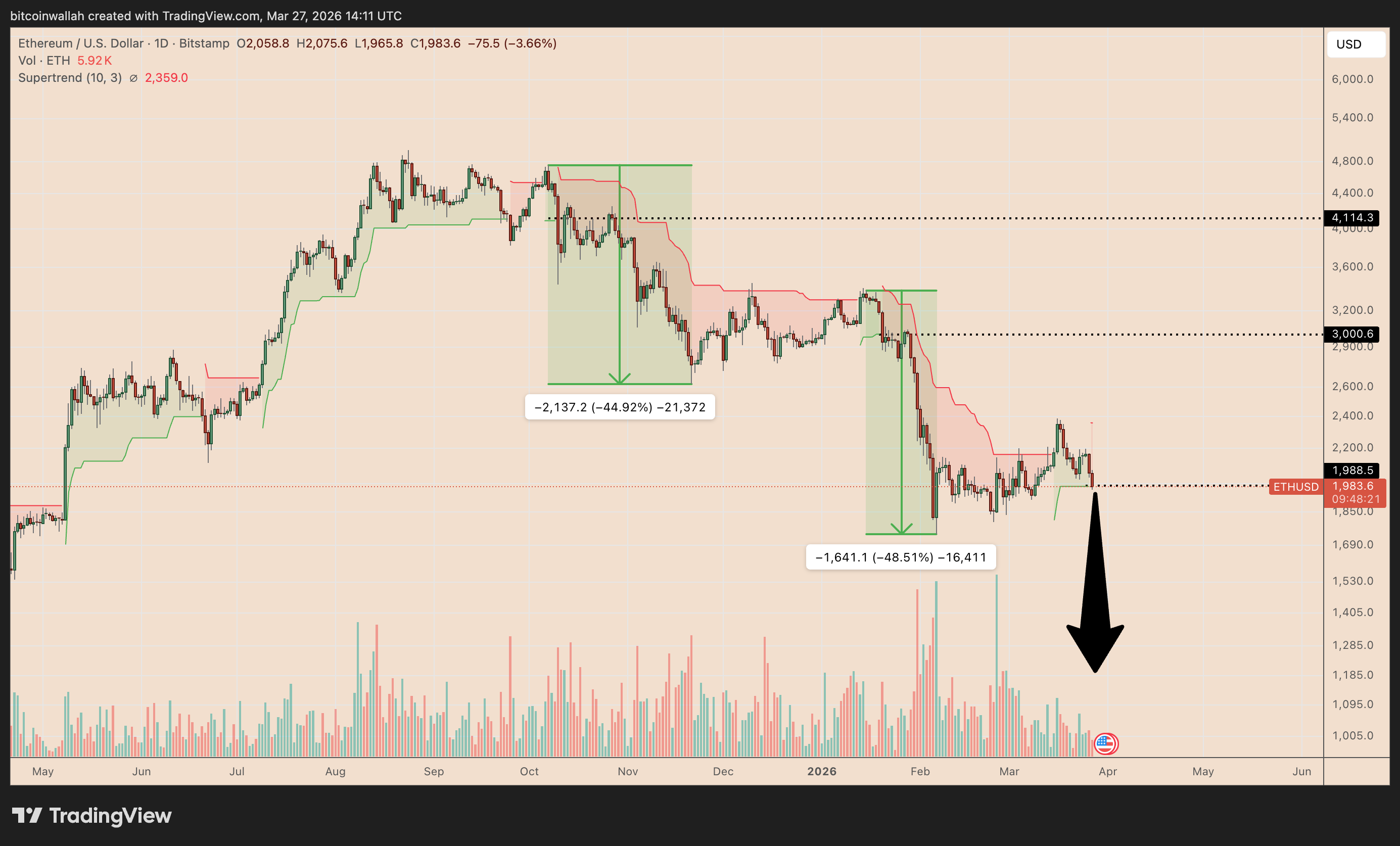 ETH/USD daily price chart. Source:
TradingView
In both cases, the price moved above the Supertrend’s upper band, which then started acting as support. Once ETH lost that support, the recovery unraveled and the price dropped 45% and 48%, respectively.
“Now the same setup is forming at $1,990,” said Leshka.eth, adding:
“If that level breaks, the next target is the $1,200 zone.”
That aligns with the measured downside target of Ethereum’s prevailing bear flag pattern, as shown below.
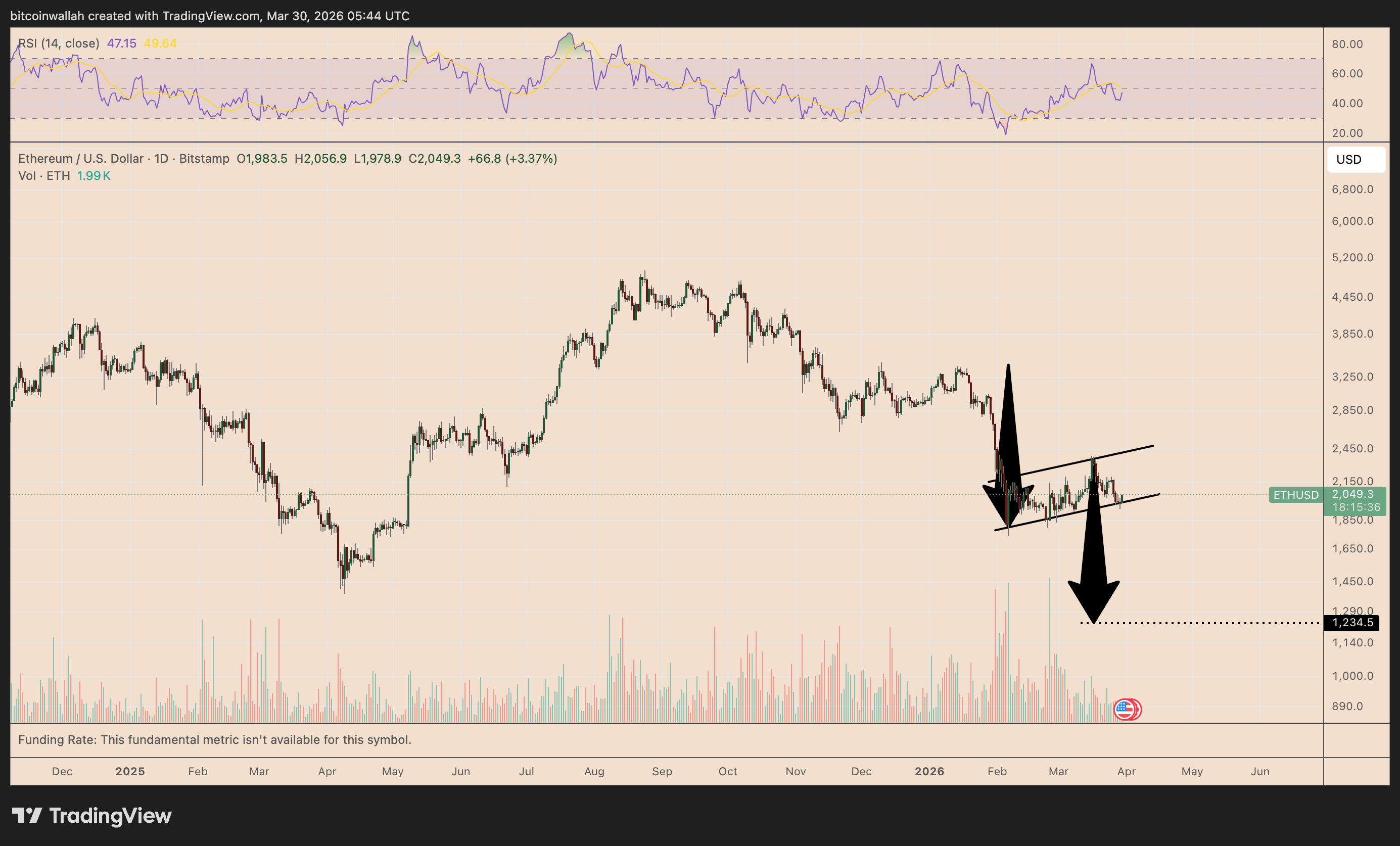 ETH/USD daily price chart. Source: TradingView
The bearish setups are taking shape as Ethereum gives back its March gains against a worsening macro backdrop.
Risk appetite has weakened alongside the US–Israel and Iran war, recession fears have risen, and bond traders no longer expect the Fed to cut rates before December 2027.
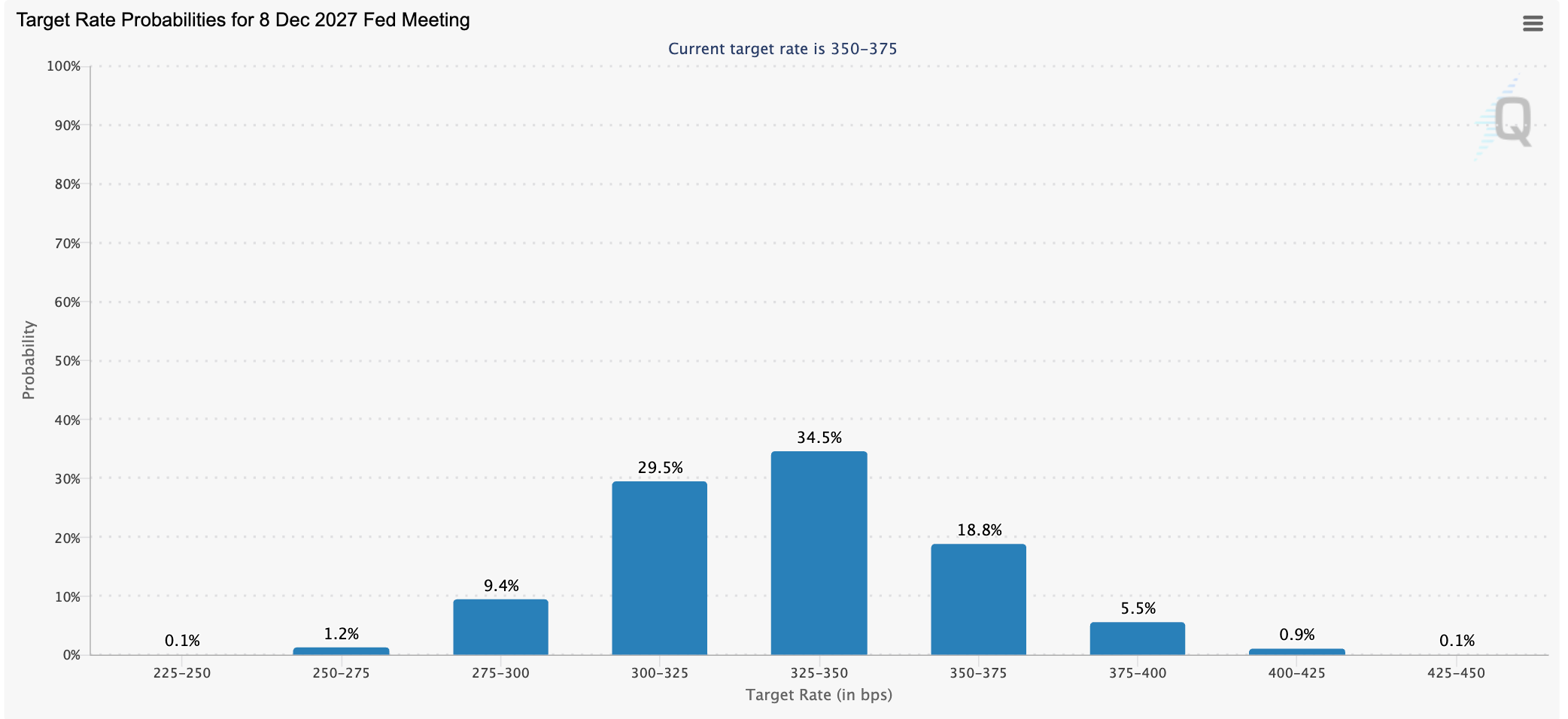 Target rate probabilities for the December Fed meeting. Source:
CME
ETH has fallen more than 17% from its monthly high from over two weeks ago. US spot Ether ETFs have seen roughly $300 million in net outflows over the same stretch.
The apparent demand for Ethereum has also slipped to its lowest in 16 months.
ETH holder accumulation remains weak
Ethereum’s latest rebound has not triggered broad-based accumulation across major wallet cohorts, Glassnode data shows.
For instance, the number of mega-whale wallets holding more than 10,000 ETH has flattened after peaking in late 2025, while the 30-day change has only just crawled back toward neutral after months of decline.
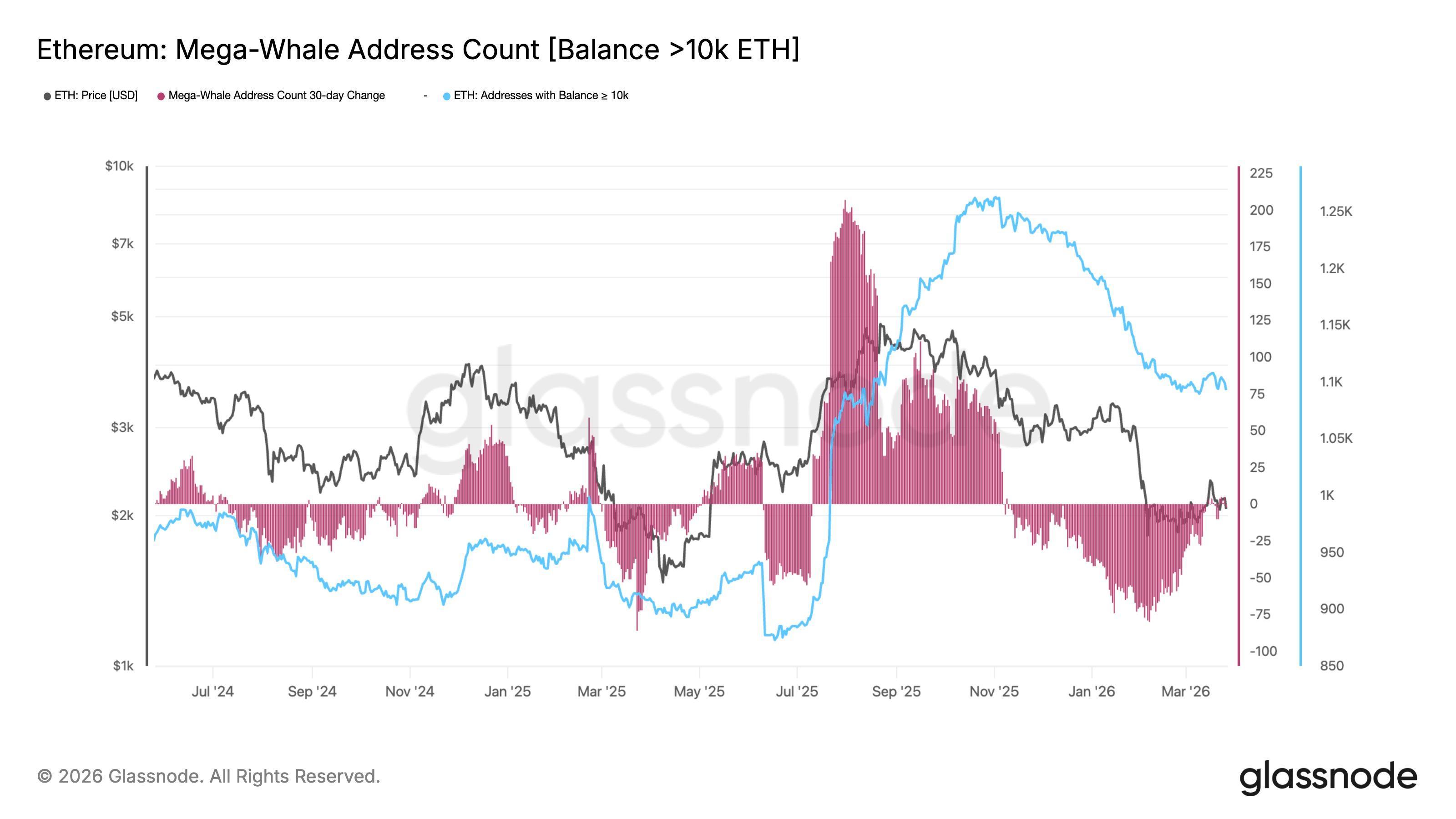 Ethereum mega-whale address count balance (>10K ETH). Source: Glassnode
In other words, the biggest holders have not been accumulating aggressively.
The picture looks similar among smaller wallet cohorts.
Ethereum whales holding 1,000 to 10,000 ETH remain below their late-2025 highs, with the 30-day change hovering around flat to slightly negative levels.
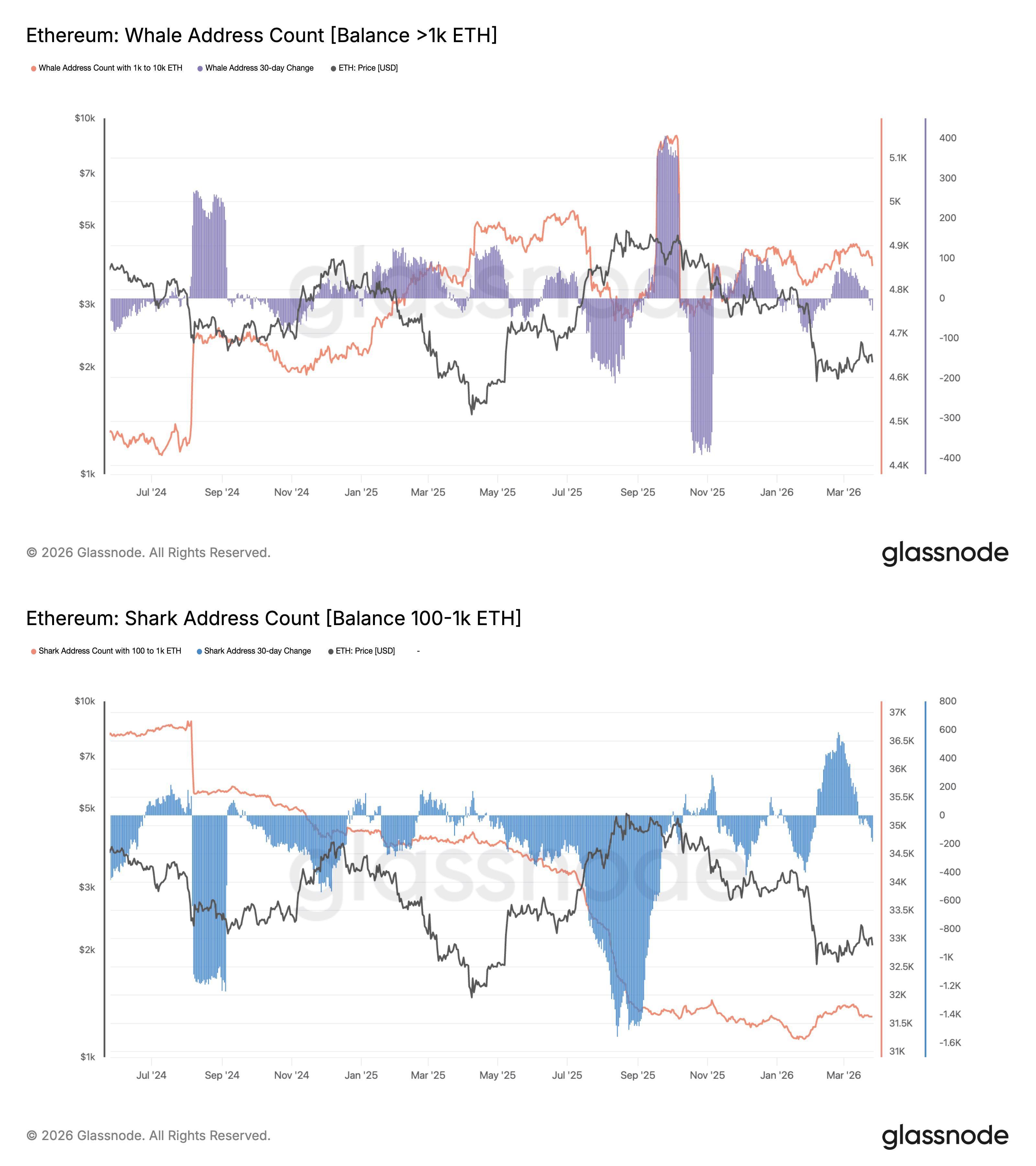 Ethereum whale and shark address count balance. Source: Glassnode
Shark addresses holding 100 to 1,000 ETH also continue to trend well below last year’s peaks, suggesting that mid-sized and smaller large holders have not returned as strong buyers either.
Taken together, the data suggest ongoing distribution and weak conviction across key ETH holder cohorts, reinforcing the risk of a deeper drop if $1,990 breaks.
As Cointelegraph reported, one of the few bullish signs for Ethereum include the increasing amount of Ether staked and supply on exchanges falling to ten-year lows.
Disclaimer: The content of this article solely reflects the author's opinion and does not represent the platform in any capacity. This article is not intended to serve as a reference for making investment decisions.
You may also like
Nvidia falls to its lowest valuation in 14 years! "Super bull" Tom Lee calls for bottom fishing, retail investors are buying more as it drops, but Wall Street is divided
After the market opened on Thursday, retail investors went against the trend and bought up Nvidia, with net purchases reaching $111 million in just half an hour, setting a record for the same period. Investors such as Tom Lee have publicly supported the company, with institutions optimistic about strong order backlogs extending to 2028, robust revenue growth, and opportunities created by declining valuations. Meanwhile, institutions like Bernstein and Goldman Sachs have become more cautious about Nvidia's outlook, with concerns focusing on management succession and technological leadership following Jensen Huang's departure.

Jane Street boosts Fidelity Bitcoin ETF stake 8x in Q3, trims BlackRock IBIT

From SpaceX to Anthropic, the market has new strategies for dealing with tech giants' IPOs
The market's response strategies to major listings are currently centered around "index inclusion expectations": the new regulations allow mega IPOs to be included in the six major indices within 15 days, triggering concentrated buying by passive funds. Investors are positioning themselves in advance and using options to hedge and amplify buying power. However, Anthropic has a free float of only about 6%; shares available for sale by employees on the first day and privately placed shares with no lock-up period may create supply pressure. On the other hand, index arbitrageurs are facing a rare opportunity.

Nvidia Q3 Earnings Preview: Revenue Expectations and Key Metrics to Watch
Crypto prices
More


