
Ethereum 'flippening' odds rise, but it won't involve Bitcoin

Ether’s (ETH) grip on the cryptocurrency market’s number-two spot is weakening, not because it is getting any closer to overtaking Bitcoin (BTC), but because the stablecoin economy is booming.
Key takeaways:
Ether’s hold on crypto’s number-two spot weakens as Tether’s growth accelerates.
ETH has lagged top stablecoins USDT and USDC in growth over the past five years.
Ethereum’s No. 2 ranking at risk in 2026
In the past five years, Ether has vastly underperformed its top competitors for the no. 2 spot, primarily Tether’s stablecoin USDT (USDT).
On a five-year rolling basis, ETH’s market capitalization grew by roughly 11.75% to around $240 billion.
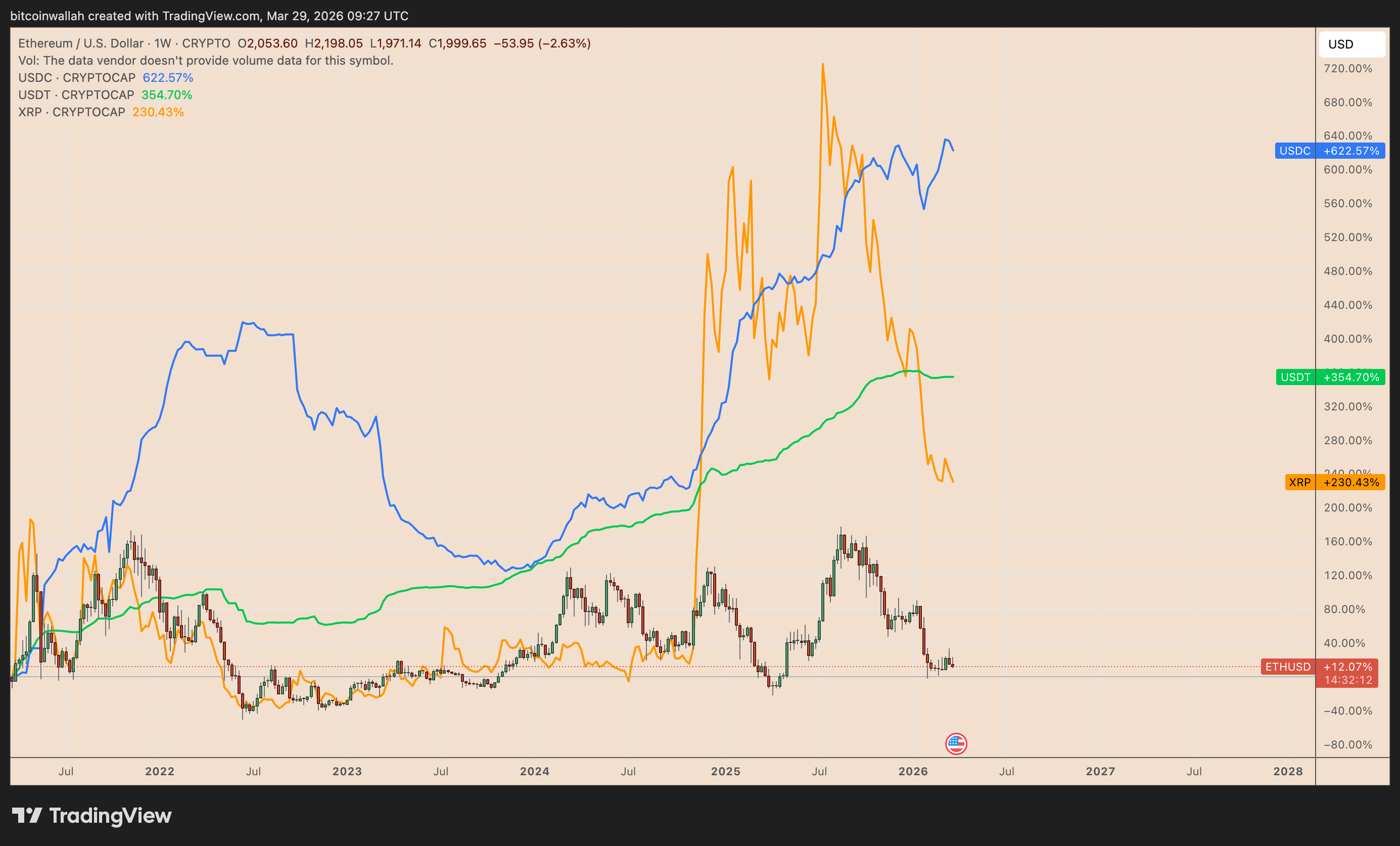 ETH/USD five-year market cap performance vs. USDT, XRP, and USDC. Source: TradingView
In comparison, USDT, the third-largest cryptocurrency, grew 622.50% in the same period, with its market cap reaching over $184 billion. Even XRP (XRP) and USD Coin (USDC) have outperformed Ether’s growth.
As a result, more traders are betting on Ethereum’s flippening in 2026.
On Polymarket’s betting platform, for instance, over 59% of punters placed bets in favor of Ether losing the number-two spot in 2026. These odds were just 17% at the year’s beginning.
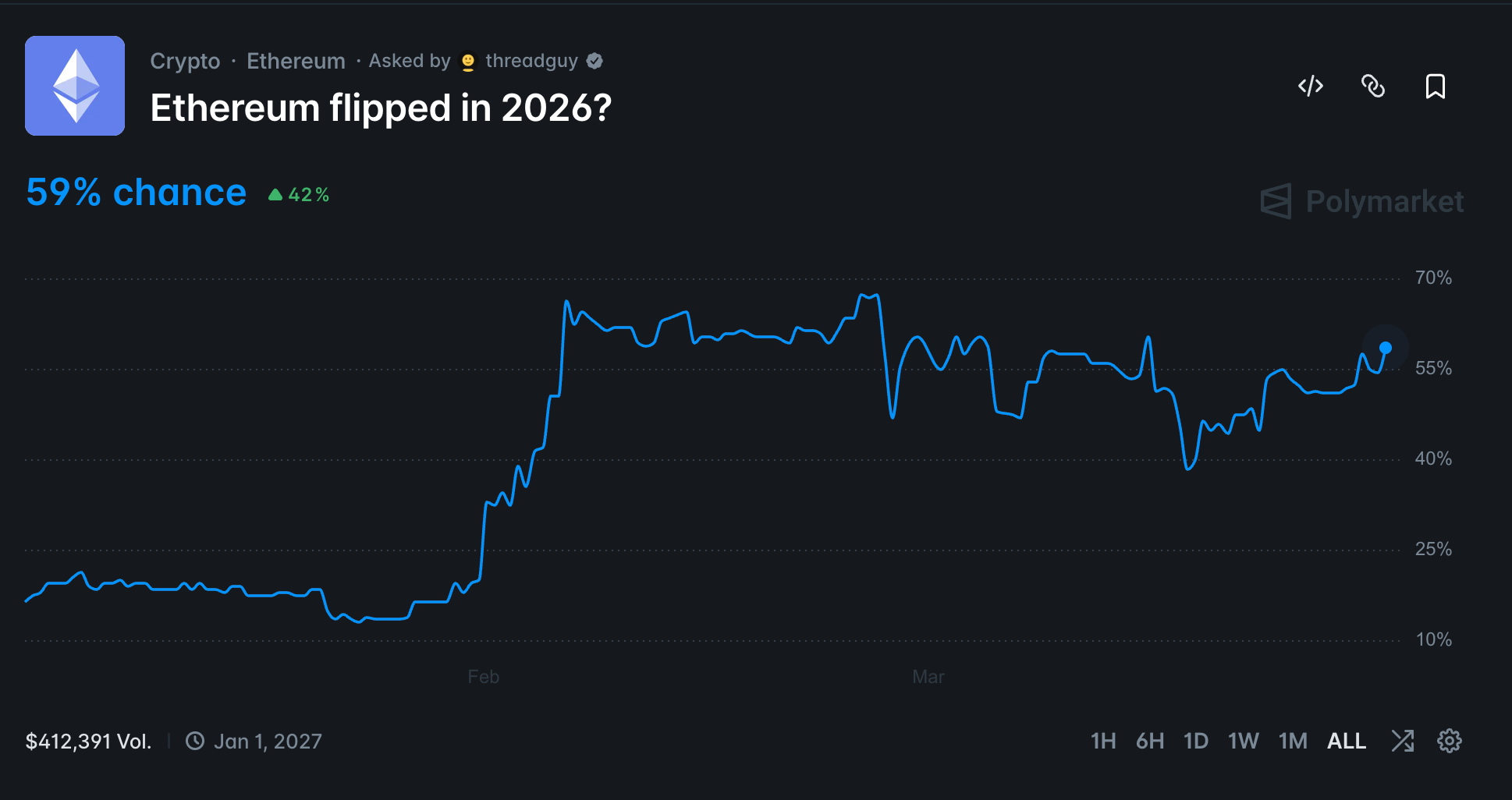 Ethereum flipped in 2026 contract. Source: Polymarket
Why has Ethereum lagged behind Tether?
Ethereum and Tether grow differently because one is crypto, the other is fiat.
Ethereum’s market value depends largely on ETH’s price rising, and that has been difficult to sustain in 2026 as crypto markets come under pressure from macro headwinds such as US tariffs, the US and Israel vs. Iran war, and fading expectations for Federal Reserve rate cuts.
That weakness has also been reflected in institutional demand. US spot Ethereum ETFs saw assets under management fall by about 65%, dropping to $11.76 billion in March from $31.86 billion in October last year, underscoring how the appetite for ETH has decreased over the past few months.
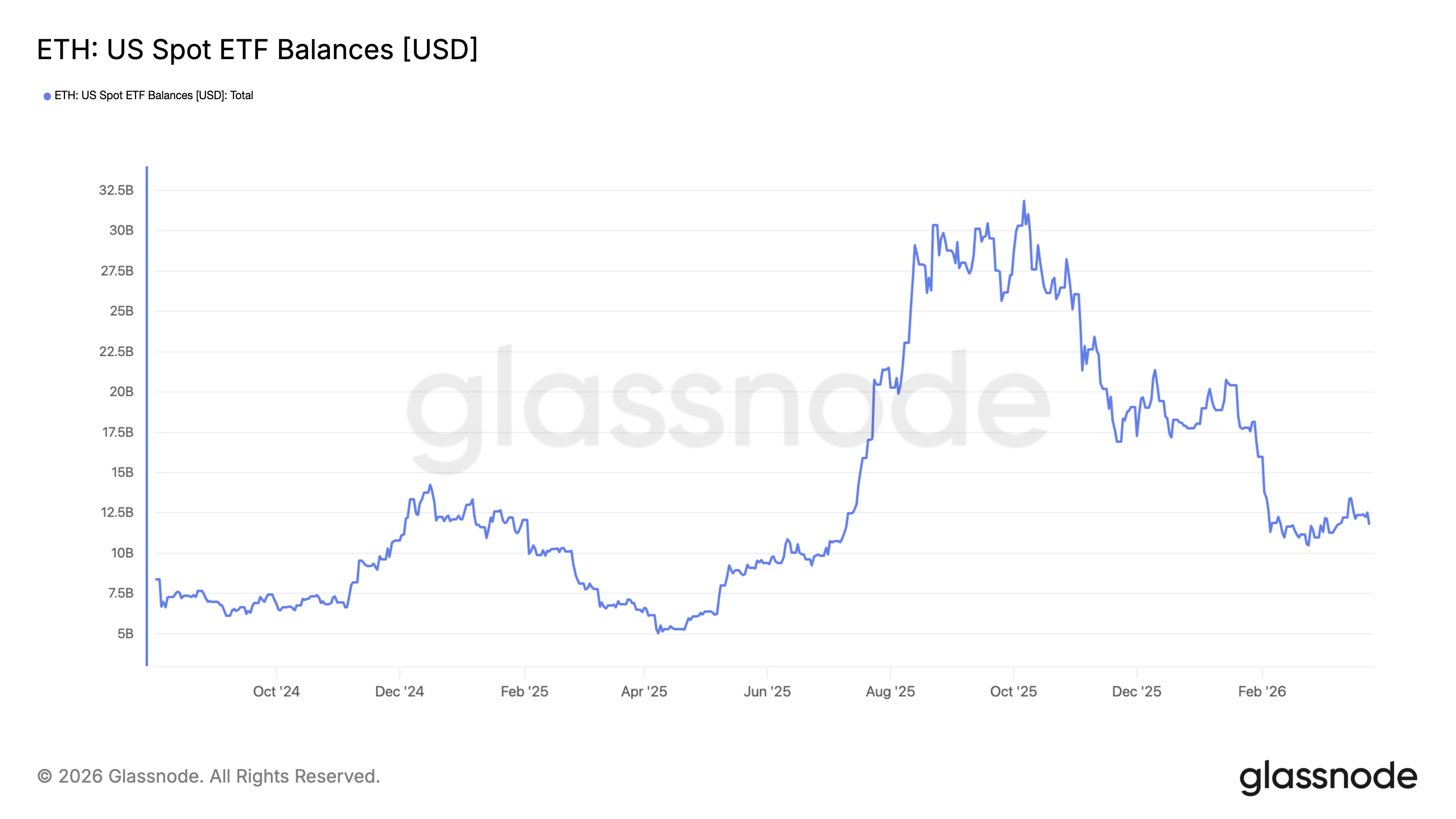 US spot Ethereum ETF balances. Source: Glassnode
Tether, by contrast, grows when capital flows into stablecoins and investors buy “crypto dollars.” That tends to happen when traders want safety, liquidity, or flexibility instead of exposure to volatile assets like ETH.
AI and stablecoins are winning despite 2026 crypto market slump
The total stablecoin market is now worth $310 billion, compared to around $5 billion in 2020, with Tether’s share at 58%.
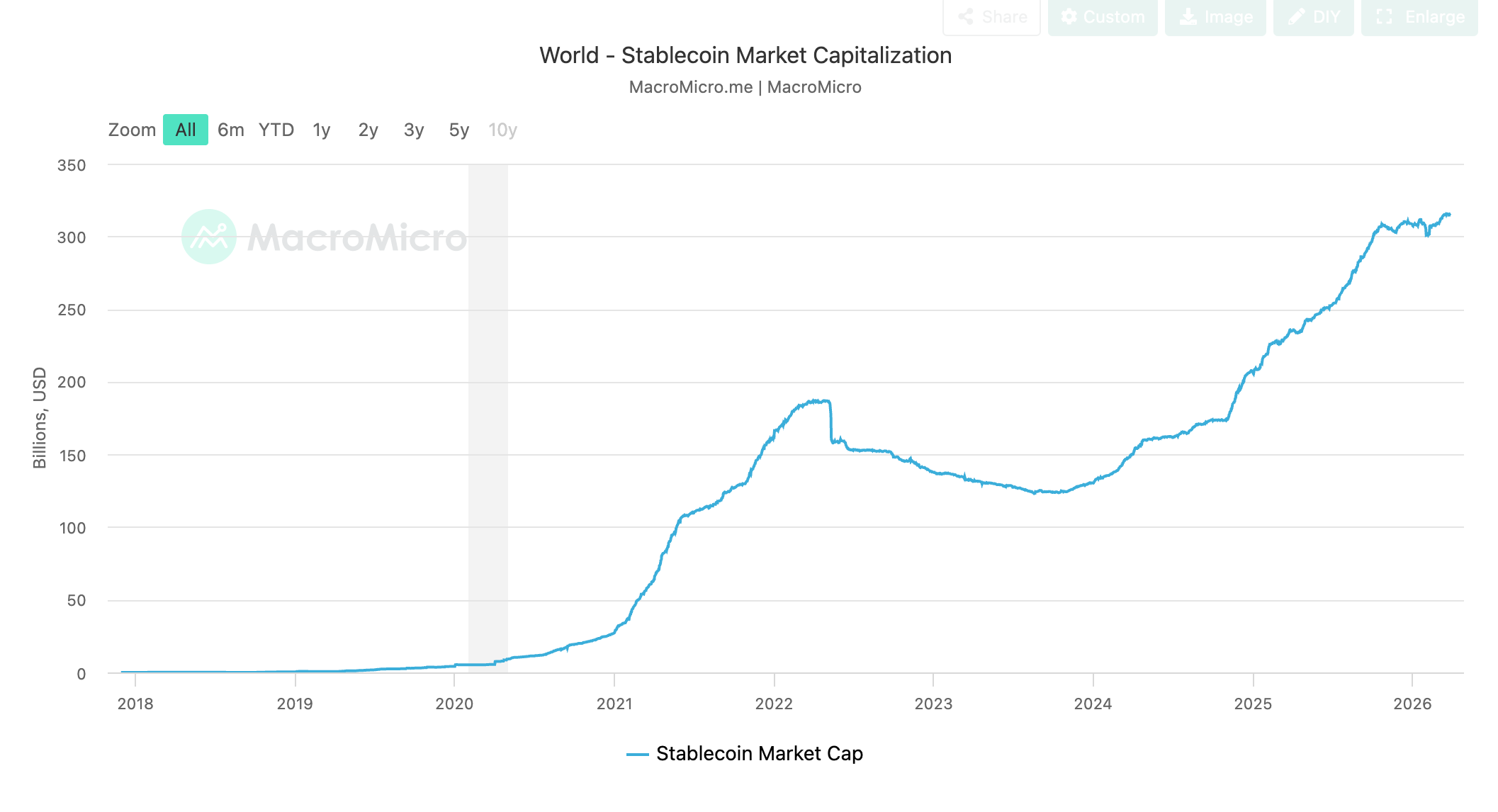 Stablecoin market capitalization. Source: MacroMicro.ME
Demand for this kind of “dry powder,” capital parked in a dollar-pegged asset while investors wait for better crypto entry points, usually stays firm during risk-off periods.
Ethereum needs a stronger risk appetite to lift ETH’s price, while Tether benefits when investors turn defensive. That helps explain why ETH market cap growth has lagged behind USDT despite remaining one of crypto’s core infrastructure assets.
Can the ETH price fall further in 2026?
From a technical perspective, Ether faces risks of further price declines in 2026.
As of Sunday, it was trading inside what appears to be a “bear flag” pattern, which increases the odds of resolving to the downside, given the price breaks decisively below the structure’s lower trendline.
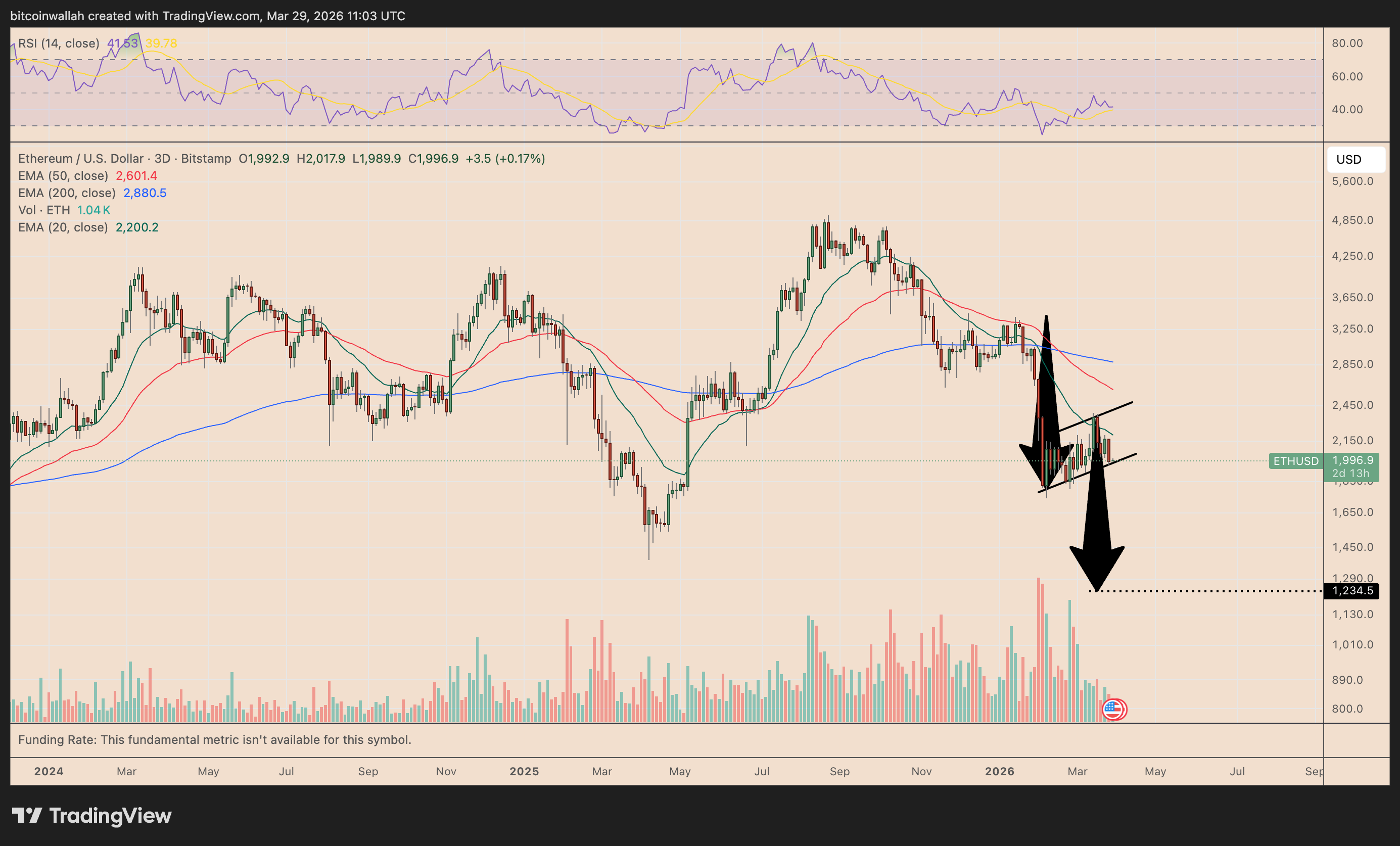 ETH/USD three-day price chart. Source: TradingView
ETH price risks falling toward the flag’s measured downside target at around $1,250 by June if the breakdown below the lower trend line persists.
Disclaimer: The content of this article solely reflects the author's opinion and does not represent the platform in any capacity. This article is not intended to serve as a reference for making investment decisions.
You may also like
Nvidia falls to its lowest valuation in 14 years! "Super bull" Tom Lee calls for bottom fishing, retail investors are buying more as it drops, but Wall Street is divided
After the market opened on Thursday, retail investors went against the trend and bought up Nvidia, with net purchases reaching $111 million in just half an hour, setting a record for the same period. Investors such as Tom Lee have publicly supported the company, with institutions optimistic about strong order backlogs extending to 2028, robust revenue growth, and opportunities created by declining valuations. Meanwhile, institutions like Bernstein and Goldman Sachs have become more cautious about Nvidia's outlook, with concerns focusing on management succession and technological leadership following Jensen Huang's departure.
Jane Street boosts Fidelity Bitcoin ETF stake 8x in Q3, trims BlackRock IBIT

From SpaceX to Anthropic, the market has new strategies for dealing with tech giants' IPOs
The market's response strategies to major listings are currently centered around "index inclusion expectations": the new regulations allow mega IPOs to be included in the six major indices within 15 days, triggering concentrated buying by passive funds. Investors are positioning themselves in advance and using options to hedge and amplify buying power. However, Anthropic has a free float of only about 6%; shares available for sale by employees on the first day and privately placed shares with no lock-up period may create supply pressure. On the other hand, index arbitrageurs are facing a rare opportunity.
Nvidia Q3 Earnings Preview: Revenue Expectations and Key Metrics to Watch
Crypto prices
More


