
Why is it so difficult for the US and Iran to stop the war?

Morning FX
This past weekend, the US-Iran war, which has lasted nearly a month, officially entered its fifth week, surpassing the four-week timeframe initially predicted by Trump at the start of the conflict. At present, both sides are confronting each other over an almost impossible agreement,and amid this war of attrition, Iran has become the side more eager to maintain the status quo.
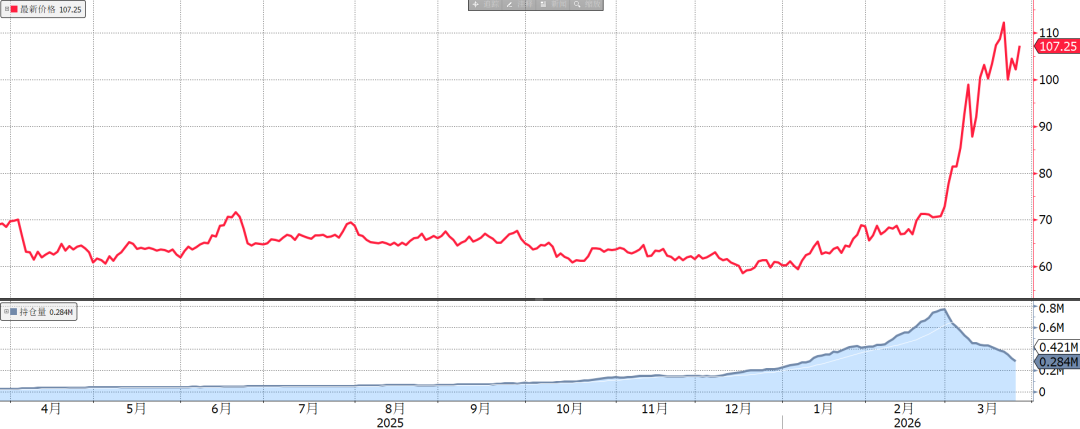
Image: International oil prices are still striving for new highs
The price the world pays each day is not limited to the surge in oil prices. Iran's demonstrated potential for disrupting energy choke points and infrastructure casts a shadow over investment in the Middle East,further deepening the long-term risks for energy prices.
1. An Almost Impossible Agreement
Trump claims the negotiations with Iran are far from formal diplomatic contact. Through mediation by Pakistan as a third party, both sides have put forward their respective demands for a ceasefire, but it’s as if they’re talking past each other.
US side: (1) Dismantle Iran’s nuclear capability, transfer the 450kg inventory of 60% high-enriched uranium, dismantle nuclear facilities at Natanz, Isfahan, and Fordow, etc. (2) Cease support for regional proxies, limit the range and number of ballistic missiles (3) Ensure the Strait of Hormuz remains open.
Iranian side: Iran to receive all compensations, lift all sanctions, the US to stop interfering in Iran’s internal affairs. Meanwhile, Iran continues to administer the Strait of Hormuz, rather than it being labeled a “free maritime zone.”
The US demands are essentially the prewar nuclear agreement plus access to Hormuz. Matters that couldn’t be resolved at the negotiating table are even less likely to be agreed upon now that the situation favors Iran. As for Iran’s demands, they take on the posture of a victorious nation, which is bound to differ greatly from Trump’s expectations.

Image: A major decisive battle in the US-Iran war may be approaching
Meanwhile, US amphibious assault forces are set to arrive in the Middle East. With “delaying tactics,” the likelihood of an intensified strike against Iran is increasing.
2. Unpredictable Battlefield and Long-term Consequences
The easing sentiment only lasted one day, and international oil prices are surging towards new highs, while stocks, bonds, non-USD currencies, and commodities (other than crude oil) are falling across almost all categories.
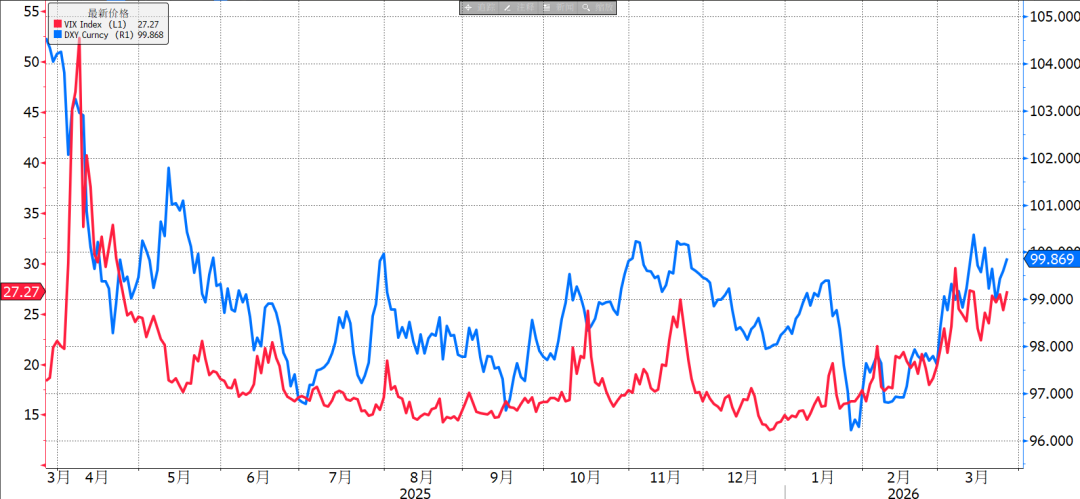
Image: The fear index is positively correlated with the US dollar index
But will the market’s reaction function change? Especially whether the rationale for the US dollar index and US interest rates rising due to the war is solid. For instance, some argue that if the war drags on, countries friendly with Iran such as China might receive “priority access,” which would shake the foundation of the “petrodollar system,” directly undermining the dollar’s status and causing the US dollar index to fall.
Additionally,research institute Citrini Research believes that rising oil prices won’t push the Federal Reserve to raise rates, but could actually increase the likelihood of distant rate cuts.
The current environment is completely different from 2022. Back then, the policy rate was at 0%, inflation was close to 5%, and the real rate was highly negative, leaving the Fed no choice but to sharply hike rates to cool off demand-driven inflation resulting from fiscal stimulus; but now the real rate is positive and already in restrictive territory, further hikes can’t affect oil supply and would only cause recession. Economic weakness caused by rising oil prices would in turn hasten a Fed rate cut.
3. Summary
(1) There’s little sign of progress in US-Iran peace talks, there’s a risk of a major decisive battle, and markets are back in panic mode.
(2) Trump’s unreliability coupled with the Fed’s dilemma amid rising oil prices—if the war drags on, the logic for the USD index and US interest rates may undergo a shift.
Disclaimer: The content of this article solely reflects the author's opinion and does not represent the platform in any capacity. This article is not intended to serve as a reference for making investment decisions.
You may also like
Nvidia falls to its lowest valuation in 14 years! "Super bull" Tom Lee calls for bottom fishing, retail investors are buying more as it drops, but Wall Street is divided
After the market opened on Thursday, retail investors went against the trend and bought up Nvidia, with net purchases reaching $111 million in just half an hour, setting a record for the same period. Investors such as Tom Lee have publicly supported the company, with institutions optimistic about strong order backlogs extending to 2028, robust revenue growth, and opportunities created by declining valuations. Meanwhile, institutions like Bernstein and Goldman Sachs have become more cautious about Nvidia's outlook, with concerns focusing on management succession and technological leadership following Jensen Huang's departure.

Jane Street boosts Fidelity Bitcoin ETF stake 8x in Q3, trims BlackRock IBIT

From SpaceX to Anthropic, the market has new strategies for dealing with tech giants' IPOs
The market's response strategies to major listings are currently centered around "index inclusion expectations": the new regulations allow mega IPOs to be included in the six major indices within 15 days, triggering concentrated buying by passive funds. Investors are positioning themselves in advance and using options to hedge and amplify buying power. However, Anthropic has a free float of only about 6%; shares available for sale by employees on the first day and privately placed shares with no lock-up period may create supply pressure. On the other hand, index arbitrageurs are facing a rare opportunity.

Nvidia Q3 Earnings Preview: Revenue Expectations and Key Metrics to Watch
Crypto prices
More


