
SEC is no longer a ‘cop on the crypto beat‘, says US lawmaker

Opposing viewpoints on how regulators keep pace with technology were on view as a US House panel on Thursday examined different approaches to digital asset regulation at the Securities and Exchange Commission (SEC).
One viewpoint evident at the hearing of the House Financial Services Committee’s Subcommittee on Digital Assets, Financial Technology, and Artificial Intelligence, was voiced by ranking member and Massachusetts Representative Stephen Lynch who said he “wholly embraced” the idea that innovative technology could be used for “tremendous good,” but expressed concern with “recent regulatory developments” in the United States.
“Under the Trump administration [...] the SEC has dismantled several of the teams that are responsible for managing the incidents of scams and frauds, the White House has dismantled FinHub, which is the dedicated office that built the agency’s technical expertise on digital assets and fintech,” said Lynch, adding:
“Related to crypto, there’s no cop on the beat. The SEC has dropped most of the cases that they’ve had against firms that had been charged with misconduct.”
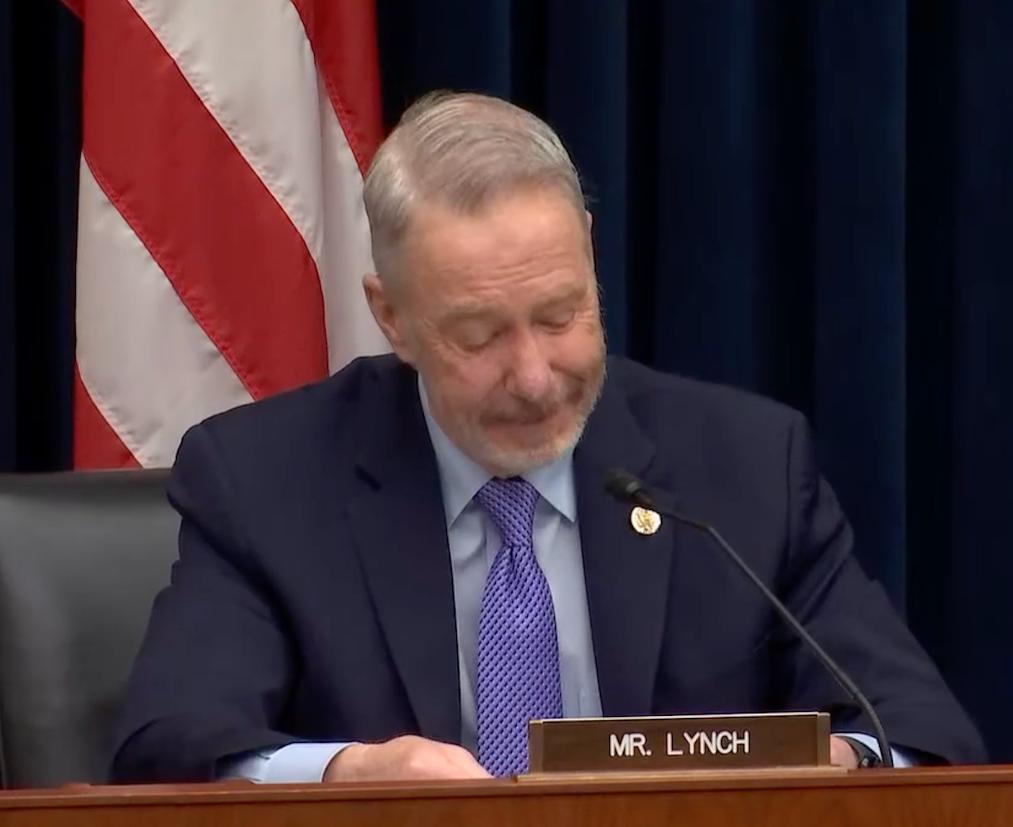 Representative Stephen Lynch speaking at subcommittee hearing on Thursday. Source:
House Financial Services Committee
Lynch was referring to the SEC under President Donald Trump dropping investigations or enforcement actions against a number of crypto companies including Ripple Labs and Coinbase, some of whose executives have close ties to the administration. Trump nominated Paul Atkins to chair the SEC after the departure of former chair Gary Gensler in January 2025.
Representative Bryan Steil, who chairs the subcommittee, cited concerns about whether regulators were “prepared to meet the moment” on technologies like digital assets. He also said that Congress was responsible for providing clarity and eliminating “fragmentation and uncertainty,” hinting at the crypto market structure bill moving through the Senate.
Regulators are coordinating on crypto in the absence of market structure
Earlier this month, the SEC and Commodity Futures Trading Commission (CFTC) signed a memorandum of understanding as part of measures to coordinate oversight of financial markets, including digital assets. Days later, the SEC issued an interpretative notice on how it intended to treat crypto assets under federal securities laws.
SEC Chair Paul Atkins said that the commission’s approach would represent a “bridge” to clarify crypto regulation with Congress stalled on the passage of the CLARITY Act, a bill to establish a market structure framework for digital assets. The legislation is expected to give the CFTC more authority in overseeing cryptocurrencies.
Disclaimer: The content of this article solely reflects the author's opinion and does not represent the platform in any capacity. This article is not intended to serve as a reference for making investment decisions.
You may also like
Nvidia falls to its lowest valuation in 14 years! "Super bull" Tom Lee calls for bottom fishing, retail investors are buying more as it drops, but Wall Street is divided
After the market opened on Thursday, retail investors went against the trend and bought up Nvidia, with net purchases reaching $111 million in just half an hour, setting a record for the same period. Investors such as Tom Lee have publicly supported the company, with institutions optimistic about strong order backlogs extending to 2028, robust revenue growth, and opportunities created by declining valuations. Meanwhile, institutions like Bernstein and Goldman Sachs have become more cautious about Nvidia's outlook, with concerns focusing on management succession and technological leadership following Jensen Huang's departure.

Jane Street boosts Fidelity Bitcoin ETF stake 8x in Q3, trims BlackRock IBIT

From SpaceX to Anthropic, the market has new strategies for dealing with tech giants' IPOs
The market's response strategies to major listings are currently centered around "index inclusion expectations": the new regulations allow mega IPOs to be included in the six major indices within 15 days, triggering concentrated buying by passive funds. Investors are positioning themselves in advance and using options to hedge and amplify buying power. However, Anthropic has a free float of only about 6%; shares available for sale by employees on the first day and privately placed shares with no lock-up period may create supply pressure. On the other hand, index arbitrageurs are facing a rare opportunity.

Nvidia Q3 Earnings Preview: Revenue Expectations and Key Metrics to Watch
Crypto prices
More


