
Even with the escalating situation in Iran, gold prices remain unmoved—the real "mastermind" behind the scenes is actually this?

FXMarkets, March 23—— The price movement of gold is determined less by pure geopolitical headlines and more by how these events shape inflation, monetary policy expectations, and real interest rates. Currently, it is still macro forces, rather than just geopolitics, that are driving the price of gold.
Recent price trends indicate that geopolitical factors alone are no longer sufficient to drive gold prices higher.
Macro factors, especially real yields, the US dollar exchange rate, and interest rate expectations, remain the key constraints limiting further gains for gold.
Safe-haven demand has been overshadowed by higher energy prices, a stronger dollar, and shifts in rate expectations.
Macro forces outweigh geopolitics
Despite the escalation of the Iran war, gold prices have fallen approximately 14% since the outbreak, highlighting that macro factors—especially rates, the US dollar, and cross-asset allocation—continue to dominate short-term price action.
This pattern is consistent with previous shock events: in the early stages, liquidity needs tend to outweigh safe-haven demand.
The reaction of gold in 2022 provides a useful reference point. When the Russia-Ukraine conflict began, gold prices initially rallied, but as the inflation shock transmitted into rates, the US dollar, and investor flows, this uptrend gradually faded.
More broadly,
Energy prices complicate the inflation outlook
Geopolitical tensions have pushed up energy prices, increasing the risk of persistently high inflation and making the path to monetary easing more complicated.
A “higher for longer” rate environment will keep real yields elevated, a headwind for gold. Last week, the Federal Reserve kept rates unchanged, and Chair Powell emphasized that further easing requires clearer progress on inflation; however, some economists still expect two 25-basis-point rate cuts later this year (in September and December).
Nonetheless, a stagflation backdrop (slowing growth accompanied by persistent inflation) should continue to support gold over the medium to long term.
Central bank demand remains supportive, but the pace may slow
Central banks continue to support gold demand, but the pace of buying has slowed.
According to the World Gold Council, net purchases in January were 5 tons, well below the 27 tons/month average in 2025, reflecting weaker momentum at the start of the year. Still, flows indicate that the structural interest remains: purchases from Uzbekistan were offset by sales from Russia, while new buyers like Malaysia and a potential return of Korean banks suggest that the demand base is gradually broadening.
While official sector demand remains structurally supportive (reflecting an ongoing trend of reserve management away from the US dollar), it is unlikely to drive short-term price volatility. Central banks may selectively accumulate reserves during periods of price weakness, but short-term price moves will remain dominated by investment flows.
ETF outflows weigh on gold prices
ETF flows remain a key demand driver for gold. Persistent outflows in recent weeks have weighed on prices, with holdings giving up much of the early-year gains since the outbreak of the Iran war. Historically, movements in ETF positioning have been closely correlated with gold prices and expectations for US monetary policy.
If there is a move toward a Fed rate cut later this year, it may trigger a new round of inflows and support prices; however, a “higher for longer” rate environment may mean continued ETF outflows remain a headwind.
Outlook remains constructive, but short-term risks are rising
Despite increased short-term risks, the overall outlook for gold remains constructive.
Gold is still up about 6% year-to-date, making the market vulnerable to profit-taking. However, any deeper correction could attract buying, especially from central banks and long-term investors.
Ultimately,
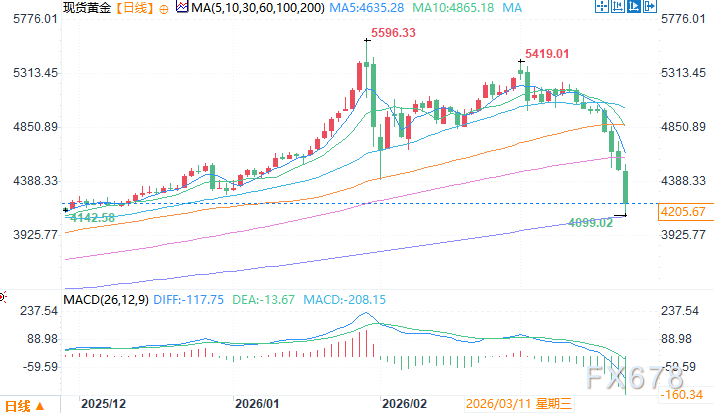
Spot Gold Daily Chart Source: Yihuizone
GMT+8, March 23, 15:41 Spot Gold quoted at $4205.67/ounce
Disclaimer: The content of this article solely reflects the author's opinion and does not represent the platform in any capacity. This article is not intended to serve as a reference for making investment decisions.
You may also like
US PPI report to test Bitcoin, gold and Nasdaq as December rate hike looms
Nvidia falls to its lowest valuation in 14 years! "Super bull" Tom Lee calls for bottom fishing, retail investors are buying more as it drops, but Wall Street is divided
After the market opened on Thursday, retail investors went against the trend and bought up Nvidia, with net purchases reaching $111 million in just half an hour, setting a record for the same period. Investors such as Tom Lee have publicly supported the company, with institutions optimistic about strong order backlogs extending to 2028, robust revenue growth, and opportunities created by declining valuations. Meanwhile, institutions like Bernstein and Goldman Sachs have become more cautious about Nvidia's outlook, with concerns focusing on management succession and technological leadership following Jensen Huang's departure.

Jane Street boosts Fidelity Bitcoin ETF stake 8x in Q3, trims BlackRock IBIT

From SpaceX to Anthropic, the market has new strategies for dealing with tech giants' IPOs
The market's response strategies to major listings are currently centered around "index inclusion expectations": the new regulations allow mega IPOs to be included in the six major indices within 15 days, triggering concentrated buying by passive funds. Investors are positioning themselves in advance and using options to hedge and amplify buying power. However, Anthropic has a free float of only about 6%; shares available for sale by employees on the first day and privately placed shares with no lock-up period may create supply pressure. On the other hand, index arbitrageurs are facing a rare opportunity.

Crypto prices
More


