
Ether taker volume hits 3-year high: Will ETH avoid a 19% price decline?

A key Ether (ETH) onchain indicator has climbed to its highest level in over three years, a level last seen when ETH bottomed during the 2022 bear market cycle.
The signal supports the case for an early bottoming phase, despite the weak spot demand and muted price action. Data suggests that ETH may stabilize near the local floor around $2,000, but a sweep of lower price levels remains possible in the coming weeks.
Ether taker flow spikes: Does this confirm the ETH bottom?
The 30-day average of positive Ether net taker volume climbed to $142 million on March 17, reaching levels last seen on July 18, 2022. The net taker volume measures the difference between aggressive buyers and sellers in derivatives markets.
A positive reading signals that market orders lean toward buyers. The recent surge aligns with prior spikes seen in mid-2022 during a correction phase.
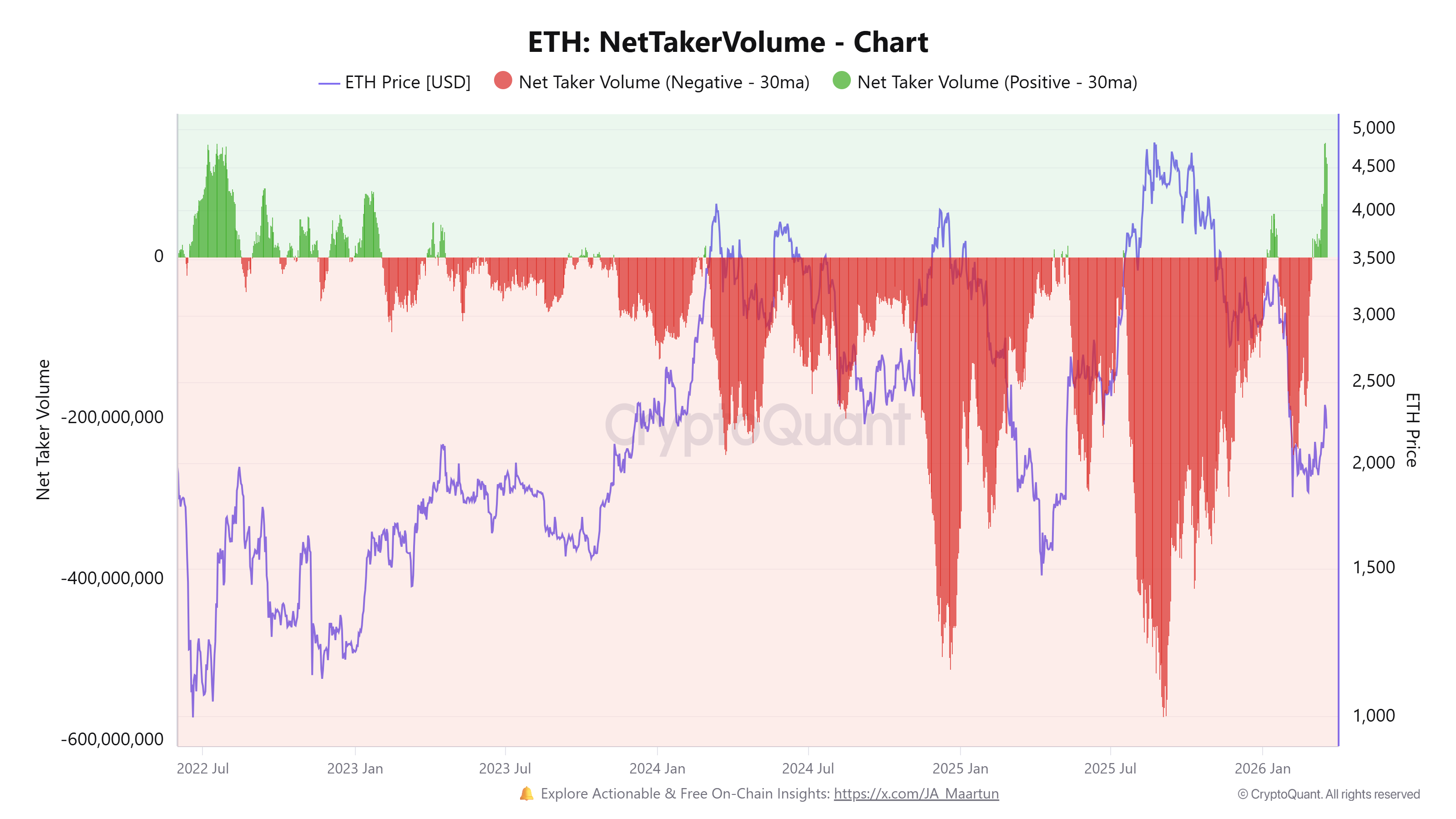 ETH net taker volume. Source: CryptoQuant
These expansions have appeared during transitional periods where traders reposition and add exposure while the price stabilizes near a market bottom, as observed in July 2022 and August 2020.
The Ethereum Coinbase premium index has also been positive since Feb. 24, and the elevated premium levels indicate growing spot demand from US-based traders.
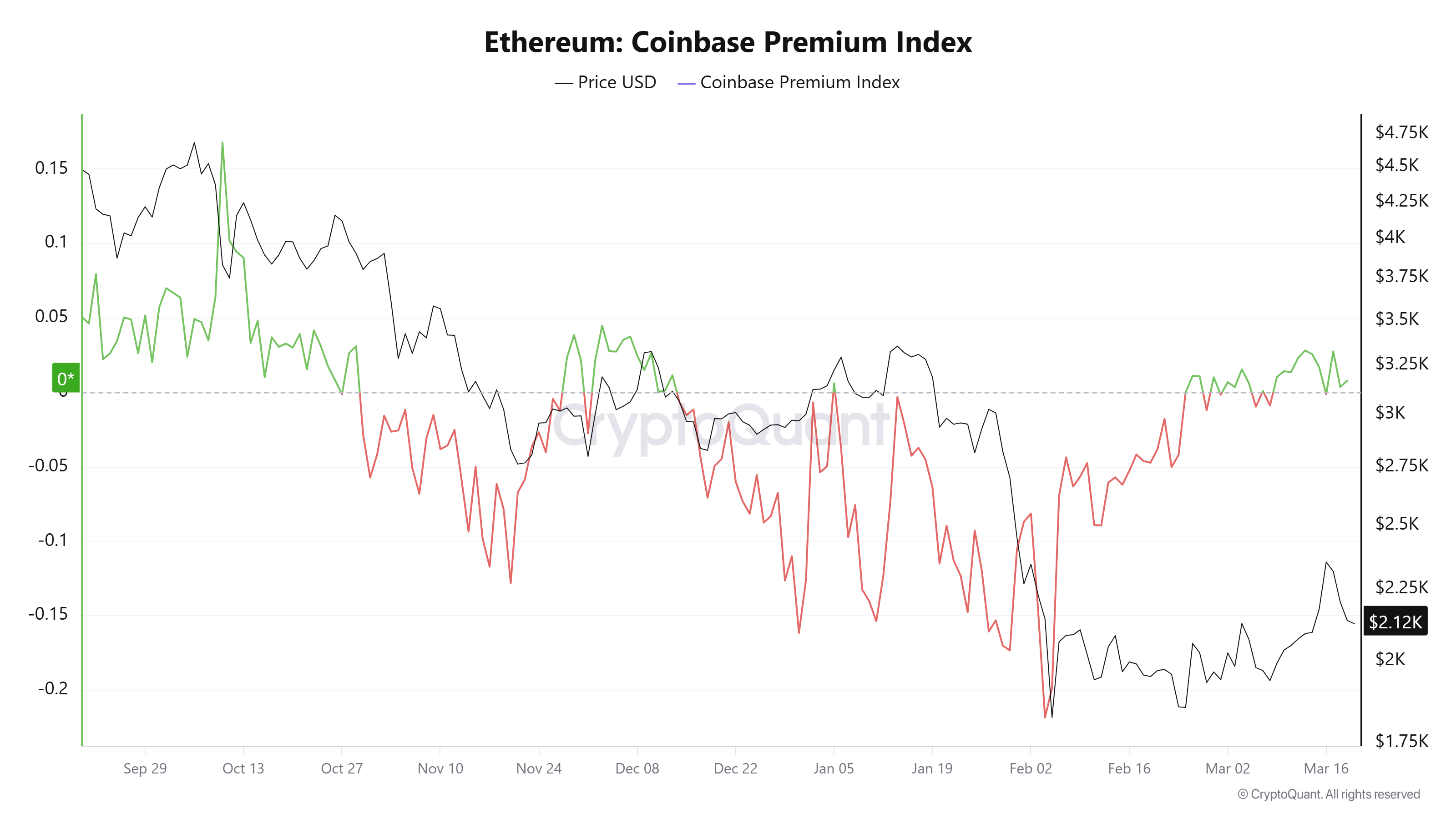 Ether coinbase premium index. Source: CryptoQuant
However, crypto analyst Pelin Ay noted that despite the drop in supply-side pressure, the price response has remained relatively muted, possibly due to a lack of dominant buy demand. The analyst said,
“The supply side is bullish, but there are no buyers. It appears that buyers still consider the current price expensive and are waiting for a new bottom.”
Related: Execution quality is the missing metric in Bitcoin and Ethereum markets
What happens if Ether falls below $2,150?
Ether’s short-term support aligns with the 100- and 200-period exponential moving averages (EMAs), but the price is compressing near an ascending trendline, with a potential breakdown placing focus on the lower liquidity zones.
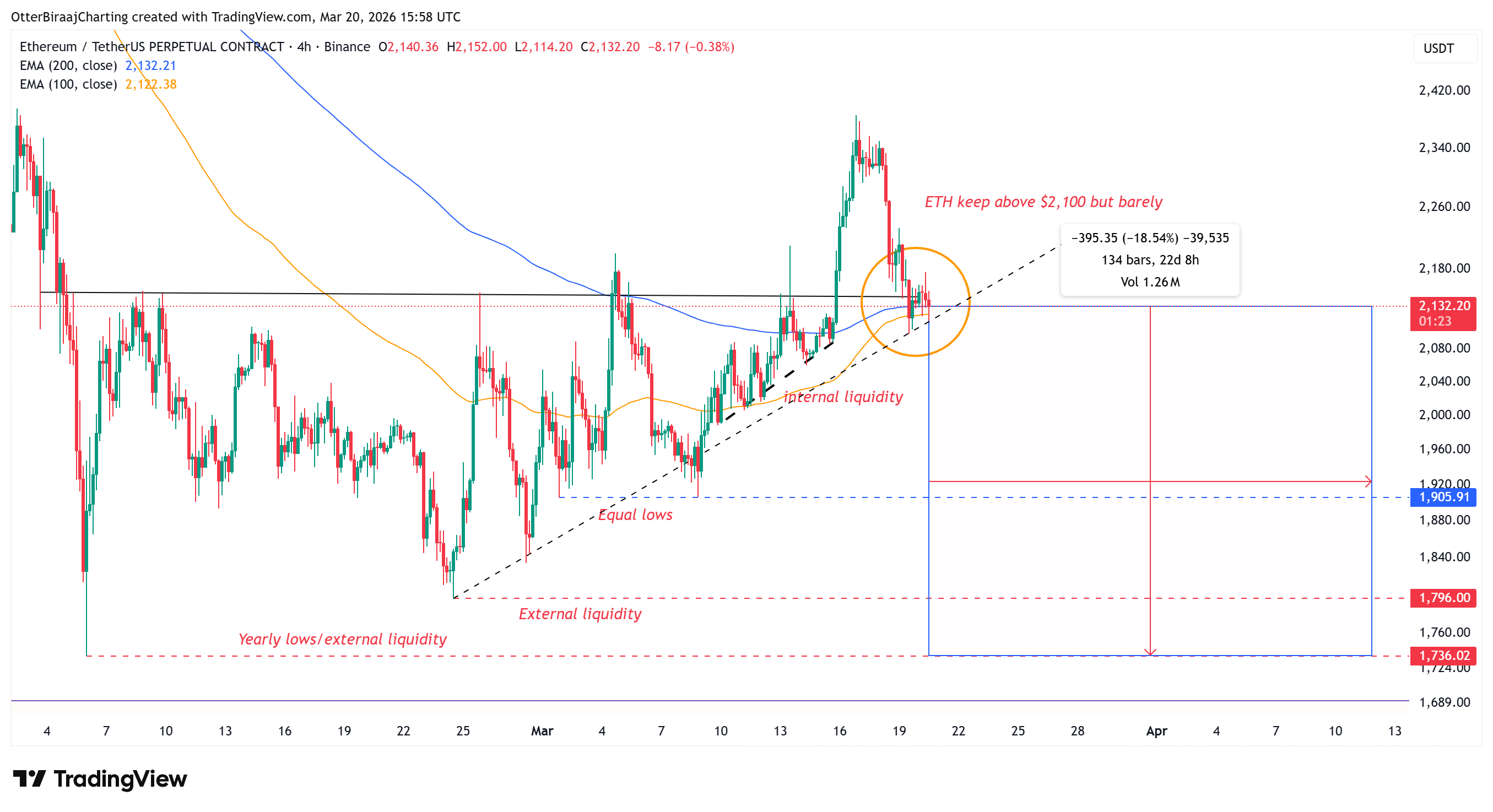 ETH/USDT four-hour chart. Source:
Cointelegraph/TradingView
The internal liquidity sits between $2,100 and $2,000 and a more pronounced cluster has formed near $1,905.
A larger liquidation cluster sits at $1,976, where over $3 billion in long positions are open. A move into this zone may trigger forced liquidations and create a short-term imbalance.
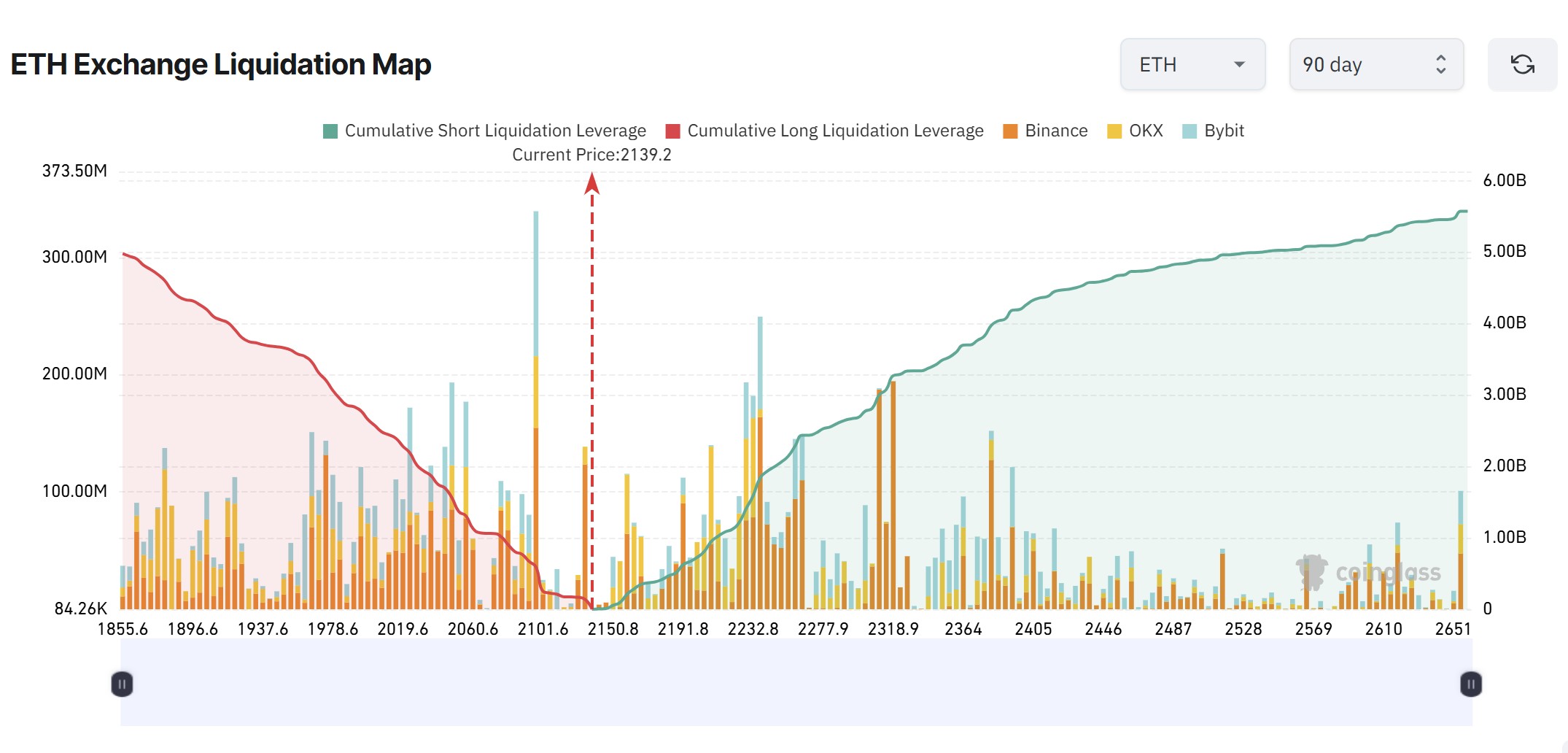 ETH exchange liquidation map. Source: CoinGlass
If buyers step in, this area may also act as a demand zone and support a price rebound above $2,000.
Crypto trader EliZ outlined a clear threshold at $2,000 on the daily timeframe. Holding above this level keeps the medium-term trend intact. A break below shifts the positioning toward aggressive short exposure, with the lower targets in focus.
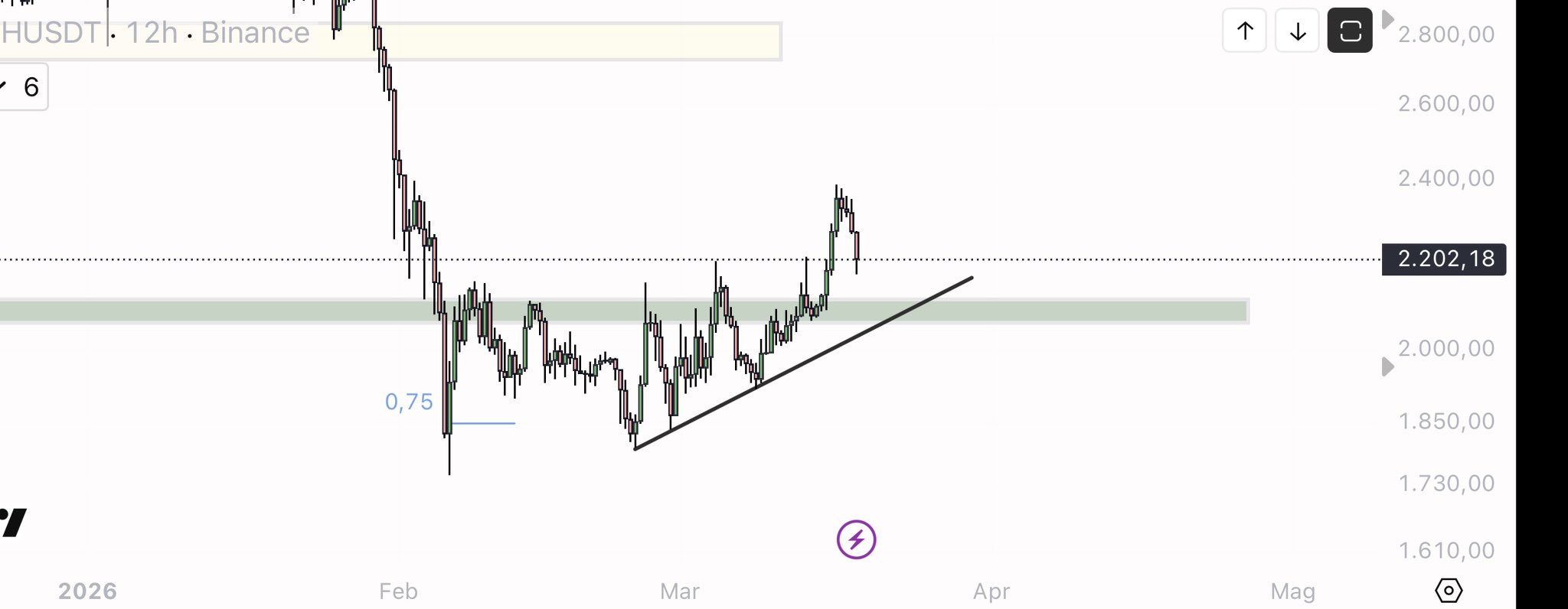 ETH/USD daily chart by EliZ. Source: X
Related: Crypto Fear and Greed rebounds off extreme lows as traders re-enter
Disclaimer: The content of this article solely reflects the author's opinion and does not represent the platform in any capacity. This article is not intended to serve as a reference for making investment decisions.
You may also like
US PPI report to test Bitcoin, gold and Nasdaq as December rate hike looms
Nvidia falls to its lowest valuation in 14 years! "Super bull" Tom Lee calls for bottom fishing, retail investors are buying more as it drops, but Wall Street is divided
After the market opened on Thursday, retail investors went against the trend and bought up Nvidia, with net purchases reaching $111 million in just half an hour, setting a record for the same period. Investors such as Tom Lee have publicly supported the company, with institutions optimistic about strong order backlogs extending to 2028, robust revenue growth, and opportunities created by declining valuations. Meanwhile, institutions like Bernstein and Goldman Sachs have become more cautious about Nvidia's outlook, with concerns focusing on management succession and technological leadership following Jensen Huang's departure.

Jane Street boosts Fidelity Bitcoin ETF stake 8x in Q3, trims BlackRock IBIT

From SpaceX to Anthropic, the market has new strategies for dealing with tech giants' IPOs
The market's response strategies to major listings are currently centered around "index inclusion expectations": the new regulations allow mega IPOs to be included in the six major indices within 15 days, triggering concentrated buying by passive funds. Investors are positioning themselves in advance and using options to hedge and amplify buying power. However, Anthropic has a free float of only about 6%; shares available for sale by employees on the first day and privately placed shares with no lock-up period may create supply pressure. On the other hand, index arbitrageurs are facing a rare opportunity.

Crypto prices
More


