
Nasdaq-listed Opera proposes 160M CELO deal to replace cash payments

Opera, a Nasdaq-listed web browser company, is proposing to change how it is compensated by the Celo ecosystem, opting to receive native tokens instead of cash as it deepens its involvement with the network.
The company said Thursday it has proposed restructuring its commercial agreement, moving from US dollar-denominated quarterly payments to an allocation of 160 million CELO (CELO) tokens, subject to approval by Celo’s onchain governance community.
If approved, the shift would more directly align Opera’s financial incentives with the network's performance and make it one of the largest institutional holders of CELO.
Celo is an Ethereum-aligned protocol focused on mobile-first payments, particularly for stablecoin transfers in emerging markets. Last year, it transitioned from a standalone layer-1 blockchain to an Ethereum layer-2 network.
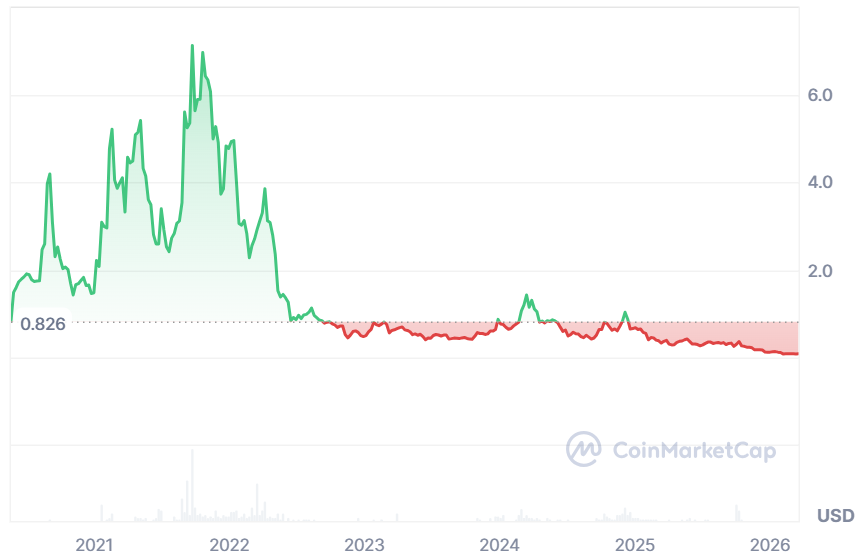 Like many blockchain-native tokens, CELO has struggled to return to its previous highs. Source:
Opera said the proposed change reflects its “belief in the long-term value” of the Celo ecosystem. The two have worked together since 2021, when Opera integrated Celo-native stablecoins into its browser wallet.
The partnership has increasingly centered on Opera’s MiniPay wallet, a self-custodial app built on Celo, which the company says has grown to 14 million users and focuses on stablecoin payments in emerging markets. MiniPay initiated connections with Latin America real-time payment platforms PIX and Mercado Pago in November.
To be sure, Opera isn’t the only company to accumulate tokens tied to a blockchain protocol. Ethereum software company ConsenSys has exposure to Ether (ETH) through its work on core infrastructure, such as MetaMask. Blockstream, a Bitcoin infrastructure company, holds Bitcoin (BTC) while developing products and services around the network.
Related:
Opera reports revenue growth, announces buyback
Opera’s deeper integration with Celo comes on the heels of stronger-than-guided results, as the company reported growth across its core browser business and newer product segments.
In February, Opera reported fourth-quarter revenue of $177.2 million, up 22% year-over-year. Adjusted earnings came in at $41.9 million, representing a 24% margin.
For the full year, revenue reached $614.8 million, with adjusted earnings of $142.5 million.
The company also announced a $300 million share repurchase program, which reduces the number of outstanding shares and can increase earnings per share.
Opera’s Nasdaq-traded shares are up more than 21% over the past month and currently trading at around $15 a share, giving the company a market capitalization of roughly $1.3 billion.
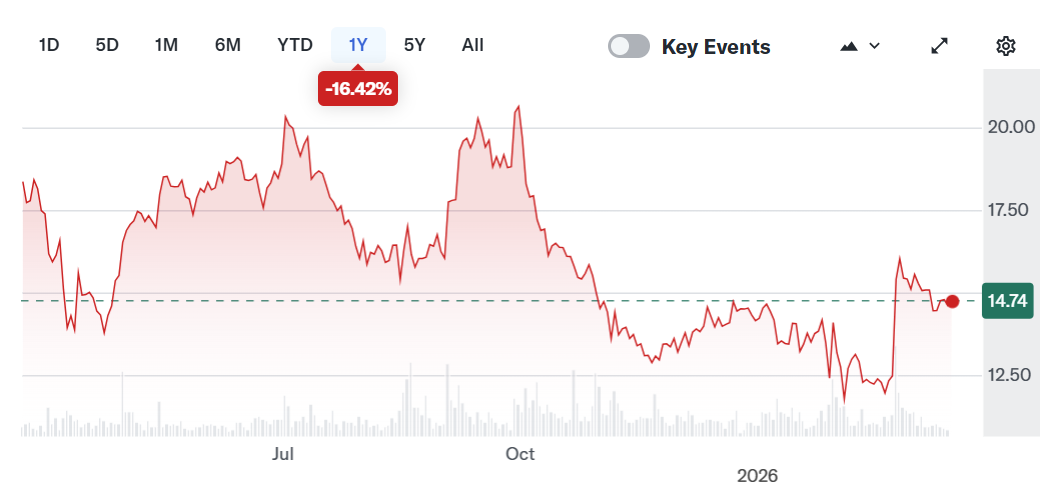 Opera (OPRA) stock. Source:
Related:
Disclaimer: The content of this article solely reflects the author's opinion and does not represent the platform in any capacity. This article is not intended to serve as a reference for making investment decisions.
You may also like
US PPI report to test Bitcoin, gold and Nasdaq as December rate hike looms
Nvidia falls to its lowest valuation in 14 years! "Super bull" Tom Lee calls for bottom fishing, retail investors are buying more as it drops, but Wall Street is divided
After the market opened on Thursday, retail investors went against the trend and bought up Nvidia, with net purchases reaching $111 million in just half an hour, setting a record for the same period. Investors such as Tom Lee have publicly supported the company, with institutions optimistic about strong order backlogs extending to 2028, robust revenue growth, and opportunities created by declining valuations. Meanwhile, institutions like Bernstein and Goldman Sachs have become more cautious about Nvidia's outlook, with concerns focusing on management succession and technological leadership following Jensen Huang's departure.
Jane Street boosts Fidelity Bitcoin ETF stake 8x in Q3, trims BlackRock IBIT

From SpaceX to Anthropic, the market has new strategies for dealing with tech giants' IPOs
The market's response strategies to major listings are currently centered around "index inclusion expectations": the new regulations allow mega IPOs to be included in the six major indices within 15 days, triggering concentrated buying by passive funds. Investors are positioning themselves in advance and using options to hedge and amplify buying power. However, Anthropic has a free float of only about 6%; shares available for sale by employees on the first day and privately placed shares with no lock-up period may create supply pressure. On the other hand, index arbitrageurs are facing a rare opportunity.

Crypto prices
More


