
South Korea Moves to Standardize Seized Crypto Handling Amid Custody Risks

South Korea is tightening its grip on digital asset enforcement as the Korean National Police Agency (KNPA) rolls out new draft guidelines to standardize how seized cryptocurrencies are stored, managed, and secured.

According to a report by local outlet Asiae, the KNPA’s directive outlines compliance protocols across every stage of crypto seizure, including the handling of software wallets and privacy-focused tokens. The guidelines aim to ensure that investigators can safely manage wallet addresses, private keys, and digital evidence, marking a shift from traditional asset storage methods.
KNPA eyes private custody provider despite budget constraints
A police spokesperson emphasized the urgency of the change, noting that investigative practices must evolve alongside emerging technologies. Unlike physical assets, once stored in warehouses, crypto requires technical expertise and structured systems to prevent loss or unauthorized access.
 Source:
asiaeco
Beyond internal protocols, the KNPA is also working to appoint a private custody provider to manage seized digital assets, with plans to finalize the selection in the first half of 2026. However, the process has faced setbacks. Three bidding rounds in 2025 reportedly failed after applicants were deemed unsuitable.
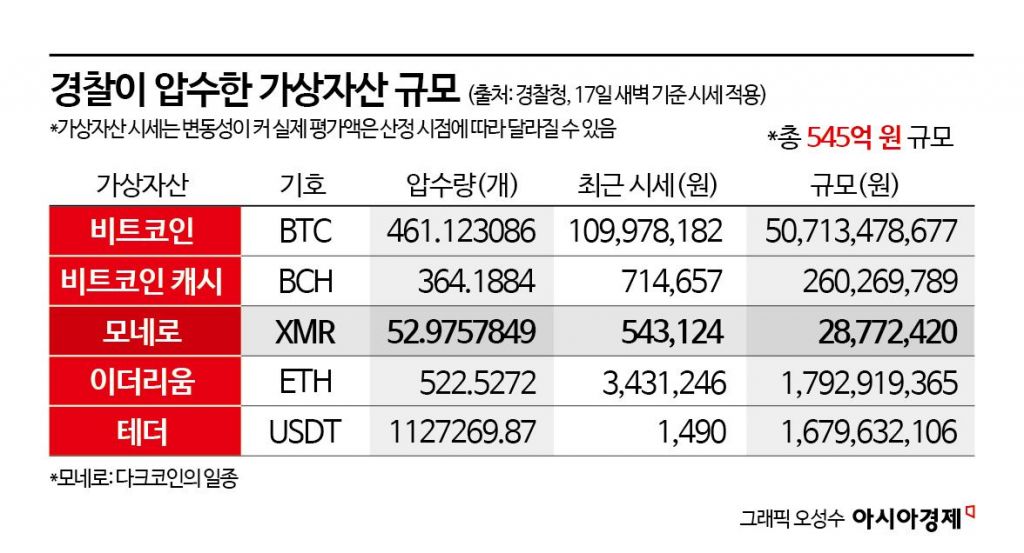
Budget limitations have further complicated efforts. The agency allocated just 83 million won (around $55,600) for crypto custody, a figure seen as low given the scale of assets involved. Over the past five years, seized cryptocurrencies linked to concluded cases have reached approximately 54.5 billion won ($36.5 million), including significant holdings in Bitcoin and Ethereum.
Phishing incident exposes weak links in asset security
The push for reform follows a high-profile custody lapse earlier this year. Officials at the Gwangju District Prosecutors’ Office discovered during a routine audit that roughly 320 Bitcoin had disappeared from custody tied to a 2025 investigation.
In a surprising turn, the stolen assets were later returned by the unidentified hacker. Authorities subsequently liquidated the recovered crypto, transferring about 31.59 billion won ($21.5 million) to the national treasury.
South Korea’s Finance Minister Koo stated last month that a comprehensive review of all digital assets held and managed by public institutions during enforcement processes would be conducted by the government, the Financial Services Commission, and the Financial Services Commission, and the Financial Supervisory Service.
The incident has intensified scrutiny over how government agencies safeguard digital assets, underscoring the need for robust custody frameworks as crypto adoption and associated risks continue to grow.
Disclaimer: The content of this article solely reflects the author's opinion and does not represent the platform in any capacity. This article is not intended to serve as a reference for making investment decisions.
You may also like
US PPI report to test Bitcoin, gold and Nasdaq as December rate hike looms
Nvidia falls to its lowest valuation in 14 years! "Super bull" Tom Lee calls for bottom fishing, retail investors are buying more as it drops, but Wall Street is divided
After the market opened on Thursday, retail investors went against the trend and bought up Nvidia, with net purchases reaching $111 million in just half an hour, setting a record for the same period. Investors such as Tom Lee have publicly supported the company, with institutions optimistic about strong order backlogs extending to 2028, robust revenue growth, and opportunities created by declining valuations. Meanwhile, institutions like Bernstein and Goldman Sachs have become more cautious about Nvidia's outlook, with concerns focusing on management succession and technological leadership following Jensen Huang's departure.

Jane Street boosts Fidelity Bitcoin ETF stake 8x in Q3, trims BlackRock IBIT

From SpaceX to Anthropic, the market has new strategies for dealing with tech giants' IPOs
The market's response strategies to major listings are currently centered around "index inclusion expectations": the new regulations allow mega IPOs to be included in the six major indices within 15 days, triggering concentrated buying by passive funds. Investors are positioning themselves in advance and using options to hedge and amplify buying power. However, Anthropic has a free float of only about 6%; shares available for sale by employees on the first day and privately placed shares with no lock-up period may create supply pressure. On the other hand, index arbitrageurs are facing a rare opportunity.

Crypto prices
More


