
US Treasury Bonds: The Liquidity Shock Has Ended

Since March, crude oil prices have soared. In addition to the U.S. dollar index rising in tandem, the stock market, non-U.S. exchange rates, bonds, and base & precious metals have all declined. This is largely due to the logic of a liquidity shock, but there are now signs that the first phase of the liquidity shock has ended.
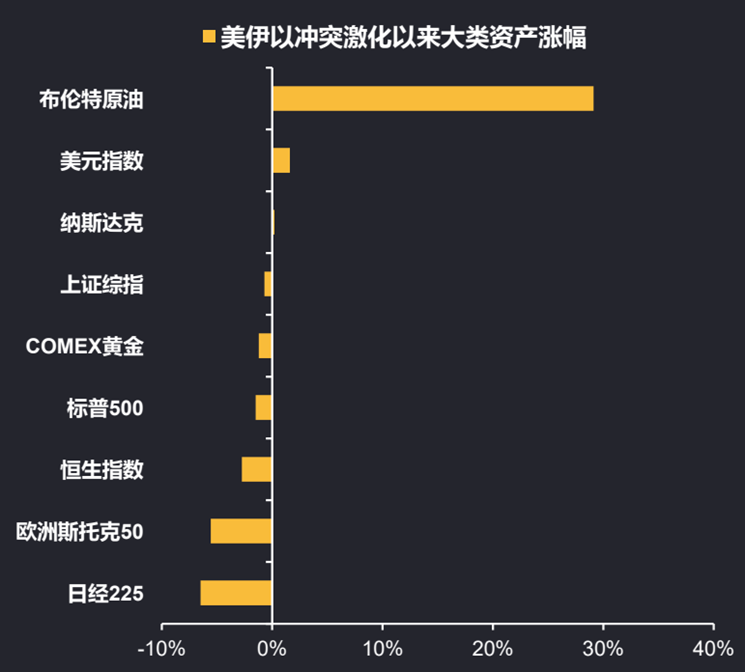
Why has the first-stage liquidity shock ended? There are several observations:
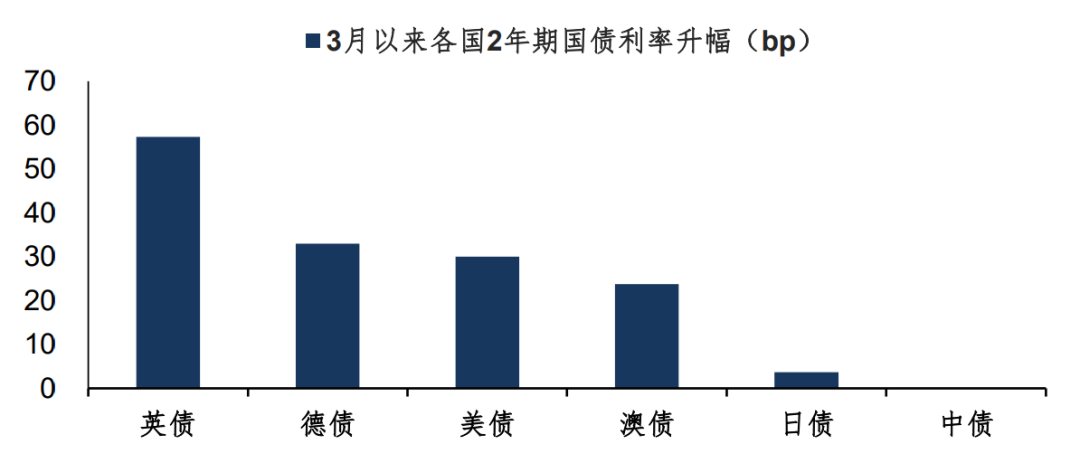
First, interest rates in major economies are starting to decouple from oil prices. Since March, the 2Y UK gilt yield has risen 60bp, and the 2Y German and U.S. rates have each risen around 30bp. However, over the past few trading days, overseas rates have shown signs of topping out, with long-term U.S. Treasury yields even falling slightly, and rates are starting to decouple from oil prices. As a liquidity-sensitive asset, bond yields starting to peak indicates something is changing.
Second, many countries' yield curves currently price in rate hike expectations, but can they really hike? At present, UK gilts, Eurozone, Australian, and Japanese government bonds are all priced for rate hikes, though the timing varies. For example, Eurozone bonds: the swap market is pricing nearly a 100% probability that the ECB will hike by 25bp in July. But can the ECB really deliver this rate hike? Looking at the inflation target the ECB cares about, 12-month HICP does not show an upward trend and is significantly lower than in 2022.
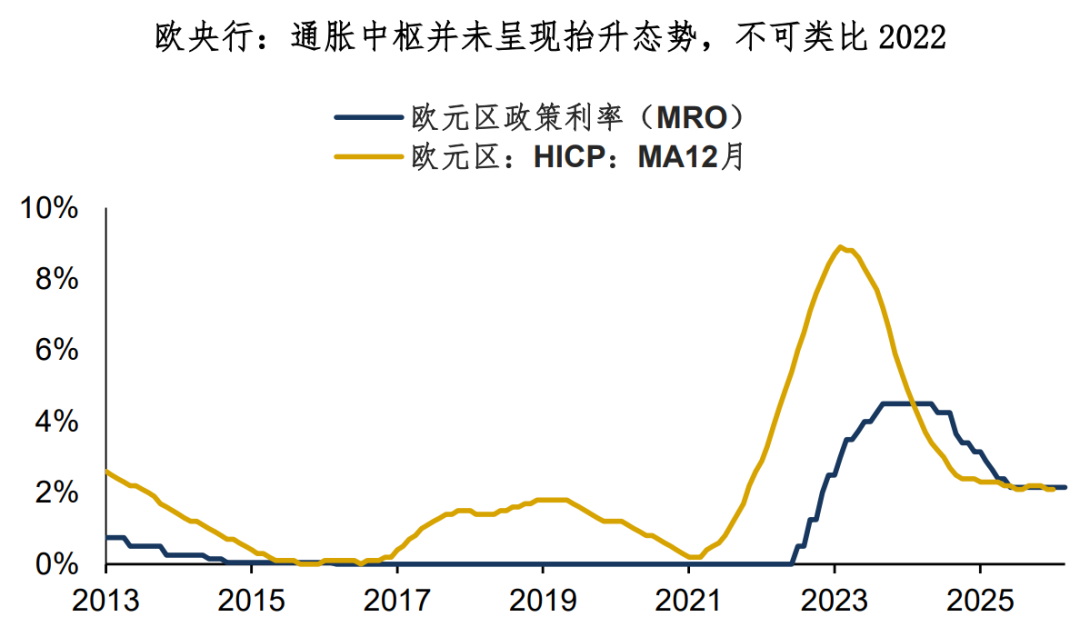
Simply put, inflation driven by oil prices lacks endogeneity. In late March, the Fed, ECB, Bank of Japan, and Bank of England will hold policy meetings in succession. What will policymakers say? My guess is that central bankers may release the following messages:
1. Acknowledge the clear upside risk to inflation, and state that the central bank will act resolutely if necessary;
2. Warn of the negative impact of persistently high energy prices on growth;
3. Stress that a simple comparison with 2022 is inappropriate, as there is currently no post-pandemic demand-driven inflation surge.
Overall, the first wave of liquidity shock brought by the surge in oil prices—converging rate cut expectations and intensifying rate hike expectations—may be coming to an end. The market is gradually recognizing that oil price-driven inflation lacks endogeneity, though this has yet to be officially acknowledged by central banks. The stance of G7 central bank officials deserves close attention.
For major assets, if one agrees that the liquidity shock is ending, the logical consequence is that assets will diverge again. The pattern of "rising oil and U.S. dollar, and falling everything else" is inherently unsustainable. With even a marginal easing of liquidity, major assets will inevitably differentiate, and those with stronger endogenous foundations will stabilize first.
For example, gold and the renminbi.
In summary for today's discussion:
1. Since the U.S.-Iran conflict, "rising oil and U.S. dollar, and falling everything else" has largely been a liquidity shock story. There are now signs that the first phase of the liquidity shock has ended;
2. Several points of observation: First, the rate trend in major economies is decoupling from oil prices, and long-term rates are peaking; Second, many countries' yield curves price in rate hike expectations, but inflation is not endogenous, so central banks may not hike as scheduled. Overall, the first wave of liquidity shock led by surging oil prices—converging rate cut expectations and intensifying rate hike expectations—may be ending;
3. For major assets, if the liquidity shock is passing, the necessary inference is that assets will start to diverge again. Those assets with stronger endogenous foundations—such as gold and the renminbi—will stabilize first.
Disclaimer: The content of this article solely reflects the author's opinion and does not represent the platform in any capacity. This article is not intended to serve as a reference for making investment decisions.
You may also like
US PPI report to test Bitcoin, gold and Nasdaq as December rate hike looms
Nvidia falls to its lowest valuation in 14 years! "Super bull" Tom Lee calls for bottom fishing, retail investors are buying more as it drops, but Wall Street is divided
After the market opened on Thursday, retail investors went against the trend and bought up Nvidia, with net purchases reaching $111 million in just half an hour, setting a record for the same period. Investors such as Tom Lee have publicly supported the company, with institutions optimistic about strong order backlogs extending to 2028, robust revenue growth, and opportunities created by declining valuations. Meanwhile, institutions like Bernstein and Goldman Sachs have become more cautious about Nvidia's outlook, with concerns focusing on management succession and technological leadership following Jensen Huang's departure.

Jane Street boosts Fidelity Bitcoin ETF stake 8x in Q3, trims BlackRock IBIT

From SpaceX to Anthropic, the market has new strategies for dealing with tech giants' IPOs
The market's response strategies to major listings are currently centered around "index inclusion expectations": the new regulations allow mega IPOs to be included in the six major indices within 15 days, triggering concentrated buying by passive funds. Investors are positioning themselves in advance and using options to hedge and amplify buying power. However, Anthropic has a free float of only about 6%; shares available for sale by employees on the first day and privately placed shares with no lock-up period may create supply pressure. On the other hand, index arbitrageurs are facing a rare opportunity.

Crypto prices
More


