
Gold: Why Did Gold Fall During the US Market Session?

Since 2026, the divergence between Asian gold trading sessions and US gold trading sessions has become increasingly evident. Statistics show that since 2026, London spot gold prices have cumulatively risen by 18% during Asian sessions, while dropping by 7% during US sessions. During last year's reciprocal tariff period, there was already some divergence between Asian and US gold sessions, but it was nowhere as pronounced as it is this year.
The same asset is behaving completely differently in different markets—this phenomenon is historically rare.
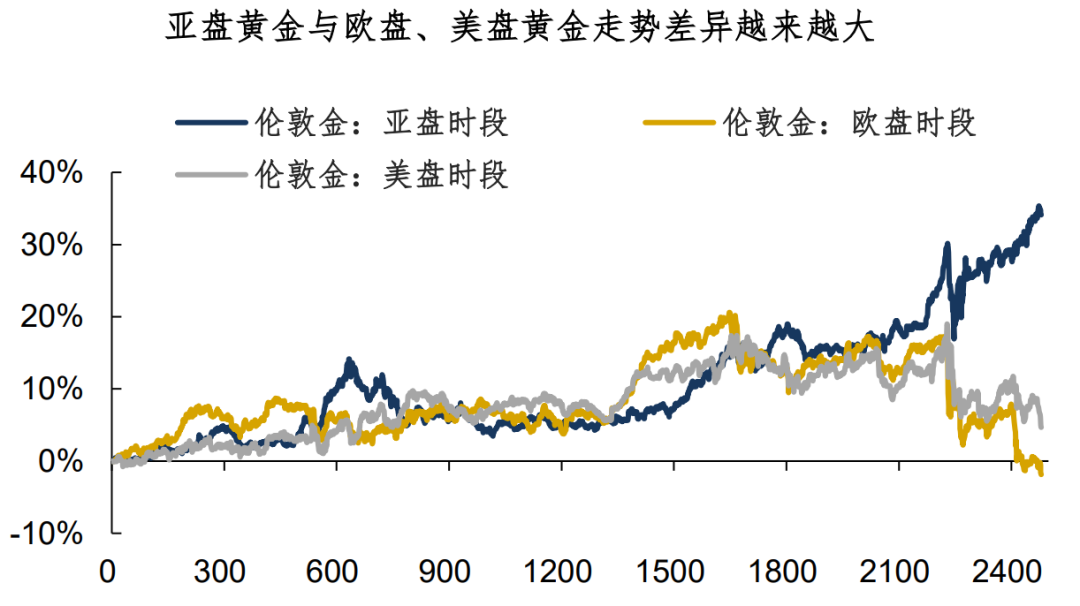
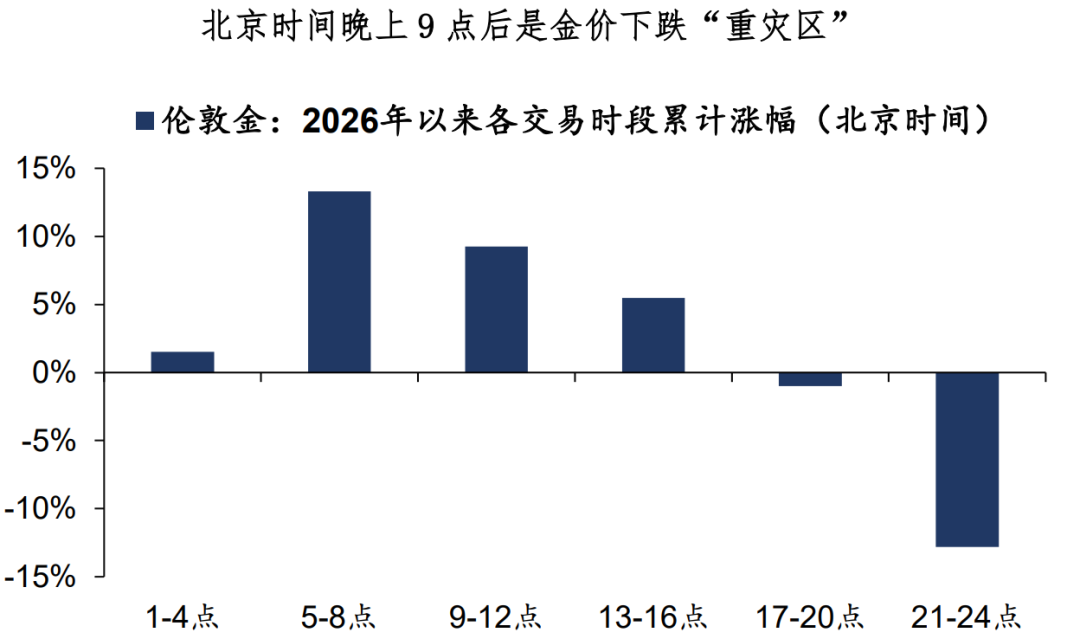
It is commonly believed that the divergence in gold prices between Asian and US sessions is due to different pricing logics in the two markets—the Asian session considers matters from a non-USD system perspective, while the US session operates from a USD system viewpoint. On a deeper level, this is actually an East-West polarization of asset pricing. Using the trendy term "Bipolar System," which has become popular with international investment banks in recent years—since politics, economics, and industry are all experiencing a Bipolar System, it's not surprising that financial market pricing is also reflecting a Bipolar System...
The above discussion is at a theoretical level, but on a technical level, we still need to understand why US session gold is dropping—what are US session investors worried about? We have isolated all the US trading session periods (9 PM to 5 AM Beijing time) using hourly candlesticks. This allows for a clearer observation of the logic behind US session gold trading:
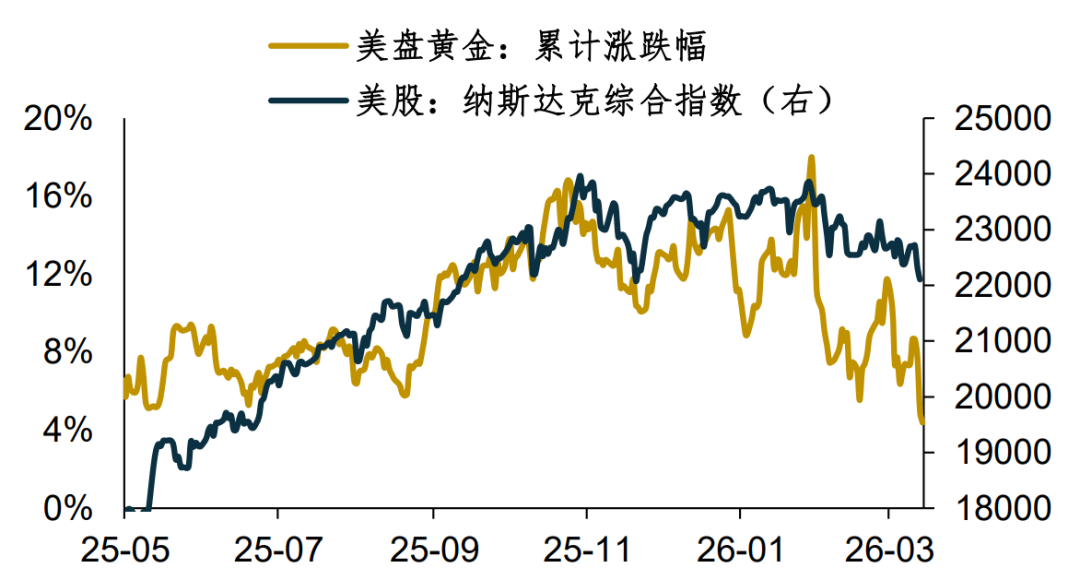
First, the drop in US session gold is closely related to the decline in US equities. On the market, the correlation coefficient between the US gold price and the NASDAQ is about 70%. The correction in US equities drags down the other end of the "dumbbell" (see "Beware of the Positive Correlation Between Gold and US Equities").
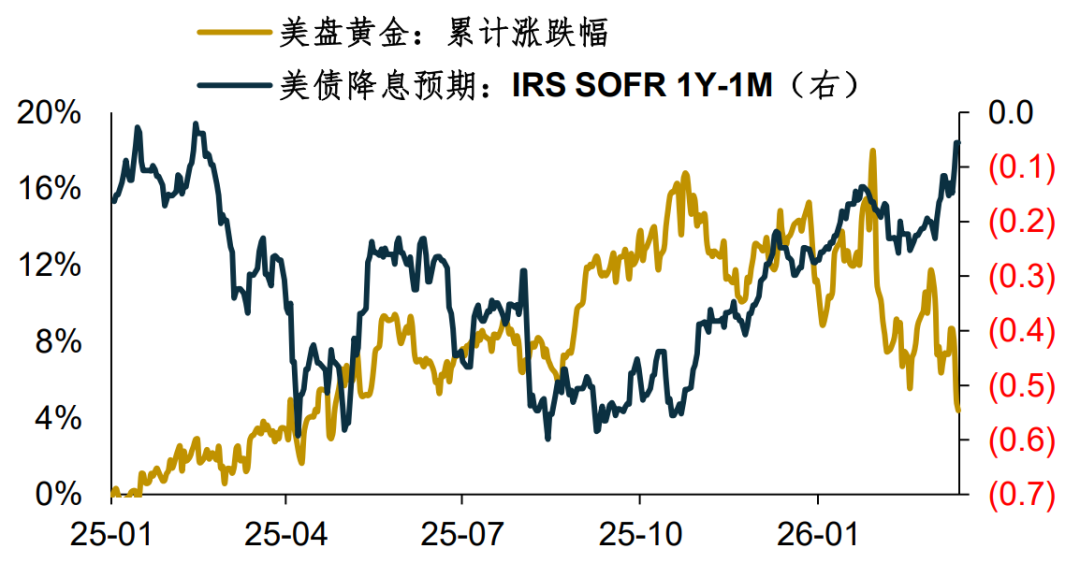
Second, the surge in oil prices has led to a tightening of US Treasury rate cut expectations, which is more bullish for the dollar and bearish for gold. As oil prices have spiked, expectations for Fed rate cuts have shrunk dramatically, with FedWatch now pricing in less than one rate cut for the year. This process is bullish for the dollar and bearish for US Treasuries and gold.
Summarizing the above, the continued decline in US session gold is directly due to the interconnected influence of US equities and Treasuries, fundamentally reflecting the perspective of the USD asset system. From this perspective, the future direction of US session gold still depends on the performance of US stocks and Treasuries. I tend to believe that this round of Treasury declines is mostly done, since rate cut expectations are now near zero, and I do not believe the Fed will raise rates...
From a trading perspective, given how consistent the “Asian session rises + US session falls” pattern is, perhaps strategies like selling high in Asia and buying low in the American session could be employed.
To summarize today’s discussion:
1. Since 2026, the divergence between Asian gold and US gold sessions has become more and more evident. It is generally believed that this divergence is due to different pricing logics in the two markets. On a deeper level, this actually reflects an East-West polarization in asset pricing;
2. Market analysis during the US session shows: 1) the decline in US session gold is closely tied to the drop in US equities; 2) the surge in oil prices has led to a tightening of US Treasury rate cut expectations, which is more bullish for the dollar and bearish for gold. In essence, US session capital still stands from the perspective of the USD asset system and is therefore more influenced by the interplay between US stocks and Treasuries;
3. Looking ahead, I personally believe that the current wave of US Treasury declines is largely complete, since rate cut expectations have almost hit zero, and I do not believe the Fed will raise interest rates. From a trading point of view, selling high during the Asian session and buying low during the US session might also be a viable strategy.
Disclaimer: The content of this article solely reflects the author's opinion and does not represent the platform in any capacity. This article is not intended to serve as a reference for making investment decisions.
You may also like
US PPI report to test Bitcoin, gold and Nasdaq as December rate hike looms
Nvidia falls to its lowest valuation in 14 years! "Super bull" Tom Lee calls for bottom fishing, retail investors are buying more as it drops, but Wall Street is divided
After the market opened on Thursday, retail investors went against the trend and bought up Nvidia, with net purchases reaching $111 million in just half an hour, setting a record for the same period. Investors such as Tom Lee have publicly supported the company, with institutions optimistic about strong order backlogs extending to 2028, robust revenue growth, and opportunities created by declining valuations. Meanwhile, institutions like Bernstein and Goldman Sachs have become more cautious about Nvidia's outlook, with concerns focusing on management succession and technological leadership following Jensen Huang's departure.

Jane Street boosts Fidelity Bitcoin ETF stake 8x in Q3, trims BlackRock IBIT

From SpaceX to Anthropic, the market has new strategies for dealing with tech giants' IPOs
The market's response strategies to major listings are currently centered around "index inclusion expectations": the new regulations allow mega IPOs to be included in the six major indices within 15 days, triggering concentrated buying by passive funds. Investors are positioning themselves in advance and using options to hedge and amplify buying power. However, Anthropic has a free float of only about 6%; shares available for sale by employees on the first day and privately placed shares with no lock-up period may create supply pressure. On the other hand, index arbitrageurs are facing a rare opportunity.

Crypto prices
More


