
BTC Market Pulse: Week 11

Overview
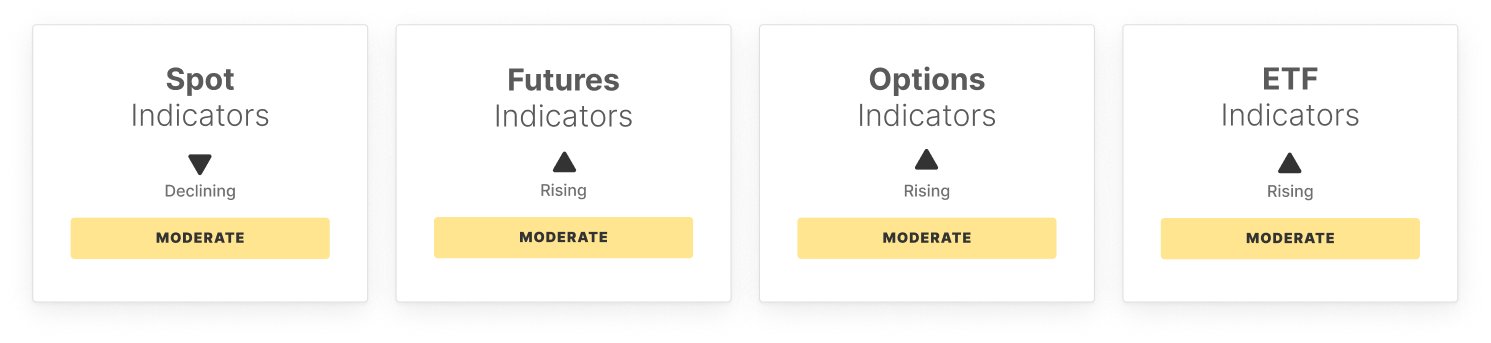
Bitcoin pulled back from $74k, while internals showed tentative signs of improvement. Momentum has firmed modestly, with RSI lifting from recent lows, but price action still lacks the strength of a decisive bullish shift. Spot activity remains subdued, with lower trading volume pointing to softer participation even as conditions begin to stabilize.
Derivatives positioning is mixed. Futures open interest increased, signalling modest leverage build-up, while long-side funding turned sharply negative, reflecting stronger demand for short exposure. Perpetual CVD rose aggressively, suggesting buy-side activity is returning in leveraged markets, though conviction remains limited.
Options markets have become less defensive. The volatility spread narrowed meaningfully as implied volatility moves closer to realised conditions, while 25-delta skew declined, pointing to softer demand for downside hedging and a more balanced near-term backdrop.
ETF activity remains a relative area of strength. Net inflows accelerated and trading volumes picked up, highlighting continued traditional finance engagement. However, the ETF MVRV ratio fell sharply into negative territory, showing the average ETF holder is now underwater and positioning stress remains elevated.
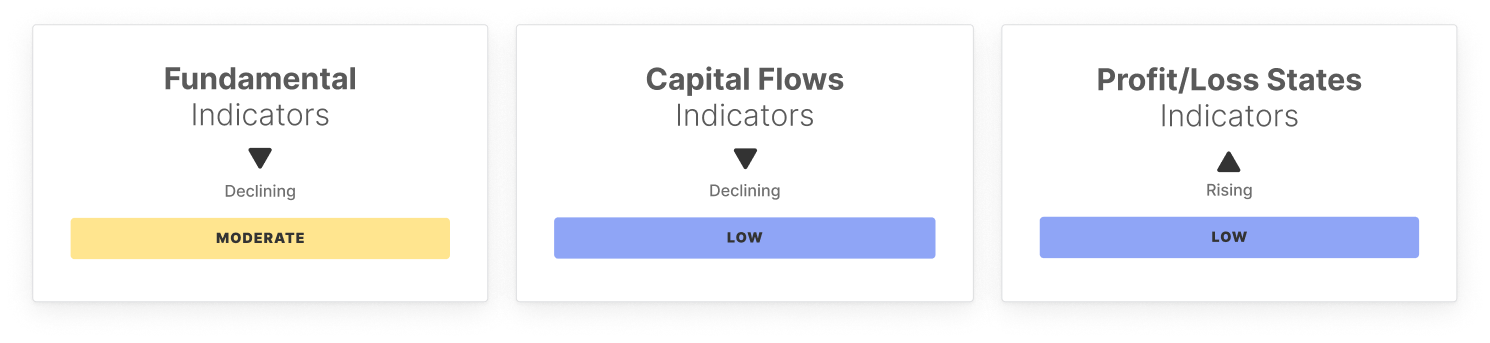
On-chain signals are mixed but slightly constructive. Transfer volume improved, pointing to firmer capital movement, while active addresses and fee volume remain soft, consistent with a quieter network backdrop. Realized cap change is still negative, though outflows are easing slightly, suggesting capital pressure may be starting to stabilize.
Positioning and profitability metrics still reflect a fragile but improving structure. The STH/LTH supply ratio remains elevated, showing short-term participation is still high, while hot capital share stays suppressed, signalling limited speculative churn. Meanwhile, supply in profit, NUPL, and the realized profit-to-loss ratio all improved modestly, suggesting market stress is easing.
Overall, conditions are stabilizing, with momentum, ETF demand, and profitability metrics improving modestly. However, capital flows remain soft, speculative participation is limited, and broader conviction has yet to fully return.
Off-Chain Indicators
On-Chain Indicators

Don't miss it!
Smart market intelligence, straight to your inbox.
Disclaimer: The content of this article solely reflects the author's opinion and does not represent the platform in any capacity. This article is not intended to serve as a reference for making investment decisions.
You may also like
MSTR stock falls 6.8% in 2026 despite Strategy’s $20.9B Q3 income – Why?

Bank of Japan shifts to “anti-inflation” mode! Kazuo Ueda hints at further room for rate hikes, December move under watch
The Bank of Japan kept its policy rate unchanged at 1.25% on Friday, but Governor Kazuo Ueda's remarks at the post-meeting press conference sent policy signals that are more noteworthy than the rate decision itself.

Betting Big on AI Burns Through Cash Cows—This Time, the Market No Longer "Rewards Burning Money"!
The AI spending race faces profitability scrutiny: Google’s search advertising growth rate has dropped to its lowest in five quarters, and Amazon’s single-quarter free cash flow has plunged to -$33.5 billion. Yet both companies continue with capital expenditure plans exceeding $400 billion. As their core cash-generating businesses lose momentum and debt and financing needs surge, the market is shifting from rewarding AI investment to questioning returns, forcing a re-evaluation of the valuation logic for tech giants.

Wall Street Sees AWS’s Ambition, But Can’t See the Future of Amazon’s Advertising Business
Amazon's Q3 financial report presents a mixed picture: AWS order backlog soared by 189% to $578 billion, and the CEO made the rare promise that growth will exceed 40% in 2027-2028, aiming for $1 trillion in revenue within five to ten years. However, advertising business growth plunged from 26% to 12%, and capital expenditure reached $77.3 billion, far exceeding expectations, causing the stock price to fall 7% after hours. While major Wall Street banks collectively maintain their “buy” ratings, they admit that the structural risks posed by AI agents to the advertising ecosystem remain unresolved.
Crypto prices
More


