
Curve Finance accuses PancakeSwap of copying its code

The team behind the Curve Finance decentralized finance (DeFi) platform accused the PancakeSwap decentralized exchange (DEX) of using its code without the proper licensing.
The code is tied to the “StableSwap” feature used for swapping stablecoins and “tightly-pegged” assets on PancakeSwap Infinity, the latest version of the PancakeSwap DEX.
“If you want to enjoy using stableswap without legal problems and to borrow some of our expertise to keep users SAFU, you still can contact us for licensing and collaboration,” the Curve team said on X.
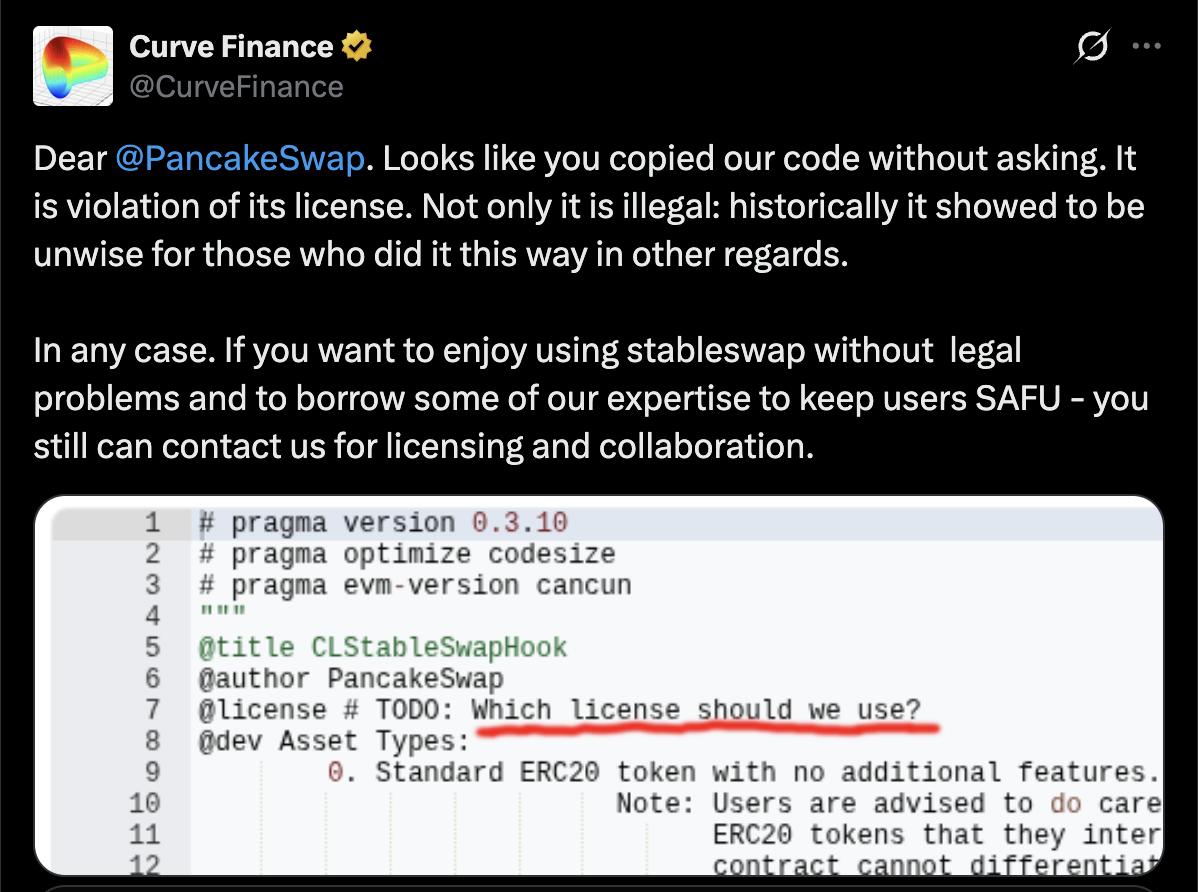
In a separate post, Curve said “deep stableswap expertise” is needed to safely integrate swap features, and cited the 2022 hack of the Saddle Finance DEX and the $116 million hack of DeFi protocol Balancer in 2025 as examples of swap-based code exploits.
The PancakeSwap team said it would reach out to Curve Finance to discuss the issue. “Indeed, better to be friends and build together,” the Curve team responded.
Cointelegraph reached out to both teams but did not receive a response by the time of publication.
The incident highlights the potential cybersecurity and legal issues that arise in decentralized finance as projects and protocols continue to iterate on products and expand features.
Related:
PancakeSwap Infinity launches and goes cross-chain
PancakeSwap Infinity launched on the Arbitrum network and BNB Chain in April 2025, following the integration of one-click, cross-chain swaps that allow users to move digital assets between blockchain protocols.
The updated DEX introduced “hooks,” smart contract plug-ins that customize parameters for liquidity pools, including dynamic fee structuring, tailored rebates and onchain limit orders that execute when preset conditions are met.
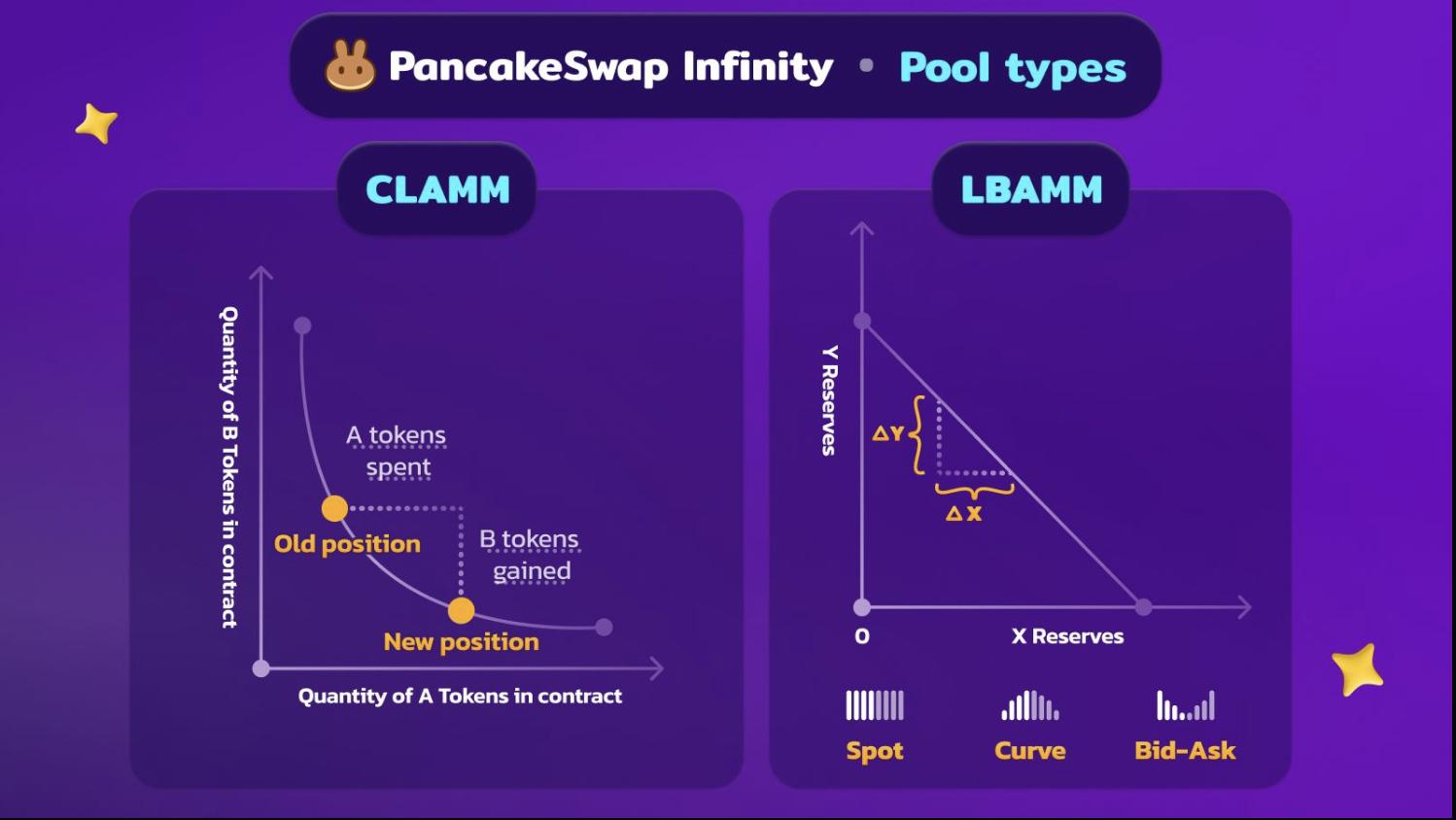
The upgrade also lowered pool creation fees by up to 99% and was built to accommodate different liquidity strategies, according to PancakeSwap.
In July 2025, PancakeSwap Infinity launched on Base, an Ethereum layer-2 (L2) scaling network, and touted up to 50% cheaper trading fees when Ether (ETH), the native token of the Ethereum layer-1 blockchain network, was traded against ERC-20 tokens.
ERC-20 is the token standard for most assets minted on Ethereum, including the gas and governance tokens of Ethereum L2s, memecoins, and other projects issuing tokens on Ethereum.
Magazine:
Disclaimer: The content of this article solely reflects the author's opinion and does not represent the platform in any capacity. This article is not intended to serve as a reference for making investment decisions.
You may also like
Citigroup Q3 Holdings: Nvidia (NVDA.US) Remains Top Heavy Position, Expanded Both Index and Tech Stock Options
According to the disclosure by the U.S. Securities and Exchange Commission (SEC), Citigroup (C.US) submitted its third quarter holdings report (13F) as of September 30, 2026, on November 4, 2026.

Carlyle still favors the healthcare sector in Q3, with Medline (MDLN.US) and StandardAero (SARO.US) accounting for over 98% of holdings
Carlyle (CG.US) has submitted its third-quarter holdings report (13F) for the period ending September 30, 2026.
Alphabet (GOOGL.US) reportedly plans to issue its first Hong Kong dollar and Singapore dollar bonds, potentially testing investor confidence amid growing concerns over AI financing.
Alphabet has recently held discussions about the potential issuance of its first Hong Kong dollar and Singapore dollar bonds. Amid global market volatility caused by sell-offs in artificial intelligence (AI) related sectors, this deal will test Asian investors’ appetite for subscription.

The "Blue Wave" overturns chip stocks, Morgan Stanley remains bullish on Seagate (STX.US): Weak market sentiment diverges from fundamentals, listed as the top storage pick
Morgan Stanley maintains an "Overweight" rating on Seagate Technology with a target price of $1,148.
Crypto prices
More


