
Traditional Safe Havens "Wiped Out": Gold, US Treasury Bonds, and Japanese Yen All Fall, Dollar Becomes the Sole Winner

Traditional safe-haven assets—US Treasuries, Japanese Yen, Swiss Franc, and gold—have failed to provide any shelter for investors this week. Meanwhile, the US dollar, whose safe-haven status has been increasingly questioned, became one of the few major assets to appreciate.
These movements indicate that market dynamics can quickly reverse, with assets once seen as reliable safe havens suddenly losing their appeal due to shifting expectations regarding central bank policies, economic growth, and trader sentiment swings.
"Safe-haven investing is not what it used to be," said Christoph Rieger, Head of Rates and Credit Research at Commerzbank. "During a crisis, when all policy options call for increased supply and stand against rate cuts, 'safe assets' fail to provide hedging. Some market trends are rational, while others are not."
Below is a detailed analysis of why traditional safe havens failed this week:
US Treasuries
US government debt is supposed to be the world’s safest asset in turbulent times. However, the inflation threat caused by surging oil and natural gas prices has outweighed safe-haven demand.
The yield on the 10-year Treasury surged 20 basis points this week, on track for its biggest rise since last April’s tariff turmoil. This marks a dramatic reversal from last month’s biggest drop in over a year.
The inflation threat means traders are also expecting fewer rate cuts. Swap contracts are now pricing in only one or two rate cuts (25 basis points each), compared to up to three just a week ago.
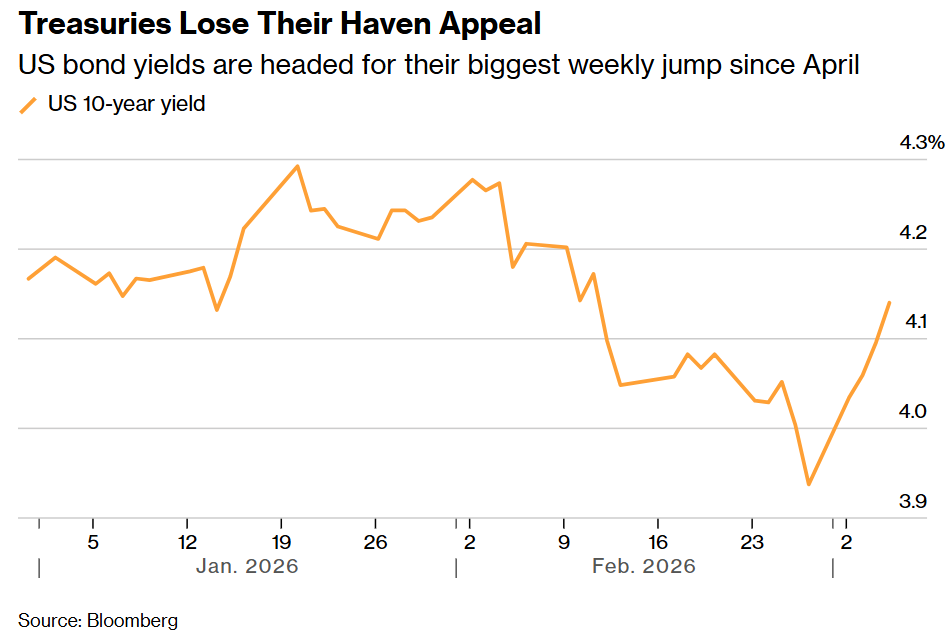 US Treasuries lose safe-haven appeal
Gold
Gold performed poorly.
Pressed by a stronger dollar and rate hike expectations, the gold price fell by 3.5% this week. This non-yielding metal tends to be more attractive in low-rate environments.
A similar situation occurred after the outbreak of the Russia-Ukraine conflict. At the time, energy prices soared, rate hike expectations and the dollar strengthened—and gold weakened in the following months. That period has become a reference for some traders.
Since mid-August last year, gold’s roughly 54% rally also made it a speculative hotbed, with unusually high volatility.
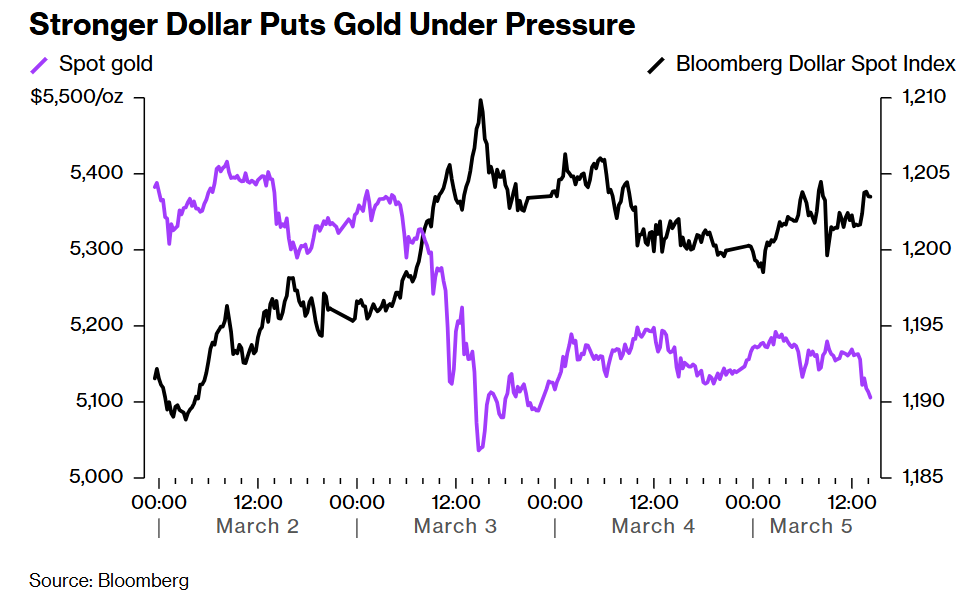 A strong dollar weighs on gold
Japanese Yen
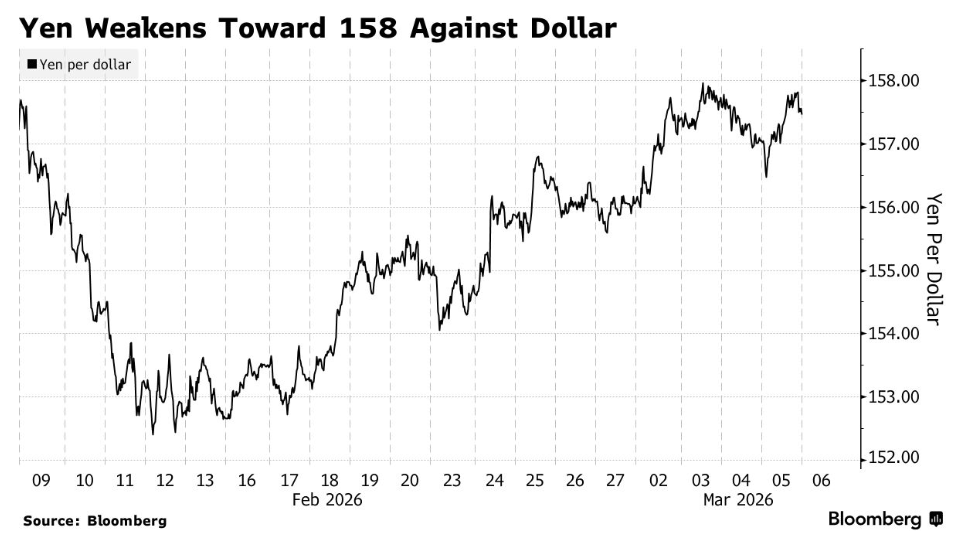
Again, the core problem is energy. Over 90% of Japan’s crude oil imports depend on the Middle East, with most transiting through the Strait of Hormuz, which is effectively shut down due to the war.
In addition, Japanese labor unions are demanding wage increases and inflation is beginning to pick up.
This has resulted in a stagflation dynamic—rather than demand-driven price increases that could prompt the Bank of Japan to aggressively tighten policy, which explains why the yen weakened about 1% against the dollar this week.
Japan’s Finance Minister, Shunichi Katayama, reiterated on Wednesday that the government could act to curb excessive exchange rate movements, including through market intervention.
Swiss Franc
Switzerland’s low debt, robust policies, and political neutrality have made the Swiss Franc the safe-haven currency of choice over the past year. But in the current currency crisis, its particular weakness is that policymakers are clearly eager to intervene to curb excessive appreciation.
Swiss National Bank Vice President Antoine Martin stated that amid Middle East turmoil, the central bank stands ready to intervene to restrain the franc’s rise, leading to a 1.5% drop in the franc against the dollar this week. He is concerned that safe-haven inflows will boost the franc, thereby suppressing inflation that is hovering near zero.
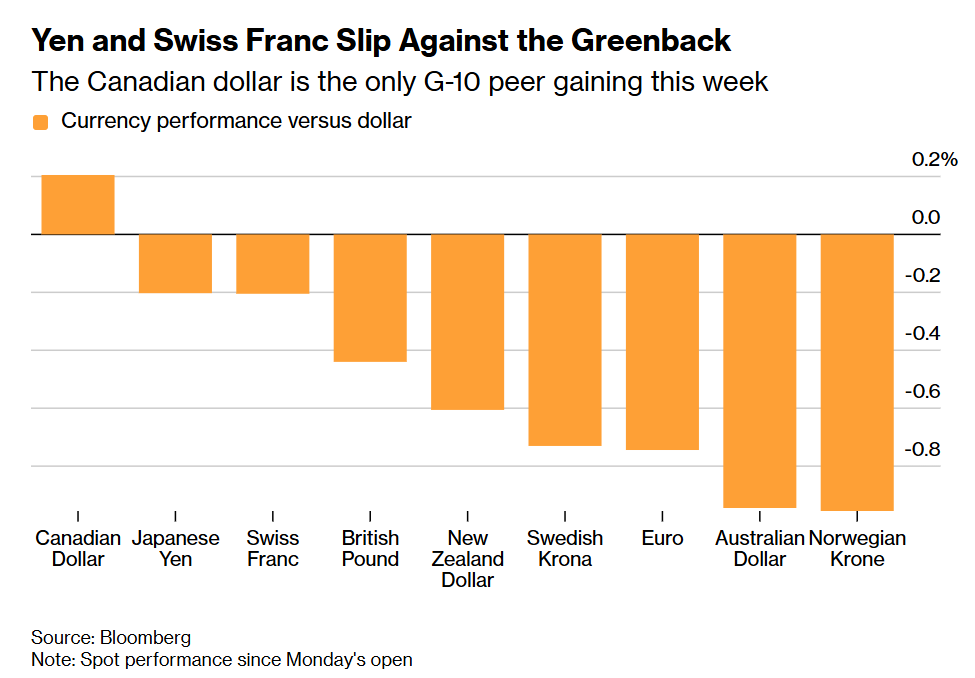 The Canadian dollar is the only G10 currency to strengthen against the US dollar this week
Meanwhile, Barclays FX strategists recommend investors buy franc against yen. They believe that although both currencies face energy risks, the franc is relatively better positioned. DTCC data show franc-dollar options flows also display resilience.
Disclaimer: The content of this article solely reflects the author's opinion and does not represent the platform in any capacity. This article is not intended to serve as a reference for making investment decisions.
You may also like
Nvidia falls to its lowest valuation in 14 years! "Super bull" Tom Lee calls for bottom fishing, retail investors are buying more as it drops, but Wall Street is divided
After the market opened on Thursday, retail investors went against the trend and bought up Nvidia, with net purchases reaching $111 million in just half an hour, setting a record for the same period. Investors such as Tom Lee have publicly supported the company, with institutions optimistic about strong order backlogs extending to 2028, robust revenue growth, and opportunities created by declining valuations. Meanwhile, institutions like Bernstein and Goldman Sachs have become more cautious about Nvidia's outlook, with concerns focusing on management succession and technological leadership following Jensen Huang's departure.

Jane Street boosts Fidelity Bitcoin ETF stake 8x in Q3, trims BlackRock IBIT

From SpaceX to Anthropic, the market has new strategies for dealing with tech giants' IPOs
The market's response strategies to major listings are currently centered around "index inclusion expectations": the new regulations allow mega IPOs to be included in the six major indices within 15 days, triggering concentrated buying by passive funds. Investors are positioning themselves in advance and using options to hedge and amplify buying power. However, Anthropic has a free float of only about 6%; shares available for sale by employees on the first day and privately placed shares with no lock-up period may create supply pressure. On the other hand, index arbitrageurs are facing a rare opportunity.

Nvidia Q3 Earnings Preview: Revenue Expectations and Key Metrics to Watch
Crypto prices
More


