
Strait of Hormuz closed, inflation at 5%: Will Bitcoin explode or collapse?

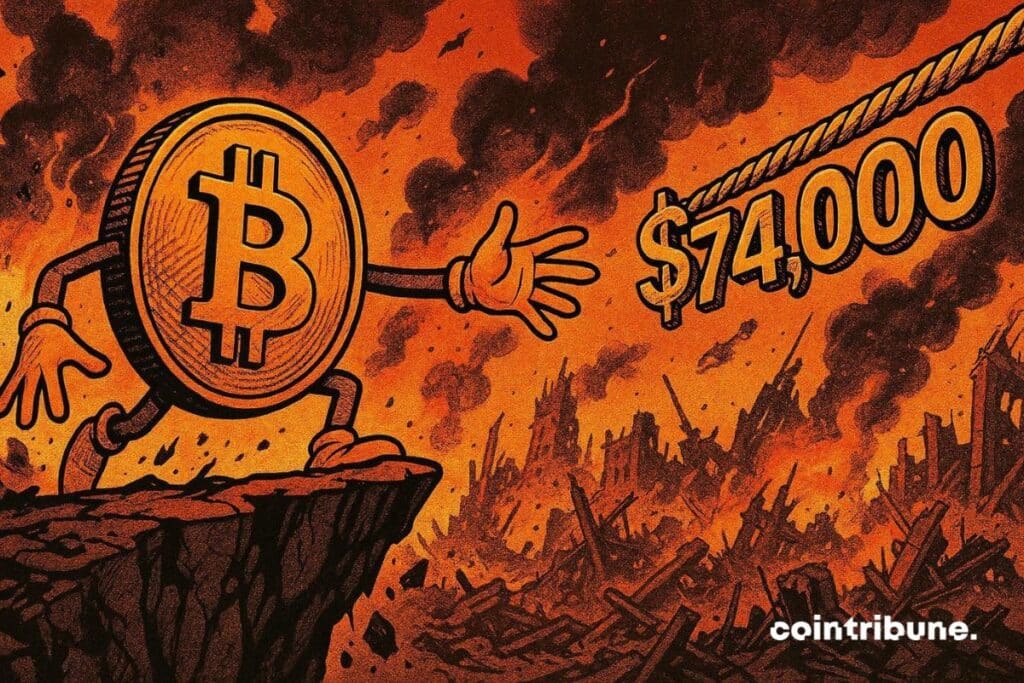
The Strait of Hormuz closed, oil boiling, and U.S. inflation at 5%. In this explosive context, Bitcoin holds firm at $67,000. Here’s how BTC could turn this crisis into an opportunity at $74,000.
In Brief
- The Strait of Hormuz closure and geopolitical tensions pose a risk of Bitcoin falling below $60,000.
- Traders target $74,000 if BTC breaks the moving average at $67,627, but Monday’s American markets opening will be decisive.
- A 5% inflation rate in the United States could strengthen Bitcoin’s appeal as a safe haven asset.
Iran/Strait of Hormuz Crisis: Bitcoin Holds Strong Despite Everything
The closure of the Strait of Hormuz by Iran, in response , has caused a shock in oil markets. With 20% of the world’s oil blocked, JPMorgan analysts predict a barrel at $120–130, which could push U.S. inflation up to 5%. However, Bitcoin, often sensitive to geopolitical crises, remains around $67,000.
This resilience is explained by several factors. First, part of the geopolitical risks had already been anticipated by the markets. Moreover, reduced liquidity over the weekend softened volatility. However, if Iran intensifies its actions by targeting, for example, oil infrastructures, BTC could then face additional pressure.
Bitcoin at $74,000? What the Charts Reveal
Bitcoin charts show an interesting technical structure. Indeed, on the daily chart, BTC held the key support at $65,000, while resistance at $74,000 becomes a realistic target for the coming days. The 21-day moving average, located around $67,627, is closely watched! A breakout above could then trigger a significant rebound.
However, Michaël van de Poppe believes that Bitcoin needs to break this moving average to start a true rally. Crypto Caesar anticipates sideways movement before a clear decision. BitBull, more optimistic, sees in current stability a sign of strength, with a target at $74,000 if traditional markets hold.
Inflation at 5%, Fed Under Pressure: Will BTC Become the New Digital Gold?
With U.S. inflation possibly reaching 5%, the Fed finds itself in a delicate position. Historically, Bitcoin has often been compared to digital gold, a safe haven asset during economic crises. However, its current correlation with stock markets like the Nasdaq shows it remains a risky asset in the short term.
Data shows that a $10 increase in oil price can add about 0.2% to the U.S. CPI. In this context, Bitcoin could benefit from its limited supply status, especially if institutions continue to adopt ETFs. Yet, if the geopolitical situation worsens into a recession, BTC could drop below $50,000.
Bitcoin stands at a decisive crossroads. On one hand, the geopolitical crisis and soaring inflation could propel it to new highs. On the other, escalating conflict or economic recession could make it plunge. What do you think, could BTC reach $74,000 in this context?
Maximize your Cointribune experience with our "Read to Earn" program! For every article you read, earn points and access exclusive rewards. Sign up now and start earning benefits.
Disclaimer: The content of this article solely reflects the author's opinion and does not represent the platform in any capacity. This article is not intended to serve as a reference for making investment decisions.
You may also like
Nvidia Q3 Earnings Preview: Revenue Expectations and Key Metrics to Watch
AI trading retreats and corporate profit growth boost European stocks! Four-day winning streak halted but still on track for biggest weekly gain since July
European stock markets had previously risen for four consecutive trading days and reached record highs, but this rally could not be sustained. The Stoxx Europe 600 Index has climbed 2.2% this week and is on track for its largest weekly gain since July.
Nebius (NBIS.US) Q3 Conference Call: CEO Says AI “Demand Is Real and Huge”, Expects Pre-tax Break-even by Q4 2027
Nebius Group (NBIS.US) will release its Q3 2026 financial results before the market opens on November 12 (US Eastern Time) and hold a conference call on the same day.
Jensen Huang's resignation drags down AI trading, US three major stock index futures collectively fall, Nvidia stabilizes pre-market, Brent crude rebounds and breaks through $96
Nasdaq 100 index futures fell over 0.3%, and S&P 500 index futures declined 0.14%. Brent crude oil rose 0.37% to $96 per barrel. Spot gold increased 0.4% to $3,893.48 per ounce. Investors are now focusing on the US PPI data to be released tonight.
Crypto prices
More


