

Bitcoin slipped toward the low-$60,000 range this week, extending a pullback that has persisted. This is despite signs of renewed institutional demand in U.S. spot exchange-traded funds [ETFs], which saw inflows of around
The divergence has drawn attention to a growing structural disconnect between ETF flows and short-term price action.
Data from recent trading sessions shows that while Bitcoin’s spot price weakened, ETF activity — particularly from large issuers — moved in the opposite direction.
Bitcoin ETF flows turn positive as price weakens
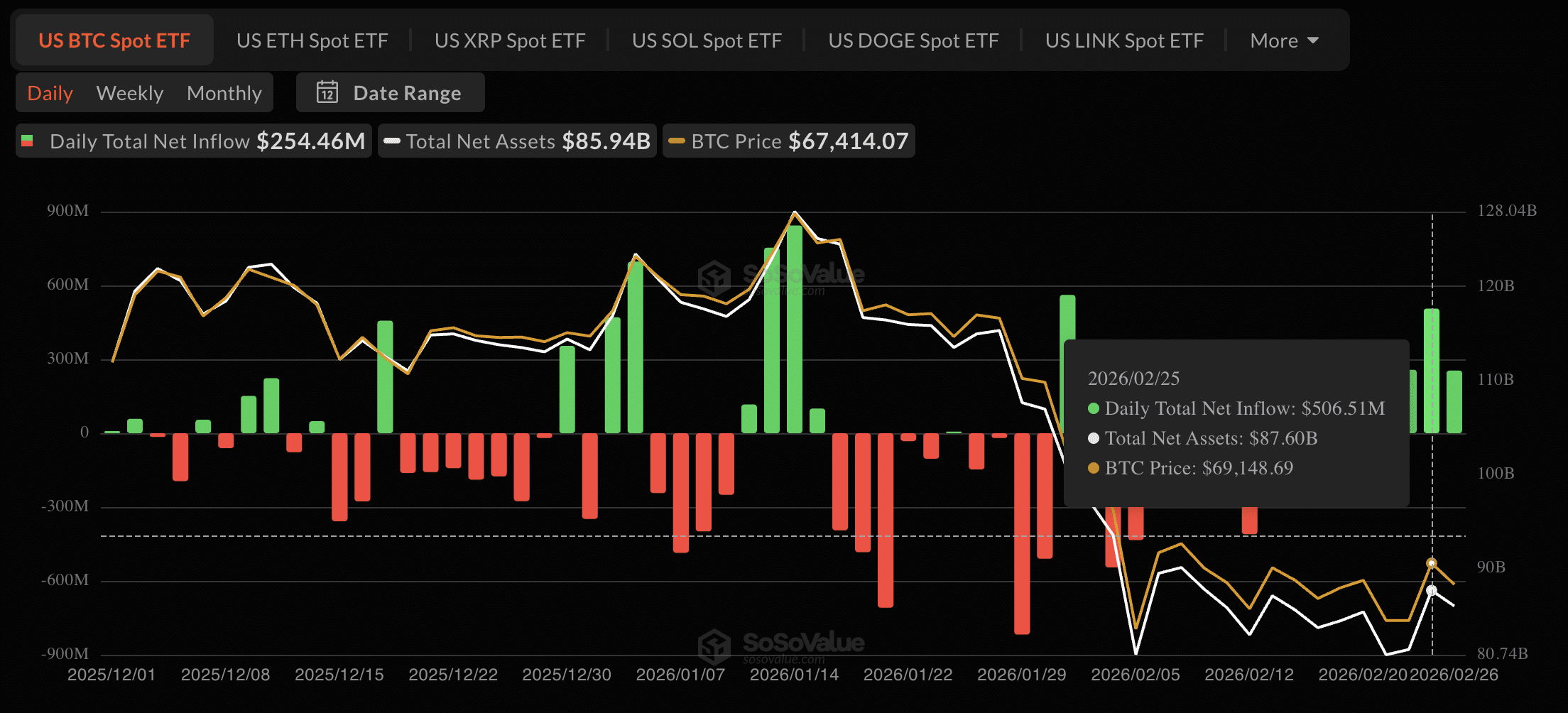
Over the past three trading days, Bitcoin ETFs recorded a mixed but stabilising flow profile. After earlier outflows weighed on sentiment, inflows re-emerged, led by activity tied to BlackRock.
Data from showed an inflow of
Source: SoSoValue
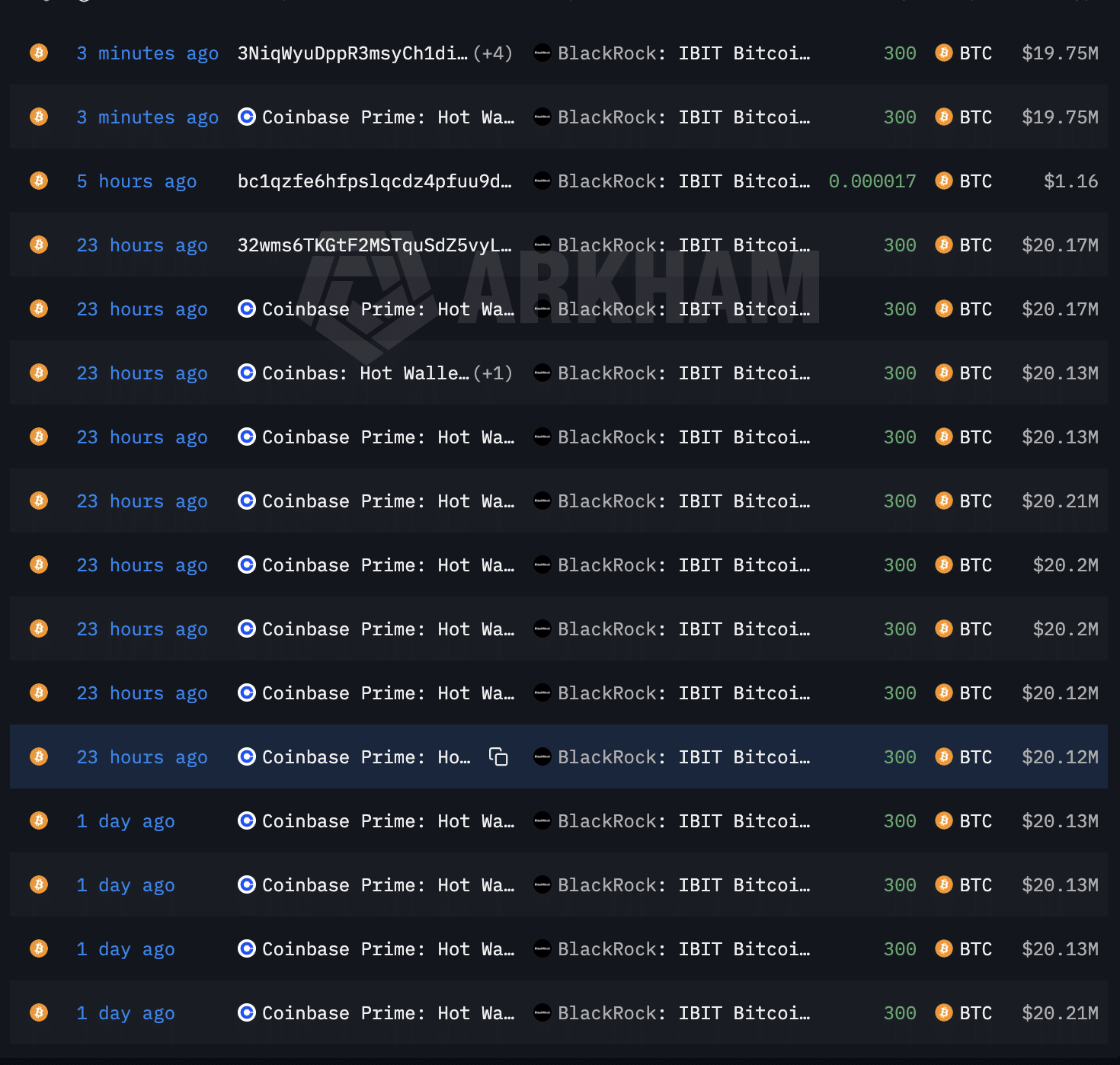
Also, on-chain data from shows that BlackRock-linked wallets have accumulated approximately
This was done across multiple transactions during the period, equivalent to roughly
Source: Arkham
These were net inflows, indicating outright purchases rather than internal transfers or rebalancing.
This accumulation occurred as Bitcoin continued to drift lower, highlighting a disconnect between institutional positioning and broader market price behaviour.
Why inflows are not lifting the market
ETF inflows reflect steady, longer-term allocation decisions rather than short-term speculative demand. At the same time, broader market structure remains dominated by deleveraging, options positioning, and reduced risk appetite following February’s volatility.
Spot selling, futures position unwinds, and call overwriting strategies have continued to cap upside, even as ETF issuers quietly add exposure. This dynamic means ETF demand can absorb supply without immediately translating into price appreciation.
In effect, institutional inflows are acting as a stabilising force rather than a catalyst.
A structural shift in how Bitcoin trades
The current environment underscores a structural shift in Bitcoin’s market mechanics. ETF flows increasingly represent patient capital, while price discovery remains sensitive to derivatives markets and macro-driven risk sentiment.
As a result, positive ETF data no longer guarantees immediate upside — especially during periods of broader risk-off positioning.
What to watch next
If ETF inflows persist while speculative selling pressure fades, the gap between institutional accumulation and spot price could narrow.
Until then, Bitcoin may continue to trade defensively even as long-term holders build exposure in the background.
Final Summary
- Bitcoin’s price weakness alongside ETF inflows reflects a market still dominated by short-term positioning rather than long-term allocation.
- Sustained institutional buying may matter less for immediate price action and more for where the next cycle ultimately finds support.


