As worries over government debt and currency stability resurface, asset managers are once again reassessing how to protect purchasing power. Assets with limited supply, from gold to digital assets, are back in focus.
Bitcoin has delivered outsized gains since the pandemic, strengthening its case as an alternative store of value, but recent market moves show investors still draw a clear line between cryptocurrencies and traditional safe havens.
In January 2026, conditions appeared ripe for the debasement trade to accelerate. The U.S. dollar logged its weakest month since mid-2025, pressured by geopolitical tensions, renewed tariff threats, fiscal disputes in Washington, and growing debate over Federal Reserve independence.
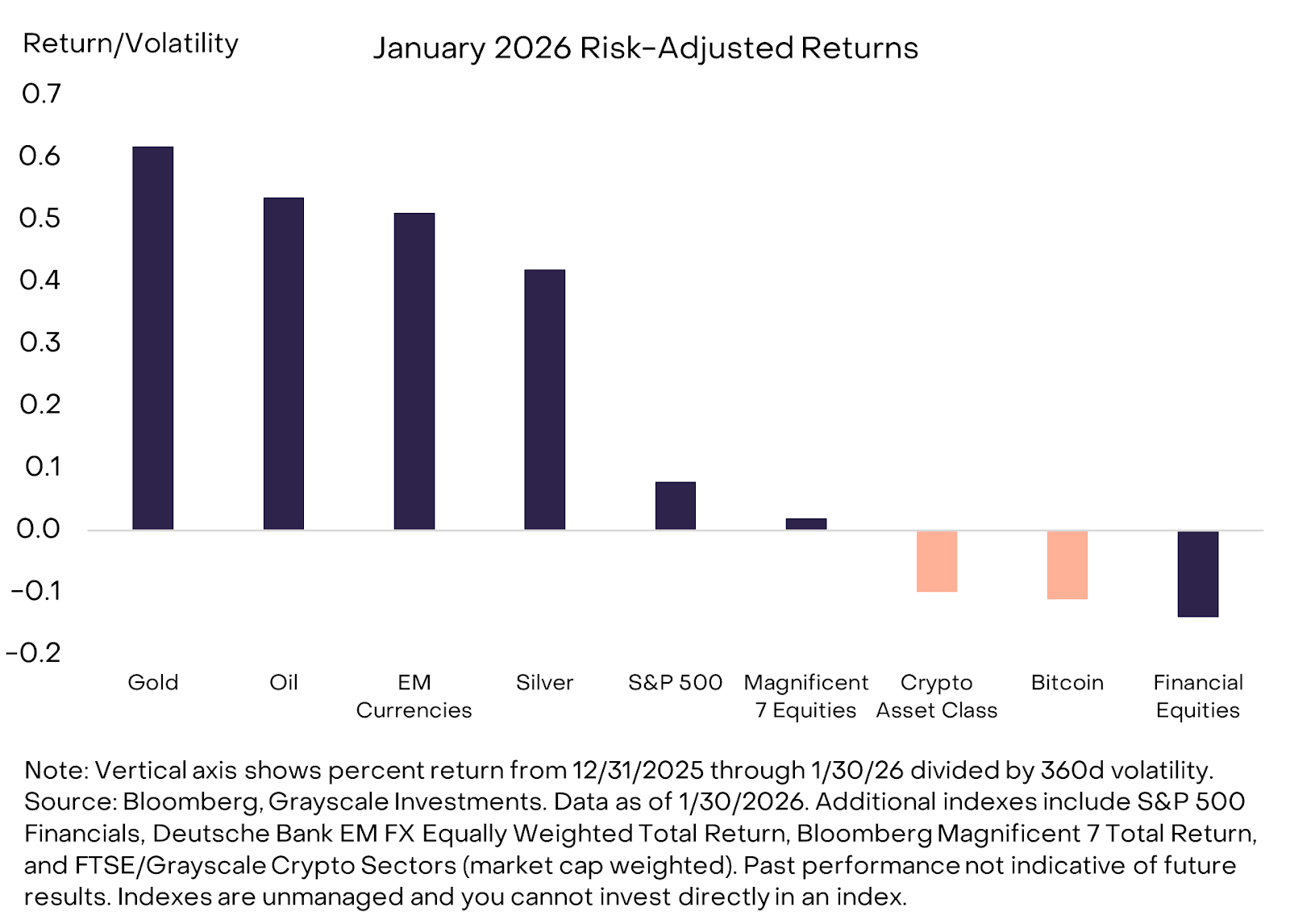
Traditional hedges reacted quickly. Gold prices rose about 13%, silver gained nearly 19%, and several emerging-market currencies strengthened.
Bitcoin moved in the opposite direction.
 Source:
Grayscale
Large-cap crypto assets declined during the month, breaking the expectations that Bitcoin would track gold higher during periods of dollar weakness. The divergence surprised some investors, particularly as Bitcoin and gold often share similar macro drivers and appear together in diversified portfolios.
Asset managers such as Grayscale argue that the difference lies in Bitcoin’s identity.
Bitcoin’s appeal stems from its monetary features: a fixed and transparent supply, global accessibility, and censorship-resistant transactions. Grayscale expects demand for these properties to grow as confidence in fiat systems fluctuates.
Still, Bitcoin is not viewed as a direct substitute for physical gold.
Gold benefits from centuries of trust and widespread institutional acceptance. Central banks hold it, and conservative investors are often required to own it. Bitcoin, by contrast, remains a relatively young technology-driven asset, and its price is often influenced by broader risk appetite and innovation cycles.
Investor behavior in January showed that distinction.
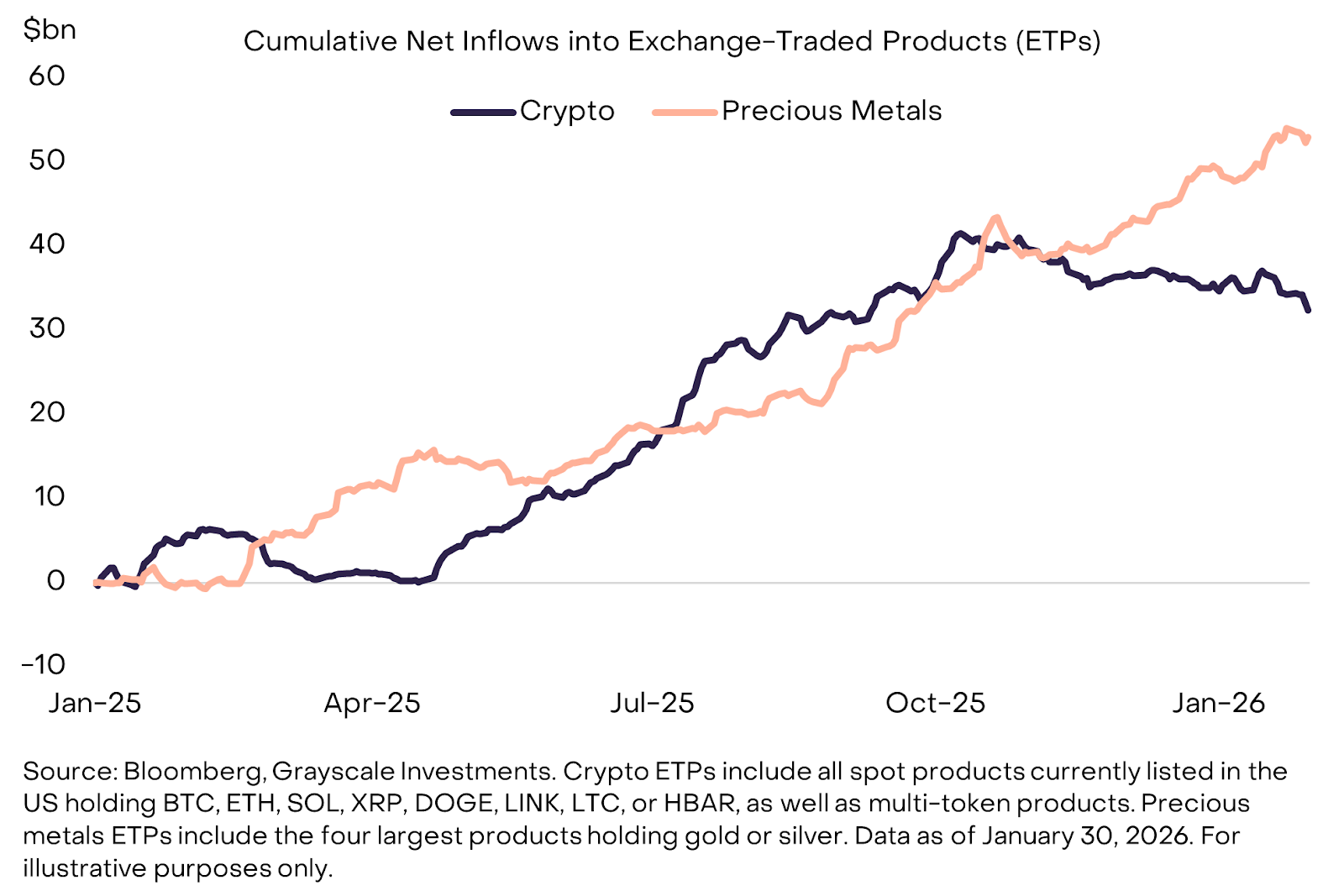
U.S.-listed spot Bitcoin exchange-traded products recorded roughly $2.3 billion in net outflows during the month. At the same time, major precious-metals funds saw more than $3.5 billion in inflows. When uncertainty rose, capital moved toward familiar safe havens.
 Source:
Grayscale
Bitcoin prices on U.S.-based exchanges also traded at a discount to offshore platforms, signaling softer domestic demand.
(adsbygoogle = window.adsbygoogle || []).push({});However, Grayscale’s report concluded, “We continue to see a favorable outlook for both Bitcoin and the crypto asset class.”
Related: Bitcoin, Gold & Silver 2026: On‑Chain Insights and Market Trends Driving Divergent Performance