
RMB Index: Has the Upward Trend Come to a Halt?

Morning FX
At the end of January, the RMB Index experienced its first significant pullback in this round of the upward trend.The index, composed of factors such as the US dollar, euro, Korean won, Japanese yen, and Australian dollar, measures the strength of the RMB relative to a basket of currencies, dropping from a peak close to 99 to 97.50 within a week.
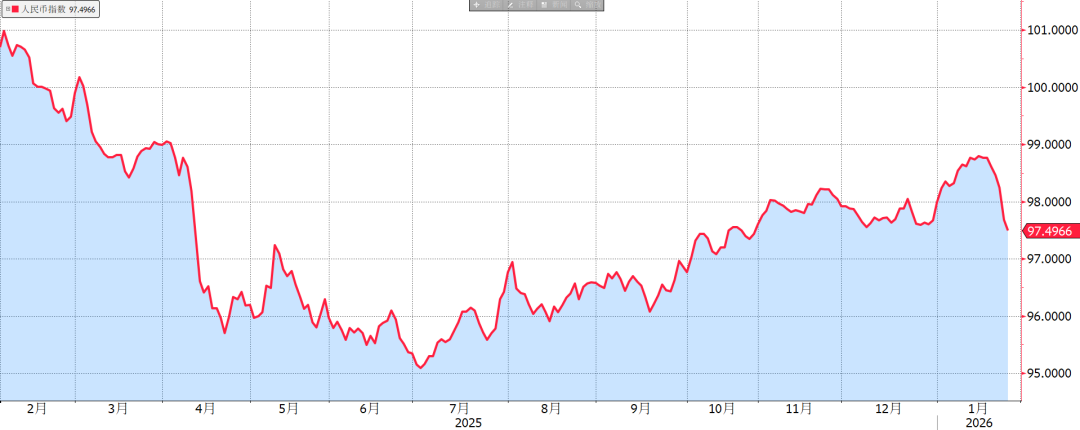
Chart: RMB Index Pullback
Visually, the euro against the RMB rose from 8.07 by 2000 pips to 8.26; the Japanese yen against the RMB rebounded from historical lows by 1000 pips to above the support level of 4.50.
I. Why was the trend of RMB's outperformance broken?
This round of the RMB Index's upward trend began in July last year. Amid the sideways movement of other non-USD currencies, a record trade surplus drove the independent appreciation of the RMB.
Yet, in this round of collective de-dollarization, the RMB did not keep pace. Euro-led European currencies rose rapidly, driven by safe-haven capital. The yen, under the threat of intervention, saw USDJPY plunge by 500 pips in a single day. In contrast, although the RMB's central parity rate dipped towards 7.0, there was no panic, and USDCNY never fell below 6.95.
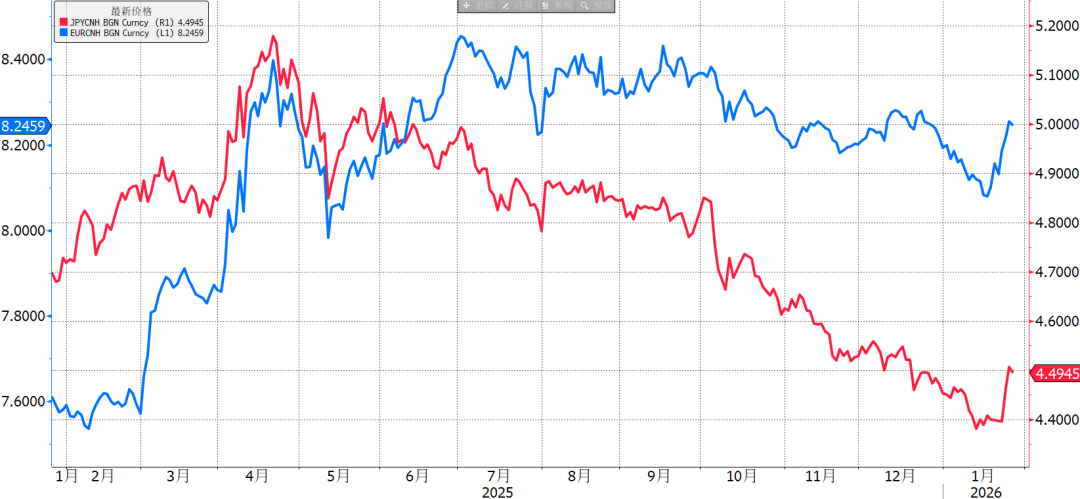
Chart: Non-USD currencies surge against RMB
Behind this is a divergence in currency logic: the RMB is driven by internal factors, with appreciation guided in an orderly manner by the supply and demand of foreign exchange settlement. This is also reflected in the simultaneous increase in volatility among non-USD currencies while RMB volatility remains low. In contrast, non-USD currencies are stimulated by external factors, as panic from US credit issues and fear of intervention trigger capital repatriation and speculative unwinding.
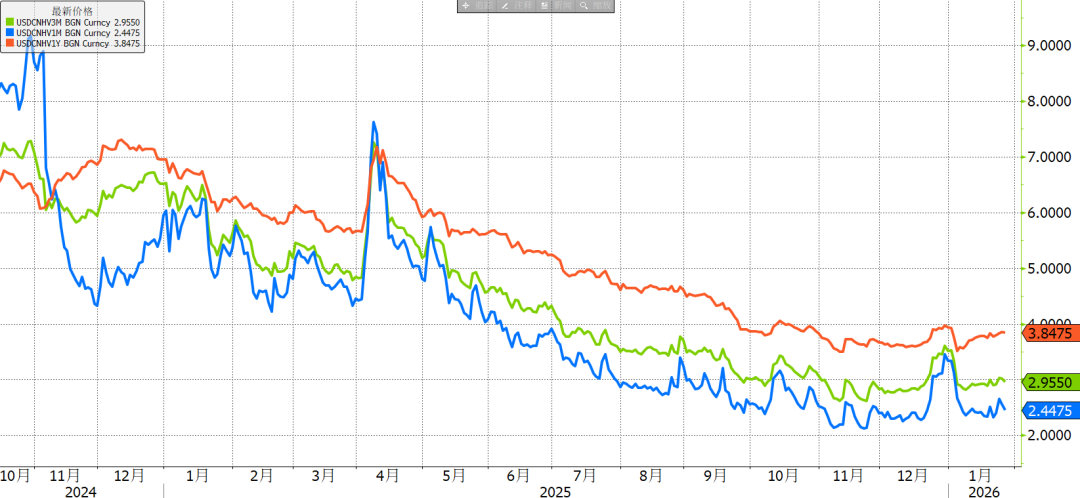
Chart: RMB volatility remains calm
II. What is the outlook for the RMB?
Comparing this to the first round of de-dollarization that began last April, at that time EUR/USD, after parity tariffs, climbed continuously from 1.08 to above 1.18 in five months, an appreciation of nearly 10%, while the RMB only appreciated about 2% during the same period.
If this round is similar in magnitude to last year, the current pullback in the RMB Index is not yet over. Objectively speaking, however, the intensity and sustainability of Europe's reaction this time are questionable, so the euro's rise may not match last year's, and therefore the RMB Index's pullback will also be limited.
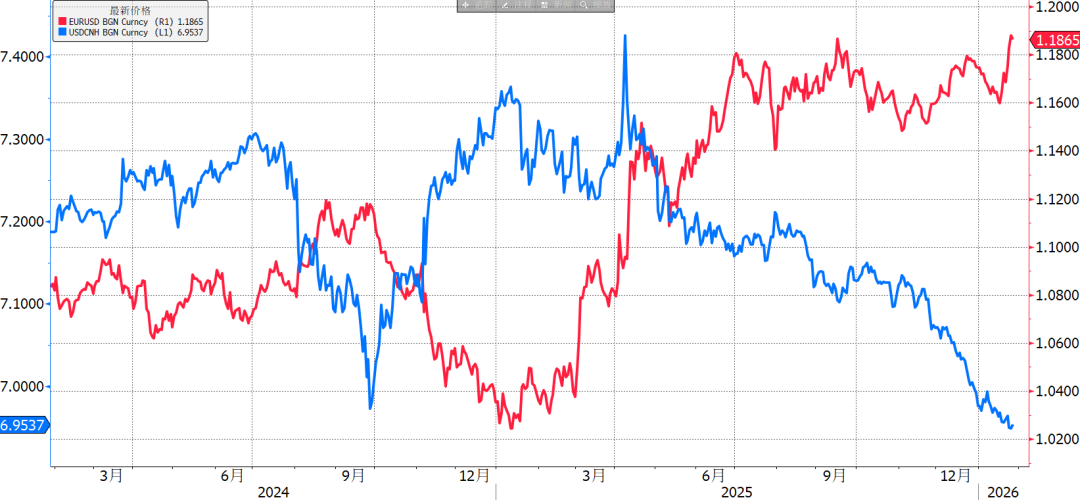
Chart: RMB volatility remains calm
From another perspective, there is still upward momentum for the RMB against the USD. After USDCNY broke below 7.0 in December, the overall downward trend has been established. This round of appreciation led by non-USD currencies has provided further momentum for the RMB.
III. Summary
(1) The RMB Index saw a significant pullback at the end of January, due to its absence in this round of de-dollarization, showing that the supply and demand for RMB exchange rates is still driven by internal factors.
(2) Looking ahead, the rally in non-USD currencies in this round provides momentum for further RMB appreciation, and settling foreign exchange at high points remains a prudent choice.
Disclaimer: The content of this article solely reflects the author's opinion and does not represent the platform in any capacity. This article is not intended to serve as a reference for making investment decisions.
You may also like
Cisco (CSCO.US) Q1 revenue up 24%, strongest in 15 years; AI infrastructure revenue expected to double to $9 billion, shares surged over 8% after hours
Network equipment giant Cisco released its financial report for the first quarter of fiscal year 2027 after the US market closed on November 12, with both revenue and profit exceeding expectations, and raised its full-year guidance.
A Record 27 Trillion Yen Intervention Fails as Yen Once Again Approaches 160: The Tug-of-War Dilemma for the World's Most Difficult Currency to Trade
In recent months, the exchange rate has remained tightly anchored within a narrow range around 1 USD to 158 JPY. However, on Wednesday, it broke through again: unexpectedly for traders, the yen weakened and approached the 160 mark.
Overnight US Stocks | The Three Major Indices Closed Lower, Nvidia (NVDA.US) Closed Down 4.3%
At the close, the Dow Jones Industrial Average fell by 189.40 points, or 0.36%, to 52,297.09 points. The S&P 500 Index declined by 26.98 points, or 0.35%, to 7,592.40 points. The Nasdaq Composite Index dropped 100.10 points, or 0.39%, to 25,366.09 points.
Tim Draper predicts Bitcoin will integrate altcoin innovations, boost market dominance

Crypto prices
More


