
The death of crypto marketing: Why founders became the product interface | Opinion

For most of crypto’s short history, growth followed a simple formula: reward behavior, and it will repeat. Liquidity mining, referral loops, token launches, airdrops. If adoption slowed, teams increased the incentives. When that stopped working, they layered on marketing campaigns, splashy announcements, and logo-filled partnership decks. That era is over.
- Crypto growth stalled because trust collapsed: incentives, airdrops, and marketing no longer convert in a market saturated with scams, fake metrics, and empty signals.
- Founder credibility has become the growth engine: consistent, public explanation builds compounding trust, defines the narrative, and creates adoption that campaigns can’t buy.
- Founders are now infrastructure: belief, coherence, and conviction are the real distribution layer — and when trust is scarce, credibility becomes the product.
Crypto didn’t stall because people forgot how to market. It stalled because the industry had exhausted trust. In a market where scams surface daily, rug pulls are routine, and metrics can be manufactured, buyers stopped believing what they were being shown. The result is uncomfortable but obvious: attention no longer converts.
The marginal return on spend is collapsing because none of these mechanisms answer the real question buyers are asking anymore: who can I trust? When trust disappears, growth doesn’t follow money. It follows credibility.
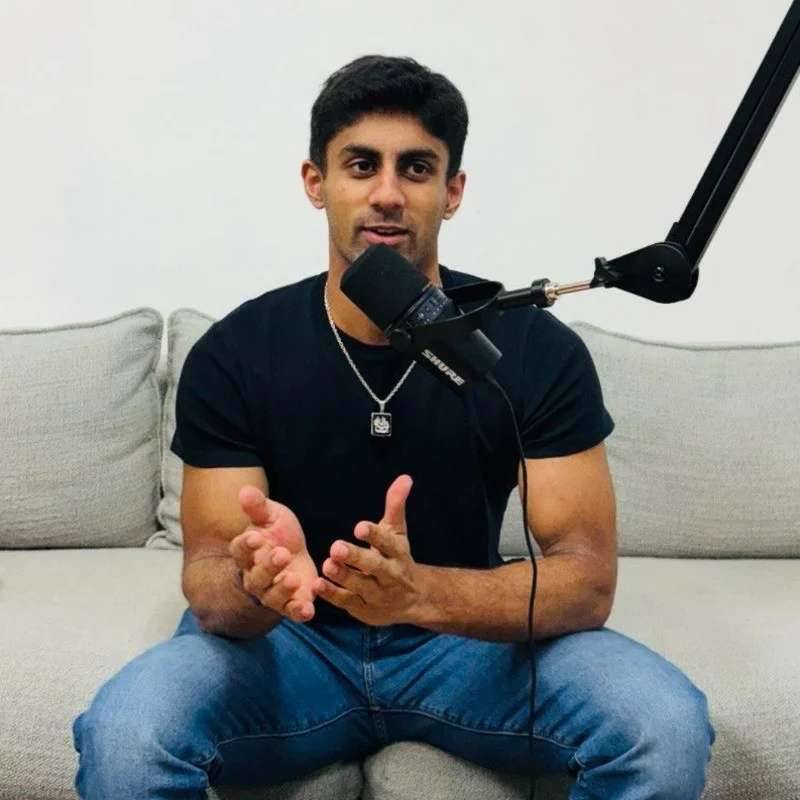
This is why a new system has quietly replaced traditional crypto marketing: founder-credibility driven growth. In this model, the primary driver of adoption is not rewards, spend, or partnerships. It is the founder’s ability to consistently earn trust by explaining, teaching, and embodying the product in public.
But this isn’t just personal branding. It’s something more structural.
Markets no longer discover products through landing pages. They discover them through people who show up repeatedly with the same worldview, the same logic, and the same intellectual posture. Buyers don’t want dashboards. They want explanations they can repeat internally. They want mental models they can borrow when convincing teams that don’t live on crypto Twitter.
This is also why campaigns and fake logo partnerships are dead. They once worked because the market was naïve, but all they signal today is performance rather than any substance. A press release filled with logos doesn’t signal legitimacy anymore — it signals theatre. In a trust-depleted market, anything that feels manufactured is discounted instantly.
Founder-credibility-driven growth model
Founder-credibility-driven growth flips the old model on its head. I’ve watched this pattern repeat across dozens of teams. Products with strong technology but weak founder presence struggled to move beyond early adopters, even with serious budgets. Meanwhile, other products — sometimes technically simpler — pulled in disproportionate inbound interest because the founder kept explaining the same problem in the same way until the market finally understood it.
The difference? Coherence.
A campaign can generate awareness. It cannot generate conviction. Founder-credibility-driven growth works because it performs three functions that incentives never could.
- First, it compounds. Campaigns are episodic. They flare up and vanish. Founder narratives accumulate. Every explanation builds context for the next. Over time, the market doesn’t just recognize the product — it understands it.
- Second, founder-driven growth creates defensibility. Institutions don’t adopt things they can’t explain. Founders who teach the market how to think about a problem don’t just promote products — they define the language people use to justify decisions internally.
- Third, this type of growth creates trust asymmetry. In a market saturated with noise, the person who keeps showing up with clarity becomes the reference point everyone else measures against.
This shift is uncomfortable because it changes who owns growth. Go-to-market is no longer something you can fully outsource. You can pay for campaigns. You cannot pay for belief.
Vision, philosophy, and conviction are non-transferable. The market doesn’t want a spokesperson. It wants the person who made the trade-offs. You can hire someone to write your announcements. You cannot hire someone to embody your worldview.
That is why founders have quietly become infrastructure. They are no longer just builders. They are the distribution layer through which markets learn how to adopt increasingly complex financial systems.
Crypto marketing isn’t dying because teams stopped trying. It’s dying because the interface changed. And in a space saturated with scams, empty partnerships, and decaying incentives, the only growth engine that still works is authentic, founder-credibility-driven trust.
When trust becomes scarce, credibility becomes the product.
Disclaimer: The content of this article solely reflects the author's opinion and does not represent the platform in any capacity. This article is not intended to serve as a reference for making investment decisions.
You may also like
Nifty 50 Is Still Down 4.91% in 2026, So Why Does Citi See 13% Upside?

US Dollar Index: Fed path and CPI focus – Deutsche Bank

 VIPMidterm Elections Conclude, Anthropic Initiates IPO
1. Cross-asset performance diverged this week. Between the October 30 and November 6 closes, the S&P 500 fell 2.68%, the Nasdaq 100 dropped 4.91%, and BTC lost 1.88%. Gold and silver rose 4.51% and 5.79%, respectively, while the Hang Seng gained 5.10%. Sharp declines in crude oil and some Asian equity indexes showed how differently assets responded to growth, policy, and event risks. 2. Democrats won majorities in both chambers of Congress in the US midterm elections, and markets rallied before reversing. We focus on actual changes in fiscal negotiations, key committee arrangements, and local industrial policy, especially data-center approvals, energy costs, and the pace of capital expenditure. We do not map party outcomes directly to asset direction. 3. The pullback in technology stocks has put returns on AI investment under renewed scrutiny. Whether rapid growth can cover financing, construction, and ongoing compute costs is becoming a key valuation test. For related positions, monitor policy implementation, customer capital expenditure, and cash collection together, and do not read a one-day rebound as a sign that the pressure has passed. 4. Anthropic's IPO preparations are putting the growth quality, operating profitability, and funding needs of AI model companies under public-market scrutiny. Valuations discussed for the offering are not final pricing, and participating in related products also requires assessing fees, allocation methods, asset rights, and trading restrictions. Assets in focus: BTC, the Nasdaq 100, crude oil, and gold, along with key earnings from companies including CSCO, AMAT, and CEG

Asian Stocks Rebound, Nikkei Up 3.4%, but Can They Lead Wall Street?

Crypto prices
More


